Easy to read, understand, and apply, the material in Beyond the Downbeat covers many important aspects of choral leadership beyond conducting. The material is practical for choirs of any size and leaders at any level of training. Key Benefits: Helps choral directors make their choirs sound more artistically beautiful Provides guidelines about the use of diction and related areas of vocal technique and improvement Provides useful choral warm-up exercises and other practical helps for any choral group"
The one room schoolhouse isn't big enough to hold thirty-four students, let alone the egos of two teachers. He can't afford to lose the position, and she refuses to lose her heart. Washington, 1891 She's running from rejection and disgrace.Humiliated after her broken engagement, Claire Montgomery flees her comfortable life in San Francisco for a teaching position in Pine Creek, Washington, a dot of a town nestled in the rugged Cascade Mountains. She's determined to succeed-for once in her life-only to discover, upon her arrival, that success will have to be won. Thanks to a school board error, two teachers have been hired. Scandal has him looking for a new start.When scandal forces professor Barrett Clarke from his position as a college professor, he returns to Pine Creek where his uncle, chairman of the school board, sets forth an irresistible offer: teach one year in return for ranchland. For this would-be rancher, nothing is more tempting than resurrecting his childhood dream, and nothing can deter him from earning that land. Except perhaps Claire Montgomery. Losing the battle for the classroom means losing the ranchland, but winning may mean losing Claire's heart. Someone will win something; the question is who? And What? One Plus One Equals Trouble is the first book in the Love That Counts Historical Christian romance series. You'll find well-developed characters, witty banter, tender journeys of faith and love, and feel-good happily-ever-afters all set in the beautiful mountains of the Pacific Northwest. Discover Sondra Kraak's small mountain town of Pine Creek, and fall in love with the characters who make these historical western romances books you won't soon forget. Start with One, and then keep counting Book 2: Two Ways HomeBook 3: Three Words and a KissBook 4: Four Dreams of YouBook 5: Five Simple GiftsNovella: First to Fall
The Kansas map is dotted with colorful and intriguing place names that invite wonderment: Grenola, La Cygne, Cawker City, Wamego, Tonovay, Liberal, Nicodemus, Skiddy, and White Woman Creek. These--and 1058 others, from Abbeyville to Zurich--are described in this handy treasure trove of local history. In addition to discussing how the name originated and what changes it has undergone, McCoy and Hults provide the inquisitive with the spelling and pronunciation (of unusual names), the county where located, related anecdotes, post office dates, and population figures. The result is a fascinating mosaic of information on Kansas history, families, events, politics, settlement patterns, and local lore. Given its geographic location at the crossroads of America, Kansas understandably boasts a diversity of place names. Native Americans, blacks, the French, Spanish, Anglo-Irish, German-Russians, and other ethnic groups have left their stamp on Kansas long with westward-moving Americans. In Kansas the majority of the place names were chosen to describe, to acknowledge origins, or to commemorate. The descriptive include Smoky Hill, Pretty Prairie, and Saline. American migrants brought Pittsburg, Erie, Oberlin, and Manhattan; foreign immigrants, Toronto, Liebenthal, Clyde, Alexanderwhol, and Smolan. But, as elsewhere in the United States, most names were chosen to commemorate; places are named for Indians, postmasters, landowners, railroad officials, military heroes, local politicians, statesmen, judges, and presidents. McCoy and Hults have included all 105 counties and their seats of government and all 629 incorporated places as listed in the 1980 U.S. Census. The remaining have been chosen because of historical geographic, or geological interest. Abundantly illustrated with humorous drawings by John Gruber, this handy place name gazetteer is both a valuable reference and a source of good fun.
Welcome to a behind-the-scenes look at the style and studio of renowned designer and Gypsy dress maker Sondra Celli. Known for the jaw-dropping couture she creates on the hit television series My Big Fat American Gypsy Wedding, the “Queen of Bling” adds crystal brilliance to everything from tuxedos to Converse sneakers to pet accessories. Here, combining fashion insights and how-to techniques, she shares fascinating details of her early design hits and misses, her family's role in her work, and the sacrifices she made as a struggling designer in the Big Apple. Sondra teaches you how to create 14 bling-tastic projects of your own: umbrellas, corsets, neckties, baby shoes, baseball caps, flip flops, and more. She also dishes about what happens behind the scenes of her TV show, how she began designing for the Gypsy community, and the pressures of creating dresses using materials such as candies, dollar bills, and real flowers.
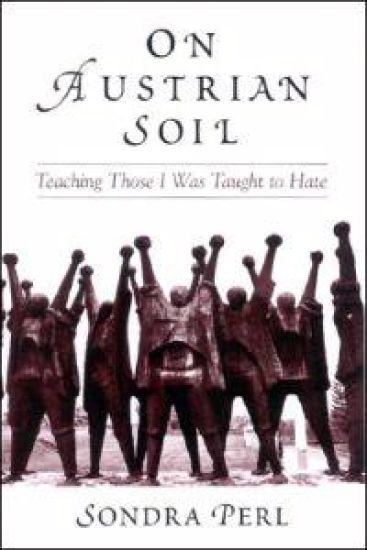
An award-winning teacher takes a journey into alien territory: Austria, Hitler's birthplace, and the territory of her own hatred. A teaching memoir that offers a pedagogy of hope.Finalist for the 2006 Independent Publishers Book Award in the Autobiography/Memoir category Most educators keep their teaching secret. In On Austrian Soil, an award-winning teacher, Sondra Perl, opens her classroom to reveal the struggles and successes she encounters when she, not without trepidation, raises the questions of history with her adult Austrian students, descendants of Nazis. Her students, teachers themselves, come face-to-face with the question of their responsibility not only to the past but also to the future. Perl's careful descriptions are an invitation to scrutinize her teaching and thinking as well as her students' own histories and hatreds. Writing together, she and her students break lifelong silences-discovering along the way the power of dialogue to transform deeply held prejudices.
Outreach 2018 Recommended Resource of the Year (Leadership)A Top Ten Book for Parish Ministry in 2017, Academy of Parish ClergyThe practice of ministry requires pastors and Christian leaders to serve as moral theologians in their communities. Ministers must preach about morally challenging texts, teach about moral issues and conflicts, offer moral counsel, and serve as an example regarding the shape of faithful Christian life. Grounding pastoral ethics in spiritual formation and spiritual disciplines, this book provides tools for facing the day-to-day demands and seizing the opportunities of being a moral teacher. An essential text for practical ministry courses.
This book offers an account of the moral foundations of pastoral ethics and the underlying interpersonal dynamics that make the practice of ministry powerful--and also morally dangerous, even for those with the best of intentions. Sondra Wheeler examines the personal disciplines and spiritual practices that help sustain safe ministry, including the essential practices of prayer and spiritual accountability. She equips ministers to abide by ethical standards when they come under pressure and offers practical strategies for navigating challenges. The author also stresses personal vulnerability and "unselfish self-care."
Feminist theory has undergone continuous evolution since its recognized establishment in 1963. Sondra Farganis's insightful volume revisits feminist philosophy's turbulent beginnings, and explores the myriad political and social factors influencing its development during the past three decades. The author also considers the interaction between feminism and the greater women's movement, discussing not only the commonalities but the differences among women of various cultures and experiences. Finally, she recounts four of the most controversial, women-centered court cases of recent years, identifying elements of feminist theory--and how they affected, or were affected by--the social and political context in which they occurred. Inspiring new directions in critical thought and theoretical advancement, Situating Feminism will prove an essential resource for students and professionals in the areas of women's and culture studies, political science, social work, communication, and psychology. " Sondra Farganis does not shy away from rigorous arguments or moral issues, dealing directly with the relationship of postmodernism and feminism, and the concerns that the former undermines the latter. She capably moves among writers like Berger and Luckman, Freire, Habermas, and Butler. . . .Ultimately, the strength of this book is its ability to present a wide range of feminist political and social theories in a coherent fashion while demonstrating its application to actual real-life situations." --Affilia "Sondra Farganis has written a concise study on the situation of feminist thought in relation to contemporary social controversies. She analyzes the Nussbaum (domestic violence and victimization), Baby M (motherhood and surrogacy), Sears (employment and affirmative action), and Hill/Thomas (race and sexual harassment) cases in a broad theoretical context. Farganis outlines major themes . . . and conflicts . . . within feminist thought, illustrating how these played out in the resolution of the cases." --Choice
Feminist theory has undergone continuous evolution since its recognized establishment in 1963. Sondra Farganis's insightful volume revisits feminist philosophy's turbulent beginnings, and explores the myriad political and social factors influencing its development during the past three decades. The author also considers the interaction between feminism and the greater women's movement, discussing not only the commonalities but the differences among women of various cultures and experiences. Finally, she recounts four of the most controversial, women-centered court cases of recent years, identifying elements of feminist theory--and how they affected, or were affected by--the social and political context in which they occurred. Inspiring new directions in critical thought and theoretical advancement, Situating Feminism will prove an essential resource for students and professionals in the areas of women's and culture studies, political science, social work, communication, and psychology. " Sondra Farganis does not shy away from rigorous arguments or moral issues, dealing directly with the relationship of postmodernism and feminism, and the concerns that the former undermines the latter. She capably moves among writers like Berger and Luckman, Freire, Habermas, and Butler. . . .Ultimately, the strength of this book is its ability to present a wide range of feminist political and social theories in a coherent fashion while demonstrating its application to actual real-life situations." --Affilia "Sondra Farganis has written a concise study on the situation of feminist thought in relation to contemporary social controversies. She analyzes the Nussbaum (domestic violence and victimization), Baby M (motherhood and surrogacy), Sears (employment and affirmative action), and Hill/Thomas (race and sexual harassment) cases in a broad theoretical context. Farganis outlines major themes . . . and conflicts . . . within feminist thought, illustrating how these played out in the resolution of the cases." --Choice
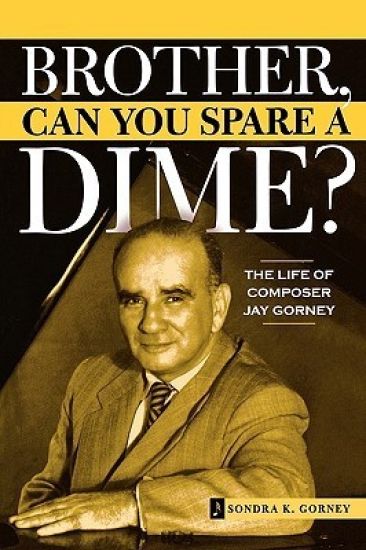
In January 2005 the Grammys announced their annual Hall of Fame inductees. Included on the list was Bing Crosby's 1932 recording of "Brother, Can You Spare a Dime?," the anthem of the Great Depression. Jay Gorney, who composed the music for this enduring classic, will also be remembered for such standards as "Baby Take a Bow" (from the film Stand Up and Cheer), "You're My Thrill," and "What Wouldn't I Do for That Man?" Throughout his lifetime, Gorney wrote hundreds of popular songs for theater, film, and television. In addition to composing, Gorney also produced films and was a distinguished writer and teacher. Unfortunately, his career was brought to a halt in 1953 with his appearance before the House Un-American Activities Committee, as he was blacklisted thereafter. This memoir by Jay's wife of more than 45 years chronicles the life of one of American music's most prolific and respected composers. From Gorney's childhood in Russia to his many stage and screen successes to his 1962 Tony Award, Brother Can You Spare a Dime? is a tribute to a man whose humanity, kindness, and courage triumphed over adversity. Contains more than 30 photos, including sheet music covers to some of Jay's greatest songs.
Although women have been teaching and performing music for centuries, their stories are often missing from traditional accounts of the history of music education. In Women Music Educators in the United States: A History, Sondra Wieland Howe provides a comprehensive narrative of women teaching music in the United States from colonial days until the end of the twentieth century. Defining music education broadly to include home, community, and institutional settings, Howe draws on sources from musicology, the history of education, and social history to offer a new perspective on the topic. In colonial America, women sang in church choirs and taught their children at home. In the first half of the nineteenth century, women published hymns, taught in academies and rural schoolhouses, and held church positions. After the Civil War, women taught piano and voice, went to college, taught in public schools, and became involved in national music organizations. With the expansion of public schools in the first half of the twentieth century, women supervised public school music programs, published textbooks, and served as officers of national organizations. They taught in settlement houses and teacher-training institutions, developed music appreciation programs, and organized women’s symphony orchestras. After World War II, women continued their involvement in public school choral and instrumental music, developed new methodologies, conducted research, and published in academia. Howe’s study traces this evolution in the roles played by women educators in the American music education system, illuminating an area of research that has been ignored far too long. Women Music Educators in the United States: A History complements current histories of music education and supports undergraduate and graduate courses in the history of music, music education, American education, and women’s studies. It will interest not only musicologists, educational historians, and scholars of women’s studies, but music educators teaching in public and private schools and independent music teachers.
Focusing on the relationship between gender and the state in the construction national identity politics in twentieth-century northern Sudan, the author investigates the mechanisms that the state and political and religious interest groups employ for achieving political and cultural hegemony. Hale argues that such a process involves the transformation of culture through the involvement of women in both left-wing and Islamist revolutionary movements. In drawing parallels between the gender ideology of secular and religious organizations in Sudan, Hale analyzes male positioning of women within the culture to serve the movement. Using data from fieldwork conducted between 1961 and 1988, she investigates the conditions under which women’s culture can be active, generating positive expressions of resistance and transformation. Hale argues that in northern Sudan women may be using Islam to construct their own identities and improve their situation. Nevertheless, she raises questions about the barriers that women may face now that the Islamic state is achieving hegemony, and discusses limits of identity politics.
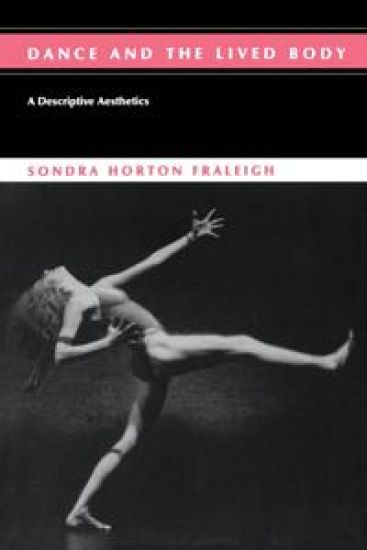
In her remarkable book, Sondra Horton Fraleigh examines and describes dance through her consciousness of dance as an art, through the experience of dancing, and through the existential and phenomenological literature on the lived body. She describes, with performance photographs, specific imagery in dance masterworks by Doris Humphrey, Anna Sokolow, Viola Farber, Nina Weiner, and Garth Fagan.
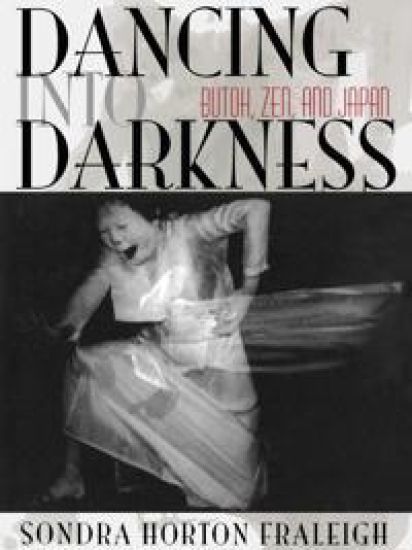
Dancing Into Darkness is Sondra Horton Fraleigh's chronological diary of her deepening understanding of and appreciation for this art form, as she moves from a position of aesthetic response as an audience member to that of assimilation as a student. As a student of Zen and butoh, Fraleigh witnesses her own artistic and personal transformation through essays, poems, interviews, and reflections spanning twelve years of study, much of it in Japan. Numerous performance photographs and original calligraphy by Fraleigh's Zen teacher Shodo Akane illuminate her words.The pieces of Dancing Into Darkness cross boundaries, just as butoh anticipates a growing global amalgamation. \u0022Butoh is not an aesthetic movement grafted onto Western dance, \u0022 Fraleigh concludes, \u0022and Western dance may be more Eastern than we have been able to see. \u0022
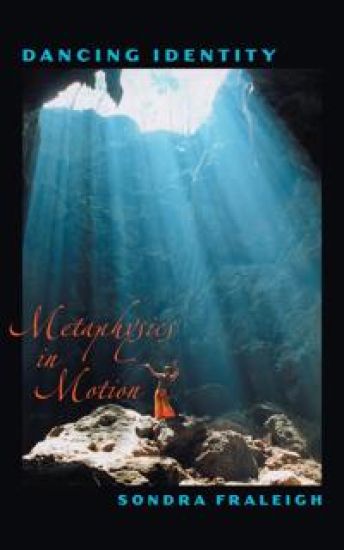
Combining critical analysis with personal history and poetry, Dancing Identity presents a series of interconnected essays composed over a period of fifteen years. Taken as a whole, these meditative reflections on memory and on the ways we perceive and construct our lives represent Sondra Fraleigh's journey toward self-definition as informed by art, ritual, feminism, phenomenology, poetry, autobiography, and-always-dance.Fraleigh's brilliantly inventive fusions of philosophy and movement clarify often complex philosophical issues and apply them to dance history and aesthetics. She illustrates her discussions with photographs, dance descriptions, and stories from her own past in order to bridge dance with everyday movement. Seeking to recombine the fractured and bifurcated conceptions of the body and of the senses that dominate much Western discourse, she reveals how metaphysical concepts are embodied and presented in dance, both on stage and in therapeutic settings.Examining the role of movement in personal and political experiences, Fraleigh reflects on her major influences, including Moshe Feldenkrais, Kazuo Ohno, and Twyla Tharp. She draws on such varied sources as philosophers Simone de Beauvoir and Martin Heidegger, the German expressionist dancer Mary Wigman, Japanese Butoh founder Tatsumi Hijikata, Hitler, the Bomb, Miss America, Balanchine, and the goddess figure of ancient cultures. Dancing Identity offers new insights into modern life and its reconfigurations in postmodern dance.
Describing new techniques and novel applications, Handbook of Research Methods in Public Administration, Second Edition demonstrates the use of tools designed to meet the increased complexity of problems in government and non-profit organizations with ever-more rigorous and systematic research. It presents detailed information on conceptualizing, planning, and implementing research projects involving a wide variety of available methodologies. Providing a reference of systematic research methods, this second edition explains how these techniques aid in understanding traditional issues, and reveals how they might be applied to answer emerging theoretical and practical questions.Following a linear, logical organization, this handbook meets systematic goals and objectives through eight groups of chapters. The first group explains the logic of inquiry and the practical problems of locating existing research. The second group deals with research design and the third examines pitfalls in measurement and data collection. The authors give practical, considered advice in the fourth section to anticipate and solve data management problems. They include numerous illustrations to supplement two separate sections devoted to basic and advanced quantitative analysis. The seventh section covers unique analytical techniques used to gain insight specific to the non-market sector’s knotty problems. The final section addresses the impact of research and describes how to overcome illusive, tricky, and sizeable barriers to influence other researchers, decision makers, foundations, and grant making institutions. With a comprehensive survey of research methods and an examination of their practical and theoretical application in the past, present, and future, Handbook of Research Methods in Public Administration, Second Edition gives you the tools to make informed decisions.