Kirjojen hintavertailu. Mukana 11 244 527 kirjaa ja 12 kauppaa.

Kirjahaku

Etsi kirjoja tekijän nimen, kirjan nimen tai ISBN:n perusteella.

340 tulosta hakusanalla Sriyam

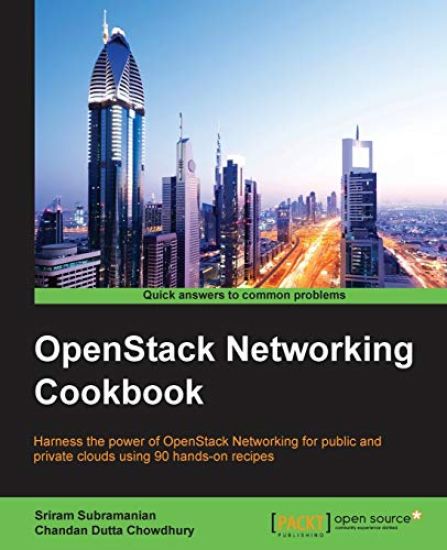
OpenStack Networking Cookbook

OpenStack Networking Cookbook

Sriram Subramanian; Chandan Dutta Chowdhury

Packt Publishing Limited
2015
nidottu
Harness the power of OpenStack Networking for public and private clouds using 90 hands-on recipes About This Book • Build and manage virtual switching, routing, and firewall-based networks in OpenStack using Neutron • Develop plugins and drivers for Neutron to enhance the built-in networking capabilities • Monitor and automate OpenStack networks using tools like Ceilometer and Heat Who This Book Is For This book is aimed at network and system administrators who want to deploy and manage OpenStack-based cloud and IT infrastructure. If you have basic knowledge of OpenStack and virtualization, this book will help you leverage the rich functionality of OpenStack Networking in your cloud deployments. What You Will Learn • Operate OpenStack Networking for public and private clouds • Configure advanced routing services for your workloads • Secure data traffic using firewall-as-a-service capabilities of OpenStack • Discover how to leverage VXLAN to implement SDN in your OpenStack cloud • Monitor the virtual networks using Ceilometer • Develop plugins to enhance and customize OpenStack Networking • Provide HA and VPN connectivity for your virtual machines • Troubleshoot and solve common problems with OpenStack Networking In Detail Networking in OpenStack has evolved from Nova Network to Neutron. This has resulted in a rich suite of networking services available to OpenStack users and administrators. Advanced services such as routers, firewall, and load balancers use building blocks such as network and subnets. Recent improvements support powerful customization using plugins. The evolution of Neutron continues as it integrates with tools like Ceilometer and Heat. This book will explore the built-in capabilities of Neutron to effectively deploy cloud solutions. You will begin with the most fundamental constructs of OpenStack Networking for switching and routing. You will then learn how to provide your tenants with services like firewalls and load-balancers. The step-by-step recipes will help you configure and troubleshoot networking problems in your cloud. This book will also introduce you to advanced topics like Ceilometer, Heat, and other upcoming tools in OpenStack Style and approach The book is full of step-by-step recipes to configure and manage the networking aspects of your OpenStack cloud. In addition to covering basic configuration involved in OpenStack Networking, the books also shares various troubleshooting tips and techniques. As much as possible the book uses OpenStack dashboard (Horizon) to help the user get a feel of real OpenStack Networking
Learning VMware vRealize Automation

Learning VMware vRealize Automation

Sriram Rajendran

Packt Publishing Limited
2016
nidottu
Learn the fundamentals of vRealize Automation to accelerate the delivery of your IT services About This Book • Learn to install the vRealize Automation product in a distributed architecture using a load balancer • Plan backup and recovery strategies for every vRealize automation component • Use vRealize Automation to manage applications and improve operational efficiency using this simple and intuitive guide Who This Book Is For This book is for anyone who wants to start their journey with vRealize Automation. It is your one-stop instruction guide to installing and configuring a distributed setup using NSX load balancer. Regardless of whether or not you have used vRealize Automation before, following the steps provided in each chapter will get you started with the product. What You Will Learn • Understand the basic building blocks of vRealize Automation before embarking on the journey of installation • Familiarize yourself with the requirements and steps that need to be performed during the first phase of the distributed installation • Carry out a functional validation of the first phase of installation before completing the installation • Build a blueprint for vSphere endpoint, an essential step for a successful deployment of a service catalog • Create, configure, and deploy tenants, endpoints, blueprints, and the service catalog • Get to grips with the failover process for all components in vRealize Automation • Learn to configure the NSX loadbalancer for vRealize Orchestrator for high availability • Leverage ASD to develop XaaS (Anything as a Service) in vRealize Automation to deliver valuable competence In Detail With the growing interest in Software Defined Data Centers (SDDC), vRealize Automation offers data center users an organized service catalog and governance for administrators. This way, end users gain autonomy while the IT department stays in control, making sure security and compliance requirements are met. Learning what each component does and how they dovetail with each other will bolster your understanding of vRealize Automation. The book starts off with an introduction to the distributed architecture that has been tested and installed in large scale deployments. Implementing and configuring distributed architecture with custom certificates is unarguably a demanding task, and it will be covered next. After this, we will progress with the installation. A vRealize Automation blueprint can be prepared in multiple ways; we will focus solely on vSphere endpoint blueprint. After this, we will discuss the high availability configuration via NSX loadbalancer for vRealize Orchestrator. Finally, we end with Advanced Service Designer, which provides service architects with the ability to create advanced services and publish them as catalog items. Style and approach This book takes a step-by-step approach, is explained in a conversational and easy-to-follow style, and includes ample screenshots . Each topic is explained sequentially through planning, preparing, installing, configuring, and validating of all vRealize Automation's components.
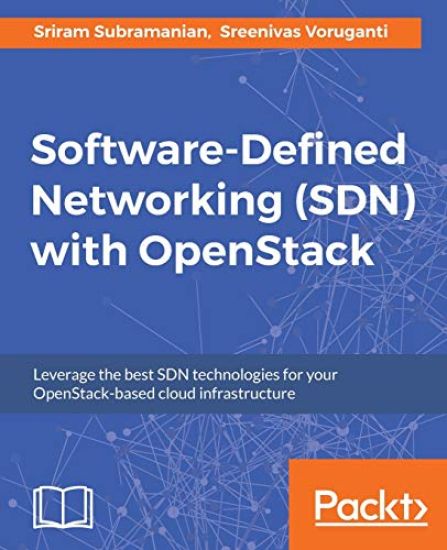
Software-Defined Networking (SDN) with OpenStack

Software-Defined Networking (SDN) with OpenStack

Sriram Subramanian; Sreenivas Voruganti

Packt Publishing Limited
2016
nidottu
Leverage the best SDN technologies for your OpenStack-based cloud infrastructure About This Book • Learn how to leverage critical SDN technologies for OpenStack Networking APIs via plugins and drivers • Champion the skills of achieving complete SDN with OpenStack with specific use cases and capabilities only covered in this title • Discover exactly how you could implement cost-effective OpenStack SDN integration for your organization Who This Book Is For Administrators, and cloud operators who would like to implement Software Defined Networking on OpenStack clouds. Some prior experience of network infrastructure and networking concepts is assumed. What You Will Learn • Understand how OVS is used for Overlay networks • Get familiar with SDN Controllers with Architectural details and functionalities • Create core ODL services and understand how OpenDaylight integrates with OpenStack to provide SDN capabilities • Understand OpenContrail architecture and how it supports key SDN functionality such as Service Function Chaining (SFC) along with OpenStack • Explore Open Network Operating System (ONOS) – a carrier grade SDN platform embraced by the biggest telecom service providers • Learn about upcoming SDN technologies in OpenStack such as Dragonflow and OVN In Detail Networking is one the pillars of OpenStack and OpenStack Networking are designed to support programmability and Software-Defined Networks. OpenStack Networking has been evolving from simple APIs and functionality in Quantum to more complex capabilities in Neutron. Armed with the basic knowledge, this book will help the readers to explore popular SDN technologies, namely, OpenDaylight (ODL), OpenContrail, Open Network Operating System (ONOS) and Open Virtual Network (OVN). The first couple of chapters will provide an overview of OpenStack Networking and SDN in general. Thereafter a set of chapters are devoted to OpenDaylight (ODL), OpenContrail and their integration with OpenStack Networking. The book then introduces you to Open Network Operating System (ONOS) which is fast becoming a carrier grade SDN platform. We will conclude the book with overview of upcoming SDN projects within OpenStack namely OVN and Dragonflow. By the end of the book, the readers will be familiar with SDN technologies and know how they can be leveraged in an OpenStack based cloud. Style and approach A hands-on practical tutorial through use cases and examples for Software Defined Networking with OpenStack.

Business Invention: Business needs you not Investment

Business Invention: Business needs you not Investment

Sriram Ananthan

Independently Published
2019
nidottu
Entrepreneurship and startups are on the rise in this day and age as they have ever been. But just as much as there are opportunities for young people to brainstorm their ideas, present them to the world, and get started on making their dreams come true, it is just as difficult to understand the steps one needs to take to achieve what they have set out to do.Once you have an idea that you believe has the potential to change your target industry and the way people interact with certain products or services, how do you actually go about making it known while also stamping your ownership on it?With Business Invention, you can embark on an educational and informative journey where you will learn how to develop a business idea and build a solid platform using which you can avail future opportunities and maximize the potential behind your thought process.
Sonic Boom Minimization

Sonic Boom Minimization

Sriram Rallabhandi

AV Akademikerverlag
2012
pokkari
Revision with unchanged content. Sonic boom annoyance is an important technical showstopper for commercial supersonic aircraft operations. Choosing the right aircraft shape reflecting the design requirements is a crucial step that is usually simplified in the early stages of design by resorting to a qualitative selection of a baseline configuration based on historical designs and designer's bias. The shortcomings of traditional tools are overcome in this study. A diverse mix of tools is integrated to provide a simple, yet powerful procedure for sonic boom minimization. A shape optimization procedure for supersonic aircraft design using better geometry generation and improved tools is demonstrated. Varying atmospheric conditions could have a huge impact on the sonic boom annoyance metrics and a quick way of obtaining probability estimates of relevant metrics is demonstrated. Theoretical sonic boom minimization equations are generalized; relevant equations are derived to yield increased flexibility in aircraft design process. The unique shape optimization procedure in conjunction with parallel genetic algorithms improves the computational time of the analysis and allows quick exploration of the vast design space.