Kirjahaku
Etsi kirjoja tekijän nimen, kirjan nimen tai ISBN:n perusteella.
550 tulosta hakusanalla Stapleton Laurence

Running in Circles: A Memoir of 12 Marathons and the Journey to Empowerment, is an inspiring story of one woman's journey to overcome the challenges of life and menopause through the transformative power of running.Gillian Stapleton shares her personal journey of taking up running at the age of 47 and training for and completing 12 marathons, to date. Along the way, she shares the struggles and triumphs that she encountered as she pushed herself to achieve her goals, both on the road and in life.Through her candid and heart-warming storytelling, Gillian encourages women of all ages to take up running as a way to improve their physical and mental well-being, and to find strength and purpose in the face of the challenges of life and menopause.Whether you are an experienced runner or a complete beginner, Running in Circles will inspire you to lace up your running shoes and hit the road. Discover the joy and fulfilment that running can bring. Let Running in Circles be your inspiration as you take your first steps towards a healthier, happier, and more fulfilling life.
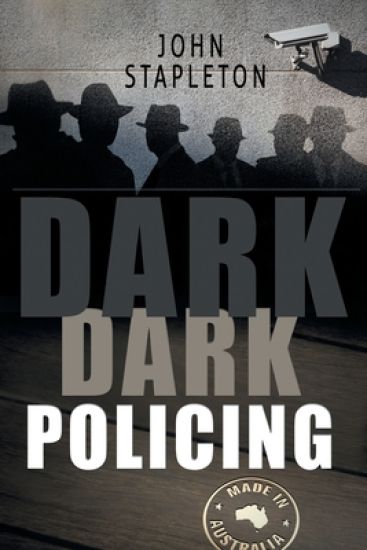
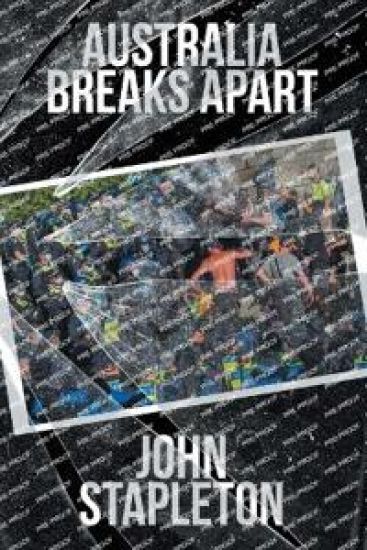
Dark Dark Policing compels the reader's concentration as it documents a nation polarised between the working poor and the uber rich at a time when ultranationalist groups are on the rise.Written with hallucinatory intensity by one of Australia's most experienced journalists, author John Stapleton, it uses novelistic techniques to depict Australia during the early millennial period, a pivotal point in its history. Dark Dark Policing is seen through the eyes of a crumpled old newspaper reporter whose visionary imagination drives him from the arid lands of the interior to confront the nation's plethora of ultra-secret security agencies. He speaks with an incandescent rage of the destruction of his beloved country.Driven by the unalloyed greed of the nation's oligarchy, indifference to the working poor and shocking levels of government incompetence, Australia is a polarised country where revolutionary sentiment and totalitarian impulses now thrive.With incendiary intent and urgent flights of fantasy, entwined with extensive reportage, Stapleton responds savagely to a conservative government's destruction of free speech and the surveillance of journalists.It's 2020, and Australians have endured extremely poor governance at federal, state and local levels for decades, and must live with the consequences. A dishonest government is a paranoid government, and intrusive surveillance of everyone from nationalist groups to the Muslim minority fires indignation at home and abroad.The Australian government had one operating principle: plunder the poor, give to the rich. Overtaxed and over regulated, when the coronavirus hit much of the population did not have the resources to cope. A million workers joined the dole queues within days. This is the story of a once optimistic country.Dark Dark Policing is a must read for anyone interested in the failure of democracies worldwide. It is the final volume in the trilogy which began with Terror in Australia: Workers' Paradise Lost and was followed by Hideout in the Apocalypse. The books can be read separately or together.
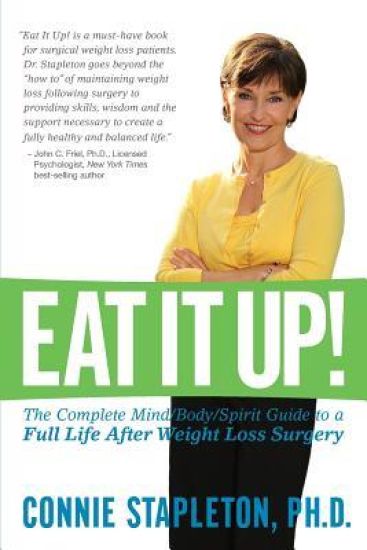
Eat It Up! The Complete Mind/Body/Spirit Guide to a Full Life After Weight Loss Surgery
Connie Stapleton; Connie Stapleton Phd
Mind Body Health Services Inc
2009
nidottu
EAT IT UP is the first book incorporating a whole person, mind/body/spirit approach to prevent weight regain in the months and years following weight loss surgery. Each chapter is devoted to a "Center of Balance," explaining obesity's negative impact on every aspect of a person's life. Eat It Up offers skills and strategies to overcome difficulties following weight loss surgery, resulting in the reward of lifelong happiness and healthy living, free from weight regain.Written with humor, compassion and a "firm and fair" approach, Eat It Up is a must-have for the millions who are obese or overweight. Regaining weight in the months and years following bariatric surgery is a devastating reality - one that can be prevented.
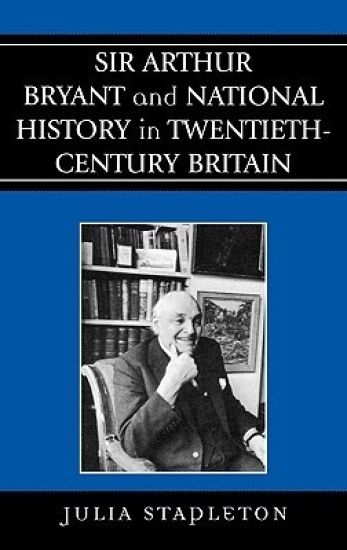
Sir Arthur Bryant and National History in Twentieth-Century Britain
Julia Stapleton
Lexington Books
2005
sidottu
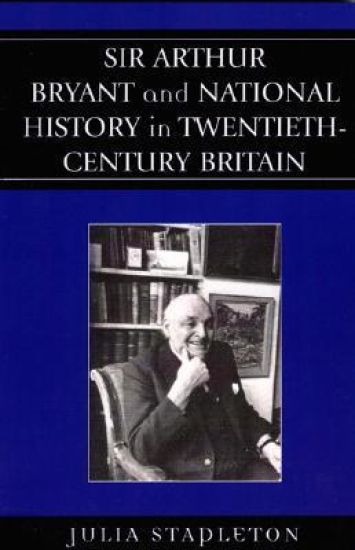
Sir Arthur Bryant and National History in Twentieth-Century Britain is a significant new study of the work of the popular historian and journalist Sir Arthur Bryant (1899-1985). Since his death, scholarly interest in Bryant has focused on his Nazi sympathies in the late 1930s. Julia Stapleton broadens our understanding of the man and the writer. Stapleton illuminates Bryant's romantic ideal of his nation. She explores the historian's success in writing for a broad middlebrow audience, aided by his firsthand experience of two world wars; and she traces the decline of Bryant's authority beginning in the 1960s as the discipline of history diversified and new ties were forged between professional historians and popular readerships. Stapleton suggests that Bryant prefigured and sustained a form of nationalism that remained nascent within the British population (though not always its elites) deep into the twentieth century, as the Falklands episode and the recent resurgence of English national identity well illustrate. Twenty years after his death, when history has scaled new heights of popularity, a study of the historian whose work made perhaps the largest public impact in twentieth-century Britain could not be more timely.
Sir Arthur Bryant and National History in Twentieth-Century Britain
Julia Stapleton
Lexington Books
2006
nidottu
Sir Arthur Bryant and National History in Twentieth-Century Britain is a significant new study of the work of the popular historian and journalist Sir Arthur Bryant (1899-1985). Since his death, scholarly interest in Bryant has focused on his Nazi sympathies in the late 1930s. Julia Stapleton broadens our understanding of the man and the writer. Stapleton illuminates Bryant's romantic ideal of his nation. She explores the historian's success in writing for a broad middlebrow audience, aided by his firsthand experience of two world wars; and she traces the decline of Bryant's authority beginning in the 1960s as the discipline of history diversified and new ties were forged between professional historians and popular readerships. Stapleton suggests that Bryant prefigured and sustained a form of nationalism that remained nascent within the British population (though not always its elites) deep into the twentieth century, as the Falklands episode and the recent resurgence of English national identity well illustrate. Twenty years after his death, when history has scaled new heights of popularity, a study of the historian whose work made perhaps the largest public impact in twentieth-century Britain could not be more timely.
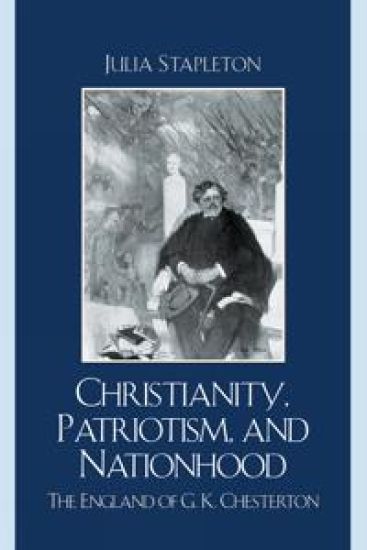
This book links the concepts of patriotism, Christianity, and nationhood in the journalistic writings of G.K. Chesterton and emphasizes their roots within the English attachments that were central to his political and spiritual persona. It further connects Chesterton to the vibrant debate about English national identity in the early years of the twentieth century, which was instrumental in shaping not only his political convictions, but also his religious convictions. Christianity, Patriotism and Nationhood explores his changing conception of the English people from an early, menacing account of their revolutionary potential in the face of plutocracy to the more complex portraits he drew of their character on recognizing their political passivity after the First World War. As Chesterton was above all a journalist, the study considers some of the varied outlets in which he expressed his ideas as a distinctly Edwardian man of letters of a strongly patriotic persuasion. His connection with The Illustrated London News over more than three decades proved pivotal in strengthening his patriotism and discourse of nationhood vilified elsewhere, not least in advanced Liberal organs such asThe Nation. Julia Stapleton shows that he was increasingly distanced by fellow Liberals before 1918, on account of the priority he gave nationhood over the state, and patriotism over citizenship. But she argues that his English loyalties were the last echo of an aspect of Victorian Liberalism that had been progressively eroded by loss of confidence among elites in the democratic aptitude of the English people. Christianity, Patriotism and Nationhood emphasizes that Chesterton upheld a cultural rather than racial conception of national homogeneity, in keeping with the Victorian sources of his thought and the popular patriotism of Edwardian England. It argues that his anti-semitism was ancillary, rather than integral to his understanding of England, and that it was matched by a similar conception of the ant
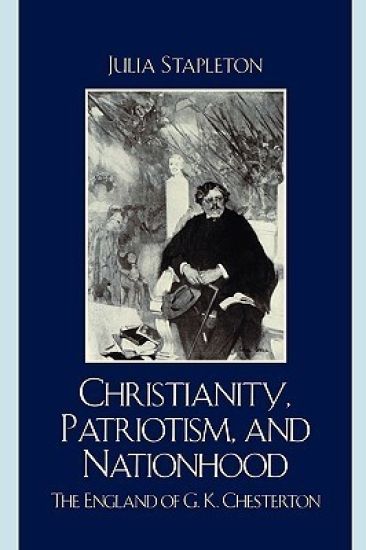
This book links the concepts of patriotism, Christianity, and nationhood in the journalistic writings of G.K. Chesterton and emphasizes their roots within the English attachments that were central to his political and spiritual persona. It further connects Chesterton to the vibrant debate about English national identity in the early years of the twentieth century, which was instrumental in shaping not only his political convictions, but also his religious convictions. Christianity, Patriotism and Nationhood explores his changing conception of the English people from an early, menacing account of their revolutionary potential in the face of plutocracy to the more complex portraits he drew of their character on recognizing their political passivity after the First World War. As Chesterton was above all a journalist, the study considers some of the varied outlets in which he expressed his ideas as a distinctly Edwardian man of letters of a strongly patriotic persuasion. His connection with The Illustrated London News over more than three decades proved pivotal in strengthening his patriotism and discourse of nationhood vilified elsewhere, not least in advanced Liberal organs such asThe Nation. Julia Stapleton shows that he was increasingly distanced by fellow Liberals before 1918, on account of the priority he gave nationhood over the state, and patriotism over citizenship. But she argues that his English loyalties were the last echo of an aspect of Victorian Liberalism that had been progressively eroded by loss of confidence among elites in the democratic aptitude of the English people. Christianity, Patriotism and Nationhood emphasizes that Chesterton upheld a cultural rather than racial conception of national homogeneity, in keeping with the Victorian sources of his thought and the popular patriotism of Edwardian England. It argues that his anti-semitism was ancillary, rather than integral to his understanding of England, and that it was matched by a similar conception of the antithesis between Islam and the patriotic ideal. Stapleton relates his abiding concern for national 'authenticity' to global imperialism, enhanced international co-ordination of states and civil society after 1918, and the increasing role of the British state in defining the nation. This book will be valuable to intellectual and political historians of early-twentieth-century England, as well as to scholars and students of English national identity in the twenty-first century. The author gratefully acknowledges the permission of A.P. Watt Ltd on behalf of the Royal Literary Fund to quote unpublished material in the Chesterton Papers, British Library.
Memorials of the Huguenots in America, with Special Reference to their Emigration to Pennsylvania
A Stapleton
Heritage Books
2009
pokkari
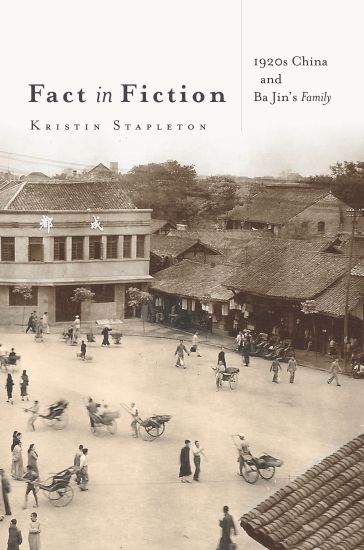
Historical novels can be windows into other cultures and eras, but it's not always clear what's fact and what's fiction. Thousands have read Ba Jin's influential novel Family, but few realize how much he shaped his depiction of 1920s China to suit his story and his politics. In Fact in Fiction, Kristin Stapleton puts Ba Jin's bestseller into full historical context, both to illustrate how it successfully portrays human experiences during the 1920s and to reveal its historical distortions. Stapleton's attention to historical evidence and clear prose that directly addresses themes and characters from Family create a book that scholars, students, and general readers will enjoy. She focuses on Chengdu, China, Ba Jin's birthplace and the setting for Family, which was also a cultural and political center of western China. The city's richly preserved archives allow Stapleton to create an intimate portrait of a city that seemed far from the center of national politics of the day but clearly felt the forces of—and contributed to—the turbulent stream of Chinese history.

Information security has a major gap when cryptography is implemented. Cryptographic algorithms are well defined, key management schemes are well known, but the actual deployment is typically overlooked, ignored, or unknown. Cryptography is everywhere. Application and network architectures are typically well-documented but the cryptographic architecture is missing. This book provides a guide to discovering, documenting, and validating cryptographic architectures. Each chapter builds on the next to present information in a sequential process. This approach not only presents the material in a structured manner, it also serves as an ongoing reference guide for future use.

An identification guide illustrated with line drawings, with descriptions and notes on distribution, ecology, uses and propagation — a very useful handbook for gardeners and nurserymen. Published for the Overseas Development Administration and the Forestry Research Programme, University of Oxford.


Hideout in the Apocalypse is about surveillance and the crushing of Australia's larrikin spirit. The government knew when it introduced the panopticon, universal surveillance, that it would have a devastating impact on the culture.If people know they are being watched they behave differently. Dissent is stifled, conformity becomes the norm, the population easier to manage.At the same time the Australian government has prosecuted the greatest assault on freedom of speech in the nation's history. The media is highly manipulated, and journalists closely monitored. They are now classified as Persons of Interest for the nation's security agencies, an outlandish assault on the Fourth Estate. A democracy in name only, in Australia the war on terror has become a war on the people's right to know, justifying an unprecedented expansion of state power. Forced by a plethora of new laws targeting journalists to use novelistic techniques, in his latest book veteran news reporter John Stapleton confirms the old adage, truth is stranger than fiction.