Kirjahaku
Etsi kirjoja tekijän nimen, kirjan nimen tai ISBN:n perusteella.
1000 tulosta hakusanalla Stephen Booth
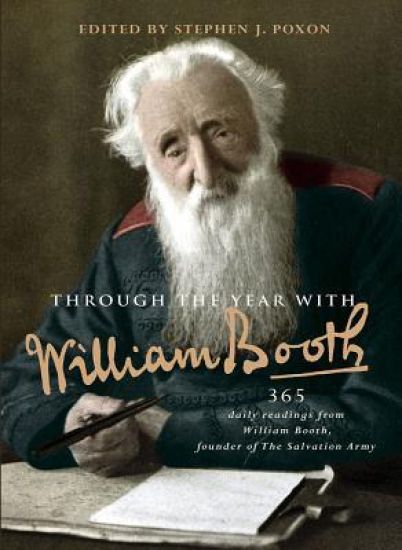
William Booth - pawnbroker's assistant, firebrand preacher, advocate of women's rights, friend of the poor, confidant of statesmen, politicians and royalty, father of eight children, champion of the marginalised, and founder and first General of The Salvation Army. General Booth's courage, oratory and passion changed Victorian Britain. He resolutely ignored his critics - including those who decried him as the Anti-Christ - and reached out to those who considered themselves well outside the concern of Almighty God. Prayer and practicality were his hallmarks: he ridiculed the idea of preaching to a beggar while that beggar was cold and hungry. William Booth worked tirelessly, campaigning, researching, negotiating, adapting music-hall songs - and writing. This book introduces us to his heart and convictions. Here we find the urgency, thought and humanity which drove him on.
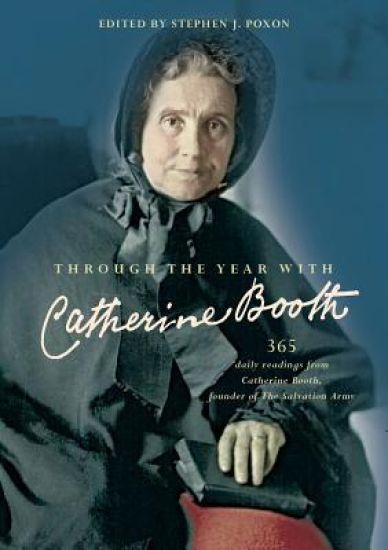
Daily readings with Scripture verses and prayers, based on the life and ministry of Catherine Booth, wife of General Booth and co-founder of The Salvation Army, often called 'The mother of The Salvation Army'. An ardent temperance campaigner, she and William developed together the firm convictions about salvation and poverty that led to the formation of the Army. Catherine Booth was eloquent and compelling in speech, and articulate and devastatingly logical in writing. At first, Catherine and her husband had shared a ministry as traveling evangelists, but then she came into great demand as a preacher in her own right, especially among the well-to-do. Although it was virtually unknown at that point for women to speak in public, and despite her nervousness, she developed a considerable preaching ministry. Catherine was both a woman and a fine preacher, a magnetic combination that attracted large numbers to hear her. This book of daily readings introduces us to Catherine's heart and convictions. Here we find the passion, urgency, thought and humanity which drove her on. Each devotional will take one page of the format above. Catherine's succinct, direct style is ideally suited to this form.
William Booth - pawnbroker's assistant, firebrand preacher, advocate of women's rights, friend of the poor, confidant of statesmen, politicians and royalty, father of eight children, champion of the marginalised, and founder and first General of The Salvation Army. General Booth's courage, oratory and passion changed Victorian Britain. He resolutely ignored his critics - including those who decried him as the Anti-Christ - and reached out to those who considered themselves well outside the concern of Almighty God. Prayer and practicality were his hallmarks: he ridiculed the idea of preaching to a beggar while that beggar was cold and hungry. William Booth worked tirelessly, campaigning, researching, negotiating, adapting music-hall songs - and writing. This book introduces us to his heart and convictions. Here we find the urgency, thought and humanity which drove him on.
The Puritans Thomas & Stephen Tracy: A Personal Quest for Family Lineage
Martin Booth Tracy Ph. D.
Createspace Independent Publishing Platform
2017
nidottu
Invasive Plant Ecology in Natural and Agricultural Systems
Barbara Booth; Stephen Murphy; Clarence Swanton
CABI Publishing
2010
nidottu
Bringing together reasons for why and where weeds occur and the ecological importance of weed management, this updated edition (previously entitled "Weed Ecology") provides an in-depth study of plant ecology with greater coverage of invasive plant biology and more concise statistics. In a new, larger format, printed in two colours, and illustrated throughout with figures, tables and case studies it is an essential text for students in plant ecology, agriculture and horticulture.
A Narrow View Across the Upper Thames Valley in Late Prehistoric and Roman Times
Paul Booth; Kate Brayne; Derek Cater; Hilary Cool; Rowena Gale; John Giorgi; Malcolm Lyne; Hilary Major; Gemma Martin; James Rackham; Stephen Rowland; Susan Tyler; Alan Vince; Tania Wilson; Tom Wilson
BAR Publishing
2008
nidottu
The report on excavations which took place as a result of the laying of a gas pipeline from Charlgrove to Ilsley. Two large and thirty-two small sites were identified, predominantly late prehistoric in date, with Iron Age deposits being the most abundant. The two larger sites were occupied from the Iron Age into the early Roman period.
Take Three Colours
Julie King; Matthew Palmer; Geoff Kersey; Grahame Booth; Stephen Coates
Search Press Ltd
2021
nidottu
Learn to paint colourful watercolours using only three colours in this collection of projects, tips and techniques from the innovative Take Three Colours series. Each of the 25 projects explores a variety of watercolour techniques and walks the reader through a sequence of clear steps using a selection of three pure colours and their many mixes, and only three brushes to complete the work. Project themes include landscapes, seascapes, flowers, mountains, lakes and rivers and snow scenes. There is also a comprehensive glossary at the end of the book, exploring some of the most commonly used terms and techniques featured in the book.
BOOTLEGGING ON THE BAYOU: Michael Demill, a wounded veteran of the Great War, returned home to discover those he left behind had abandoned him. Impoverished and squeaking out a living harvesting wild oysters, he is given an opportunity to become wealthy.Demill, fluent in Spanish, French and English, uses his seamanship skills acquired as a professional fisherman to become an importer of rum during the American Prohibition. He soon discovers that bootlegging is both highly profitable and very dangerous. Once in, retiring from the business is complicated, but a beautiful woman provides a strong motivation.ABOUT THE AUTHOR: Stephen Estopinal grew up in the swamps and bayous of Louisiana, in an area heavily settled by Canary Islanders in 1778. Calling upon family oral history and extensive research, he has woven a tale of adventure and intrigue in Southeast Louisiana.
Between 1920 and 1933 the issue of prohibition proved to be the greatest challenge to Canada-U.S. relations. When the United States adopted national prohibition in 1920—ironically, just as Canada was abandoning its own national and provincial experiments with prohibition—U.S. tourists and dollars promptly headed north and Canadian liquor went south. Despite repeated efforts, Americans were unable to secure Canadian assistance in enforcing American prohibition laws until 1930. Bootleggers and Borders explores the important but surprisingly overlooked Canada-U.S. relationship in the Pacific Northwest during Prohibition. Stephen T. Moore maintains that the reason Prohibition created such an intractable problem lies not with the relationship between Ottawa and Washington DC but with everyday operations experienced at the border level, where foreign relations are conducted according to different methods and rules and are informed by different assumptions, identities, and cultural values. Through an exploration of border relations in the Pacific Northwest, Bootleggers and Borders offers insight into not only the Canada-U.S. relationship but also the subtle but important differences in the tactics Canadians and Americans employed when confronted with similar problems. Ultimately, British Columbia's method of addressing temperance provided the United States with a model that would become central to its abandonment and replacement of Prohibition.
The Consolation of Boethius as Poetic Liturgy
Stephen Blackwood
Oxford University Press
2022
nidottu
Throughout Antiquity and the Middle Ages, literature was read with the ear as much as with the eye: silent reading was the exception; audible reading, the norm. This highly original book shows that Boethius's Consolation of Philosophy - one of the most widely-read texts in Western history-aims to affect the listener through the designs of its rhythmic sound. Stephen Blackwood argues that the Consolation's metres are arranged in patterns that have a therapeutic and liturgical purpose: as a bodily mediation of the text's consolation, these rhythmic patterns enable the listener to discern the eternal in the motion of time. The Consolation of Boethius as Poetic Liturgy vividly explores how in this acoustic encounter with the text philosophy becomes a lived reality, and reading a kind of prayer.
The Consolation of Boethius as Poetic Liturgy
Stephen Blackwood
Oxford University Press
2015
sidottu
Throughout Antiquity and the Middle Ages, literature was read with the ear as much as with the eye: silent reading was the exception; audible reading, the norm. This highly original book shows that Boethius's Consolation of Philosophy - one of the most widely-read texts in Western history - aims to affect the listener through the designs of its rhythmic sound. Stephen Blackwood argues that the Consolation's metres are arranged in patterns that have a therapeutic and liturgical purpose: as a bodily mediation of the text's consolation, these rhythmic patterns enable the listener to discern the eternal in the motion of time. The Consolation of Boethius as Poetic Liturgy vividly explores how in this acoustic encounter with the text philosophy becomes a lived reality, and reading a kind of prayer.
The Swallows in the Boathouse: A Political Satire
Stephen L. W. Greene
Createspace Independent Publishing Platform
2015
nidottu
Cardinal Martini approaches the figure of Stephen, the first martyr, by beginning with what is described in Chapters 6-8 of the Acts of the Apostles, 'an impressive document of a man's retrospective view in the face of death, of himself, the history of salvation, of what Christ has meant for him and the future to which he has been called.' Reflection on the figure of Stephen is important for the entire community of believers; in fact with Stephen 'the Church feels the seriousness of being both witness and servant: It understands that abandoning oneself to God does not save one from death, but it does allow one to pass through death, contemplating the glory of God; it recognises what it is that God saves us and does not save us from and what he prepares us for.'The richness of these meditations lies in this summary of things. It lies in the experience of a man who is approaching the revelation of the proximity of a transcendent and immanent God and at the same time arrives 'at the culmination of his mission as servant witness, ' experiencing the mystery that he proclaims, contemplates and adores, in his very own body.