In this book, the author examines two approaches to the analysis of China's industrialization efforts between 1870 and 1911: the generally accepted domestic-limitation approach and the alternative foreign-intervention approach. He points to the year 1897 as a turning point in China's development.
Originally published in 1991, although written in the 1970s when the New Orthodoxy was exerting its most powerful influence upon students of the period, this book examines what changed and what did not change in Germany as a result of the Revolution of 1918. It discusses in particular, aspects of German life which the Social Democrats had singled out for change, and specifically political, land, and educational reform and the liberalization of the cultural and artistic climate.
Originally published in 1991, although written in the 1970s when the New Orthodoxy was exerting its most powerful influence upon students of the period, this book examines what changed and what did not change in Germany as a result of the Revolution of 1918. It discusses in particular, aspects of German life which the Social Democrats had singled out for change, and specifically political, land, and educational reform and the liberalization of the cultural and artistic climate.
Trust in government dropped to a near-record low during the 1992 election as Ross Perot’s startling campaign illustrated all too graphically. Stephen Craig shows the trajectory of this popular discontent over the years and predicts that the “confidence gap” is not likely to close until citizens adjust their perceptions and expectations of government—a shift that would represent a major change in our political culture. Blending survey data and interviews with both elites and nonelites, Craig gives us a nuanced view of how people assess their leaders, how leaders see themselves, and how opinions converge and diverge on the issues that matter most: the economy, the environment, and, above all, the quality of our democracy.
Trust in government dropped to a near-record low during the 1992 election as Ross Perot’s startling campaign illustrated all too graphically. Stephen Craig shows the trajectory of this popular discontent over the years and predicts that the “confidence gap” is not likely to close until citizens adjust their perceptions and expectations of government—a shift that would represent a major change in our political culture. Blending survey data and interviews with both elites and nonelites, Craig gives us a nuanced view of how people assess their leaders, how leaders see themselves, and how opinions converge and diverge on the issues that matter most: the economy, the environment, and, above all, the quality of our democracy.
In 1992, it was Bill Clinton's New Covenant. In 1994, it was the Republicans' Contract with America. In 1996, it is likely to be a whole new set of circumstances. Nonetheless, one theme will prevail: Citizens and their government distrust one another, and it will take major changes on both sides to restore confidence in the relationship.Broken Cont
Originally published in 1991, this volume examines Hegel’s political philosophy from the perspective of his argument for constitutional monarchy. It offers an interpretation of Hegelian theory that is relevant for the understanding of modern republican constitutions. Modern republican theories are assessed together with those of Plato, Kant and Marx in order to put Hegel’s model to the most rigorous test. The arguments are based on fresh analysis of Hegel’s system and on new translations of key passages in Hegel’s text.
Originally published in 1991, this volume examines Hegel’s political philosophy from the perspective of his argument for constitutional monarchy. It offers an interpretation of Hegelian theory that is relevant for the understanding of modern republican constitutions. Modern republican theories are assessed together with those of Plato, Kant and Marx in order to put Hegel’s model to the most rigorous test. The arguments are based on fresh analysis of Hegel’s system and on new translations of key passages in Hegel’s text.
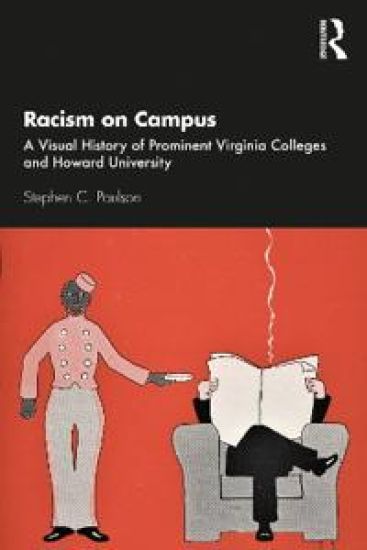
Drawing on content from yearbooks published by prominent colleges in Virginia, this book explores changes in race relations that have occurred at universities in the United States since the late 19th century. It juxtaposes the content published in predominantly White university yearbooks to that published by Howard University, a historically Black college. The study is a work of visual sociology, with photographs, line drawings and historical prints that provide a visual account of the institutional racism that existed at these colleges over time. It employs Bonilla-Silva’s concept of structural racism to shed light on how race ordered all aspects of social life on campuses from the period of post-Civil War Reconstruction to the present. It examines the lives of the Black men and women who worked at these schools and the racial attitudes of the White men and women who attended them. As such, Racism on Campus will appeal to scholars of sociology, history and anthropology with interests in race, racism and visual methods.
Drawing on content from yearbooks published by prominent colleges in Virginia, this book explores changes in race relations that have occurred at universities in the United States since the late 19th century. It juxtaposes the content published in predominantly White university yearbooks to that published by Howard University, a historically Black college. The study is a work of visual sociology, with photographs, line drawings and historical prints that provide a visual account of the institutional racism that existed at these colleges over time. It employs Bonilla-Silva’s concept of structural racism to shed light on how race ordered all aspects of social life on campuses from the period of post-Civil War Reconstruction to the present. It examines the lives of the Black men and women who worked at these schools and the racial attitudes of the White men and women who attended them. As such, Racism on Campus will appeal to scholars of sociology, history and anthropology with interests in race, racism and visual methods.
I was delighted when I learned in the fall of 2005 that Steve Cowin was working on a textbook in biomechanics. Steve and I were in the same department at Tulane University in the 1970s, and under his influence I learned the beauty and power of continuum mechanics as a means to better understand the musculoskeletal system. When I began teaching courses in biomechanics during that decade, it was natural to teach the material from a continuum mechanics persp- tive. Over the years I have used a variety of continuum mechanics texts, but, for the most part, I have had to find the biomedical examples I used directly from the research literature. I have now had a chance to review a draft of Tissue Mechanics by Cowin and Doty, and it exceeds my high expectations. The material includes a rigorous and comprehensive introd- tion to continuum mechanics oriented toward biomechanics. Indeed, all of the foundation t- ics for continuum models of biological materials are covered. This material is illustrated through applications to the hard and soft tissues of the human body. Steve Cowin is now one of the leading researchers in the mechanics of bone, so one would expect the chapters on bone tissue and bone tissue adaptation to be of a very high order. But the presentation on collagen and cartilage mechanics is also excellent. Their presentation of finite deformation mechanics and its application to tendons and ligaments is one of the most accessible in the literature.
South Asian Buddhism presents a comprehensive historical survey of the full range of Buddhist traditions throughout South Asia from the beginnings of the religion up to the present. Starting with narratives on the Buddha’s life and foundational teachings from ancient India, the book proceeds to discuss the rise of Buddhist monastic organizations and texts among the early Mainstream Buddhist schools. It considers the origins and development of Mahayana Buddhism in South Asia, surveys the development of Buddhist Tantra in South Asia and outlines developments in Buddhism as found in Sri Lanka and Nepal following the decline of the religion in India. Berkwitz also importantly considers the effects of colonialism and modernity on the revivals of Buddhism across South Asia in the nineteenth and twentieth centuries.South Asian Buddhism offers a broad, yet detailed perspective on the history, culture, and thought of the various Buddhist traditions that developed in South Asia. Incorporating findings from the latest research on Buddhist texts and culture, this work provides a critical, historically based survey of South Asian Buddhism that will be useful for students, scholars, and general readers.
South Asian Buddhism presents a comprehensive historical survey of the full range of Buddhist traditions throughout South Asia from the beginnings of the religion up to the present. Starting with narratives on the Buddha’s life and foundational teachings from ancient India, the book proceeds to discuss the rise of Buddhist monastic organizations and texts among the early Mainstream Buddhist schools. It considers the origins and development of Mahayana Buddhism in South Asia, surveys the development of Buddhist Tantra in South Asia and outlines developments in Buddhism as found in Sri Lanka and Nepal following the decline of the religion in India. Berkwitz also importantly considers the effects of colonialism and modernity on the revivals of Buddhism across South Asia in the nineteenth and twentieth centuries.South Asian Buddhism offers a broad, yet detailed perspective on the history, culture, and thought of the various Buddhist traditions that developed in South Asia. Incorporating findings from the latest research on Buddhist texts and culture, this work provides a critical, historically based survey of South Asian Buddhism that will be useful for students, scholars, and general readers.
Epidemiologic Methods: The Essentials is a concise, but thorough volume that provides a solid grounding in core methodologic issues. The book takes a streamlined approach on cohort studies, case-control studies, prevalence studies, randomized trials, demographic studies of morbidity and mortality, ecologic studies, screening, effect modification, bias and confounding. Organized according to study design, with each chapter building on those preceding it, the book provides detailed examples throughout, using data tables and graphs to reinforce methodologic points.
The 21st Century brings all new rules. Entrepreneurs are challenging conventional wisdom and thinking outside the box. One of the first challenges involves challenging the assumption that a business has to be big to be successful. While most of the 20th century heralded big businesses, it is clear that businesses no longer have to be big to do big business. Now it is possible for a handful of people to operate a global business from virtually any place on the planet. Today, the keyboard has overtaken the boardroom. Financial markets, alliances, and joint ventures have eliminated the need for entrepreneurs to put up substantial capital investments. Today's businesses are driven by ideas, innovation, and execution. This book will show entrepreneurs and business leaders will provide CEOs and entrepreneurs with the tools that they will need to become leaders in their market.
EPA insiders offer a behind-the-scenes look at Agency review of Premanufacture Notifications (PMNs) for new chemical substances. Each year the EPA receives more than 2,500 PMNs for new chemical substances; under the Toxic Substances Control Act, the EPA may keep a PMN substance off the market if it appears to pose unreasonable risk. In many cases submitters fail to supply the Agency with all of the information necessary to perform a human health and environmental safety assessment to estimate risk. When that happens, Agency scientists fill in the blanks themselves with best estimatesoften to the submitter's disadvantage. What chemical information would the EPA like to receive, and how is this information used to assess a PMN chemical? What can you do to avoid the need for Agency estimates and to facilitate accurate Agency assessments and decisions? What impact does the EPA's pollution prevention program have upon the review process, and what can you do about it? Until now, submitters had to learn the answers to these and other crucial questions concerning the PMN process the hard waythrough trial and error coupled with minimal technical guidance from the Agency. This valuable technical guide, written by two EPA scientists, helps you reduce the learning curve and facilitates the EPA's accurate review of your new chemical. It provides: *A blow-by-blow account of the EPA scientific review procedure and the rationale behind each step in the process *A detailed review of physicochemical information the EPA uses, how to measure and estimate the critical information, and how the EPA uses the information to assess risk *An in-depth, practical look at the EPA's pollution prevention program as it relates to the PMN review process *Insider tips on additional dataincluding frequently overlooked product benefitsthat help Agency reviewers weigh your product's benefits in their assessments. Avoid conservative estimates and worst-case scenarios that may lead to unnecessary regulation of your new chemical. Find out how to prepare the perfect PMN in Premanufacture Notification.
A practical guide to taking your company publicsuccessfully This updated version of the Ernst & Young Guide to Taking Your Company Public looks at the IPO as a milestone in a larger process called The Value Journeysm, the basis for the work of the Ernst & Young Center for Strategic Transactions®, a business advisory resource for CEOs. This practical book is designed to help you determine whether an IPO is the right move for your company and addresses the major leadership challenges that CEOs face. It describes how to plan your IPO journey and chart your business strategy, focusing on the steps you must take to succeed during and after the IPO event and fulfill the critical need to continuously innovate and renew your company.
An introduction to classical biostatistical methods in epidemiology Biostatistical Methods in Epidemiology provides an introduction to a wide range of methods used to analyze epidemiologic data, with a focus on nonregression techniques. The text includes an extensive discussion of measurement issues in epidemiology, especially confounding. Maximum likelihood, Mantel-Haenszel, and weighted least squares methods are presented for the analysis of closed cohort and case-control data. Kaplan-Meier and Poisson methods are described for the analysis of censored survival data. A justification for using odds ratio methods in case-control studies is provided. Standardization of rates is discussed and the construction of ordinary, multiple decrement and cause-deleted life tables is outlined. Sample size formulas are given for a range of epidemiologic study designs. The text ends with a brief overview of logistic and Cox regression. Other highlights include: *Many worked examples based on actual data *Discussion of exact methods *Recommendations for preferred methods *Extensive appendices and references Biostatistical Methods in Epidemiology provides an excellent introduction to the subject for students, while also serving as a comprehensive reference for epidemiologists and other health professionals. For more information, visit www.wiley.com/mathematics
How to avoid legal liability and prevent costly litigation Youre notified that your restaurant is being sued: what should you do? A guest is choking in your restaurants dining room: are you required to assist? If the assistance causes further injury, who is responsible? Your franchiser demands to see daily receipt totals: can you say no? Restaurant Law Basics prepares you to make the right decisions in these critical situations and hundreds of others. To avoid costly legal problems in your restaurant, begin with step one: read Restaurant Law Basics. This completely practical, jargon-free guide gives you the tools you need to protect your restaurant from legal exposure of every kind. It prepares restaurant managers to comply with the law and avoid or limit liability in virtually any situationfrom hiring and managing employees and dealing with customer complaints to ensuring safety and security, obeying regulatory requirements, and much more. Restaurant Law Basics features: *Managers Briefs that focus on critical legal aspects of your operations *Realistic scenarios that are analyzed to help prepare you to make the right decisions in challenging situations *Checklists to help you avoid liability before any incident occurs *A companion Web site that provides additional resources, training assistance, and more The Restaurant Basics Series provides restaurant owners and managers with expert advice and practical guidance on critical issues in restaurant operation and management. Written by leading authorities in each field, these easy-to-use guides offer instant access to authoritative information on every aspect of the restaurant business and every type of restaurantindependent, chain, or franchise.
A comprehensive practice-based guide to the art of drawing, Drawing: A Complete Guide provides a chapter-by-chapter overview of key elements of drawing (such as line, shape, tone and value) before addressing the different genres (such as still life and portraiture). Written in an accessible and encouraging manner, Drawing: A Complete Guide seeks to build the learner’s confidence in artistic exploration as well as developing his or her practical abilities. An introductory chapter makes the case that anyone can draw, while the concluding chapter, ‘Looking at Drawings: Critical Thinking and Critiques’, equips learners with the necessary critical tools to develop their craft independently. Richly illustrated with examples of artists’ drawings and the author’s own works, Drawing: A Complete Guide also includes student work to make the practice of drawing more accessible and achievable.