Now in its fifth edition, Politics: The Basics explores the systems, movements and issues at the cutting edge of modern politics. A highly successful introduction to the world of politics, it offers clear and concise coverage of a range of issues and addresses fundamental questions such as:• Why does politics matter?• Why obey the state?• What are the key approaches to power?• How are political decisions made?• What are the current issues affecting governments worldwide?Accessible in style and topical in content, the fifth edition has been fully restructured to reflect core issues, systems and movements that are at the centre of modern politics and international relations. Assuming no prior knowledge in politics, it is ideal reading for anyone approaching the study of politics for the first time.
While notions of what constitutes critical thinking vary, educators, politicians, and employers all agree that critical thinking skills are necessary for well-educated citizens and a key capacity for successful employees. In Teaching for Critical Thinking, Stephen Brookfield explores how students learn to think critically and what methods teachers can use to help. In his engaging, conversational style, Brookfield establishes a basic protocol of critical thinking that focuses on students uncovering and checking assumptions, exploring alternative perspectives, and taking informed actions. The book fosters a shared understanding of critical thinking and helps all faculty adapt general principles to specific disciplinary contexts. Drawing on thousands of student testimonies, the book identifies the teaching methods and approaches that are most successful when teaching students to think, read, and write critically. Brookfield explains when to make critical thinking the classroom focus, how to encourage critical discussions, and ways to reach skeptical students. He outlines the basic components required when reviewing a text critically and shows how to give highly specific feedback. The book also addresses how to foster critical thinking across an institution, beginning with how it can be explained in syllabi and even integrated into strategic plans and institutional missions. Brookfield stresses the importance of teachers modeling critical thinking and demonstrates himself how to do this. Crammed with activities and techniques, this how-to guide is applicable in face-to-face, online, and hybrid classrooms of all sizes. Each exercise includes detailed instructions, examples from different academic disciplines, and guidance for when and how to best use each activity. Any reader will come away with a pedagogic tool kit of new ideas for classroom exercises, new approaches to designing course assignments, and new ways to assess students’ ability to practice critical analysis.
LISTEN FIRST! Shhh… Listen. Hear that? That's the sound of your business. The conversations taking place online and in the marketplace tell you nearly everything you need to know about your company and your customers?what people are saying about you, how they use your products, whether they'll buy or recommend your product, and how they respond to your marketing and advertising. Listening provides unrivaled insight. If you do it right, you'll have a decisive edge over your competition as you adapt faster to customer needs and market changes. Listening is ultimately about gaining business advantage. Based on authoritative research from the Adver-tising Research Foundation, Listen First! delivers a playbook for marketing and advertising success-fully in our conversational era. This book explains what listening is, how to do it, how it's used, and where it's headed. Done well, social media listening uncovers pivotal insights that guide marketing as well as product development, customer service, and just about all business functions that touch customers and other stakeholders. You'll learn the tools, winning plays, and proven tactics for listening so that you can: Understand what customers are thinking, feeling, and doing in their lives that affect demand and interest in your products or servicesIdentify threats to your reputationSee how customers position competing brands in their minds, not as advertisers position themSense market shifts that threaten existing business or present new opportunitiesDevelop new products or refine your current lineup by bringing customer voices into R&D, innovation, and concept testingMake your messages more relevant and sharpen targeting by directing messages to people according to their conversational interestsKeep sales humming, even when business conditions might be unfavorable?or better predict short-term sales based on the volume and specifics of conversational activityDetermine competitors' strengths and weaknessesPlan and buy advertising based on where conversations are happeningOrganize your company to maximize listening's value across all its departments Listen First! gives you evidence, research, and expert viewpoints that will enable you to take advantage of listening and build your business over the short term and for the long haul. If you want your company to have a sustainable business advantage in an uncertain world, it is time to start?and act on?listening.
“Solomon’s fascinating and sweeping history of the legal fight over mandatory school prayers is compelling, judicious, and elegantly written. Fabulous!”—David Rudenstine, Dean, Benjamin N. Cardozo School of Law, Yeshiva University“Stephen Solomon’s Ellery’s Protest provides a brilliant analysis of a major Supreme Court decision that redefined the relationship between church and state almost a half century ago. This study goes well beyond simply offering a gripping account of the course of litigation that brought before the Justices the contentious issue of prayer and Bible reading in public schools, though the thoroughness of that account would merit careful reading by itself. Especially impressive is the author’s deep probing of hitherto neglected sources, and invaluable primary material including extensive direct contact with the plaintiff, the ‘Ellery’ of the book’s title. Finally, and perhaps most impressive, is Solomon’s careful placement of the issue and the case in a far broader context that is as critical to national life and policy today as it was four and a half decades ago when the high Court first tackled these questions.”—Robert O’Neil, Professor of Law, University of VirginiaGreat legal decisions often result from the heroic actions of average citizens. Ellery’s Protest is the story of how one student’s objection to mandatory school prayer and Bible reading led to one of the most controversial court cases of the twentieth century—and a decision that still reverberates in the battle over the role of religion in public life.Abington School District v. Schempp began its journey through the nation’s courts in 1956, when sixteen-year-old Ellery Schempp protested his public school’s compulsory prayer and Bible-reading period by reading silently from the Koran. Ejected from class for his actions, Schempp sued the school district. The Supreme Court’s decision in his favor was one of the most important rulings on religious freedom in our nation’s history. It prompted a conservative backlash that continues to this day, in the skirmishes over school prayer, the teaching of creationism and intelligent design, and the recitation of the Pledge of Allegiance with the phrase “under God.”Author Stephen D. Solomon tells the fascinating personal and legal drama of the Schempp case: the family’s struggle against the ugly reactions of neighbors, and the impassioned courtroom clashes as brilliant lawyers on both sides argued about the meaning of religious freedom. But Schempp was not the only case challenging religious exercises in the schools at the time, and Ellery’s Protest describes the race to the Supreme Court among the attorneys for four such cases, including one involving the colorful atheist Madalyn Murray.Solomon also explores the political, cultural, and religious roots of the controversy. Contrary to popular belief, liberal justices did not kick God out of the public schools. Bitter conflict over school Bible reading had long divided Protestants and Catholics in the United States. Eventually, it was the American people themselves who removed most religious exercises from public education as a more religiously diverse nation chose tolerance over sectarianism. Ellery’s Protest offers a vivid account of the case that embodied this change, and a reminder that conservative justices of the 1950s and 60s not only signed on to the Schempp decision, but strongly endorsed the separation of church and state.
The most important topics in the theory and application of complex variables receive a thorough, coherent treatment in this introductory text. Intended for undergraduates or graduate students in science, mathematics, and engineering, this volume features hundreds of solved examples, exercises, and applications designed to foster a complete understanding of complex variables as well as an appreciation of their mathematical beauty and elegance. Prerequisites are minimal; a three-semester course in calculus will suffice to prepare students for discussions of these topics: the complex plane, basic properties of analytic functions (including a rewritten and reorganized discussion of Cauchy's Theorem), analytic functions as mappings, analytic and harmonic functions in applications, and transform methods. Useful appendixes include tables of conformal mappings and Laplace transforms, as well as solutions to odd-numbered exercises.Students and teachers alike will find this volume, with its well-organized text and clear, concise proofs, an outstanding introduction to the intricacies of complex variables.
In the first millennium AD, the Classic Maya created courtly societies in and around the Yucatan Peninsula that have left some of the most striking intellectual and aesthetic achievements of the ancient world, including large settlements like Tikal, Copan, and Palenque. This book is the first in-depth synthesis of the Classic Maya. It is richly informed by new decipherment of hieroglyphs, decades of intensive excavation and survey. Structured by categories of person in society, it reports on kings, queens, nobles, gods, and ancestors, as well as the many millions of farmers and other figures who lived in societies predicated on sacred kingship and varying political programs. The Classic Maya presents a tandem model of societies bound by moral covenants and convulsed by unavoidable tensions between groups, affected by demographic trends and changing environments. It will serve as the basic source for all readers interested in the civilisation of the Maya.
A Child's Story is memories transformed into an exciting story that impacts all of your emotions. Too True For Lies has volumes of twist and turns. It will make you look back and forth through the pages and you will say at the end ""No Way!"" The main character David tells his story as he struggles through an ever changing environment. We can agree life isn't all ways trouble-free but it has more than its share of troubles for the child that goes through it in the absence of an adult. Written by Stephen D. Matthews
From the suburbs to the inner-cities, from a secluded rural hell to an act of madness cheered on by millions, this shocking and unforgettable anthology pierces the heart of a world where murder is measured by degree, but dead is always just dead.
This study guide explores the origins and reception history of the Book of Revelation and its continuing fascination for readers from both religious and secular backgrounds. Stephen D. Moore examines the transcultural impact Revelation has had, both within and beyond Christianity, not only on imaginings of when and how the world will end, but also on imaginings of the risen Jesus, heaven and hell, Satan, the Antichrist, and even Mary the mother of Jesus.Moore traces Revelation’s remarkable reception through the ages, with special emphasis on its twentieth and twenty-first century appropriations, before resituating the book in its original context of production: Who wrote it, where, when, why, and modelled on what? The study guide culminates with a miniature commentary on the entire text of Revelation, weaving together liberationist, postcolonial, feminist, womanist, queer, and ecological approaches to the book in order to discern what it might mean for contemporary readers and communities concerned with issues of social justice.
This study guide explores the origins and reception history of the Book of Revelation and its continuing fascination for readers from both religious and secular backgrounds. Stephen D. Moore examines the transcultural impact Revelation has had, both within and beyond Christianity, not only on imaginings of when and how the world will end, but also on imaginings of the risen Jesus, heaven and hell, Satan, the Antichrist, and even Mary the mother of Jesus.Moore traces Revelation’s remarkable reception through the ages, with special emphasis on its twentieth and twenty-first century appropriations, before resituating the book in its original context of production: Who wrote it, where, when, why, and modelled on what? The study guide culminates with a miniature commentary on the entire text of Revelation, weaving together liberationist, postcolonial, feminist, womanist, queer, and ecological approaches to the book in order to discern what it might mean for contemporary readers and communities concerned with issues of social justice.
Financial independence is a goal a lot of people aim for. This book is for Barbers. Cosmetologist, Make-up Artist, Nail Technicians and anyone else in the beauty industry. My goal is to help them learn about the ways in which they can achieve their goals of being financially independent. Although I am speaking to the beauty industry, their is something for everyone in this book regardless of their profession. This book book is equipped with simple and consistent strategies that can help you understand the concepts of accumulating wealth. The tools and vehicles you can use to change your mindset and help you focus on the right path to financial management and ultimately financial freedom.
With over 40 years of industry experience, Steve Mayer takes the complicated subject of financial planning and explains it in an easy to read format that all ages and levels of income can relate to . Using metaphors for your asset groups (the buckets), your advisors (the shovels), your life (the beach) and your financial plan (the map), Steve walks you through the process of planning and the things you should be thinking about in order to achieve your financial goals, not just for your retirement, but to meet you and your families goals in life .As illustrated in the book, Steve uses his personal story to describe using 5 Buckets, 4 Shovels, a Beach and a Map as his own financial planning strategy. As his assets and family grew, filling the right buckets and having the right shovels in place became increasingly important . In the book, Steve explains how even buying life insurance for his children at a young age helped bridge the gaps and became a planning tool for future, unforeseen expenses .5 Buckets, 4 Shovels, a Beach and a Map will easily become your go-to reference book for financial planning. Many of SD Mayer & Associates clients have used this approach to successfully create a financial plan that considers their investment, insurance, retirement and other assets so that they are protected now and into the future.All proceeds from the sale of this book will fund financial literacy for high school and college age students. A student version of the book is being created to provide free of charge to these groups.
A collection of thought-provoking stories on life, philosophy and humor sprinkled with bits of advice on business and life.Steve Mayer has been a practicing accountant and entrepreneur for over 40 years, having started over 18 businesses, including one of the largest accounting and consulting firms in the San Francisco Bay Area.
ForewordFrom start to finish "Where Did You Go, Gehazi?" by author Steve Price will remind you where the praises of men should be directed. You will journey with Gehazi, servant to Elisha, through his success and failures, and see how this story of redemption from Scripture parallels our own journey. Then you will find, as I did, the need to repent, because this book becomes more of a mirror upon our own misguided efforts than a window of judgment upon another's. Grab a box of tissues as you walk with these men and discover, as they did, who you are by realizing the place Christ deserves in your life. With this revelation the opulence of king's palaces and even the moments of miracles will pale in comparison to this reminder that we were all created and gifted to glorify God. --Don C. Allen, PhD Senior Pastor, The Church @ War Hill
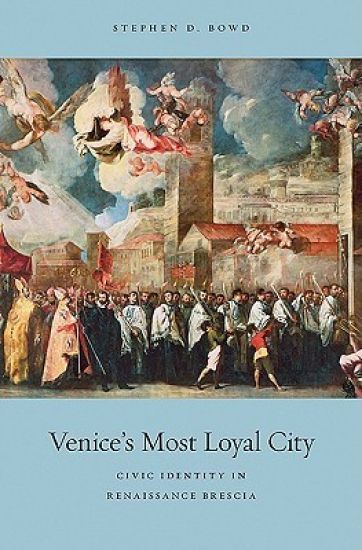
By the second decade of the fifteenth century Venice had established an empire in Italy extending from its lagoon base to the lakes, mountains, and valleys of the northwestern part of the peninsula. The wealthiest and most populous part of this empire was the city of Brescia which, together with its surrounding territory, lay in a key frontier zone between the politically powerful Milanese and the economically important Germans. Venetian governance there involved political compromise and some sensitivity to local concerns, and Brescians forged their distinctive civic identity alongside a strong Venetian cultural presence.Based on archival, artistic, and architectural evidence, Stephen Bowd presents an innovative microhistory of a fascinating, yet historically neglected city. He shows how Brescian loyalty to Venice was repeatedly tested by a succession of disasters: assault by Milanese forces, economic downturn, demographic collapse, and occupation by French and Spanish armies intent on dismembering the Venetian empire. In spite of all these troubles the city experienced a cultural revival and a dramatic political transformation under Venetian rule, which Bowd describes and uses to illuminate the process of state formation in one of the most powerful regions of Renaissance Italy.
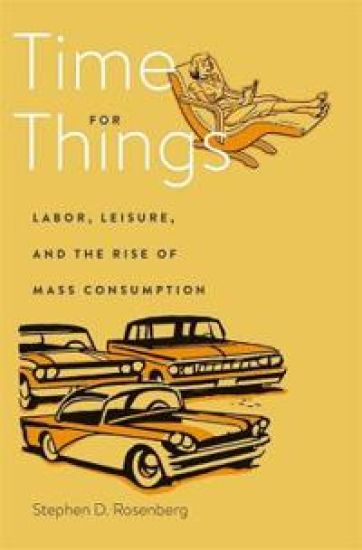
Modern life is full of stuff yet bereft of time. An economic sociologist offers an ingenious explanation for why, over the past seventy-five years, Americans have come to prefer consumption to leisure.Productivity has increased steadily since the mid-twentieth century, yet Americans today work roughly as much as they did then: forty hours per week. We have witnessed, during this same period, relentless growth in consumption. This pattern represents a striking departure from the preceding century, when working hours fell precipitously. It also contradicts standard economic theory, which tells us that increasing consumption yields diminishing marginal utility, and empirical research, which shows that work is a significant source of discontent. So why do we continue to trade our time for more stuff?Time for Things offers a novel explanation for this puzzle. Stephen Rosenberg argues that, during the twentieth century, workers began to construe consumer goods as stores of potential free time to rationalize the exchange of their labor for a wage. For example, when a worker exchanges their labor for an automobile, they acquire a duration of free activity that can be held in reserve, counterbalancing the unfree activity represented by work. This understanding of commodities as repositories of hypothetical utility was made possible, Rosenberg suggests, by the standardization of durable consumer goods, as well as warranties, brands, and product-testing, which assured wage earners that the goods they purchased would be of consistent, measurable quality.This theory clarifies perplexing aspects of behavior under industrial capitalism—the urgency to spend earnings on things, the preference to own rather than rent consumer goods—as well as a variety of historical developments, including the coincident rise of mass consumption and the legitimation of wage labor.