Kirjojen hintavertailu. Mukana 11 244 527 kirjaa ja 12 kauppaa.

Kirjahaku

Etsi kirjoja tekijän nimen, kirjan nimen tai ISBN:n perusteella.

1000 tulosta hakusanalla Stephen G Perry

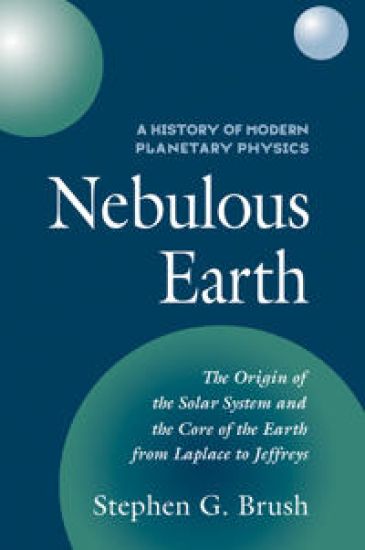
A History of Modern Planetary Physics: Volume 1, The Origin of the Solar System and the Core of the Earth from LaPlace to Jeffreys
Where did we come from? Before there was life there had to be something to live on - a planet, a solar system. During the past 200 years, astronomers and geologists have developed and tested several different theories about the origin of the solar system and the nature of the Earth. Did the Earth and other planets form as a by-product of a natural process that formed the Sun? Did the solar system come into being as the result of catastrophic encounter of two stars? Is the inside of the Earth solid, liquid or gaseous? The three volumes that make up A History of Modern Planetary Physics present a survey of these theories. Nebulous Earth follows the development of the nineteenth-century's most popular explanation for the origin of the solar system, Laplace's Nebular Hypothesis. This theory supposes that a flattened mass of gas extending beyond Neptune's orbit cooled and shrank, throwing off in the process successive rings that in time coalesced to form several planets.
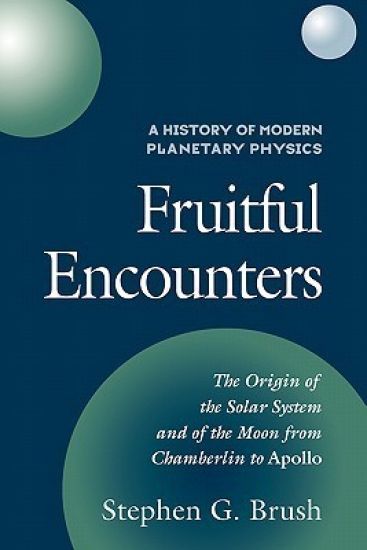
A History of Modern Planetary Physics: Volume 3, The Origin of the Solar System and of the Moon from Chamberlain to Apollo
Where did we come from? Before there was life there had to be something to live on - a planet, a solar system. During the past 200 years, astronomers and geologists have developed and tested several different theories about the origin of the solar system and the nature of the Earth. Together, the three volumes that make up A History of Modern Planetary Physics present a survey of these theories. The early twentieth century saw the replacement of the Nebular Hypothesis with the Chamberlain-Moulton theory that the solar system resulted from the encounter of the Sun with a passing star. Fruitful Encounters follows the eventual refutation of the encounter theory and the subsequent revival of a modernised Nebular Hypothesis. Professor Brush also discusses the role of findings from the Apollo space programme, especially the analysis of lunar samples, culminating in the establishment, in the 1980s, of the 'giant impact' theory of the Moon's origin.
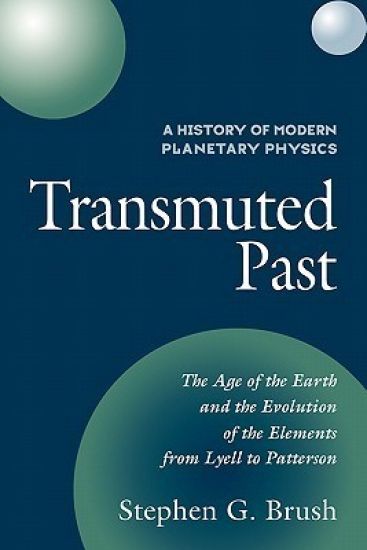
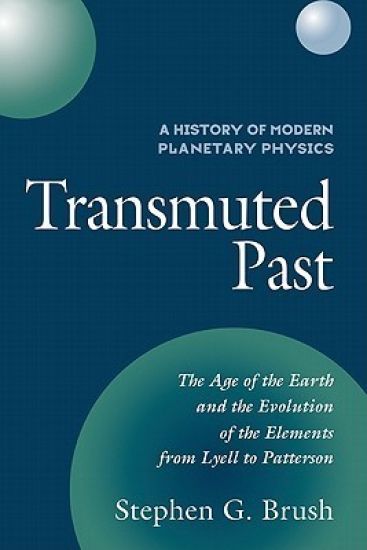
A History of Modern Planetary Physics: Volume 2, The Age of the Earth and the Evolution of the Elements from Lyell to Patterson
Where did we come from? Before there was life there had to be something to live on - a planet, a solar system. During the past 200 years, astronomers and geologists have developed and tested several different theories about the origin of the solar system and the nature of the Earth. The three volumes that together make up A History of Modern Planetary Physics present a survey of these theories. The age of the Earth has been one of the most disputed numbers in science since the seventeenth century. Transmuted Past follows the development of theories of stellar evolution and nucleosynthesis in the twentieth century and describes radiometric methods for estimating the age of the Earth. Professor Brush also offers perspectives on the changing reputation of planetary science relative to the 'pure' sciences, such as physics, and a comparison of history and geology as ways of studying the past.
A History of Modern Planetary Physics

A History of Modern Planetary Physics

Stephen G. Brush

Cambridge University Press
1996
sidottu
Where did we come from? Before there was life there had to be something to live on - a planet, a solar system. During the past 200 years, astronomers and geologists have developed and tested several different theories about the origin of the solar system and the nature of the Earth. Did the Earth and other planets form as a byproduct of a natural process that formed the Sun? Did the solar system come into being as the result of a catastrophic encounter of two stars? Together, the three volumes that make up A History of Modern Planetary Physics present a survey of these theories. Nebulous Earth follows the development of Laplace’s Nebular Hypothesis, its connection with ideas about the interior of the Earth, and its role in the establishment of the ‘evolutionary’ worldview that dominated science in the latter part of the nineteenth century. Brush also explores Saturn’s rings, Poincaré’s contributions to ideas about cosmic evolution, the use of seismology to probe the Earth’s core, and explanations of the Earth’s magnetic field.
A History of Modern Planetary Physics

A History of Modern Planetary Physics

Stephen G. Brush

Cambridge University Press
1996
sidottu
Where did we come from? Before there was life there had to be something to live on - a planet, a solar system. During the past 200 years, astronomers and geologists have developed and tested several different theories about the origin of the solar system and the nature of the Earth. The three volumes that together make up A History of Modern Planetary Physics present a survey of these theories. The age of the Earth has been one of the most disputed numbers in science since the seventeenth century. Transmuted Past follows the development of theories of stellar evolution and nucleosynthesis in the twentieth century and describes radiometric methods for estimating the age of the Earth. Professor Brush also offers perspectives on the changing reputation of planetary science relative to the ‘pure’ sciences, such as physics, and a comparison of history and geology as ways of studying the past.
A History of Modern Planetary Physics

A History of Modern Planetary Physics

Stephen G. Brush

Cambridge University Press
1996
sidottu
Where did we come from? Before there was life there had to be something to live on - a planet, a solar system. During the past 200 years, astronomers and geologists have developed and tested several different theories about the origin of the solar system and the nature of the Earth. Together, the three volumes that make up A History of Modern Planetary Physics present a survey of these theories. The early twentieth century saw the replacement of the Nebular Hypothesis with the Chamberlain-Moulton theory that the solar system resulted from the encounter of the Sun with a passing star. Fruitful Encounters follows the eventual refutation of the encounter theory and the subsequent revival of a modernised Nebular Hypothesis. Professor Brush also discusses the role of findings from the Apollo space programme, especially the analysis of lunar samples, culminating in the establishment, in the 1980s, of the 'giant impact' theory of the Moon's origin.
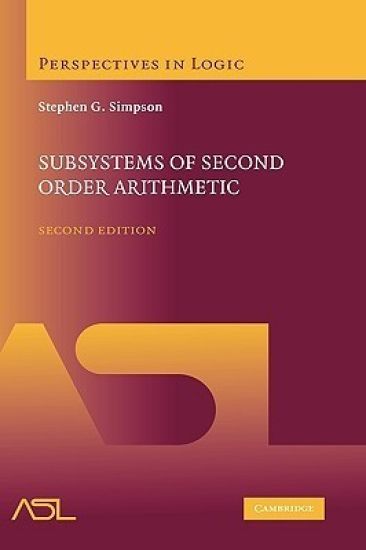
Subsystems of Second Order Arithmetic

Subsystems of Second Order Arithmetic

Stephen G. Simpson

Cambridge University Press
2009
sidottu
Almost all of the problems studied in this book are motivated by an overriding foundational question: What are the appropriate axioms for mathematics? Through a series of case studies, these axioms are examined to prove particular theorems in core mathematical areas such as algebra, analysis, and topology, focusing on the language of second-order arithmetic, the weakest language rich enough to express and develop the bulk of mathematics. In many cases, if a mathematical theorem is proved from appropriately weak set existence axioms, then the axioms will be logically equivalent to the theorem. Furthermore, only a few specific set existence axioms arise repeatedly in this context, which in turn correspond to classical foundational programs. This is the theme of reverse mathematics, which dominates the first half of the book. The second part focuses on models of these and other subsystems of second-order arithmetic.
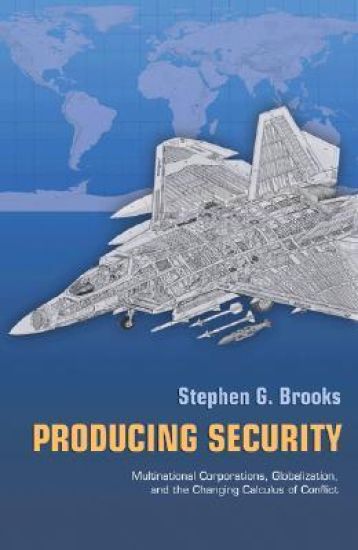
Producing Security

Producing Security

Stephen G. Brooks

Princeton University Press
2007
pokkari
Scholars and statesmen have debated the influence of international commerce on war and peace for thousands of years. Over the centuries, analysts have generally treated the questions "Does international commerce influence security?" and "Do trade flows influence security?" as synonymous. In Producing Security, Stephen Brooks maintains that such an overarching focus on the security implications of trade once made sense but no longer does. Trade is no longer the primary means of organizing international economic transactions; rather, where and how multinational corporations (MNCs) organize their international production activities is now the key integrating force of global commerce. MNC strategies have changed in a variety of fundamental ways over the past three decades, Brooks argues, resulting in an increased geographic dispersion of production across borders. The author shows that the globalization of production has led to a series of shifts in the global security environment. It has a differential effect on security relations, in part because it does not encompass all countries and industries to the same extent. The book's findings indicate that the geographic dispersion of MNC production acts as a significant force for peace among the great powers. The author concludes that there is no basis for optimism that the globalization of production will promote peace elsewhere in the world. Indeed, he finds that it has a net negative influence on security relations among developing countries.
World Out of Balance

World Out of Balance

Stephen G. Brooks; William C. Wohlforth

Princeton University Press
2008
pokkari
World Out of Balance is the most comprehensive analysis to date of the constraints on the United States' use of power in pursuit of its security interests. Stephen Brooks and William Wohlforth overturn conventional wisdom by showing that in a unipolar system, where the United States is dominant in the scales of world power, the constraints featured in international relations theory are generally inapplicable. In fact, the authors argue that the U.S. will not soon lose its leadership position; rather, it stands before a twenty-year window of opportunity for reshaping the international system. Although American primacy in the world is unprecedented, analysts routinely stress the limited utility of such preeminence. The authors examine arguments from each of the main international relations theories--realism, institutionalism, constructivism, and liberalism. They also cover the four established external constraints on U.S. security policy--international institutions, economic interdependence, legitimacy, and balancing. The prevailing view is that these external constraints conspire to undermine the value of U.S. primacy, greatly restricting the range of security policies the country can pursue. Brooks and Wohlforth show that, in actuality, the international environment does not tightly constrain U.S. security policy. World Out of Balance underscores the need for an entirely new research agenda to better understand the contours of international politics and the United States' place in the world order.
The Political Economy of Security

The Political Economy of Security

Stephen G. Brooks

PRINCETON UNIVERSITY PRESS
2025
sidottu
A systematic empirical and theoretical examination of how economic factors influence security affairsIn this book, Stephen Brooks offers a systematic empirical and theoretical account of the ways in which economic factors influence security affairs. Empirically, he explores how economic variables of all kinds affect the full range of security-dependent variables—interstate war, terrorism, and civil war—and analyzes sixteen pathways of economic influence on security matters. His analysis overturns the conventional view that certain economic factors—international trade, economic development, cross-border financial flows, and the globalization of production, to name a few—have clear and specific effects on security affairs. Brooks shows that the relationship between economic factors and conflict is complex and multifaceted; discrete economic factors such as globalized manufacturing are sometimes helpful for advancing peace and stability, but at other times are detrimental.Brooks then argues that a stronger theoretical foundation is needed to guide future research on the economics-security interaction. Drawing on the work of Adam Smith, he answers three key conceptual questions: how economic goals relate to security goals; what kinds of economic factors should be studied when analyzing world politics; and how, and how much, economic actors influence security policies. Combining an innovative and powerful theoretical understanding with empirical rigor, Brooks’s account will reshape our understanding of the political economy of security.
The Political Economy of Security

The Political Economy of Security

Stephen G. Brooks

PRINCETON UNIVERSITY PRESS
2025
pokkari
A systematic empirical and theoretical examination of how economic factors influence security affairsIn this book, Stephen Brooks offers a systematic empirical and theoretical account of the ways in which economic factors influence security affairs. Empirically, he explores how economic variables of all kinds affect the full range of security-dependent variables—interstate war, terrorism, and civil war—and analyzes sixteen pathways of economic influence on security matters. His analysis overturns the conventional view that certain economic factors—international trade, economic development, cross-border financial flows, and the globalization of production, to name a few—have clear and specific effects on security affairs. Brooks shows that the relationship between economic factors and conflict is complex and multifaceted; discrete economic factors such as globalized manufacturing are sometimes helpful for advancing peace and stability, but at other times are detrimental.Brooks then argues that a stronger theoretical foundation is needed to guide future research on the economics-security interaction. Drawing on the work of Adam Smith, he answers three key conceptual questions: how economic goals relate to security goals; what kinds of economic factors should be studied when analyzing world politics; and how, and how much, economic actors influence security policies. Combining an innovative and powerful theoretical understanding with empirical rigor, Brooks’s account will reshape our understanding of the political economy of security.
Finding the Mean

Finding the Mean

Stephen G. Salkever

Princeton University Press
2014
pokkari
Stephen Salkever shows that reading Aristotle is a starting point for discussing contemporary political problems in new ways that avoid the opposition between liberal individualism and republican communitarianism, between the politics of rights and the politics of virtues. Originally published in 1990. The Princeton Legacy Library uses the latest print-on-demand technology to again make available previously out-of-print books from the distinguished backlist of Princeton University Press. These editions preserve the original texts of these important books while presenting them in durable paperback and hardcover editions. The goal of the Princeton Legacy Library is to vastly increase access to the rich scholarly heritage found in the thousands of books published by Princeton University Press since its founding in 1905.
Finding the Mean

Finding the Mean

Stephen G. Salkever

Princeton University Press
2016
sidottu
Stephen Salkever shows that reading Aristotle is a starting point for discussing contemporary political problems in new ways that avoid the opposition between liberal individualism and republican communitarianism, between the politics of rights and the politics of virtues. Originally published in 1990. The Princeton Legacy Library uses the latest print-on-demand technology to again make available previously out-of-print books from the distinguished backlist of Princeton University Press. These editions preserve the original texts of these important books while presenting them in durable paperback and hardcover editions. The goal of the Princeton Legacy Library is to vastly increase access to the rich scholarly heritage found in the thousands of books published by Princeton University Press since its founding in 1905.