Many textbooks on differential equations are written to be interesting to the teacher rather than the student. Introduction to Differential Equations with Dynamical Systems is directed toward students. This concise and up-to-date textbook addresses the challenges that undergraduate mathematics, engineering, and science students experience during a first course on differential equations. And, while covering all the standard parts of the subject, the book emphasizes linear constant coefficient equations and applications, including the topics essential to engineering students. Stephen Campbell and Richard Haberman--using carefully worded derivations, elementary explanations, and examples, exercises, and figures rather than theorems and proofs--have written a book that makes learning and teaching differential equations easier and more relevant. The book also presents elementary dynamical systems in a unique and flexible way that is suitable for all courses, regardless of length.
Stephen L. Dyson finds in the experience of the Republic the origins of Roman frontier policy and methods of border control as practiced under the Empire. Focusing on the western provinces during the Republic, he demonstrates the ways in which Roman society, like that of the United States, was shaped by its own frontier. Originally published in 1985. The Princeton Legacy Library uses the latest print-on-demand technology to again make available previously out-of-print books from the distinguished backlist of Princeton University Press. These editions preserve the original texts of these important books while presenting them in durable paperback and hardcover editions. The goal of the Princeton Legacy Library is to vastly increase access to the rich scholarly heritage found in the thousands of books published by Princeton University Press since its founding in 1905.
Stephen L. Dyson finds in the experience of the Republic the origins of Roman frontier policy and methods of border control as practiced under the Empire. Focusing on the western provinces during the Republic, he demonstrates the ways in which Roman society, like that of the United States, was shaped by its own frontier. Originally published in 1985. The Princeton Legacy Library uses the latest print-on-demand technology to again make available previously out-of-print books from the distinguished backlist of Princeton University Press. These editions preserve the original texts of these important books while presenting them in durable paperback and hardcover editions. The goal of the Princeton Legacy Library is to vastly increase access to the rich scholarly heritage found in the thousands of books published by Princeton University Press since its founding in 1905.
Do You Want to Be a Marketing Genius? Have a great marketing idea? What if instead you had a great marketing process? Developing a marketing process that integrates with sales is the way to grow sales. And isn't growing sales the whole point of marketing? In Genius Marketing you'll learn how to build a marketing machine that consistently produces leads and supports sales. You'll learn how to: - Assess the sales process - Determine and communicate the organizational brand - Write your value proposition and sales messages - Develop a realistic budget for marketing - Create the one thing you must do to have ongoing success - Market from an action-based system Plus, you'll learn what to do with all those great marketing ideas you (and others) have for your business. Genius Marketing is based on a system that has helped companies successfully market their products and services for over 20 years. This field-tested process will change the way you think about, and more importantly, how you plan and execute marketing. Genius Marketing is for anyone who is ready to get off the marketing merry-go-round of chasing ideas and the latest marketing trends and develop an effective marketing system.
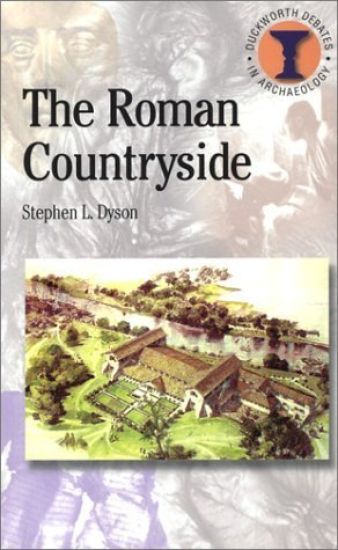
In this work, Stephen Dyson provides a new synthesis, describing current research on the Roman countryside within a topological rather than a geographical or historical framework. He first examines the Roman villa, looking at changing interpretations of the villa and the ways they have been shaped both by new information and evolving interpretative models, relating the survey-settlement evidence to larger questions of landscape use and landscape transformation during the Roman period. Focusing on areas where some of the most innovative rural research has been conducted - Italy, North Africa, Spain and France - he discusses what happened in rural areas in the period of transition between the end of Antiquity and the emergence of medieval society, showing that the period of transition was much longer than previously thought and that there was tremendous variation not only between one part of the Empire and another, but between micro-regions within a single province.
This book examines the possibilities of opposition to government-supported, dominant social orders through legal writing using post-Independence (1960-61) Cameroon as its example. 'Legal writing' in this case encompasses traditional fictional works such as novels, plays, and short stories that deal with legal themes, settings, and language, but also works that are less-often considered as traditional narratives such as legal case decisions, textbooks, and articles. An investigation of such Cameroonian texts demonstrates the potential uses and effectiveness of oppositional narrative, as defined by such authors as Ross Chambers and Michel de Certeau, within postcolonial legal systems in order to influence a different reading of the legal and social order. The investigation treats both narratives of resistance and oppositionality, and concludes that oppositional literary and legal storytelling offers more hope for subverting and changing the dominant social discourse than more conventional means of legal resistance. Although the two approaches overlap, oppositional legal narratives offer greater opportunity for fostering lasting social justice than legal narratives of resistance, especially within the legal system of Cameroon, which is both unduly influenced by an oppressive government and singular in its organization. This system is split between indigenous legal traditions, Francophone civil code law, Anglophone common law, and thus it presents a complex, pluralistic legal and social atmosphere that is unsuitable for dictatorial, revolutionary change while at the same time offering potential discursive space for oppositional writing and reading.
Archaeology doesn't just happen. With large numbers of people involved, the complex logistics of fieldwork, funding needed for projects of any size, and a bewildering set of legal regulations and ethical norms to follow, a well-run archaeological project requires careful and detailed planning. In this reader-friendly guide, Black and Jolly give novice researchers invaluable practical advice on the process of designing successful field projects. Encompassing both directed academic and directed CRM projects, they outline the elements needed in your professional toolkit, show step-by-step how an archaeological project proceeds, focus on developing appropriate research questions and theoretical models, and address implementation issues from NAGPRA regulations down to estimating the number of shovels to toss into the pickup. Sidebars explain important topics like the Section 106 process, the importance of ethnology and geology to archaeologists, OSHA requirements, and how to assess significance. Archaeology by Design is an ideal starting point for giving students and novices the big picture of a contemporary archaeological project.
This is Book 2 of 7 in the Ethnographer's Toolkit, Second Edition. Initiating Ethnographic Research: A Mixed Methods Approach, is the first book of its kind. Unlike texts that describe and detail methods for doing ethnographic and qualitative research once in the field, Book 2 explores in depth the many critical issues that ethnographic researchers need to consider before going to the field and in the earliest stages of the field experience. These include preparation of self, establishing relationships that ensure access to the field, and steps in the construction of a formative theoretical model that will inform the entire research process from start to finish. Following guidelines established in Book 1, the first three chapters describe the reasons why ethnography should be considered a mixed methods approach to social science research. They discuss why theory is important in guiding a study, and the important institutional and personal preparations required to enter a field setting and begin work. Additional chapters debunk the idea that ethnographers always enter the field with their minds a “clean slate” in terms of what they will find during their investigation. They show why and how researchers can develop initial theoretical models based on local knowledge and literature reviews. Ethnography uses a holistic approach, so such models take into consideration both individual/population and systemic or structural considerations. They lead the way to integrating ecological, empirical, critical, and interpretivist approaches into a comprehensive analysis of a dynamic system. Two chapters also provide detailed examples to illustrate the connection between steps in the modeling process, creation of observational measures, and steps in data collection--from most open-ended kinds of interviewing and observation to the kind of highly structured ethnographic surveying described in Book 3. Extensive illustrative case examples are included. The final chapter shows how the modeling process can be extended to guide the development of interventions and change strategies at multiple levels—a process that should be part of any research program. A wide variety of diagrams, instructions, examples, and illustrations make the topics and processes covered in Book 2 easy to read and understand, even by novice researchers. Overall, Book 2 offers a unique mixed methods lens through which to build theory by engaging in research modeling, to enter the field, to set up to gather data, and to anticipate influencing change. Other books in the set: Book 1: Designing and Conducting Ethnographic Research: An Introduction, Second Edition by Margaret D. LeCompte and Jean J. Schensul 9780759118690 Book 3: Essential Ethnographic Methods: A Mixed Methods Approach, Second Edition by Jean J. Schensul and Margaret D. LeCompte 9780759122031 Book 4: Specialized Ethnographic Methods: A Mixed Methods Approach edited by Jean J. Schensul and Margaret D. LeCompte 9780759122055 Book 5: Analysis and Interpretation of Ethnographic Data: A Mixed Methods Approach, Second Edition by Margaret D. LeCompte and Jean J. Schensul 9780759122079 Book 6: Ethics in Ethnography: A Mixed Methods Approach by Margaret D. LeCompte and Jean J. Schensul 9780759122093 Book 7: Ethnography in Action: A Mixed Methods Approach by Jean J. Schensul and Margaret D. LeCompte 9780759122116
This book reads Ernest Becker both as a prophet of modernity and as a sensitive observer of its decline. Situated within the disciplinary approach of 'theology of culture,' the book discerns in dialogue with Becker the contours of modern vision in its depth-dimension. Taking note of Becker's works as a whole, it identifies the two master images of human existence—homo poeta and homo heroica—which articulate this dimension, situating them in scholarly debate and comparing and relating them to the contemporary situation.
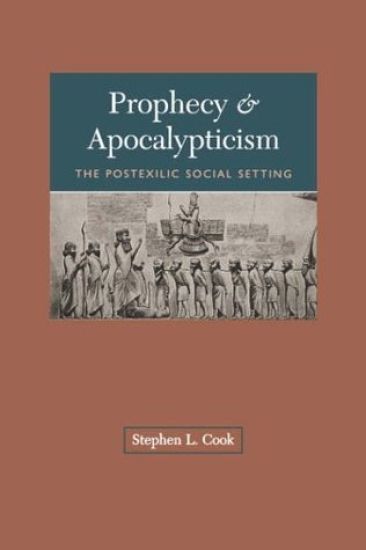
Did Israelite Jewish apocalyptic literature originate among alienated or disenfranchised groups? In this overview of apocalypticism in the Hebrew Bible, Stephen Cook contends that such thinking and writing stems from priestly groups that held power.
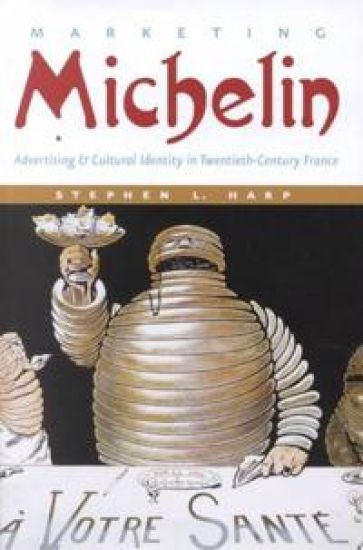
One of the world's largest tire makers and an international corporation with interests in countries around the world, Michelin is also a uniquely French company, one that throughout its history has closely identified itself with the country's people and culture. In the process, it has helped shape the self-image of twentieth-century France. In Marketing Michelin, Stephen Harp provides a provocative history of the company and its innovative advertising campaigns between 1898, when Bibendum-the company's iconic "Michelin Man"-was first introduced, to 1940, when France fell to the Nazis and the company's top executive, Edouard Michelin, died. Both events indelibly changed the company and the national context in which it operated. Harp uses the familiar figure of Bibendum and the promotional campaigns designed around him to analyze the cultural assumptions of belle-epoque France, including representations of gender, race, and class. He also considers Michelin's efforts to promote automobile tourism in France and Europe through its famous Red Guide (first introduced in 1900), noting that, in the aftermath of World War I, the company sold tour guides to the battlefields of the Western Front and favorably positioned France's participation in the war as purely defensive and unavoidable. Throughout this period, the company successfully identified the name of Michelin with many aspects of French society, from cuisine and local culture to nationalism and colonialism. Michelin also introduced Fordism and Taylorism to France, and Harp offers a nuanced understanding of how the firm effected Americanization and modernization despite the protests of the French public. Through its marketing efforts, Harp concludes, Michelin exerted a profound impact on France's cultural identity in the twentieth century. His ambitious study offers a fresh perspective on both French social history in these years and the relationship between corporate culture and popular culture in the twentieth century.
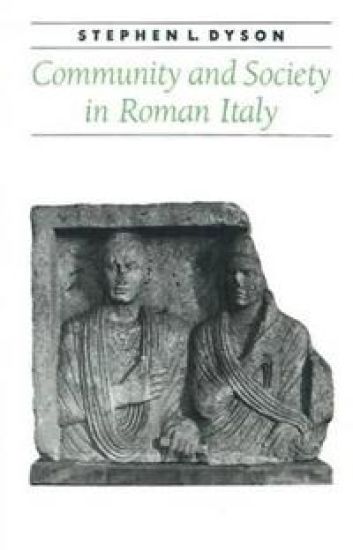
Stephen L. Dyson examines rural communities as functioning, largely autonomous societies. Dyson traces the major outlines of community development from the end of the war with Hannibal to the early Middle Ages. He shows how local communities responded to changes in the greater Roman society while still retaining their distinctive identity. He examines the "typical" Roman community during the High Empire and explores the life cycle of rural inhabitants, showing how individuals- the aristocrats, the free poor, and the slaves- developed in relation to society as a whole.
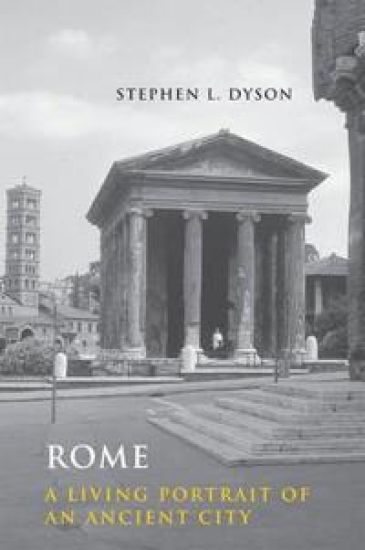
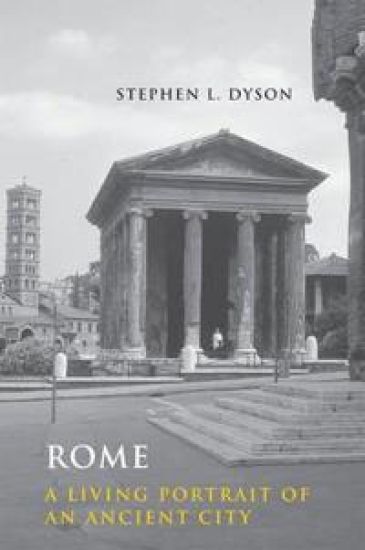
Stephen L. Dyson has spent a lifetime studying and teaching the history of ancient Rome. That unparalleled knowledge is reflected in his magisterial overview of the Eternal City. Rather than look only at the physical development of the city-its buildings, monuments, and urban spaces-Dyson also explores its social, economic, and cultural histories. This unique approach situates Rome against a background of comparative urban history and theory, allowing Dyson to examine the dynamic society that once thrived there. In his personal effort to reconstruct the city, Dyson populates its streets with the hurried politicians, hawking vendors, and animated students that once lived, worked, and studied there, bringing the ancient city to life for a new generation of students and tourists. Dyson follows Rome as it developed between the third century BC and the fourth century AD, dividing the great megalopolis into distinct neighborhoods and locales. He shows how these communities, each with its own unique customs and colorful inhabitants, eventually grew into the great imperial capital of the Italian Empire. Dyson integrates the full range of sources available-literary, artistic, epigraphic, and archaeological-to create a comprehensive history of the monumental city. In doing so, he offers a dramatic picture of a complex and changing urban center that, despite its flaws, flourished for centuries.
Stephen L. Dyson has spent a lifetime studying and teaching the history of ancient Rome. That unparalleled knowledge is reflected in his magisterial overview of the Eternal City. Rather than look only at the physical development of the city-its buildings, monuments, and urban spaces-Dyson also explores its social, economic, and cultural histories. This unique approach situates Rome against a background of comparative urban history and theory, allowing Dyson to examine the dynamic society that once thrived there. In his personal effort to reconstruct the city, Dyson populates its streets with the hurried politicians, hawking vendors, and animated students that once lived, worked, and studied there, bringing the ancient city to life for a new generation of students and tourists. Dyson follows Rome as it developed between the third century BC and the fourth century AD, dividing the great megalopolis into distinct neighborhoods and locales. He shows how these communities, each with its own unique customs and colorful inhabitants, eventually grew into the great imperial capital of the Italian Empire. Dyson integrates the full range of sources available-literary, artistic, epigraphic, and archaeological-to create a comprehensive history of the monumental city. In doing so, he offers a dramatic picture of a complex and changing urban center that, despite its flaws, flourished for centuries.