Kirjojen hintavertailu. Mukana 12 390 323 kirjaa ja 12 kauppaa.

Kirjahaku

Etsi kirjoja tekijän nimen, kirjan nimen tai ISBN:n perusteella.

1000 tulosta hakusanalla Stephen Lawrence

Stahl's Illustrated Attention Deficit Hyperactivity Disorder

Stahl's Illustrated Attention Deficit Hyperactivity Disorder

Stephen M. Stahl; Laurence Mignon

Cambridge University Press
2009
pokkari
As with Stahl's Essential Psychopharmacology, 3rd edition and The Prescriber's Guide, Attention Deficit Hyperactivity Disorder is a heavily illustrated title with a fun approach to theories. Stahl has been at the heart of significant advances in the treatment of ADHD in the past ten years, as new psychopharmacologic medications and cognitive and behavioral therapy techniques have been introduced into practice. The visual learner will find that these books make psychopharmacology concepts easy to master, while the non-visual learner will enjoy a shortened text version of complex psychopharmacology concepts. Novices to the series will find that the well-structured graphics and visual vocabulary can help build a vivid conception of complex pharmacologies. The complementary tables and algorithms provide clinical strategies and tips for drug dosaging, and the Suggested Reading section at the end of each book is an invaluable tool to guide the reader to more in-depth learning on particular concepts.
Stahl's Illustrated Antipsychotics

Stahl's Illustrated Antipsychotics

Stephen M. Stahl; Laurence Mignon

Cambridge University Press
2010
pokkari
All of the titles in the Stahl's Illustrated series are designed to be fun. Concepts are illustrated by full-color images that will be familiar to all readers of Stahl's Essential Psychopharmacology, 3rd Edition and The Prescriber's Guide. The texts in this user-friendly series can be supplements to figures, images and tables. The visual learner will find that these books make psychopharmacology concepts easy to master, while the non-visual learner will enjoy a shortened text version of complex psychopharmacology concepts. Within each book, each chapter builds on previous chapters, synthesizing information from basic biology and diagnostics to building treatment plans and dealing with complications and comorbidities. Novices may want to approach the Stahl's Illustrated series by first looking through all the graphics and gaining a feel for the visual vocabulary. Readers more familiar with these topics should find that going back and forth between images and text provides an interaction with which to vividly conceptualize complex pharmacologies. And, to help guide the reader toward more in-depth learning about particular concepts, each book ends with a Suggested Reading section.
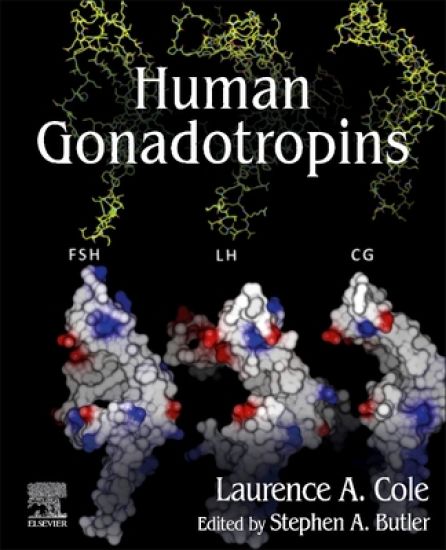
Human Gonadotropins

Human Gonadotropins

Laurence A. Cole; Stephen A. Butler

Elsevier Science Publishing Co Inc
2022
nidottu
Human Gonadotropins is a must-have reference for basic science researchers looking to maximize their knowledge in this specific field of study. Luteinizing hormone, follicle-stimulating hormone, and human chorionic gonadotropin are essential for reproduction and outlined in detail in this work, covering topics ranging from antibodies and immunoassays, to commercial products and standards, genetics, and receptors and intermediaries for gonadotropins. Dr. Laurence Cole has been recognized for his outstanding research throughout his illustrious career. He has received awards from the Institute for Anticancer Research, Biannual Prize for best research; American Association for Clinical Chemistry, Most Outstanding Research Contributor to Clinical Chemistry Prize; Gynecology Oncology, Outstanding Speaker Award; and International Society for Study of Trophoblastic Disease, Gold Medal for most outstanding research. This detailed resource compiles all the recent research together into one volume, with one consistent voice.
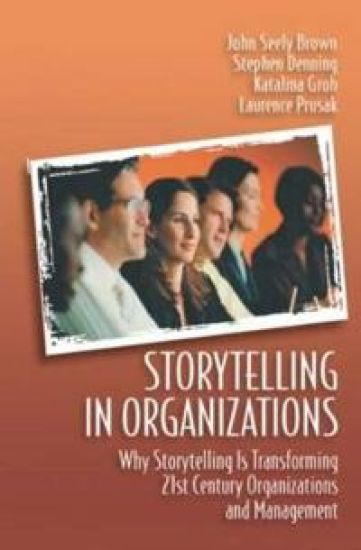
Storytelling in Organizations

Storytelling in Organizations

Laurence Prusak; Katalina Groh; Stephen Denning; John Seely Brown

Butterworth-Heinemann Ltd
2004
nidottu
This book is the story of how four busy executives, from different backgrounds and perspectives, were surprised to find themselves converging on the idea of narrative as a valuable lens for understanding and managing organizations. The authors describe the power of narrative and storytelling in their own experience working on knowledge management, change management, and innovation strategies in organizations such as Xerox, the World Bank, and IBM. Storytelling in Organizations lays out for the first time why narrative and storytelling should be part of the mainstream of organizational and management thinking.
Storytelling in Organizations

Storytelling in Organizations

Laurence Prusak; Katalina Groh; Stephen Denning; John Seely Brown

Routledge
2016
sidottu
This book is the story of how four busy executives, from different backgrounds and different perspectives, were surprised to find themselves converging on the idea of narrative as an extraordinarily valuable lens for understanding and managing organizations in the twenty-first century. The idea that narrative and storytelling could be so powerful a tool in the world of organizations was initially counter-intuitive. But in their own words, John Seely Brown, Steve Denning, Katalina Groh, and Larry Prusak describe how they came to see the power of narrative and storytelling in their own experience working on knowledge management, change management, and innovation strategies in organizations such as Xerox, the World Bank, and IBM. Storytelling in Organizations lays out for the first time why narrative and storytelling should be part of the mainstream of organizational and management thinking. This case has not been made before. The tone of the book is also unique. The engagingly personal and idiosyncratic tone comes from a set of presentations made at a Smithsonian symposium on storytelling in April 2001. Reading it is as stimulating as spending an evening with Larry Prusak or John Seely Brown. The prose is probing, playful, provocative, insightful and sometime profound. It combines the liveliness and freshness of spoken English with the legibility of a ready-friendly text. Interviews will all the authors done in 2004 add a new dimension to the material, allowing the authors to reflect on their ideas and clarify points or highlight ideas that may have changed or deepened over time.
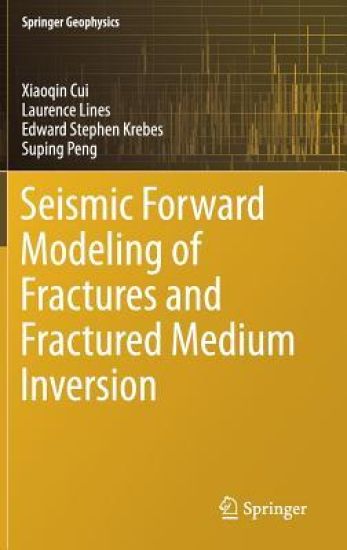
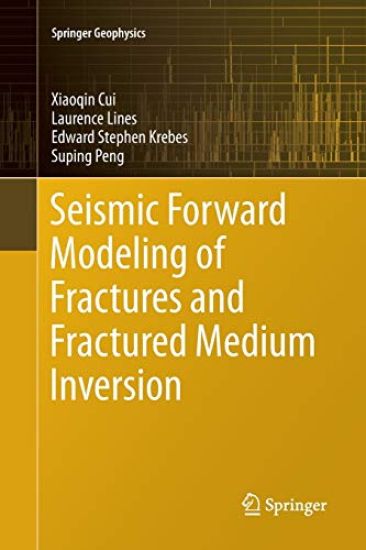
Seismic Forward Modeling of Fractures and Fractured Medium Inversion

Seismic Forward Modeling of Fractures and Fractured Medium Inversion

XiaoQin Cui; Laurence Lines; Edward Stephen Krebes; Suping Peng

Springer Verlag, Singapore
2017
sidottu
This detailed book systematically investigates subsurface geological fractures using rock mechanics, geology, and geophysics. Based on geological fracture mechanisms and fracture boundary conditions, it presents new finite-difference equations for the simulation of seismic wave responses to geological fractures, and proposes innovative AVO inversion equations for the accurate estimation of the rock properties of the fractured medium. It employs schematics, snapshots, color images and charts to demonstrate the mechanical characteristics of the fractures, the seismic wave-field response to the fractures, the seismic data attributes of the fractures and the rock properties of the fractures obtained via inversion. It provides a new methodology for enhancing geological fracture detection technology and for the accurate delineation of fractured reservoirs that ultimately benefits reservoir and mining engineers, geologists and geophysicists in terms of optimizing reservoir recovery, well performance and mining safety.
Seismic Forward Modeling of Fractures and Fractured Medium Inversion

Seismic Forward Modeling of Fractures and Fractured Medium Inversion

Xiaoqin Cui; Laurence Lines; Edward Stephen Krebes; Suping Peng

Springer Verlag, Singapore
2018
nidottu
This detailed book systematically investigates subsurface geological fractures using rock mechanics, geology, and geophysics. Based on geological fracture mechanisms and fracture boundary conditions, it presents new finite-difference equations for the simulation of seismic wave responses to geological fractures, and proposes innovative AVO inversion equations for the accurate estimation of the rock properties of the fractured medium. It employs schematics, snapshots, color images and charts to demonstrate the mechanical characteristics of the fractures, the seismic wave-field response to the fractures, the seismic data attributes of the fractures and the rock properties of the fractures obtained via inversion. It provides a new methodology for enhancing geological fracture detection technology and for the accurate delineation of fractured reservoirs that ultimately benefits reservoir and mining engineers, geologists and geophysicists in terms of optimizing reservoir recovery, well performance and mining safety.
Understanding the Global Experience

Understanding the Global Experience

Thomas Arcaro; Rosemary Haskell; Robert G. Anderson; Laurence A. Basirico; Anne Bolin; Stephen Braye; Ann J. Cahill; Brian Digre; Chinedu "Ocek" Eke; Mathew Gendle; Duane McClearn; Jeffrey C. Pugh; Laura Roselle; Jean Schwind; Kerstin Sorensen; Anthony Weston

Pearson
2010
nidottu
This cross-disciplinary anthology explores many contemporary global issues; looks at the different methodologies used to analyze and interpret those topics; and shows how all of us can make progress, through the acquisition of information, knowledge and understanding, toward the goal of responsible world citizenship.
Canadian Mountain Assessment

Canadian Mountain Assessment

Graham McDowell; Madison Stevens; Shawn Marshall; Eric Higgs; Aerin Jacob; Gùdia Mary Jane Johnson; Linda Johnson; Megan Dicker; Dani Inkpen; Michele Koppes; Keara Lightning; Brenda Parlee; Wanda Pascal; Joseph Shea; Daniel Sims; Niiyokamigaabaw Deondre Smiles; Leon Andrew; Caroline Aubry-Wake; David Borish; Ashley-Anne Churchill; Dawn Saunders Dahl; Goota Desmarais; Karine Gagné; Erika Gavenus; Stephan Gruber; Jiaao Guo; Katherine Hanly; Nina Hewitt; Murray Humphries; Rod Hunter; Lawrence Ignace; Pnnal Bernard Jerome

UNIVERSITY OF CALGARY PRESS
2024
sidottu
The Canadian Mountain Assessment provides a first-of-its-kind look at what we know, do not know, and need to know about mountain systems in Canada. The assessment is based on insights from First Nations, Métis, and Inuit knowledges of mountains, as well as findings from an extensive assessment of pertinent academic literature. Its inclusive knowledge co-creation approach brings these multiple forms of evidence together in ways that enhance our collective understanding of mountains in Canada, while also respecting and maintaining the integrity of different knowledge systems.The Canadian Mountain Assessment is a text-based document, but also includes a variety of visual materials as well as access to video recordings of oral knowledges shared by Indigenous individuals from mountain areas in Canada. The assessment is the result of over three years of work, during which time the initiative played an important role in connecting and cultivating relationships between mountain knowledge holders from across Canada. It is the outcome of contributions from more than 80 Indigenous and non-Indigenous individuals and contains six chapters:IntroductionMountain EnvironmentsMountains as HomelandsGifts of the MountainsMountains Under PressureDesirable Mountain FuturesBy way of these chapters, the Canadian Mountain Assessment aims to enhance appreciation for the diversity and significance of mountains in Canada, to clarify challenges and opportunities for mountain systems in the country, and to motivate and inform new research, relationships, and actions that support the realization of desirable mountain futures. More broadly, the Canadian Mountain Assessment provides insights into applied reconciliation efforts in a knowledge assessment context and seeks to inspire similar knowledge co-creation efforts in and beyond Canada.
Canadian Mountain Assessment

Canadian Mountain Assessment

Graham McDowell; Madison Stevens; Shawn Marshall; Eric Higgs; Aerin Jacob; Gùdia Mary Jane Johnson; Linda Johnson; Megan Dicker; Dani Inkpen; Michele Koppes; Keara Lightning; Brenda Parlee; Wanda Pascal; Joseph Shea; Daniel Sims; Niiyokamigaabaw Deondre Smiles; Leon Andrew; Caroline Aubry-Wake; David Borish; Ashley-Anne Churchill; Dawn Saunders Dahl; Goota Desmarais; Karine Gagné; Erika Gavenus; Stephan Gruber; Jiaao Guo; Katherine Hanly; Nina Hewitt; Murray Humphries; Rod Hunter; Lawrence Ignace; Pnnal Bernard Jerome

UNIVERSITY OF CALGARY PRESS
2023
pokkari
The Canadian Mountain Assessment provides a first-of-its-kind look at what we know, do not know, and need to know about mountain systems in Canada. The assessment is based on insights from First Nations, Métis, and Inuit knowledges of mountains, as well as findings from an extensive assessment of pertinent academic literature. Its inclusive knowledge co-creation approach brings these multiple forms of evidence together in ways that enhance our collective understanding of mountains in Canada, while also respecting and maintaining the integrity of different knowledge systems.The Canadian Mountain Assessment is a text-based document, but also includes a variety of visual materials as well as access to video recordings of oral knowledges shared by Indigenous individuals from mountain areas in Canada. The assessment is the result of over three years of work, during which time the initiative played an important role in connecting and cultivating relationships between mountain knowledge holders from across Canada. It is the outcome of contributions from more than 80 Indigenous and non-Indigenous individuals and contains six chapters:IntroductionMountain EnvironmentsMountains as HomelandsGifts of the MountainsMountains Under PressureDesirable Mountain FuturesBy way of these chapters, the Canadian Mountain Assessment aims to enhance appreciation for the diversity and significance of mountains in Canada, to clarify challenges and opportunities for mountain systems in the country, and to motivate and inform new research, relationships, and actions that support the realization of desirable mountain futures. More broadly, the Canadian Mountain Assessment provides insights into applied reconciliation efforts in a knowledge assessment context and seeks to inspire similar knowledge co-creation efforts in and beyond Canada.
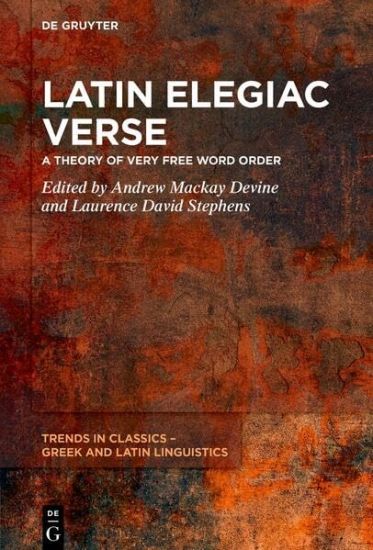
Latin Elegiac Verse

Latin Elegiac Verse

A.M. Devine; Laurence D. Stephens

De Gruyter
2024
sidottu
A striking feature of Latin elegiac verse is its very free word order. One gets the impression that the word order is just random or that the rules of Latin syntax have been suspended for metrical convenience. Combining ample philological documentation with an overall theoretical stance, this book argues that these impressions are wrong and proceeds to analyze the syntax of Latin verse as a coherent system generated by the application of a small set of derivational rules. While these rules are independently available syntactic mechanisms like scrambling, stranding and verb raising, their systematically regular application both at the clausal and at the phrasal level is remarkable. Not only complete constituents but also partial constituents are constantly attracted towards the left edge of the phrase that contains them. The cumulative effect of this is to narrow the extent and attenuate the weight of the nuclear assertion, which reduces its processing domain and the span of its prosodic correlate. This book will be of interest both to Classicists and to linguists: it aims to solve an old problem in Classical philology, while at the same time working out a configurational syntax for a language with extreme free word order.
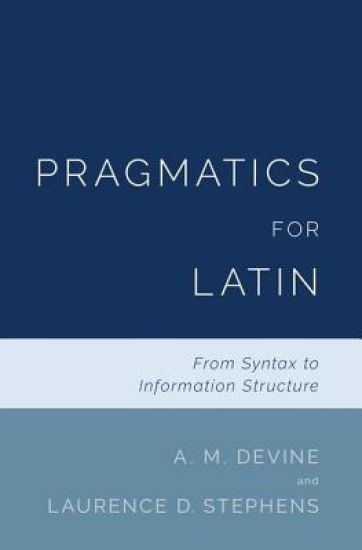
Pragmatics for Latin

Pragmatics for Latin

A. M. Devine; Laurence D. Stephens

Oxford University Press Inc
2019
sidottu
Latin is often described as a free word order language, but in general each word order encodes a particular information structure: in that sense, each word order has a different meaning. Pragmatics for Latin provides a descriptive analysis of Latin information structure based on detailed philological evidence and elaborates a syntax-pragmatics interface that formalizes the informational content of the various different word orders. Using a slightly adjusted version of the structured meanings theory, the book shows how the pragmatic meanings matching the different word orders arise naturally and spontaneously out of the compositional process as an integral part of a single semantic derivation covering denotational and informational meaning at one and the same time.
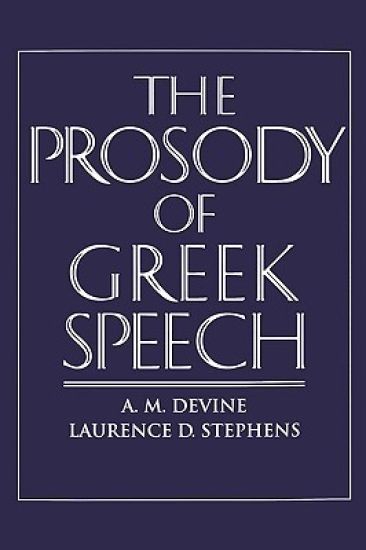
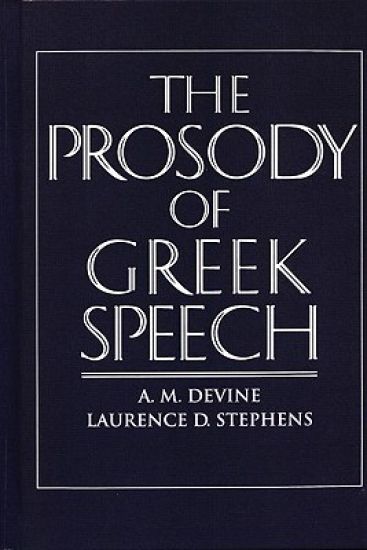
The Prosody of Greek Speech

The Prosody of Greek Speech

A. M. Devine; Laurence D. Stephens

Oxford University Press Inc
1995
sidottu
The reconstruction of the prosody of a dead language is, on the face of it, an almost impossible undertaking. However, once a general theory of prosody has been developed from reliable data in living languages, it is possible to exploit texts as sources of answers to questions that would normally be answered in the laboratory. In this work, the authors interpret the evidence of Greek verse texts and musical settings in the framework of a theory of prosody based on crosslinguistic evidence and experimental phonetic and psycholinguistic data, and reconstruct the syllable structure, rhythm, accent, phrasing, and intonation of classical Greek speech. Sophisticated statistical analyses are employed to support an impressive range of new findings which relate not only to phonetics and phonology, but also to pragmatics and the syntax-phonology interface.
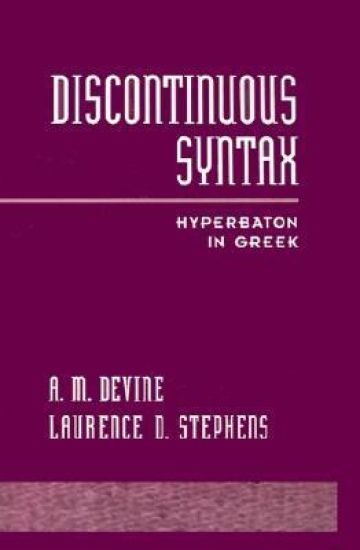
Discontinuous Syntax

Discontinuous Syntax

A. M. Devine; Laurence D. Stephens

Oxford University Press Inc
2000
sidottu
The interface between syntax and meaning, both semantic and pragmatic, has emerged as perhaps the richest and most fascinating area of current linguistics theory. This study applies some of these ideas to hyperbaton, offering an original new theory with broad applications for our understanding of Greek syntax. Students of epic will find a fresh perspective on orality in Homer while the general classicist will discover a more precise and explicit framework for the analysis of textual meaning in literary research.
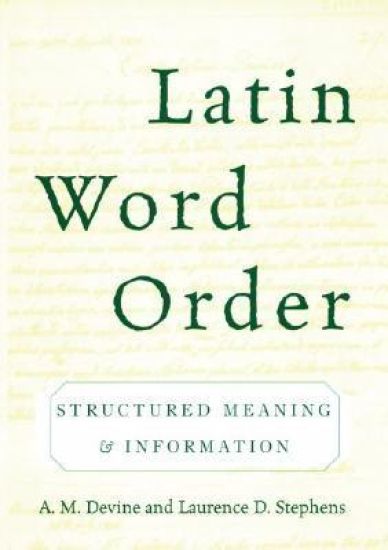
Latin Word Order

Latin Word Order

A. M. Devine; Laurence D. Stephens

Oxford University Press Inc
2006
sidottu
Word order is not a subject anyone reading Latin can afford to ignore: apart from anything else, word order is what gets one from disjoint sentences to coherent text. Reading a paragraph of Latin without attention to the word order entails losing access to a whole dimension of meaning, or at best using inferential procedures to guess at what is actually overtly encoded in the syntax. This book begins by introducing the reader to the linguistic concepts, formalism and analytical techniques necessary for the study of Latin word order. It then proceeds to present and analyze a representative selection of data in sufficient detail for the reader to develop both an intuitive grasp of the often rather subtle principles controlling Latin word order and a theoretically grounded understanding of the system that underlies it. Combining the rich empirical documentation of traditional philological approaches with the deeper theoretical insight of modern linguistics, this work aims to reduce the intricate surface patterns of Latin word order to a simple and general crosscategorial system of syntactic structure which translates more or less directly into constituents of pragmatic and semantic meaning.
The Prosody of Greek Speech

The Prosody of Greek Speech

A. M. Devine; Laurence D. Stephens

Oxford University Press Inc
2008
nidottu
The reconstruction of the prosody of a dead language is, on the face of it, an almost impossible undertaking. However, once a general theory of prosody has been developed from eliable data in living languages, it is possible to exploit texts as sources of answers to questions that would normally be answered in the laboratory. In this work, the authors interpret the evidence of Greek verse texts and musical settings in the framework of a theory of prosody based on crosslinguistic evidence and experimental phonetic and psycholinguistic data, and reconstruct the syllable structure, rhythm, accent, phrasing, and intonation of classical Greek speech. Sophisticated statistical analyses are employed to support an impressive range of new findings which relate not only to phonetics and phonology, but also to pragmatics and the syntax-phonology interface.
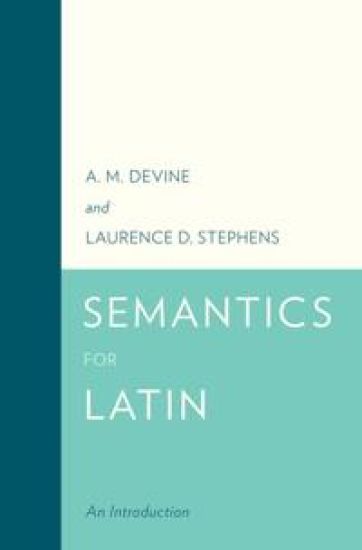
Semantics for Latin

Semantics for Latin

A. M. Devine; Laurence D. Stephens

Oxford University Press Inc
2013
sidottu
The advent of the new discipline of Formal Semantics around forty years ago has resulted in a vast expansion in our knowledge and theoretical understanding of grammatical meaning. Semantics for Latin collects together this new material, applies it to Latin, and makes the results accessible to a Classical audience. The issues confronted by Formal Semantics are mostly those that comprise the core subject matter of Latin grammar. Formal Semantics, however, is not just a new way of doing an old subject: the richness and explanatory depth of its analyses, together with their striking elegance and precision, go far beyond anything that was achieved by the rather vague notional semantics used in our classroom textbooks and in the standard German reference grammars. Thus, apart from its intrinsic interest, the material in this book will be of real practical value to students and teachers of Latin and, more generally, to scholars engaged in any discussion of Latin textual meaning.
Stephen

Stephen

Carlo Maria Martini

Coventry Press
2020
sidottu
Cardinal Martini approaches the figure of Stephen, the first martyr, by beginning with what is described in Chapters 6-8 of the Acts of the Apostles, 'an impressive document of a man's retrospective view in the face of death, of himself, the history of salvation, of what Christ has meant for him and the future to which he has been called.' Reflection on the figure of Stephen is important for the entire community of believers; in fact with Stephen 'the Church feels the seriousness of being both witness and servant: It understands that abandoning oneself to God does not save one from death, but it does allow one to pass through death, contemplating the glory of God; it recognises what it is that God saves us and does not save us from and what he prepares us for.'The richness of these meditations lies in this summary of things. It lies in the experience of a man who is approaching the revelation of the proximity of a transcendent and immanent God and at the same time arrives 'at the culmination of his mission as servant witness, ' experiencing the mystery that he proclaims, contemplates and adores, in his very own body.