Kirjojen hintavertailu. Mukana 11 342 296 kirjaa ja 12 kauppaa.

Kirjahaku

Etsi kirjoja tekijän nimen, kirjan nimen tai ISBN:n perusteella.

1000 tulosta hakusanalla Steven C Harbert

Politicizing the International Criminal Court

Politicizing the International Criminal Court

Steven C. Roach

Rowman Littlefield Publishers
2006
sidottu
The establishment of the International Criminal Court (ICC) in July 1998 has attracted growing interest in the evolving role of politics in international law. Steven C. Roach's innovative and systematic work on the political and ethical dimensions of the ICC is the first comprehensive attempt to situate the politics of the ICC both theoretically and practically. Linking the ICC's internal politicization with its formative development, Roach provides a unique understanding of this institution's capacity to play a constructive role in global politics. He argues that an internal form of politicization will allow the ICC to counter outside efforts to politicize it, whether this involves the political agenda of a state hegemon or the geopolitical interests of U. N. Security Council permanent members. Steering a new path between conventional approaches that stress the formal link between legitimacy and legal neutrality, and unconventional approaches that treat legitimacy and politics as inextricable elements of a repressive international legal order, Roach formulates the concept of political legalism, which calls for a self-directed and engaged application of the legal rules and principles of the ICC Statute. Politicizing the International Criminal Court is a must-read for scholars, students, and policymakers interested in the dynamics of this important international institution.
Politicizing the International Criminal Court

Politicizing the International Criminal Court

Steven C. Roach

Rowman Littlefield Publishers
2006
nidottu
The establishment of the International Criminal Court (ICC) in July 1998 has attracted growing interest in the evolving role of politics in international law. Steven C. Roach's innovative and systematic work on the political and ethical dimensions of the ICC is the first comprehensive attempt to situate the politics of the ICC both theoretically and practically. Linking the ICC's internal politicization with its formative development, Roach provides a unique understanding of this institution's capacity to play a constructive role in global politics. He argues that an internal form of politicization will allow the ICC to counter outside efforts to politicize it, whether this involves the political agenda of a state hegemon or the geopolitical interests of U. N. Security Council permanent members. Steering a new path between conventional approaches that stress the formal link between legitimacy and legal neutrality, and unconventional approaches that treat legitimacy and politics as inextricable elements of a repressive international legal order, Roach formulates the concept of political legalism, which calls for a self-directed and engaged application of the legal rules and principles of the ICC Statute. Politicizing the International Criminal Court is a must-read for scholars, students, and policymakers interested in the dynamics of this important international institution.
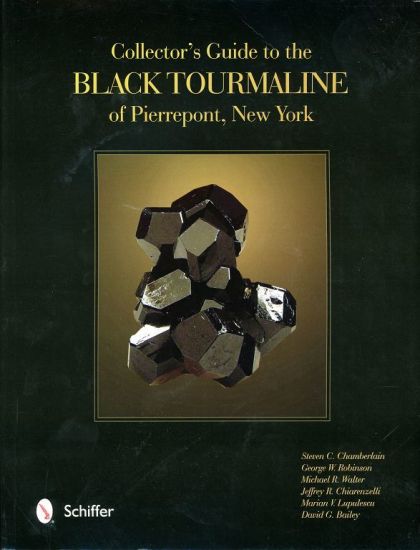
Collector's Guide to the Black Tourmaline of Pierrepont, New York

Collector's Guide to the Black Tourmaline of Pierrepont, New York

Steven C. Chamberlain; George Robinson; Michael Walter; Jeffrey Chiarenzelli

Schiffer Publishing Ltd
2016
nidottu
Since its discovery by a teenager in 1859, thousands of specimens of lustrous black tourmaline crystals from Pierrepont, New York, have found their way into both museum and private mineral collections worldwide. Pierrepont is a classic American mineral locality and a popular site for field collecting, and the discovery of new collecting sites there in the past decade has only enhanced its importance. Yet no detailed scientific research has been published until now. The six authors represent a team with comprehensive skills to tackle this study, which covers the locality's history, geology, and mineralogy. The origin of the mineralization, the true nature of the black tourmaline, and the extensive suite of accessory minerals are presented in detail. The authors also resolve identification questions about the tourmaline and its many accessory minerals.
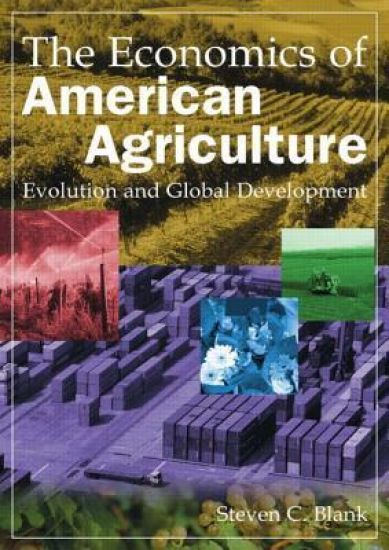
The Economics of American Agriculture

The Economics of American Agriculture

Steven C. Blank

Routledge
2008
sidottu
This book answers the questions: What is happening to American agriculture, and why? Steven C. Blank uses portfolio theory to analyze both macro- and microeconomic data that paints a clear picture of the trends in agriculture, and explains why these trends are consistent with market evolution and global economic development. He clarifies agriculture's specific role in economic development with a focus on the current and future globalizing commodity markets.The book features empirical research that demonstrates the link between farm-level investment decisions and regional and national economic trends. It shows how the dynamic environment of industrialization and globalization of agriculture is part of a continuing development that is driven by technological innovation. This all points to a future with a very different agricultural production sector and some extremely important policy choices that will face the entire country.
The Economics of American Agriculture

The Economics of American Agriculture

Steven C. Blank

Routledge
2008
nidottu
This book answers the questions: What is happening to American agriculture, and why? Steven C. Blank uses portfolio theory to analyze both macro- and microeconomic data that paints a clear picture of the trends in agriculture, and explains why these trends are consistent with market evolution and global economic development. He clarifies agriculture's specific role in economic development with a focus on the current and future globalizing commodity markets.The book features empirical research that demonstrates the link between farm-level investment decisions and regional and national economic trends. It shows how the dynamic environment of industrialization and globalization of agriculture is part of a continuing development that is driven by technological innovation. This all points to a future with a very different agricultural production sector and some extremely important policy choices that will face the entire country.
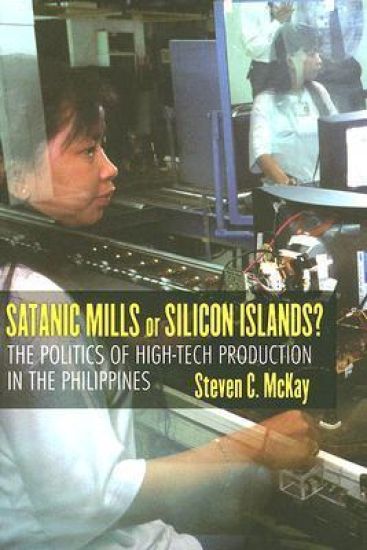
Satanic Mills or Silicon Islands?

Satanic Mills or Silicon Islands?

Steven C. McKay

Cornell University Press
2006
pokkari
Satanic Mills or Silicon Islands? challenges the myth of globalization's homogenizing power, arguing that the uniqueness of place is becoming more, not less important. Steven McKay documents how multinational firms secure worker control and consent by reaching beyond the high-tech factory and into local labor markets. He also traces the rise of a new breed of privatized export processing zones, revealing the state's—in these cases, the Philippines—revamped role in the wider politics of global production. Finally, McKay gives voice to the women workers themselves, as they find meaning, identity, and agency on and beyond the "new" shop floor. This book deftly weaves together three critical strands of global studies: Southeast Asia as a key site of global production, the organization of work in advanced electronics, and working-class conditions under globalization. Drawing on the author's rich analysis of four multinational electronics firms—from their boardrooms to boarding houses—Satanic Mills or Silicon Islands? makes a unique contribution to the study of work, labor, and high-tech production.
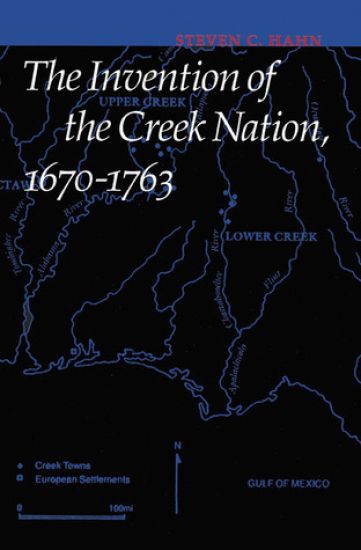
The Invention of the Creek Nation, 1670-1763

The Invention of the Creek Nation, 1670-1763

Steven C. Hahn

University of Nebraska Press
2004
sidottu
Drawing on archaeological evidence and often-neglected Spanish source material, The Invention of the Creek Nation, 1670–1763 explores the political history of the Creek Indians of Georgia and Alabama and the emergence of the Creek Nation during the colonial era in the American Southeast. In part a study of Creek foreign relations, this book examines the creation and application of the "neutrality" policy—defined here as the Coweta Resolution of 1718—for which the Creeks have long been famous, in an era marked by the imperial struggle for the American South. Also a study of the culture of internal Creek politics, this work shows the persistence of a "traditional" kinship-based political system in which town and clan affiliation remained supremely important. These traditions, coupled with political intrusions by the region's three European powers, promoted the spread of Creek factionalism and mitigated the development of a regional Creek Confederacy. But while traditions endured, the struggle to maintain territorial integrity against Britain also promoted political innovation. In this context the territorially defined Creek Nation emerged as a legal concept in the era of the French and Indian War, as imperial policies of an earlier era gave way to the territorial politics that marked the beginning of a new one.
The Invention of the Creek Nation, 1670-1763

The Invention of the Creek Nation, 1670-1763

Steven C. Hahn

University of Nebraska Press
2014
pokkari
Drawing on archaeological evidence and often-neglected Spanish source material, The Invention of the Creek Nation, 1670–1763 explores the political history of the Creek Indians of Georgia and Alabama and the emergence of the Creek Nation during the colonial era in the American Southeast. In part a study of Creek foreign relations, this book examines the creation and application of the "neutrality" policy—defined here as the Coweta Resolution of 1718—for which the Creeks have long been famous, in an era marked by the imperial struggle for the American South. Also a study of the culture of internal Creek politics, this work shows the persistence of a "traditional" kinship-based political system in which town and clan affiliation remained supremely important. These traditions, coupled with political intrusions by the region's three European powers, promoted the spread of Creek factionalism and mitigated the development of a regional Creek Confederacy. But while traditions endured, the struggle to maintain territorial integrity against Britain also promoted political innovation. In this context the territorially defined Creek Nation emerged as a legal concept in the era of the French and Indian War, as imperial policies of an earlier era gave way to the territorial politics that marked the beginning of a new one.
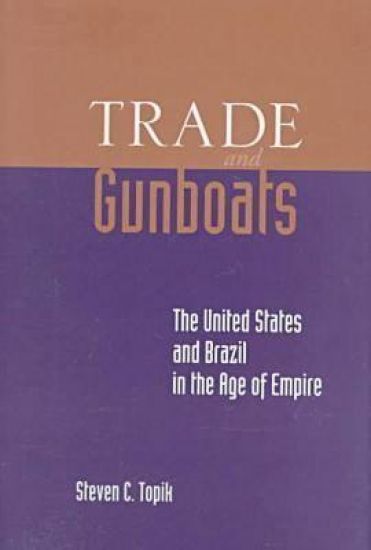
Trade and Gunboats

Trade and Gunboats

Steven C. Topik

Stanford University Press
1997
sidottu
A hundred years ago, the United States first projected itself onto the international stage, hoping to stake out a sphere of influence in Latin America just as the largest of Latin American countries, Brazil, ending a 67-year-long monarchical regime, struggled to redefine its relationship to the world economy. Debates raged between liberals and corporatists, between free traders and protectionists. When the trajectories of these two unequal giants collided, their interaction revealed much about the international economic and political affairs of their day that bears upon the debates surrounding today’s “new world order.” The book begins by examining the Blaine-Mendonca Accord of 1891, the first commercial pact ever signed between Brazil and the United States, thus beginning a special relationship that lasted into the 1970’s. This is the first study of U.S.-Brazilian relations that seriously examines the internal politics and economics of both countries and how they played themselves out in the late nineteenth century. The author attempts a new kind of international history, comparative political economy, that examines not only internal dynamics but also the nature of the international regime at the time.
Trade and Gunboats

Trade and Gunboats

Steven C. Topik

Stanford University Press
2000
pokkari
A hundred years ago, the United States first projected itself onto the international stage, hoping to stake out a sphere of influence in Latin America just as the largest of Latin American countries, Brazil, ending a 67-year-long monarchical regime, struggled to redefine its relationship to the world economy. Debates raged between liberals and corporatists, between free traders and protectionists. When the trajectories of these two unequal giants collided, their interaction revealed much about the international economic and political affairs of their day that bears upon the debates surrounding today's "new world order." The book begins by examining the Blaine-Mendonca Accord of 1891, the first commercial pact ever signed between Brazil and the United States, thus beginning a special relationship that lasted into the 1970's. This is the first study of U.S.-Brazilian relations that seriously examines the internal politics and economics of both countries and how they played themselves out in the late nineteenth century. The author attempts a new kind of international history, comparative political economy, that examines not only internal dynamics but also the nature of the international regime at the time.
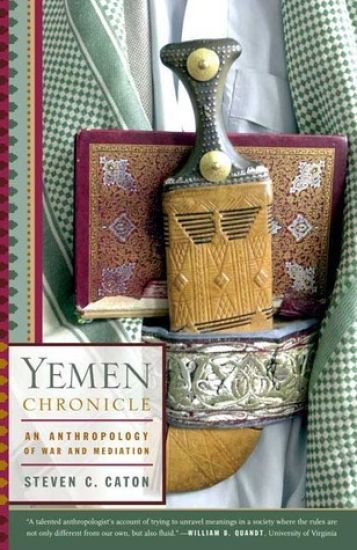
Yemen Chronicle: An Anthropology of War and Mediation
In 1979, Steven C. Caton went to a remote area of Yemen to do fieldwork on the famous oral poetry of its tribes. The recent hostage crisis in Iran made life perilous for a young American in the Middle East; worse, he was soon embroiled in a dangerous local conflict and tribal hostilities simmered for months. Yemen Chronicle is his extraordinary report both on events that ensued and on the many theoretical let alone practical difficulties of doing ethnography in such circumstances. Caton also offers a profound meditation on the political, cultural, and sexual components of modern Arab culture."
Historical Dictionary of Zimbabwe

Historical Dictionary of Zimbabwe

Steven C. Rubert; Kent R. Rasmussen

Scarecrow Press
2001
sidottu
Zimbabwe, one of Africa's longer, more promising countries, has been in the news a lot recently-for all the wrong reasons. This more than justifies a third edition. Zimbabwe has witnessed an incredible amount of history in the relatively short span of eighteen years. The new edition of this dictionary updates the dictionary to keep it abreast of the changes in the country. Hundreds of fresh entries cover new political leaders, changing governmental, cultural, and economic developments, and scores of place name changes. There were also corrections to existing entries and an expanded bibliography.
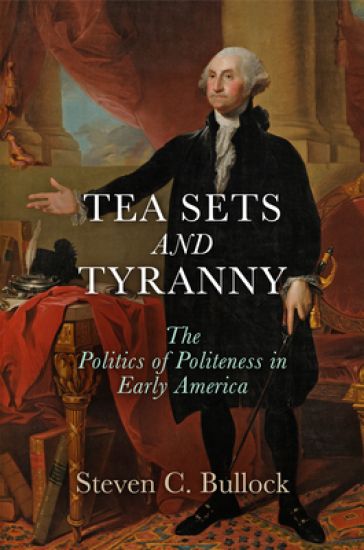
Tea Sets and Tyranny

Tea Sets and Tyranny

Steven C. Bullock

University of Pennsylvania Press
2016
sidottu
Even as eighteenth-century thinkers from John Locke to Thomas Jefferson struggled to find effective means to restrain power, contemporary discussions of society gave increasing attention to ideals of refinement, moderation, and polished self-presentation. These two sets of ideas have long seemed separate, one dignified as political theory, the other primarily concerned with manners and material culture. Tea Sets and Tyranny challenges that division. In its original context, Steven C. Bullock suggests, politeness also raised important issues of power, leadership, and human relationships. This politics of politeness helped make opposition to overbearing power central to early American thought and practice. Although these views spanned the English Atlantic world, they were particularly significant in America, most notably in helping shape its Revolution. By the end of the eighteenth century, the politics of politeness was already breaking apart, however its ideals continued to be important. Opposition to arbitrary governing became central to American political culture; self-control became a major part of nineteenth-century values, but these ideals increasingly seemed to belong in separate spheres. This division between public power and personal life continues to shape thinking about liberty so fully that it has been difficult to recognize its origins in the eighteenth-century politics of politeness. Tea Sets and Tyranny follows the experiences of six extraordinary individuals, each seeking to establish public authority and personal standing: a cast of characters that includes a Virginia governor consumed by fits of towering rage; a Carolina woman who befriended a British princess; and a former Harvard student who became America's first confidence man.
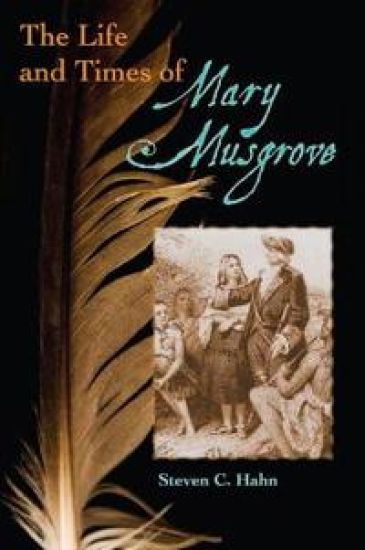
The Life and Times of Mary Musgrove

The Life and Times of Mary Musgrove

Steven C. Hahn

University Press of Florida
2012
sidottu
The story of Mary Musgrove (1700-1764), a Greek Indian-English woman struggling for success in colonial society, is an improbable one. As a literate Christian, entrepreneur, and wife of an Anglican clergyman, Mary was one of a small number of ""mixed blood"" Indians to achieve a position of prominence among English colonists. Born to a Creek mother and an English father, Mary's bicultural heritage prepared her for an eventful adulthood spent in the rough and tumble world of Colonial Georgia Indian affairs. Active in diplomacy, trade, and politics--affairs typically dominated by men--Mary worked as an interpreter between the Creek Indians and the colonists--although some argue that she did so for her own gains, altering translations to sway transactions in her favour. Widowed twice in the prime of her life, Mary and her successive husbands claimed vast tracts of land in Georgia (illegally, as British officials would have it) by virtue of her Indian heritage, thereby souring her relationship with the colony's governing officials and severely straining the colony's relationship with the Creek Indians. Using Mary's life as a narrative thread, Steven Hahn explores the connected histories of the Creek Indians and the colonies of South Carolina and Georgia. He demonstrates how the fluidity of race and gender relations on the southern frontier eventually succumbed to more rigid hierarchies that supported the region's emerging plantation system.
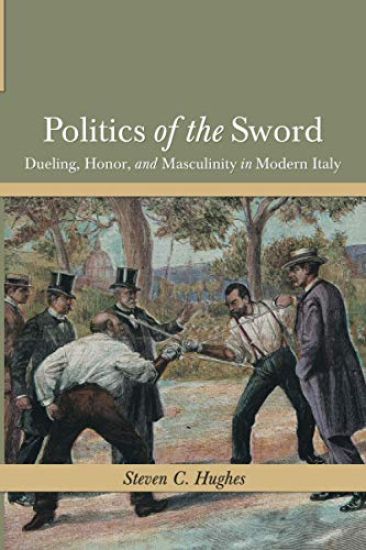
Politics of the Sword

Politics of the Sword

Steven C Hughes

Ohio State University Press
2020
pokkari
Following its creation as a country in 1861, Italy experienced a wave of dueling that led commentators to bemoan a national "duellomania" evidenced by the sad spectacle of a duel a day. Pamphlets with titles like "Down with the Duel" and "The Shame of the Duel" all communicated the passion of those who could not believe that a people supposedly just returned to the path of progress and civilization had wholeheartedly embraced such a "barbaric" custom. Yet these critics were consistently countered by sober-minded men of rank and influence who felt that the duel was necessary for the very health of the new nation. Steven C. Hughes argues that this extraordinary increase in chivalric combat occurred because the duel played an important role in the formation, consolidation, and functioning of united Italy. The code of honor that lay at the heart of the dueling ethic offered a common model and bond of masculine identity for those patriotic elites who, having created a country of great variety and contrast for often contradictory motives, had to then deal with the consequences. Thus dueling became an iconic weapon of struggle during the Risorgimento, and, as Italy performed poorly on the stage of great power politics, it continued to offer images of martial valor and manly discipline. It also enhanced the social and political power of the new national elites, whose monopoly over chivalric honor helped reinforce the disenfranchisement of the masses. Eventually, the duel fed into the hypermasculinity and cult of violence that marked the early fascist movement, but in the end it would prove too individualistic in its definition of honor to stand up to the emerging totalitarian state. Although Mussolini would himself fight five duels at the start of his career, the duel would disappear along with the liberal regime that had embraced it.
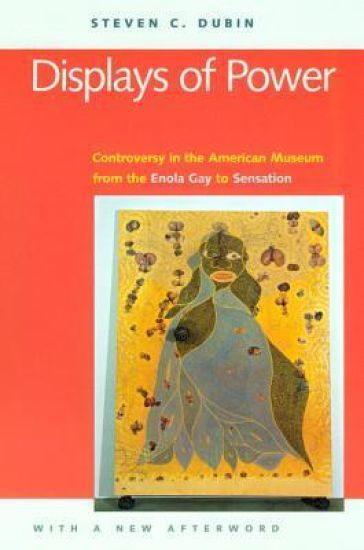
Displays of Power

Displays of Power

Steven C. Dubin

New York University Press
1999
sidottu
A study of the American cultural wars taking place in controversial museum exhibitions Museums have become ground zero in America's culture wars. Whereas fierce public debates once centered on provocative work by upstart artists, the scrutiny has now expanded to mainstream cultural institutions and the ideas they present. In Displays of Power, Steven Dubin, whose Arresting Images was deemed "masterly" by the New York Times, examines the most controversial exhibitions of the 1990s. These include shows about ethnicity, slavery, Freud, the Old West, and the dropping of the atomic bomb by the Enola Gay. This new edition also includes a preface by the author detailing the recent Sensation! controversy at the Brooklyn Museum. Displays of Power draws directly upon interviews with many key combatants: museum administrators, community activists, curators, and scholars. It authoritatively analyzes these episodes of America struggling to redefine itself in the late 20th century.
Displays of Power (with a New Afterword)

Displays of Power (with a New Afterword)

Steven C. Dubin

New York University Press
2001
pokkari
Museums have become ground zero in America's culture wars. Whereas fierce public debates once centered on provocative work by upstart artists, the scrutiny has now expanded to mainstream cultural institutions and the ideas they present. In Displays of Power, Steven Dubin, whose Arresting Images was deemed "masterly" by the New York Times, examines the most controversial exhibitions of the 1990s. These include shows about ethnicity, slavery, Freud, the Old West, and the dropping of the atomic bomb by the Enola Gay. This new edition also includes a preface by the author detailing the recent Sensation! controversy at the Brooklyn Museum. Displays of Power draws directly upon interviews with many key combatants: museum administrators, community activists, curators, and scholars. It authoritatively analyzes these episodes of America struggling to redefine itself in the late 20th century.
Rustic Warriors

Rustic Warriors

Steven C. Eames

New York University Press
2011
sidottu
The early French Wars (1689-1748) in North America saw provincial soldiers, or British white settlers, in Massachusetts and New Hampshire fight against New France and her Native American allies with minimal involvement from England. Most British officers and government officials viewed the colonial soldiers as ill-disciplined, unprofessional, and incompetent: General John Forbes called them "a gathering from the scum of the worst people." Taking issue with historians who have criticized provincial soldiers' battlefield style, strategy, and conduct, Steven Eames demonstrates that what developed in early New England was in fact a unique way of war that selectively blended elements of European military strategy, frontier fighting, and native American warfare. This new form of warfare responded to and influenced the particular challenges, terrain, and demography of early New England. Drawing upon a wealth of primary materials on King William's War, Queen Anne's War, Dummer's War, and King George's War, Eames offers a bottom-up view of how war was conducted and how war was experienced in this particular period and place. Throughout Rustic Warriors, he uses early New England culture as a staging ground from which to better understand the ways in which New Englanders waged war, as well as to provide a fuller picture of the differences between provincial, French, and Native American approaches to war.
Cultural Autonomy, Minority Rights and Globalization
This insightful and timely book analyzes the role of cultural autonomy in advancing minority rights protection on the national and global level. It assesses the historical and legal limits of the right to self-determination and autonomy and draws on Marxist internationalism, liberal nationalism and EU integrationist studies to examine the relationship between cultural autonomy and globalization. As such, emphasis is placed on the sociological and historical value of cultural autonomy, with the aim of working beyond formalistic and utilitarian approaches to cultural autonomy. The volume will appeal primarily to upper-level undergraduate and graduate level students of political science and international law interested in rethinking the role of cultural autonomy in an age of globalization.