Kirjojen hintavertailu. Mukana 12 097 377 kirjaa ja 12 kauppaa.

Kirjahaku

Etsi kirjoja tekijän nimen, kirjan nimen tai ISBN:n perusteella.

1000 tulosta hakusanalla Steven H. Pataky

Representation Theory of Finite Groups

Representation Theory of Finite Groups

Steven H. Weintraub

Amer Mathematical Society
2003
sidottu
'We explore widely in the valley of ordinary representations, and we take the reader over the mountain pass leading to the valley of modular representations, to a point from which (s)he can survey this valley, but we do not attempt to widely explore it. We hope the reader will be sufficiently fascinated by the scenery to further explore both valleys on his/her own' - from the Preface. Representation theory plays important roles in geometry, algebra, analysis, and mathematical physics. In particular, it has been one of the great tools in the study and classification of finite groups. The theory contains some particularly beautiful results: Frobenius' theorem, Burnside's theorem, Artin's theorem, Brauer's theorem - all of which are covered in this textbook. Some seem uninspiring at first but prove to be quite useful. Others are clearly deep from the outset.And when a group (finite or otherwise) acts on something else (as a set of symmetries, for example), one ends up with a natural representation of the group. This book is an introduction to the representation theory of finite groups from an algebraic point of view, regarding representations as modules over the group algebra.The approach is to develop the requisite algebra in reasonable generality and then to specialize it to the case of group representations. Methods and results particular to group representations, such as characters and induced representations, are developed in depth. Arithmetic comes into play when considering the field of definition of a representation, especially for subfields of the complex numbers.The book has an extensive development of the semisimple case, where the characteristic of the field is zero or is prime to the order of the group, and builds the foundations of the modular case, where the characteristic of the field divides the order of the group. The book assumes only the material of a standard graduate course in algebra. It is suitable as a text for a year-long graduate course. The subject is of interest to students of algebra, number theory and algebraic geometry. The systematic treatment presented here makes the book also valuable as a reference.

Practical Computing for Biologists

Practical Computing for Biologists

Steven H. D. Haddock; Casey W. Dunn

Oxford University Press Inc
2010
nidottu
Published by Sinauer Associates, an imprint of Oxford University Press. Increasingly, scientists find themselves facing exponentially larger data sets and analyses without suitable tools to deal with them. Many biologists end up using spreadsheet programs for most of their data-processing tasks and spend hours clicking around or copying and pasting, and then repeating the process for other data files. Practical Computing for Biologists shows you how to use many freely available computing tools to work more powerfully and effectively. The book was born out of the authors' own experience in developing tools for their research and helping other biologists with their computational problems. Although many of the techniques are relevant to molecular bioinformatics, the motivation for the book is much broader, focusing on topics and techniques that are applicable to a range of scientific endeavors. Twenty-two chapters organized into six parts address these topics (and more; see Contents): * Searching with regular expressions * The Unix command line * Python programming and debugging * Creating and editing graphics * Databases * Performing analyses on remote servers * Working with electronics While most of the concepts and examples apply to any operating system, the main narrative focuses on Mac OS X. Where there are differences for Windows and Linux users, parallel instructions are provided in the margin and in an appendix. The book is designed to be used as a self-guided resource for researchers, a companion book in a course, or as a primary textbook. Practical Computing for Biologists will free you from the most frustrating and time-consuming aspects of data processing so you can focus on the pleasures of scientific inquiry.
Objects of Hope

Objects of Hope

Steven H. Cooper

Analytic Press,U.S.
2000
sidottu
Despite the importance of the concept of hope in human affairs, psychoanalysts have long had difficulty accepting responsibility for the manner in which their various interpretive orientations and explanations of therapeutic action express their own hopes for their patients. In Objects of Hope: Exploring Possibility and Limit in Psychoanalysis, Steven Cooper remedies this longstanding lacuna in the literature, and, in the process, provides a thorough comparative analysis of contemporary psychoanalytic models with respect to issues of hope and hopefulness. Cooper's task is challenging, given that the most hopeful aspects of human growth frequently entail acceptance of the destructive elements of our inner lives. The analysis of hope, then, implicates what Cooper sees as a central dialectic tension in psychoanalysis: that between psychic possibility and psychic limit. He argues that analysts have historically had difficulty integrating the concept of limit into a treatment modality so dedicated to the creation and augmentation of psychic possibility. And yet, it is only by accepting the realm of limit as a necessary counterpoise to the realm of possibility and clinically embracing the tension between the two realms that analysts can further their understanding of therapeutic process in the interest of better treatment outcomes. Cooper persuasively demonstrates how each psychoanalytic theory provides its own logic of hope; this logic, in turn, translates into a distinctive sense of what the analyst may hope for the patient, and what the patient is encouraged to hope for himself or herself. Objects of Hope brings ranging scholarship and refreshing candor to bear on the knotty issue of what can and cannot be achieved in the course of psychoanalytic therapy. It will be valued not only as an exemplary exercise in comparative psychoanalysis, but also as a thoughtful, original effort to place the vital issue of hope at the center of clinical concern.
The Musical Edge of Therapeutic Dialogue

The Musical Edge of Therapeutic Dialogue

Steven H. Knoblauch

Analytic Press,U.S.
2000
sidottu
Such nuances and shifts in the music of a patient's voice have long been familiar to clinicians. Indeed, as Steven Knoblauch observes, the music of psychotherapy has been acknowledged across a variety of theoretical orientations, from Freudian to self-psychological to interpersonal and relational perspectives. In The Musical Edge of Therapeutic Dialogue, Knoblauch provides a model of "resonant minding" in which the musical elements of speech become a major source of information about unconscious communication and action. More specifically, resonant minding, by distinguishing between discrete and continuous levels of communication, between the verbal and the musical, offers a way of accessing and affecting levels of unconscious interactive process by attending to the musical edge of dialogue -- provided only that we can hear it. Drawing on detailed clinical vignettes, he explores the shifts in musical expression across a sequence of patient-therapist interactions in order to show how the dyadic logic of mutual improvisation operates at the periphery to guide the continuous flow of unconscious communication and mutual regulation. In so doing, he provides a vivid sense of how the shifting movement of the patient's "solo performance" can be facilitated and enriched by the creative "accompaniment" of the therapist. Ultimately, Knoblauch argues, the music of therapy is not only another road to the unconscious, but one uniquely able to convey emergent meanings in a variety of domains, from conflicting cultural identifications to the experience of the body to the emergence of desire. His vision of mutual immersion in a shared "performance" aimed at fostering growth coalesces into a major contribution - at once evocative and clinically consequential - to the current movement to grasp nonverbal behavior and processes of mutual regulation as they enter into all effective psychotherapy.
A Guide to Advanced Linear Algebra

A Guide to Advanced Linear Algebra

Steven H. Weintraub

Mathematical Association of America
2011
sidottu
Linear algebra occupies a central place in modern mathematics. This book provides a rigorous and thorough development of linear algebra at an advanced level. It approaches linear algebra from an algebraic point of view, but its selection of topics is governed not only for their importance in linear algebra itself, but also for their applications throughout mathematics. Topics treated in this book include: vector spaces and linear transformations; dimension counting and applications; representation of linear transformations by matrices; duality; determinants and their uses; rational and especially Jordan canonical form; bilinear forms; inner product spaces; normal linear transformations and the spectral theorem; and an introduction to matrix groups as Lie groups. Students in algebra, analysis and topology will all find much of interest and use to them and the careful treatment and breadth of subject matter will make this book a valuable reference for mathematicians throughout their professional lives.
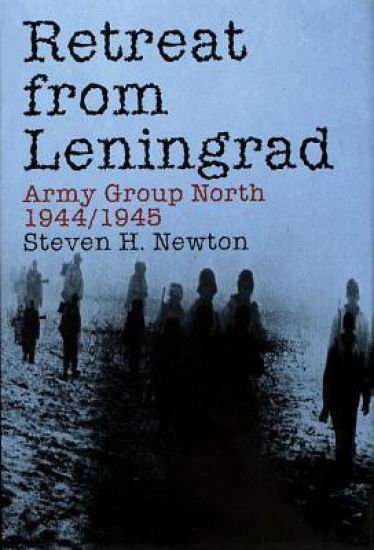
Retreat from Leningrad

Retreat from Leningrad

Steven H. Newton

Schiffer Publishing Ltd
1997
sidottu
Most histories of the northern sector of the Russian front concentrate on the siege of Leningrad, and focus little attention on the heavy fighting during the Wehrmacht's withdrawl into the Baltic countries. Retreat from Leningrad begins where those books end, with the massive January 1944 Soviet offensive which was designed not only to break the siege completely but also to destroy Army Group North. Enjoying huge superiorites in men and material, the Red Army attempted to crush two German armies which lacked more than a handful of tanks, contained a high percentage of unreliable foreign volunteers, and were hampered by Adolph Hitler's inflexable "no retreat" strategy. This untold story is recovered here in great detail, primarily as told by the German officers who served as commanders and chiefs of staff for Army Group North and its constituent armies. Their accounts were drafted soon after the war ended at the request of the United States Army, but have languished in poorly translated manuscripts until Professor Steven H. Newton re-translated, corrected, and annotated them, as well as providing subsatanial amounts of new material direct from the army group's operational records. The result is the most comprehensive and detailed operational study of sustained combat in the northern sector of the Russian front ever published in English. Dr Steven H. Newton is Associate Professor of History and Political Science at Delaware State University. Trained as a military historian, he received his Ph.D. fromn The College of William and Mary. His specalities include the German Army, Eastern from combat in World War II, and the American Civil War. Retreat from Lenigrad is his third book; he is also the author of German Battle Tactics on the Russian Front, 1941-1945(also available from Schiffer Publishing). Dr Newton is an active lecturer on Military topics, who has appeared in Chicago, Philadelphia, and New York. He also serves as a platoon sergeant in Army National Guard's "Stonewall Brigade"(1st Brigade, 29th Infantry Division[Light]).
Beat Your Conviction DUI Edition: Beat Your Conviction DUI Edition; What the Police Do Not Want You to Know and Secrets from a Former DUI Prosecutor
Beat your conviction, DUI Edition was written by a former DUI prosecutor to be a driver's training manual for understanding a DUI encounter and to successfully invoke your Constitutional rights to avoid a DUI conviction. This simple to read and understand book is a must for anyone that drives a vehicle and has a glass of wine or other alcoholic beverage at a restaurant and then drives home. This book will teach you what all driver's need to know when they get stopped by the police. Most importantly, there are very specific words to say as well as words to avoid when being question by the police. My book uses real police reports of DUI encounters as examples on how to interact with the police to not be intimidated by their authority.
Playing and Becoming in Psychoanalysis

Playing and Becoming in Psychoanalysis

Steven H. Cooper

TAYLOR FRANCIS LTD
2022
sidottu
Building on Winnicott’s theory of play, this book defines the concept of play from the perspective of clinical practice, elaborating on its application to clinical problems. Although Winnicott’s theory of play constitutes a radical understanding of the intersubjectivity of therapy, Cooper contends, there remains a need to explore the significance of play to the enactment of transference-countertransference. Among several ideas, this book considers how to help patients as they navigate debilitating internal object relations, supporting them to engage with "bad objects" in alternatively playful ways. In addition, throughout the book, Cooper develops an ethic of play that can support the analyst to find "ventilated spaces" of their own, whereby they can reflect on transference-countertransference. Rather than being hindered by the limits of the therapeutic setting, this book explores how possibilities for play can develop out of these very constraints, ultimately providing a fulsome exploration of the concept without eviscerating its magic. With a broad theoretical base, and a wide definition of play, this book will appeal to psychoanalysts and psychoanalytic psychotherapists wanting to understand how play functions within and can transform their clinical practice.
Playing and Becoming in Psychoanalysis

Playing and Becoming in Psychoanalysis

Steven H. Cooper

TAYLOR FRANCIS LTD
2022
nidottu
Building on Winnicott’s theory of play, this book defines the concept of play from the perspective of clinical practice, elaborating on its application to clinical problems. Although Winnicott’s theory of play constitutes a radical understanding of the intersubjectivity of therapy, Cooper contends, there remains a need to explore the significance of play to the enactment of transference-countertransference. Among several ideas, this book considers how to help patients as they navigate debilitating internal object relations, supporting them to engage with "bad objects" in alternatively playful ways. In addition, throughout the book, Cooper develops an ethic of play that can support the analyst to find "ventilated spaces" of their own, whereby they can reflect on transference-countertransference. Rather than being hindered by the limits of the therapeutic setting, this book explores how possibilities for play can develop out of these very constraints, ultimately providing a fulsome exploration of the concept without eviscerating its magic. With a broad theoretical base, and a wide definition of play, this book will appeal to psychoanalysts and psychoanalytic psychotherapists wanting to understand how play functions within and can transform their clinical practice.
Nonlinear Dynamics and Chaos

Nonlinear Dynamics and Chaos

Steven H Strogatz

TAYLOR FRANCIS LTD
2024
sidottu
The goal of this third edition of Nonlinear Dynamics and Chaos: With Applications to Physics, Biology, Chemistry, and Engineering is the same as previous editions: to provide a good foundation - and a joyful experience - for anyone who’d like to learn about nonlinear dynamics and chaos from an applied perspective.The presentation stresses analytical methods, concrete examples, and geometric intuition. The theory is developed systematically, starting with first-order differential equations and their bifurcations, followed by phase plane analysis, limit cycles and their bifurcations, and culminating with the Lorenz equations, chaos, iterated maps, period doubling, renormalization, fractals, and strange attractors.The prerequisites are comfort with multivariable calculus and linear algebra, as well as a first course in physics. Ideas from probability, complex analysis, and Fourier analysis are invoked, but they're either worked out from scratch or can be safely skipped (or accepted on faith).Changes to this edition include substantial exercises about conceptual models of climate change, an updated treatment of the SIR model of epidemics, and amendments (based on recent research) about the Selkov model of oscillatory glycolysis. Equations, diagrams, and every word has been reconsidered and often revised. There are also about 50 new references, many of them from the recent literature.The most notable change is a new chapter. Chapter 13 is about the Kuramoto model.The Kuramoto model is an icon of nonlinear dynamics. Introduced in 1975 by the Japanese physicist Yoshiki Kuramoto, his elegant model is one of the rare examples of a high-dimensional nonlinear system that can be solved by elementary means.Students and teachers have embraced the book in the past, its general approach and framework continue to be sound.
Psychoanalysis in Play

Psychoanalysis in Play

Steven H. Cooper

TAYLOR FRANCIS LTD
2025
nidottu
In this book, Steven H. Cooper expands on his thinking of psychoanalysis as a form of play and the implications of this for theory and clinical practice.The most important activities of the analyst as a usable object for the patient have to do with finding the patient’s creative elements of self. Cooper illuminates this process of finding within both patient and analyst. He illuminates how play processes occur in relation to such concepts as defense, temporality, and neutrality within the analytic situation. Along the way, he theorizes a complex but usable clinical relationship between becoming and knowing in psychoanalytic work.With rich clinical vignettes and a fresh take on the nature and practice of psychoanalysis, this book is key reading for all psychoanalysts and psychoanalytic psychotherapists.
Psychoanalysis in Play

Psychoanalysis in Play

Steven H. Cooper

TAYLOR FRANCIS LTD
2025
sidottu
In this book, Steven H. Cooper expands on his thinking of psychoanalysis as a form of play and the implications of this for theory and clinical practice.The most important activities of the analyst as a usable object for the patient have to do with finding the patient’s creative elements of self. Cooper illuminates this process of finding within both patient and analyst. He illuminates how play processes occur in relation to such concepts as defense, temporality, and neutrality within the analytic situation. Along the way, he theorizes a complex but usable clinical relationship between becoming and knowing in psychoanalytic work.With rich clinical vignettes and a fresh take on the nature and practice of psychoanalysis, this book is key reading for all psychoanalysts and psychoanalytic psychotherapists.
What's Wrong with the First Amendment

What's Wrong with the First Amendment

Steven H. Shiffrin

Cambridge University Press
2016
sidottu
What is Wrong with the First Amendment? argues that the US love affair with the First Amendment has mutated into free speech idolatry. Free speech has been placed on so high a pedestal that it is almost automatically privileged over privacy, fair trials, equality and public health, even protecting depictions of animal cruelty and violent video games sold to children. At the same time, dissent is unduly stifled and religious minorities are burdened. The First Amendment benefits the powerful at the expense of the vulnerable. By contrast, other Western democracies provide more reasonable accommodations between free speech and other values though their protections of dissent, and religious minorities are also inadequate. Professor Steven H. Shiffrin argues that US free speech extremism is not the product of broad cultural factors, but rather political ideologies developed after the 1950s. He shows that conservatives and liberals have arrived at similar conclusions for different political reasons.
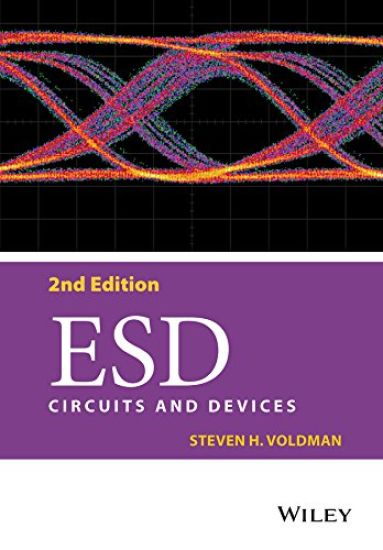
ESD

ESD

Steven H. Voldman

John Wiley Sons Inc
2015
sidottu
ESD: Circuits and Devices 2nd Edition provides a clear picture of layout and design of digital, analog, radio frequency (RF) and power applications for protection from electrostatic discharge (ESD), electrical overstress (EOS), and latchup phenomena from a generalist perspective and design synthesis practices providing optimum solutions in advanced technologies. New features in the 2nd edition: Expanded treatment of ESD and analog design of passive devices of resistors, capacitors, inductors, and active devices of diodes, bipolar junction transistors, MOSFETs, and FINFETs.Increased focus on ESD power clamps for power rails for CMOS, Bipolar, and BiCMOS.Co-synthesizing of semiconductor chip architecture and floor planning with ESD design practices for analog, and mixed signal applicationsIllustrates the influence of analog design practices on ESD design circuitry, from integration, synthesis and layout, to symmetry, matching, inter-digitation, and common centroid techniques.Increased emphasis on system-level testing conforming to IEC 61000-4-2 and IEC 61000-4-5.Improved coverage of low-capacitance ESD, scaling of devices and oxide scaling challenges. ESD: Circuits and Devices 2nd Edition is an essential reference to ESD, circuit & semiconductor engineers and quality, reliability &analysis engineers. It is also useful for graduate and undergraduate students in electrical engineering, semiconductor sciences, microelectronics and IC design.