Kirjojen hintavertailu. Mukana 11 244 527 kirjaa ja 12 kauppaa.

Kirjahaku

Etsi kirjoja tekijän nimen, kirjan nimen tai ISBN:n perusteella.

1000 tulosta hakusanalla Steven J. Howell

DNA Is Not Destiny

DNA Is Not Destiny

Steven J. Heine

WW Norton Co
2017
sidottu
Do you fear what might be lurking in your DNA? Well, now you can find out, and you most likely will. Scientists expect one billion people to have their genomes sequenced by 2025, and as the price drops it may even become a standard medical procedure. Yet cultural psychologist Steven Heine argues that the first thing we’ll do upon receiving our DNA test results is to misinterpret them completely. We’ve become accustomed to breathless media coverage about newly discovered “cancer” or “IQ” or “infidelity” genes, each one promising a deeper understanding of what makes us tick. But as Heine shows, most of these claims are oversimplified and overhyped misinterpretations of how our DNA really works. With few exceptions, it is a complex combination of experience, environment, and genetics that determines who we are, how we behave, and what diseases will afflict us in the future. So why do we continue to buy into the belief that our genes control our destiny? Heine argues that we are psychologically ill equipped to deal with DNA results, repeatedly falling into predictable biases—switch-thinking, essentialism, fatalism, negativity dominance, and more—that mold our thinking about the information we receive. Heine shares his research—and his own genome-sequencing results—to not only to set the record straight regarding what your genes actually reveal about your health, intelligence, ethnic identity, and family, but to also help you counteract these insidious cognitive traps. His fresh, surprising conclusions about the promise, and limits, of genetic engineering and DNA testing upend conventional thinking and reveal a simple, profound truth: your genes create life—but they do not control it.
The Win-Win Solution

The Win-Win Solution

Steven J. Brams; Alan D. Taylor

WW Norton Co
2000
nidottu
Since the publication of Roger Fisher and William Ury's highly influential book, Getting to Yes, it has been widely recognized that there is a middle ground between winning and losing in negotiation. Yet, while Getting to Yes was long on motivation, it was short on technique. What you really want to know is on which issues you will win, on which you will lose, and on which you will have to compromise. To this question, Steven J. Brams and Alan D. Taylor bring a patented procedure that not only is fair but also actually guarantees that both parties walk away with as much of the "win-win" potential as possible. "One can hire a lawyer and spend years and thousands of dollars fighting [in a divorce], or one can make use of a neat new formula devised by Steven Brams and Alan Taylor."—The New Yorker
DNA Is Not Destiny

DNA Is Not Destiny

Steven J. Heine

WW Norton Co
2018
nidottu
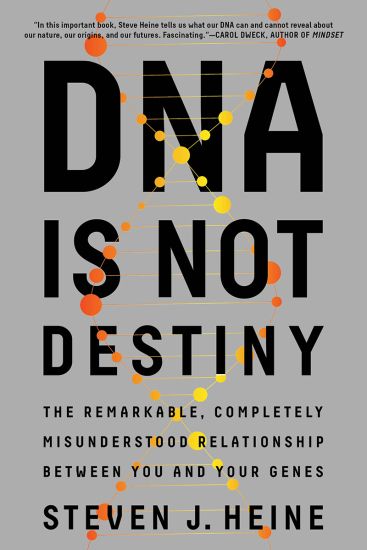
Around 250,000 people have had their genomes sequenced and scientists expect that number to rise to one billion by 2025. Steven J. Heine argues that the first thing we will do on receiving our DNA test results is to misinterpret them completely. In DNA Is Not Destiny, Heine shares his research to not only show what your genes can tell you about your health, intelligence, ethnic identity and family but also highlight the psychological biases that make us so vulnerable to the media hype. Heine’s fresh, surprising conclusions about the promise, and limits, of genetic engineering and DNA testing upend conventional thinking and reveal a simple, profound truth: your genes create life—but they do not control it.
Cultural Psychology

Cultural Psychology

Steven J. Heine

WW Norton Co
2020
nidottu
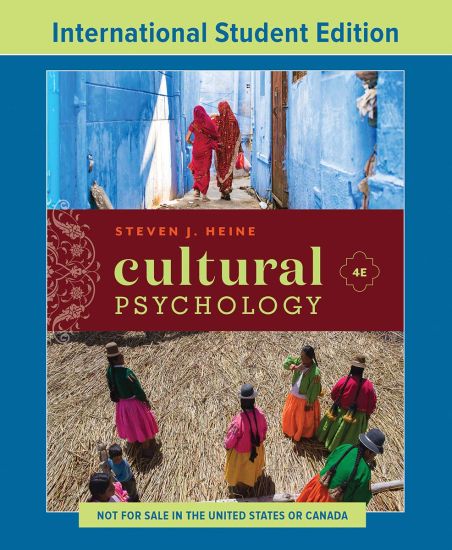
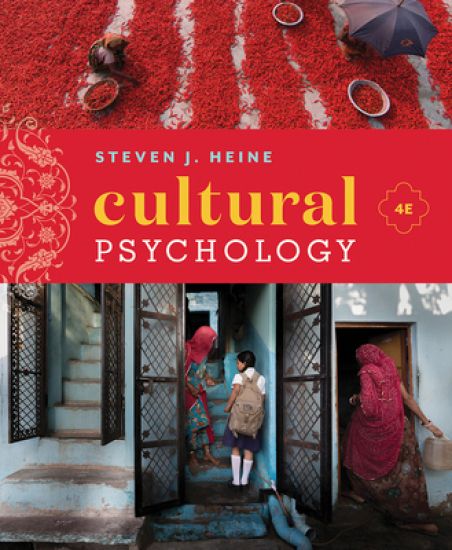
The most contemporary and relevant introduction to the field, Cultural Psychology Fourth Edition, is unmatched in both its presentation of current, global experimental research and its focus on helping students to think like cultural psychologists.
Cultural Psychology

Cultural Psychology

Steven J. Heine

WW NORTON CO
2020
nidottu
The most contemporary and relevant introduction to the field,Cultural Psychology, Fourth Edition, is unmatched in both its presentation of current, global experimental research and its focus on helping students to think like cultural psychologists.
Psychology of Learning and Behavior

Psychology of Learning and Behavior

Steven J. Robbins; Barry Schwartz; Edward A. Wasserman

WW Norton Co
2001
sidottu
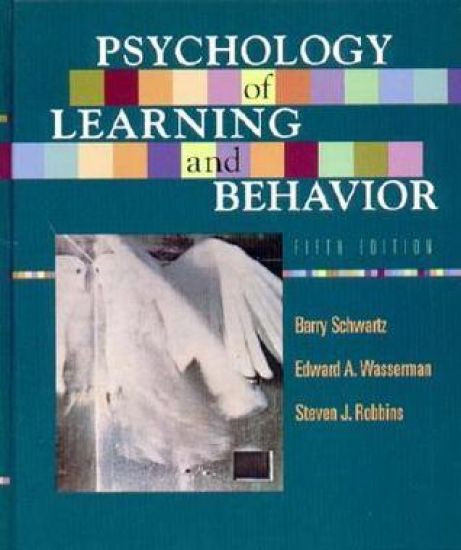
Barry Schwartz, Steven Robbins, and new coauthor Edward Wasserman offer students an engaging introduction to the basic principles of Pavlovian conditioning, operant conditioning, and comparative cognition. The text’s critical approach exposes students to the unresolved problems and controversies surrounding behavior theory and encourages them to interpret the material and make connections between theories and real-life situations. With several hundred new references, a new emphasis on comparative cognition, and expanded treatment of neuroscience and the neural basis of learning, the Fifth Edition sets the standard in its coverage of contemporary theory and research.
No Heroes, No Villains

No Heroes, No Villains

Steven J. Phillips

Vintage Books
1978
pokkari
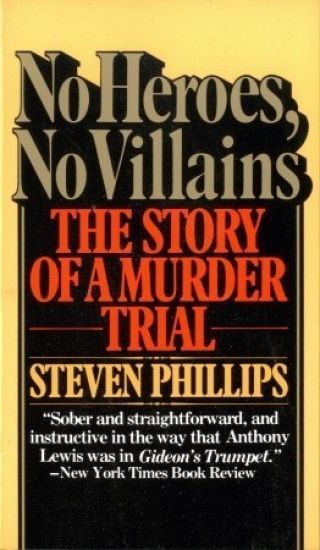
On June 28, 1972 in a South Bronx subway station, John Skagen, a white off-duty policeman on his way home, suddenly and without apparent provocation, ordered James Richardson, a black man on his way to work, to get against the wall and put his hands up. Richardson had a gun, and the two exchanged shots. In the melee that followed, Skagen was fatally wounded by a cop who rushed to the scene. In the ensuing trial, William Kunstler handled Richardson's defense and the author of this book, then assistant district attorney, prosecuted the case. Here is a first-hand, behind-the-scenes account of every step of the proceedings.
International Law, New Diplomacy and Counterterrorism
This interdisciplinary book explores how terrorism is meant to target a government’s legitimacy, and advocates for sounder defensive measures when countering international attacks.The dramatic increase in global cooperation throughout the twentieth century—between international organisations and their state missions of diplomats, foreign officers, international civil servants, intelligence officers, military personnel, police investigators, judges, legislators, and financial regulators—has had a bearing on the shape and content of the domestic political order. The rules that govern all of these interactions, and the diplomats engaged to monitor and advocate for compliance, have undergone a mushrooming development following the conclusion of each world war. This dramatic growth is arguably the most significant change the international structure has experienced since the inception of the state-based system ushered in with the Peace of Westphalia in 1648. International Law, New Diplomacy and Counterterrorism explores the impact of this growth on domestic legitimacy through the integration of two disciplines: international law and political philosophy. Focusing particularly on the cross-border counterterrorism actions launched by the United States, the author investigates how civil societies have often turned to the standards of international law to understand and judge the legitimacy of their government’s counterterrorism policies reaching across international borders. The book concludes that those who craft counterterrorism policies must be attentive to defending the target of legitimacy by being wholly mindful of the realms of legality, morality and efficacy when exercising force.This book will be of much interest to students of international law, diplomacy, counterterrorism, political philosophy, security studies and IR.
Emotional Intelligence Skills Assessment (EISA) Self

Emotional Intelligence Skills Assessment (EISA) Self

Steven J. Stein; Derek Mann; Peter Papadogiannis; Wendy Gordon

John Wiley Sons Inc
2009
nidottu
The Emotional Intelligence Skills Assessment (EISA): Self is your personal instrument to understanding and increasing your emotional intelligence Developed in partnership with MHS (the same company who brought you the EQ-i), The EISA: Self is a 50-item assessment that measures EI on 5 scales: Perceiving, Managing, Decision Making, Achieving, and Influencing. The EISA: Self will help you better understand how emotional and social skills impact your performance and how you can strengthen your effectiveness by using these skills successfully. It will also help you: Discover the major components of emotional intelligenceRecognize the behaviors and characteristics of an emotionally intelligent personIdentify areas where you can apply emotional intelligenceEvaluate your own emotional strengths and opportunities for growth
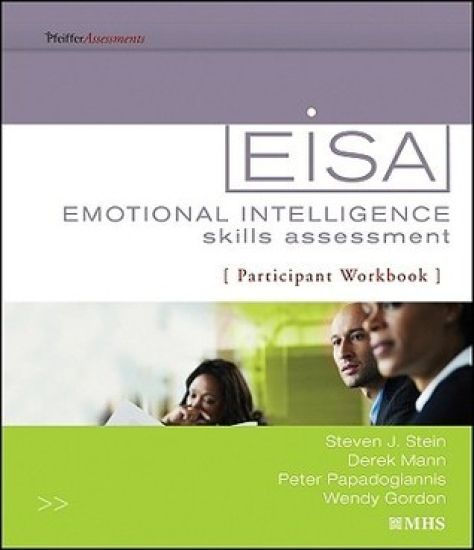
Emotional Intelligence Skills Assessment (EISA) Participant Workbook

Emotional Intelligence Skills Assessment (EISA) Participant Workbook

Steven J. Stein; Derek Mann; Peter Papadogiannis; Wendy Gordon

John Wiley Sons Inc
2009
nidottu
Your Personal Guide to Understanding and Increasing Your Emotional Intelligence This hands-on workbook is your companion to the dynamic Emotional Intelligence Skills Assessment (EISA) workshop in which you will be given the opportunity to measure your skills in five key areas—Perceiving, Managing, Decision Making, Achieving, and Influencing. These are the key areas that most influence personal performance. Once you have completed the 50-item self and 360° assessments, the EISA workbook will help you better understand how emotional and social skills impact your performance and how you can strengthen your effectiveness by using these skills successfully. The EISA participant workbook will also help you: Discover the major components of emotional intelligence Recognize the behaviors and characteristics of an emotionally intelligent person Identify areas where you can apply emotional intelligence Evaluate your own emotional strengths and opportunities for growth Generate action steps for improving your emotional and social abilities that will lead to success
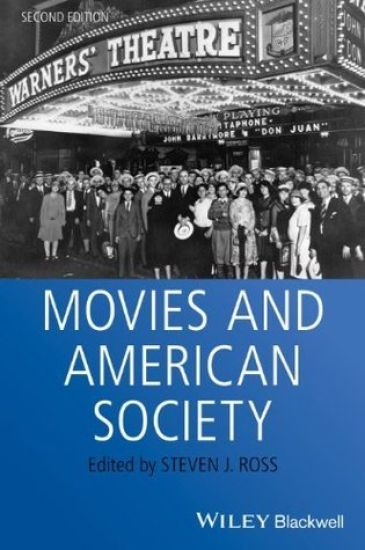
Movies and American Society

Movies and American Society

Steven J. Ross

John Wiley Sons Inc
2014
nidottu
The second edition of Movies and American Society is a comprehensive collection of essays and primary documents that explore the ways in which movies have changed—and been changed by—American society from 1905 to the present. Each chapter includes an introduction, discussion questions, an essay examining the issues of the period, primary documents, and a list of further reading and screeningsIncludes a new chapter on "American Film in the Age of Terror" and new essays for Chapter 9 ("Race, Violence, and Film") and Chapter 13 ("Hollywood Goes Global"), as well as updated Reading and Screenings sectionsDiscusses all the major periods in American film history from the first nickelodeons to the wars in Iraq and Afghanistan and the globalization of HollywoodDemonstrates the unique influence of movies on all aspects of American culture, from ideology, politics, and gender to class, war, and race relationsEngaging and accessible for students, with jargon-free essays and primary documents that show social practices and controversies as well as the fun and cultural influence of movies and movie-going
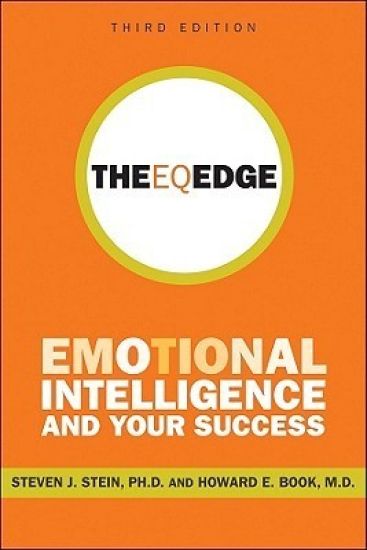
The EQ Edge

The EQ Edge

Steven J. Stein; Howard E. Book

John Wiley Sons Inc
2011
nidottu
REVISED AND UPDAT ED WITH NEW RESEARCH INTO EQ AND PERSONAL AND CAREER SUCCESS What is the formula for success at your job? As a spouse? A parent? A Little League baseball coach or behind the bench of a minor hockey team? What does it take to get ahead? To separate yourself from the competition? To lead a less stressful and happier existence? To be fulfilled in personal and professional pursuits? What is the most important dynamic of your makeup? Is it your A) intelligence quotient? or B) emotional quotient? If you picked "A", you are partly correct. Your intelligence quotient can be a predictor of things such as academic achievement. But your IQ is fixed and unchangeable. The real key to personal and professional growth is your emotional intelligence quotient, which you can nurture and develop by learning more about EQ from the international bestseller The EQ Edge. Authors Steven J. Stein and Howard E. Book show you how the dynamic of emotional intelligence works. By understanding EQ, you can build more meaningful relationships, boost your confidence and optimism, and respond to challenges with enthusiasm-all of which are essential ingredients of success. The EQ Edge offers fascinating-and sometimes surprising-insights into what it takes to be a top law-enforcement officer, lawyer, school principal, student, doctor, dentist or CEO. You will learn what the top EQ factors are across many different kinds of jobs, from business managers and customer service representatives to HR professionals and public servants. The EQ Edge will help you determine which personnel are the right fit for job opportunities and who among your staff are the most promising leaders and drivers of your business. And because all of us have other roles-parent, spouse, caregiver to aging parents, neighbor, friend-The EQ Edge also describes how everyone can be more successful in these relationships. "Finally, a practical and usable guide to what emotional intelligence is all about. This book peels the onion on what EQ really is and teaches the reader to assess their own EQ and how to increase it. This is the holy grail for career success."—Michael Feiner, Professor, Columbia Graduate School of Business and author of The Feiner Points of Leadership
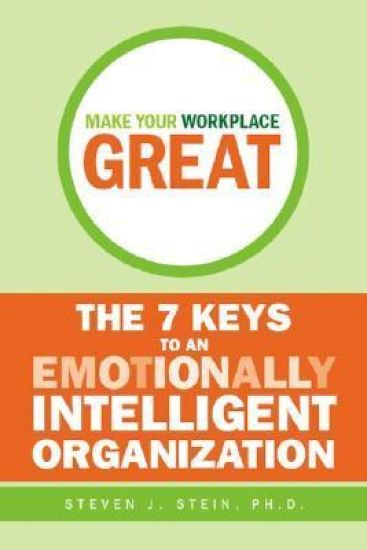
Make Your Workplace Great

Make Your Workplace Great

Steven J. Stein

John Wiley Sons Inc
2007
sidottu
What Steven J. Stein found out about creating and sustaining great workplaces The proprietary and cutting-edge research carried out by the author led to outcomes that shed new light on management practice and strategy. The 7 Keys presented in this book, when implemented, will produce immediate results and long-term enhanced performance. You will be privy to what the author has learned about the changing workplace and the role leaders play in maximizing their workforce. You can fill an organization with all the intelligent and highly educated people you want, but without the right culture and discipline, your chances of success are in doubt. Use this book to see how your organization measures up to the 7 Keys and implement the necessary changes to make your workplace a happier and more productive one. The 7 keys Hire capable people who love the work they do and show how they contribute to the bigger picture.Compensate people fairly.Don't overwork (or underwork) people.Build strong teams with shared purpose and viable goals.Make sure managers can manage.Treat people with respect and leverage their unique talents.Be proactively responsible by doing the right things to win the hearts and minds of your people.
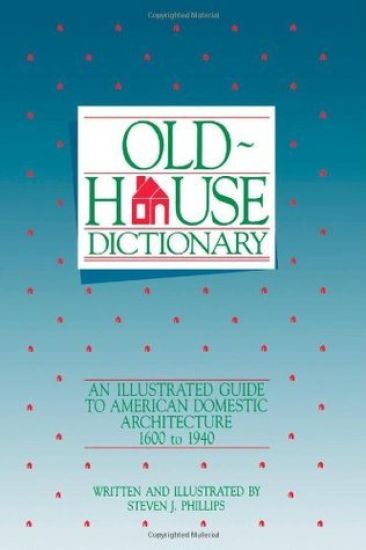
Old-House Dictionary

Old-House Dictionary

Steven J. Phillips

John Wiley Sons Inc
1992
nidottu
Old-House Dictionary From a One Room Cabin to a Beaux-Arts Mansion Here’s a concise and easily understandable architectural dictionary for professionals and amateurs alike. More than 450 illustrations, 1500 terms, 750 definitions, and 17 useful cross references guide you smoothly through the oftentimes confusing language of American domestic architecture. Who is This Dictionary For?*Architects and Architectural Historians*Preservationists*Building Trades Professionals*Interior Designers*High School and College Students*Old Home Owners and Lovers
Beyond Coso

Beyond Coso

Steven J. Root

John Wiley Sons Inc
2000
nidottu
The authoritative, practical guide to internal control after COSO (Committee on Sponsoring Organizations of the Treadway Commission) Beyond COSO unravels the complexities of the COSO Report while providing clear-cut guidelines on how to implement the various internal controls it mandates. Just as important, it builds on the COSO framework to provide a more rigorous system that corporate executives and directors can use to transform the internal control function into a valuable strategic tool for leveraging corporate strengths and improving performance. The first practical guide to complying with COSO Report mandates, Beyond COSO: *Clearly explains the intricacies of the COSO Report *Describes proven techniques for complying with COSO requirements *Provides a detailed account of the internal control oversight process *Offers expert recommendations on how to carry out internal control responsibilities more efficiently *Supplies a wealth of ready-to-use internal control documentation Beyond COSO is an invaluable working resource for internal and external auditors, CFOs, members of audit committees, and corporate directors. www.wiley.com/accounting
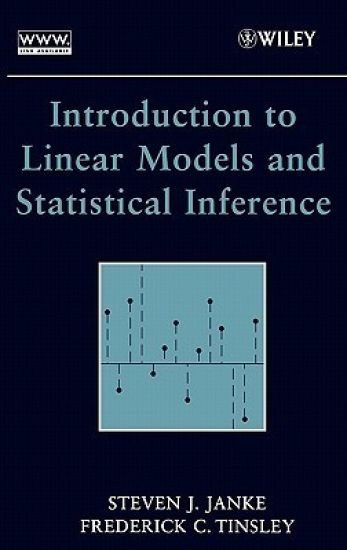
Introduction to Linear Models and Statistical Inference

Introduction to Linear Models and Statistical Inference

Steven J. Janke; Frederick Tinsley

John Wiley Sons Inc
2005
sidottu
A multidisciplinary approach that emphasizes learning by analyzing real-world data sets This book is the result of the authors' hands-on classroom experience and is tailored to reflect how students best learn to analyze linear relationships. The text begins with the introduction of four simple examples of actual data sets. These examples are developed and analyzed throughout the text, and more complicated examples of data sets are introduced along the way. Taking a multidisciplinary approach, the book traces the conclusion of the analyses of data sets taken from geology, biology, economics, psychology, education, sociology, and environmental science. As students learn to analyze the data sets, they master increasingly sophisticated linear modeling techniques, including: * Simple linear models * Multivariate models * Model building * Analysis of variance (ANOVA) * Analysis of covariance (ANCOVA) * Logistic regression * Total least squares The basics of statistical analysis are developed and emphasized, particularly in testing the assumptions and drawing inferences from linear models. Exercises are included at the end of each chapter to test students' skills before moving on to more advanced techniques and models. These exercises are marked to indicate whether calculus, linear algebra, or computer skills are needed. Unlike other texts in the field, the mathematics underlying the models is carefully explained and accessible to students who may not have any background in calculus or linear algebra. Most chapters include an optional final section on linear algebra for students interested in developing a deeper understanding. The many data sets that appear in the text are available on the book's Web site. The MINITAB(r) software program is used to illustrate many of the examples. For students unfamiliar with MINITAB(r), an appendix introduces the key features needed to study linear models. With its multidisciplinary approach and use of real-world data sets that bring the subject alive, this is an excellent introduction to linear models for students in any of the natural or social sciences.
Game Theory and Politics

Game Theory and Politics

Steven J. Brams

Dover Publications Inc.
2011
nidottu
This illuminating and instructive survey demonstrates both the insights and the pitfalls that result from applying game theoretic models to the analysis of problems in political science. Using real-life examples, it shows how game theory can explain and elucidate complex political situations, from warfare to presidential vetoes. 1975 edition. 24 figures.
The Fairness Doctrine and the Media

The Fairness Doctrine and the Media

Steven J. Simmons

University of California Press
2022
pokkari
The Fairness Doctrine and the Media examines the complex history and ongoing debates surrounding the Federal Communications Commission's fairness doctrine, a regulation designed to ensure that broadcast media provide balanced and diverse viewpoints on controversial issues of public importance. The doctrine, which arose in the context of the rise of radio and television, was grounded in the belief that media outlets, with their amplified voices, held a responsibility to ensure that the public could hear all sides of important issues. This book delves into the legal and practical implications of the fairness doctrine, offering a historical narrative of its development, its challenges, and its eventual decline. The author critically explores the doctrine’s evolution, including its inconsistencies, potential for misuse, and the dangers of government overreach, while also offering thoughtful proposals for reform. Through a detailed analysis, the book provides an insightful examination for a wide range of audiences, including students, legal professionals, broadcasters, and members of the general public interested in media regulation and freedom of speech. The work is an invaluable resource for those seeking a nuanced understanding of how government regulation intersects with media practices, and it critically assesses the role of the fairness doctrine in shaping media content. By exposing both the strengths and shortcomings of this regulatory effort, the book encourages readers to reexamine long-held assumptions about the balance between government intervention and press freedom, making it a vital text for those engaged in the ongoing debate about the future of media regulation in the United States. This title is part of UC Press's Voices Revived program, which commemorates University of California Press’s mission to seek out and cultivate the brightest minds and give them voice, reach, and impact. Drawing on a backlist dating to 1893, Voices Revived makes high-quality, peer-reviewed scholarship accessible once again using print-on-demand technology. This title was originally published in 1978.
The Fairness Doctrine and the Media

The Fairness Doctrine and the Media

Steven J. Simmons

University of California Press
2022
sidottu
The Fairness Doctrine and the Media examines the complex history and ongoing debates surrounding the Federal Communications Commission's fairness doctrine, a regulation designed to ensure that broadcast media provide balanced and diverse viewpoints on controversial issues of public importance. The doctrine, which arose in the context of the rise of radio and television, was grounded in the belief that media outlets, with their amplified voices, held a responsibility to ensure that the public could hear all sides of important issues. This book delves into the legal and practical implications of the fairness doctrine, offering a historical narrative of its development, its challenges, and its eventual decline. The author critically explores the doctrine’s evolution, including its inconsistencies, potential for misuse, and the dangers of government overreach, while also offering thoughtful proposals for reform. Through a detailed analysis, the book provides an insightful examination for a wide range of audiences, including students, legal professionals, broadcasters, and members of the general public interested in media regulation and freedom of speech. The work is an invaluable resource for those seeking a nuanced understanding of how government regulation intersects with media practices, and it critically assesses the role of the fairness doctrine in shaping media content. By exposing both the strengths and shortcomings of this regulatory effort, the book encourages readers to reexamine long-held assumptions about the balance between government intervention and press freedom, making it a vital text for those engaged in the ongoing debate about the future of media regulation in the United States. This title is part of UC Press's Voices Revived program, which commemorates University of California Press’s mission to seek out and cultivate the brightest minds and give them voice, reach, and impact. Drawing on a backlist dating to 1893, Voices Revived makes high-quality, peer-reviewed scholarship accessible once again using print-on-demand technology. This title was originally published in 1978.
Sky and Ocean Joined

Sky and Ocean Joined

Steven J. Dick

Cambridge University Press
2007
pokkari
As one of the oldest scientific institutions in the United States, the US Naval Observatory has a rich and colourful history. This volume is, first and foremost, a story of the relations between space, time and navigation, from the rise of the chronometer in the United States to the Global Positioning System of satellites, for which the Naval Observatory provides the time to a billionth of a second per day. It is a story of the history of technology, in the form of telescopes, lenses, detectors, calculators, clocks and computers over 170 years. It describes how one scientific institution under government and military patronage has contributed, through all the vagaries of history, to almost two centuries of unparalleled progress in astronomy. Sky and Ocean Joined will appeal to historians of science, technology, scientific institutions and American science, as well as astronomers, meteorologists and physicists.