

Kirjahaku
Etsi kirjoja tekijän nimen, kirjan nimen tai ISBN:n perusteella.
1000 tulosta hakusanalla Steven R. Rose

A major work of history, "The Great Tax Wars" is the gripping, epic story of six decades of often violent conflict over wealth, power, and fairness that gave America the income tax. It's the story of a tumultuous period of radical change, from Abraham Lincoln and the Civil War through the progressive era under Theodore Roosevelt and ending with Woodrow Wilson and World War I. During these years of upheaval, America was transformed from an agrarian society into a mighty industrial nation, great fortunes were amassed, farmers and workers rebelled, class war was narrowly averted, and America emerged as a global power. "The Great Tax Wars" features an extraordinary cast of characters, including the men who built the nation's industries and the politicians and reformers who battled them -- from J. P. Morgan and Andrew Carnegie to Lincoln, T.R., Wilson, William Jennings Bryan, and Eugene Debs. From their ferocious battles emerged a more flexible definition of democracy, economic justice, and free enterprise largely framed by a more progressive tax system. In this groundbreaking book, Weisman shows how the ever controversial income tax transformed America and how today's debates about the tax echo those of the past.

The metaphor of performance has been applied fruitfully by anthropologists and other social theorists to different aspects of human social existence, and furnishes a potentially helpful model in terms of which to think theologically about Christian life. After an introductory editorial chapter reflecting on the nature of artistic performance and its relationship to the notions of tradition and identity, Part One of this book attends specifically to the phenomenon of dramatic performance and possible theological applications of it. Part Two considers various aspects of the performance of Christian identity, looking at worship, the interpretation of the Bible, Christian response to elements in the contemporary media, the shape of Christian moral life, and ending with a theological reflection on the shape of personal identity, correlating it with the theatrical metaphors of 'character' and 'performing a part' in a scripted drama. Part Three demonstrates how art forms (including some technically non-performative ones - literature, poetry, painting) may constitute faithful Christian practices in which the tradition is authentically 'performed', producing works which break open its meaning in profound new ways for a constantly shifting context.

In Every Knee Should Bow, Steven Harmon explores the manner in which Clement of Alexandria (ca. 160-215 C.E.), Origen (ca. 185-ca. 251 C.E.), and Gregory of Nyssa (331/340-ca. 395 C.E.) appealed to Scripture in developing rationales for their concepts of apokatastasis, the hope that all rational creatures will ultimately be reconciled to God. Harmon argues that these patristic universalists maintained their hope for "a wideness in God's mercy" primarily because they believed this hope was the most coherent reading of the biblical story. Although Hellenistic thought might also have suggested an eschatology in which the end corresponds to the beginning, the eschatologies of these ancient Christian theologians were shaped mainly by the Hebrew story of creation, fall, redemption, and consummation, read through the lenses of the church's experience of God's saving work in the person of Jesus Christ. These early attempts to take seriously the biblical story's affirmations of the divine intention to save all people on the one hand, and of judgment and hell on the other, have a certain timeless relevance. In a context not unlike that of the late antique Christian world, the postmodern church again wrestles with these tensions in the biblical story in the midst of religious pluralism.

Hoover Crips is the product of field interviews with Crip gang members in South Central Los Angeles, California. Older gang members offer a dramatic portrayal of their life experiences within a social world beset by gangster politics. The book reveals the Hoover street gang is a community institution that significantly impacts the lifestyle choices of Black male residents. The main feature of the book is its insider's view of gangs. Unique information gathered by Professor Steven R. Cureton includes: · the origins and current state of the Hoover community, gang, and residents · insight into the subculture of gang membership, reputation building, and hustling drugs, guns, and people for survival · the balance between humanity, civility, peace, and war in gang life · and new discoveries relative to Black residency in a gang-dominated environment. The study concludes with a "where they are now" for the participants in the interviews. This book is recommended for courses in deviance, juvenile delinquency, criminology, cultural deviance, urban communities/sociology of communities, race in America, Black experiences, race relations, race and ethnic relations, qualitative research methodology, and ethnographic research.

Black Vanguards and Black Gangsters: From Seeds of Discontent to a Declaration of War examines the extent to which black gangsterism is a product of civil rights gains, community transition, black flight, social activism, and failed grassroots social movement groups. Unfortunately, the voice of the ghetto was politically tempered, silenced, ignored, and at times rebuked by a black leadership that seemed to be preoccupied with a middle-class integrationist agenda. As a result, a once strong sense of universal brotherhood became fractured and the mood of the oppressed shifted to confusion only to be tempered by relentless frustration, out of which emerged black gangs.
Why do individuals say what they do during everyday face-to-face influence interactions? How do people seek or resist compliance in different relational, institutional, and cultural contexts? Linking theory and research to salient, real life examples and recent academic studies, Steven Wilson introduces the reader to the theories, systems of message analysis, complexities and nuances of interpersonal persuasion. Seeking and Resisting Compliance is the only single-authored, interdisciplinary text to explore compliance gaining and resistance from a message production perspective. This incisive, clearly written text is ideal for students, scholars, and anyone interested in interpersonal influence and persuasion in everyday interactions. Recommended for graduate and upper-level undergraduate courses in persuasion as well as special topics courses in interpersonal influence, social psychology, and sociolinguistics. Features of this text: Ground breaking, specific focus on message production as opposed to only message effects. Multiple theoretical perspectives are presented and the vast body of research from communication, psychology, linguistics, philosophy and related fields is reviewed.Student-friendly pedagogy, such as definitions, examples, and sections describing "common assumptions" about various theories engage students and highlight important concepts. Steven Wilson currently is an Associate Professor and Director of Graduate Studies in the Department of Communication at Purdue University. He is one of five associate editors for the interdisciplinary journal Personal Relationships, and past chair of the International Communication Association's Interpersonal Communication division. His research and teaching focus on interpersonal influence and message production in a variety of contexts, from parent-child interaction in abusive families to intercultural business negotiations. He has published nearly forty articles and book chapters on these topics.
Why do individuals say what they do during everyday face-to-face influence interactions? How do people seek or resist compliance in different relational, institutional, and cultural contexts? Linking theory and research to salient, real life examples and recent academic studies, Steven Wilson introduces the reader to the theories, systems of message analysis, complexities and nuances of interpersonal persuasion. Seeking and Resisting Compliance is the only single-authored, interdisciplinary text to explore compliance gaining and resistance from a message production perspective. This incisive, clearly written text is ideal for students, scholars, and anyone interested in interpersonal influence and persuasion in everyday interactions. Recommended for graduate and upper-level undergraduate courses in persuasion as well as special topics courses in interpersonal influence, social psychology, and sociolinguistics. Features of this text: Ground breaking, specific focus on message production as opposed to only message effects. Multiple theoretical perspectives are presented and the vast body of research from communication, psychology, linguistics, philosophy and related fields is reviewed.Student-friendly pedagogy, such as definitions, examples, and sections describing "common assumptions" about various theories engage students and highlight important concepts. Steven Wilson currently is an Associate Professor and Director of Graduate Studies in the Department of Communication at Purdue University. He is one of five associate editors for the interdisciplinary journal Personal Relationships, and past chair of the International Communication Association's Interpersonal Communication division. His research and teaching focus on interpersonal influence and message production in a variety of contexts, from parent-child interaction in abusive families to intercultural business negotiations. He has published nearly forty articles and book chapters on these topics.

This two-volume set is an essential reference work dedicated to clock companies that have kept time for us from the late 1600s through the early 2000s. The comprehensive text explores mechanical and electric clock companies; clock retail and part supplier firms; clock related foundry companies; clock label printers; and trademarks, trade names, and brand names. Volume One covers several hundred companies with biographical entries and histories, augmented with over 400 trademarks and lists of their trade names. Clock companies from the U.S. and 20 countries around the globe are discussed. Volume Two contains appendices including clock trade names that cross-reference trademarks, trade names, and brand names alphabetically by text and symbols to the company using them; clock patent time lines; production time lines encompassing over 4,000 company names with dates in business and addresses; and more. This is an absolute must-have for collectors, clock enthusiasts, and those who adore the essence of time.
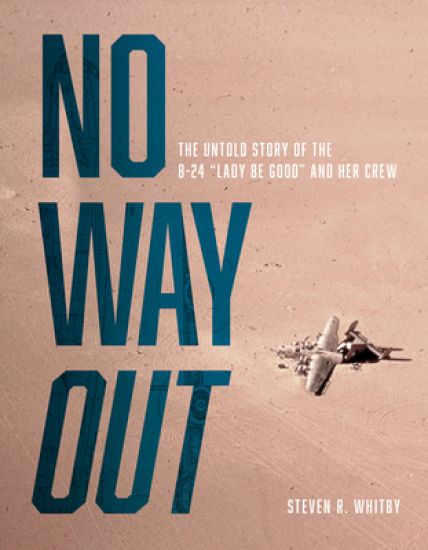
Looks at the mystery surrounding the discovery of a WWII American bomber aircraft lost in 1943! It was the first and only combat mission for the B-24 Liberator “Lady Be Good.” On April 4, 1943, she left her base on the North African coast of Libya to bomb the port city of Naples, Italy. She never returned to base. It was not until the spring of 1959 that “Lady Be Good” was discovered by a BP oil exploration team almost 500 miles into the Libyan Desert, virtually intact, with no trace of the crew. What happened to the “Lady Be Good” is explored in this book. Includes the search for the crew and the subsequent mission to find the two US Army personnel lost during the initial search. The author interviewed personnel who took part in the recovery effort, and has included many unpublished photos taken at the crash site during the first USAF visit in 1959. Author Steven Whitby had always had an interest in the history of flight, especially World War II aircraft. As an 11-year-old, he read the story of the "Lady Be Good" in the March 7, 1960, issue of Life magazine and was hooked on the mystery ever since. This book is the result of his very extensive research on this decades-long mystery.

Emotional Transformation Therapy: An Interactive Ecological Psychotherapy describes an entirely original approach to psychotherapy that drastically accelerates therapeutic outcomes in terms of speed and long-term effects. It includes an attachment-based interpersonal approach that increases the impact of the therapist-client bond and is amplified by the precise use of the client's visual ecology. This synthesis is called Emotional Transformation Therapy® (ETT®). Steven R. Vazquez, PhD, discusses four techniques that therapeutically harness the client's visual ecology. When the client is asked to view a maximally saturated spectral chart of colors, visual feedback provides immediate diagnostic information that helps the therapist to regulate emotional intensity or loss of awareness of emotions. A second technique offers an original form of directed eye movement that facilitates relief of emotional distress within minutes. A third technique uses peripheral eye stimulation to rapidly reduce extreme emotional or physical pain within seconds as well as to access previously unconscious thoughts, emotions, or memories related to the issue or symptom. The fourth technique uses the emission of precise wavelengths (colors) of light into the client's eyes during verbal processing that dramatically amplifies the effect of talk therapy and changes the brain in profound ways. Emotional Transformation Therapy uses theory, research, and case studies to show how this method can be applied to depression, anxiety disorders, posttraumatic stress disorder, and complex trauma. Pre and post brain scans have shown that ETT® substantially changes the human brain. This method possesses the potential to revolutionize psychotherapy as we know it.
Accelerated Ecological Psychotherapy: ETT Applications for Sleep Disorders, Pain, and Addiction describes a number of therapeutic breakthroughs for a diverse array of conditions. The means for accomplishing these advances are specific attachment-based interpersonal processes that are radically amplified by using precise elements of the client's visual ecology. Forms of visually initiated brain stimulation include (1) an innovative form of eye movement, (2) a specialized type of peripheral eye stimulation, (3) Spectral Resonance Technique that uses intense color, and (4) a tunable light device from which hundreds of precise wavelengths of light can be selected to emit into the client's eyes. The method is called Emotional Transformation Therapy® (ETT®). This approach consistently relieves disturbing emotions in seconds, alleviates physical pain in minutes, and frequently evokes states of extreme wellbeing. This book offers a new process theory of emotion focused on the nature and progression patterns of emotions. The book describes an entirely different treatment for seasonal affective disorder (SAD) that offers a radical new level of treatment outcome. Since external light controls the brain's biological clock that dictates sleep and waking patterns, ETT® can be used to treat a variety of sleep disorders. One of the most stunning applications of ETT® concerns its use for chronic physical pain. Migraines, lower back pain, arthritis, fibromyalgia, and many other forms of pain are usually alleviated in the first session and extinguished long-term after a brief series of sessions. One of the most unique discoveries of the ETT® method concerns the rapid, long-term elimination of substance addictive craving. Revolutionary treatment outcomes for sex addiction and other behavioral addictions offers a new advance. ETT® can be applied to couple psychotherapy in such a way that it facilitates radical changes in emotional dysfunctions in couple relationships. Impasses in conflict and alleviation of severely distressed couples can be resolved surprisingly fast. Of all of the breakthroughs brought forth by ETT®, its impact on spiritual phenomena may be the most dramatic. ETT® includes processes to either alleviate a religious/spiritual block or to facilitate states of extreme wellbeing verified by brain scans.

Creator Spirit – The Holy Spirit and the Art of Becoming Human
Steven R. Guthrie; Jeremy Begbie
Baker Academic, Div of Baker Publishing Group
2011
nidottu
Art is often viewed as being inherently spiritual. But what does it mean to describe an experience of art or beauty as "spiritual"? Is there a relationship between the spiritual experience a person has in the presence of a work of art and the Holy Spirit of Christian faith? Skilled theologian, musician, and educator Steven Guthrie examines areas of overlap between spirituality, human creativity, and the arts with the goal of sharpening and refining how we speak and think about the Holy Spirit. By exploring various connections between art and spirituality, he helps Christians better understand the doctrine of the Holy Spirit and offers a clear, engaging theology of the arts. The book includes a foreword by renowned theologian and musician Jeremy Begbie.

Civil war and other types of radical domestic upheaval are replacing international war as the preeminent threat to American security and economic well being, according to Steven R. David. Catastrophic Consequences argues that civil conflicts are of even greater importance than deliberate efforts to harm the United States because the damage they inflict is unintended and therefore impossible to deter. David examines the prospects for and potential aftereffects of instability in four nations vital to U.S. national interests-Saudi Arabia, Pakistan, China, and Mexico. It is not, he argues, a rising China that threatens America, but one that is falling apart. Likewise, it is not a hostile Pakistani regime over which the United States should worry, rather it is one that cannot keep the country together. Similarly, a conflict-torn Mexico or Saudi Arabia poses a far greater danger to America than does either of those states growing stronger. In assessing these threats, David contends that the United States's only viable option is to view other-state civil upheaval similarly to natural disasters and to develop a coherent, effective emergency response mechanism, which does not exist today in any systemic, nationwide form.
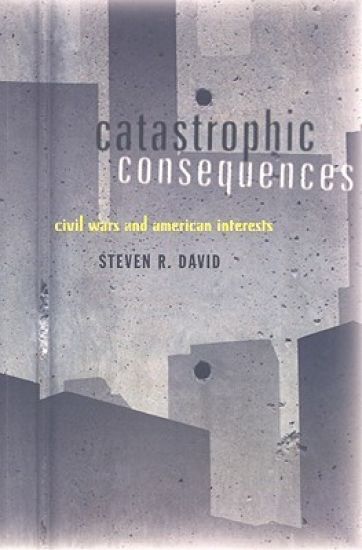
Civil war and other types of radical domestic upheaval are replacing international war as the preeminent threat to American security and economic well being, according to Steven R. David. Catastrophic Consequences argues that civil conflicts are of even greater importance than deliberate efforts to harm the United States because the damage they inflict is unintended and therefore impossible to deter. David examines the prospects for and potential aftereffects of instability in four nations vital to U.S. national interests-Saudi Arabia, Pakistan, China, and Mexico. It is not, he argues, a rising China that threatens America, but one that is falling apart. Likewise, it is not a hostile Pakistani regime over which the United States should worry, rather it is one that cannot keep the country together. Similarly, a conflict-torn Mexico or Saudi Arabia poses a far greater danger to America than does either of those states growing stronger. In assessing these threats, David contends that the United States's only viable option is to view other-state civil upheaval similarly to natural disasters and to develop a coherent, effective emergency response mechanism, which does not exist today in any systemic, nationwide form.
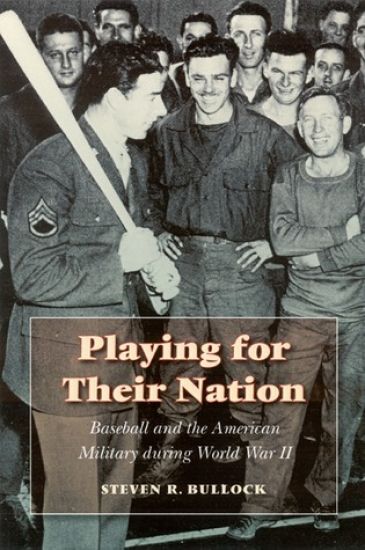
Just two months after the magical baseball season of 1941, the United States entered World War II, and baseball, like other American institutions, was called upon to sacrifice and serve in the war effort. Utilizing personal accounts, military documents, and newspaper sources, Playing for Their Nation provides the first in-depth analysis of the development of military baseball during the Second World War. Steven R. Bullock describes how virtually every significant American military installation around the world boasted formal baseball teams and leagues designed to soothe the anxieties of combatants and prepare them physically for battle. Officials also sponsored hundreds of exhibition contests involving military and civilian teams and tours by major league stars to entertain servicemen and elevate their spirits.Fund-raising by the Major Leagues proved remarkably successful in the encouragement of war bond sales and in donations of equipment for military teams. By the end of the war, more than ninety percent of the players on prewar Major League rosters served in the armed forces, and Bullock relates the wartime experiences of the players, such as Joe DiMaggio and Ted Williams. Also provided is the statistical analysis of the negative impact of the war on the careers of Major League players in terms of their reduced productivity and shortened careers.Proving itself to be much more than a game, baseball offered comfort and pride to a military, and a nation, gripped by war.
Experimental Design and Analysis
Steven R. Brown; Lawrence E. Melamed
SAGE Publications Inc
1990
nidottu
"Brown and Melamed's book is one of the best concise treatments of the design and analysis of experiments that I have seen. The authors begin by showing the significance of variability (variance) for the analysis of experiments, and clearly illustrate the utility of the analysis of variance (ANOVA) model to the analysis of experimental data. They also provide a clear discussion of more advanced topics such as nested, factorial, split-plot, and repeated measures designs. Their book is comprehensive, handles each topic deftly, and should be readily accessible to researchers with a good grounding in basic statistics."--Contemporary Sociology"The book is well written and includes useful examples. . . . Useful to researchers in both the planning and analysis phases of an experimental study." --ANNA Journal "Introductory, well written, and has illustrative examples. Highly recommended for introductory courses and self study; the book can be supplemented easily with a treatment of covariates from other available study materials."--Journal of Marketing ResearchThis volume introduces the reader to one of the most fundamental topics in social science statistics--experimental design. The authors clearly show how to select an experimental design based on the number of independent variables, the sources and number of extraneous variables, and the number of subjects. Other topics addressed include variability, hypothesis testing, how ANOVA can be extended to the multi-group situation, the logic of the t test, and completely randomized designs.

Handbook of Applied Dog Behavior and Training, Adaptation and Learning
Steven R. Lindsay; Victoria Lea Voith
JOHN WILEY AND SONS LTD
2000
sidottu
Twenty-five years of study and experience went into the making of this one-of-a-kind reference. Veterinarians, animal scientists, dog owners, trainers, consultants, and counsellors will find this book a benchmark reference and handbook concerning positive, humane management and control of dogs. Reflecting the author's extensive work with dogs, this book promises thorough explanations of topics, and proven behavioural strategies that have been designed, tested, and used by the author. More than 50 figures and tables illustrate this unique and significant contribution to dog behaviour, training, and learning.
Law, Behavior, and Mental Health
Steven R. Smith; Robert Meyer
New York University Press
1987
sidottu
This comprehensive new volume on psychology and the law is an essential reference for students and professionals. It offers the most up-to-date information on issues such as malpractive, confidentiality, jury selection, punishment, competency, and the right to refuse treatment. Two well-known professionals, a lawyer and a clinical psychologist, have teamed up to write this judiciously balanced, clearly presented, and accessible guide to an ever more complex subject. they answer such questions as: What does a lie detector test really tell you? Can law enforcement officials use hypnosis to investigate a crime? Is eyewitness testimony the most reliable and persuasive evidence? Are we living in a more punitive society? These and other issues are dealt with in a concise, readable manner, one that tells readers how to approach the problems with arise in day-today practive as well as how to think about the fundamental current ethical and legal issues. Meticulously researched and documented, this important new volume offers a lively presentation, one which is must reading for students of law, and for professionals in both fields who want a complete reference guide.

Law, Behavior, and Mental Health
Steven R. Smith; Robert Meyer
New York University Press
1988
pokkari
This comprehensive new volume on psychology and the law is an essential reference for students and professionals. It offers the most up-to-date information on issues such as malpractive, confidentiality, jury selection, punishment, competency, and the right to refuse treatment. Two well-known professionals, a lawyer and a clinical psychologist, have teamed up to write this judiciously balanced, clearly presented, and accessible guide to an ever more complex subject. they answer such questions as: What does a lie detector test really tell you? Can law enforcement officials use hypnosis to investigate a crime? Is eyewitness testimony the most reliable and persuasive evidence? Are we living in a more punitive society? These and other issues are dealt with in a concise, readable manner, one that tells readers how to approach the problems with arise in day-today practive as well as how to think about the fundamental current ethical and legal issues. Meticulously researched and documented, this important new volume offers a lively presentation, one which is must reading for students of law, and for professionals in both fields who want a complete reference guide.