Kirjojen hintavertailu. Mukana 11 228 534 kirjaa ja 12 kauppaa.

Kirjahaku

Etsi kirjoja tekijän nimen, kirjan nimen tai ISBN:n perusteella.

1000 tulosta hakusanalla Stuart Nicholson

Stuart Hall

Stuart Hall

Chris Rojek

Polity Press
2002
sidottu
Stuart Hall is the leading figure in cultural studies today – no one else has had the same influence in the shaping of the field. This book is the first full-length study of Hall's work. It examines every aspect of his work and constitutes a major critical introduction and appraisal of Hall's contribution. The book guides the reader through Hall's formative experience in Jamaica and Oxford. It examines the increasing politicization of his thought and his identification with emancipatory, socialist politics. In Birmingham, during his Directorship of the seminal Centre for Contemporary Cultural Studies, Hall created a genuinely collaborative approach to the study of culture. In a series of dazzling publications in the 1970s, the Birmingham Centre changed the way in which social scientists think about culture. The book provides a complete guide to the debates and contribution of the Birmingham School. It explores Hall's relation with Marx, Gramsci, Althusser and a variety of traditions in continental sociology and philosophy. In the 1980s Hall occupied the vanguard of criticism against Thatcherism and Reaganism. His passionate, principled attack on the New Right and his critique of authoritarian populism reached a readership well beyond the confines of the academy. His later work has moved on to the terrain of hybridity, identity, Occidentalism, race relations. multiculturalism and the politics of difference. All of these areas are methodically explored in the book, making it the most complete study of Hall's work and significance. It will be required reading by students and lecturers in cultural studies, media studies and sociology.
Stuart Hall

Stuart Hall

Chris Rojek

JOHN WILEY AND SONS LTD
2002
nidottu
Stuart Hall is the leading figure in cultural studies today, no one else has had the same influence in the shaping of the field. This book is a full-length study of Hall's work. It examines every aspect of his work and is critical introduction and appraisal of Hall's contribution.
John Stuart Blackie

John Stuart Blackie

Stuart Wallace

Edinburgh University Press
2006
sidottu
John Stuart Blackie was one of the most impressive and influential figures of nineteenth-century Scotland, as well as one of the most striking and flamboyant. As an intellectual he translated Goethe's Faust and brought first-hand knowledge of German philosophy to Scotland as a means of keeping the Enlightenment tradition alive. As first Professor of Humanity at Aberdeen from 1839 to 1852 and then as Professor of Greek at Edinburgh until 1882, he played a, perhaps the, central role in modernising the Scottish university curriculum, removing the dead hand of theological orthodoxy, raising standards (and the entry age), introducing tutorial teaching and establishing new chairs (including the Edinburgh chair of Celtic). His role in the reform of secondary school teaching was equally central. But Blackie was also a great 'public man', corresponding with great and famous throughout Great Britain and Europe, from Goethe and Carlyle to Ruskin and Gladstone, and filling the pages of newspapers and journals with writings on the major issues of the day. For the last thirty years of his life he became closely involved in issues of Scottish nationalism and home rule, and as champion of the crofters is largely responsible for their contemporary survival and unique status. Despite the existence of a rich archive of his papers and letters, there has been only one book devoted to his life: The Life of Professor John Stuart Blackie, the most distinguished Scotsman of the day, edited by J. G. Duncan and published in 1895.
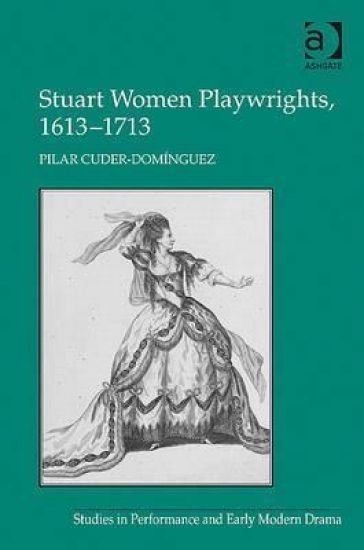
Stuart Women Playwrights, 1613–1713

Stuart Women Playwrights, 1613–1713

Pilar Cuder-Dominguez

Ashgate Publishing Limited
2010
sidottu
In the field of seventeenth-century English drama, women participated not only as spectators or readers, but more and more as patronesses, as playwrights, and later on as actresses and even as managers. This study examines English women writers' tragedies and tragicomedies in the seventeenth century, specifically between 1613 and 1713, which represent the publication dates of the first original tragedy (Elizabeth Cary's The Tragedy of Mariam) and the last one (Anne Finch's Aristomenes) written by a Stuart woman playwright. Through this one-hundred year period, major changes in dramatic form and ideology are traced in women's tragedies and tragicomedies. In examining the whole of the century from a gender perspective, this project breaks away from conventional approaches to the subject, which tend to establish an unbridgeable gap between the early Stuart period and the Restoration. All in all, this study represents a major overhaul of current theories of the evolution of English drama as well as offering an unprecedented reconstruction of the genealogy of seventeenth-century English women playwrights.
Stuart Tank, Vol. 1

Stuart Tank, Vol. 1

David Doyle

Schiffer Publishing Ltd
2019
sidottu
The Stuart light tanks were the first tanks taken into combat by US troops during WWII. Production of these vehicles can be broken into two categories: the early tanks powered by air-cooled radial engines, and late versions powered by twin V-8 engines. This volume explores the early, air-cooled vehicles, the M3, M3A1, and M3A3. Widely used both by the US Army and US Marines, as well as many Allied nations, these tanks, though lightly armed and armored, were mechanically sound and did much to stem the tide of Axis aggression during the early stages of the US entry into WWII. Through dozens of archival photos, including previously unpublished images, as well as detailed photographs of some of the finest existing examples of these vehicles, this early-war combat vehicle is explored and its history is explained. A companion volume will explore the later M5 and M5A1, and M8 Howitzer Motor Carriage versions. Part of the Legends of Warfare series.
Stuart Tank Vol. 2

Stuart Tank Vol. 2

David Doyle

Schiffer Publishing Ltd
2019
sidottu
The Stuart light tanks were the first tanks taken into combat by US troops during WWII. Production of these vehicles can be broken into two categories: the early tanks powered by air-cooled radial engines, and late vehicles powered by twin V-8 engines. This volume explores the late vehicles with Cadillac water-cooled engines, the M5 and M5A1, as well as the M8 Howitzer Motor Carriage. Stuart light tanks, though lightly armed and armored, were mechanically sound and widely used by US forces in Europe and the Pacific, as well as by Allied nations. Through dozens of archival photos, including previously unpublished images, as well as detailed photographs of some of the finest existing examples of these vehicles, this early-war combat vehicle is explored, and its history is explained. A companion volume explores the early M3, M3A1, and M3A3 versions.
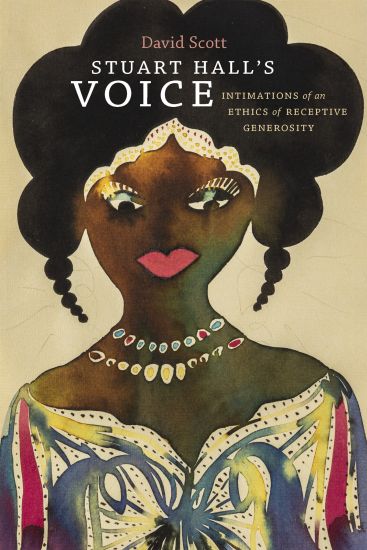
Stuart Hall's Voice

Stuart Hall's Voice

David Scott

Duke University Press
2017
sidottu
Stuart Hall’s Voice explores the ethos of style that characterized Stuart Hall’s intellectual vocation. David Scott frames the book-which he wrote as a series of letters to Hall in the wake of his death-as an evocation of friendship understood as the moral and intellectual medium in which his dialogical hermeneutic relationship with Hall’s work unfolded. In this respect, the book asks: what do we owe intellectually to the work of those whom we know well, admire, and honor? Reflecting one of the lessons of Hall’s style, the book responds: what we owe should be conceived less in terms of criticism than in terms of listening. Hall’s intellectual life was animated by voice in literal and extended senses: not only was his voice distinctive in the materiality of its sound, but his thinking and writing were fundamentally shaped by a dialogical and reciprocal practice of speaking and listening. Voice, Scott suggests, is the central axis of the ethos of Hall’s style. Against the backdrop of the consideration of the voice’s aspects, Scott specifically engages Hall’s relationship to the concepts of "contingency" and "identity," concepts that were dimensions less of a method as such than of an attuned and responsive attitude to the world. This attitude, moreover, constituted an ethical orientation of Hall’s that should be thought of as a special kind of generosity, namely a "receptive generosity," a generosity oriented as much around giving as receiving, as much around listening as speaking.
Stuart Masques and the Renaissance Stage. With 197 Illus. --

Stuart Masques and the Renaissance Stage. With 197 Illus. --

Allardyce 1894- Nicoll

Hassell Street Press
2021
sidottu
This work has been selected by scholars as being culturally important and is part of the knowledge base of civilization as we know it.This work is in the public domain in the United States of America, and possibly other nations. Within the United States, you may freely copy and distribute this work, as no entity (individual or corporate) has a copyright on the body of the work.Scholars believe, and we concur, that this work is important enough to be preserved, reproduced, and made generally available to the public. To ensure a quality reading experience, this work has been proofread and republished using a format that seamlessly blends the original graphical elements with text in an easy-to-read typeface.We appreciate your support of the preservation process, and thank you for being an important part of keeping this knowledge alive and relevant.
Stuart Masques and the Renaissance Stage. With 197 Illus. --

Stuart Masques and the Renaissance Stage. With 197 Illus. --

Allardyce 1894- Nicoll

Hassell Street Press
2021
nidottu
This work has been selected by scholars as being culturally important and is part of the knowledge base of civilization as we know it.This work is in the public domain in the United States of America, and possibly other nations. Within the United States, you may freely copy and distribute this work, as no entity (individual or corporate) has a copyright on the body of the work.Scholars believe, and we concur, that this work is important enough to be preserved, reproduced, and made generally available to the public. To ensure a quality reading experience, this work has been proofread and republished using a format that seamlessly blends the original graphical elements with text in an easy-to-read typeface.We appreciate your support of the preservation process, and thank you for being an important part of keeping this knowledge alive and relevant.