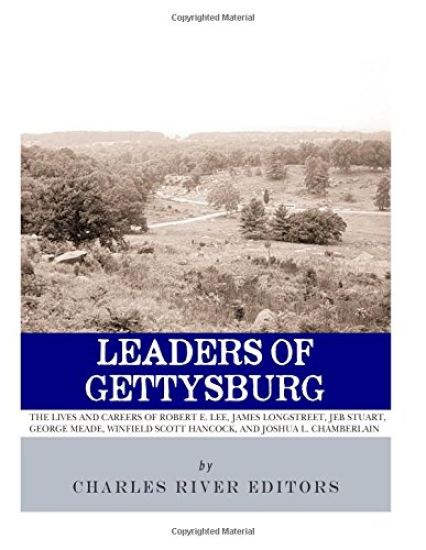
*Weaves the lives and careers of all 6 generals into one entertaining and educational narrative. *Includes pictures of the generals and important people, places, and events in their lives. *Includes Bibliographies of each general for further reading. Despite the fact that the Civil War began over 150 years ago, it remains one of the most widely discussed topics in America today, with Americans arguing over its causes, reenacting its famous battles, and debating which general was better than others. Americans continue to be fascinated by the Civil War icons who made the difference between victory and defeat in the war's great battles. No battle fascinates Americans quite like Gettysburg, the most famous and biggest battle of the Civil War. Careers were tarnished, legacies were immortalized, and the Confederacy had reached its high water mark. Since the dust settled there, historians and interested scholars alike have dissected every decision and movement made by the leaders of the battle, arguing over who to credit and who to blame. Of all the battles Robert E. Lee led in, he was most criticized for Gettysburg, particularly his order of Pickett's Charge on the third and final day of the war. Despite the fact his principle subordinate and corps leader, General James Longstreet, advised against the charge, Lee went ahead with it, ending the army's defeat at Gettysburg with a violent climax that left half of the men who charged killed or wounded. After the South lost the war and Gettysburg came to be viewed as one of its biggest turning points, former Confederate generals looked to that battle to find scapegoats to blame for losing the war. Two of them were JEB Stuart and James Longstreet. Stuart's roundabout cavalry raid deprived Lee of his eyes and ears, leading to an inadvertent clash at Gettysburg, and Longstreet was charged with being slow to attack on the second day of the Battle of Gettysburg, allowing the Union to man Little Round Top. Naturally, George Meade is best known for defeating Robert E. Lee's Army of Northern Virginia at Gettysburg in July 1863, although he's not nearly as well remembered as his Confederate counterpart, and he has even been eclipsed in popularity by some of the men he commanded at Gettysburg, like Joshua Chamberlain. Chamberlain had a respectable Civil War career and life, but he had been largely forgotten in the decades after the Civil War, with the focus on more influential commanding generals and their principal subordinates. Then a remarkable thing happened with the 1974 publication of Michael Sharaa's The Killer Angels, a Pulitzer Prize winning historical fiction that focuses on the Battle of Gettysburg and its influential generals and leaders. In one fell swoop, Michael Sharaa breathed life back into the reputations of men like John Buford and Joshua Chamberlain, cast as the Union heroes of Day 1 and Day 2 respectively that made victory at Gettysburg possible. At Gettysburg, Hancock was the commanding general in the field on Day 1, as Meade and the rest of the Union army arrived later that night. On Day 2, Hancock's men assisted Sickles' III Corps when Sickles disobeyed orders and moved it forward, creating a gap in the Union lines. And on Day 3, Hancock's greatest day of the war, he was seriously injured and nearly bled to death while leading his men in their decisive repulse of Pickett's Charge. Leaders of Gettysburg comprehensively covers the decisive command decisions made by the leaders at Gettysburg, but it also chronicles the lives and careers of all six men and analyzes their lasting legacies. Along with bibliographies and pictures, you will learn about the Leaders of Gettysburg like you never have before.
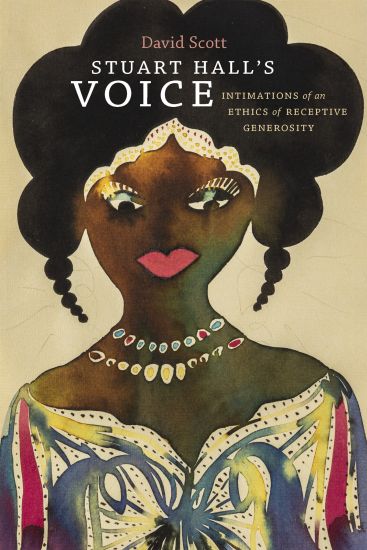
Stuart Hall’s Voice explores the ethos of style that characterized Stuart Hall’s intellectual vocation. David Scott frames the book-which he wrote as a series of letters to Hall in the wake of his death-as an evocation of friendship understood as the moral and intellectual medium in which his dialogical hermeneutic relationship with Hall’s work unfolded. In this respect, the book asks: what do we owe intellectually to the work of those whom we know well, admire, and honor? Reflecting one of the lessons of Hall’s style, the book responds: what we owe should be conceived less in terms of criticism than in terms of listening. Hall’s intellectual life was animated by voice in literal and extended senses: not only was his voice distinctive in the materiality of its sound, but his thinking and writing were fundamentally shaped by a dialogical and reciprocal practice of speaking and listening. Voice, Scott suggests, is the central axis of the ethos of Hall’s style. Against the backdrop of the consideration of the voice’s aspects, Scott specifically engages Hall’s relationship to the concepts of "contingency" and "identity," concepts that were dimensions less of a method as such than of an attuned and responsive attitude to the world. This attitude, moreover, constituted an ethical orientation of Hall’s that should be thought of as a special kind of generosity, namely a "receptive generosity," a generosity oriented as much around giving as receiving, as much around listening as speaking.
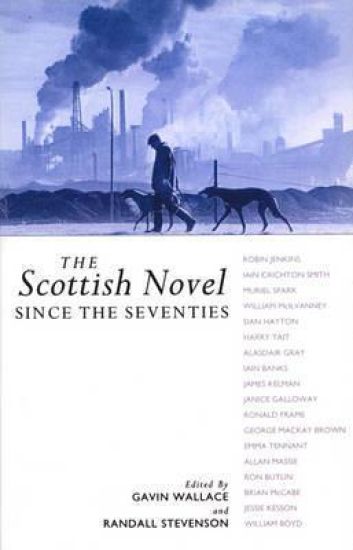
The last two decades have seen a new renaissance in Scottish literary culture in which the Scottish novel has attained new heights of maturity, confidence and challenge. The Scottish Novel since the Seventies is the first major critical reassessment of the developments in this period. Ranging from the work of longer-established authors such as Robin Jenkins, Muriel Spark and William McIlvanney to the more recent experiments of Alasdair Gray James Kelman and Janice Galloway, it provides a new critical focus on the intriguing relationship between continuity and innovation which characterises the novel's response to the complex changes in Scottish culture and society during the past twenty years. The contributors assess the work of an extensive number of writers in thecontext of a correspondingly wide range of issues: gender, postmodernism, political identity, archaism and myth, and the theme of disintegration.There are also chapters on the continuing growth of the 'Glasgow novel' and film adaptations of Scottish fiction. A bibliography of Scottish fiction since 1970 completes this critical account.
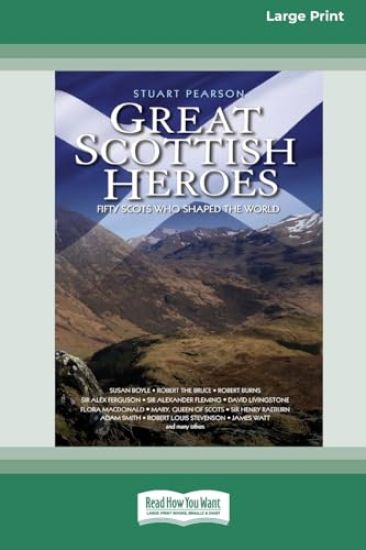
Which Scottish anti - slavery campaigner lost a son in a Confederate prisoner - of - war camp during the American Civil War? Was the enemy of Scotland's first 'freedom fighter' not England, but ancient Rome? What was the laboratory accident that led to one of the greatest discoveries in modern medicine? How did the Declaration of Arbroath in 1320 influence the legal foundation of the greatest superpower the world has ever seen? Which singing superstar overcame a learning difficulty to become a worldwide inspiration? The answers to these and many other questions can be found in Great Scottish Heroes, covering 2,000 years of Scottish history and encompassing outstanding leaders in a broad range of pursuits, including the arts, exploration, medicine, sport, religion and politics. Even a brief list of Scottish inventions shows the nation's influence upon our world: television, penicillin, the steam engine, the telephone, the vacuum flask, to name only a few. Scotland has for centuries produced a great number of exceptional, heroic individuals out of all proportion to its small population and geographical size. This concise but wide - ranging book offers biographies of fifty Scottish heroes and heroines, but in truth there are a hundred others, and more, who would qualify for inclusion. These men and women helped to shape the world, and continue to do so today. Great Scottish Heroes shows how they achieved such remarkable success. If you are a Scot by birth, descent, or adoption, this book will make you even prouder of your countrymen. If you are not Scottish, you will wish you were.
Which Scottish anti-slavery campaigner lost a son in a Confederate prisoner-of-war camp during the American Civil War? Was the enemy of Scotland's first 'freedom fighter' not England, but ancient Rome? What was the laboratory accident that led to one of the greatest discoveries in modern medicine? How did the Declaration of Arbroath in 1320 influence the legal foundation of the greatest superpower the world has ever seen? Which singing superstar overcame a learning difficulty to become a worldwide inspiration? The answers to these and many other questions can be found in Great Scottish Heroes, covering 2,000 years of Scottish history and encompassing outstanding leaders in a broad range of pursuits, including the arts, exploration, medicine, sport, religion and politics. Even a brief list of Scottish inventions shows the nation's influence upon our world: television, penicillin, the steam engine, the telephone, the vacuum flask, to name only a few. Scotland has for centuries produced a great number of exceptional, heroic individuals out of all proportion to its small population and geographical size. This concise but wide-ranging book offers biographies of fifty Scottish heroes and heroines, but in truth there are a hundred others, and more, who would qualify for inclusion. These men and women helped to shape the world, and continue to do so today. Great Scottish Heroes shows how they achieved such remarkable success. If you are a Scot by birth, descent, or adoption, this book will make you even prouder of your countrymen. If you are not Scottish, you will wish you were.
This book is the story of Bonnie Prince Charlie's army at Culloden. Beginning with initial recruitment, it will strip away the myth and expose the realities of life in the Jacobite rebellion army, a force which included volunteers, 'pressed men', mercenaries and French forces, sent over to assist as part of the 'Auld Alliance'. Unit organization, weapons and tactics are discussed in depth, as well as the vicious battles that were fought to secure the crown. The wonderful colour plates and rare images illustrate the variety of uniforms that were worn ranging from tartan to regular army dress. This is an essential introductory guide to the Jacobite Armies as well as a definitive guide to the uniforms and weaponry of the period.
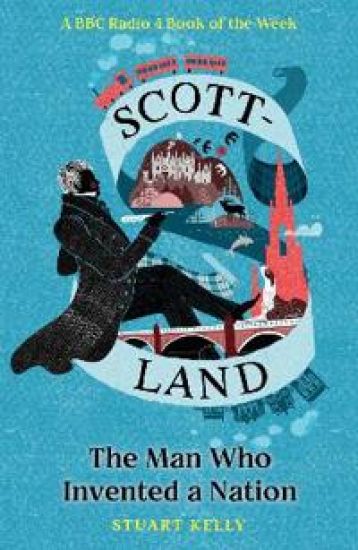
No writer has ever been as famous as Sir Walter Scott once was; and no writer has ever enjoyed such huge acclaim followed by such absolute neglect and outright hostility. But Scotland would not be Scotland except for Scott. All the icons of Scottishness have their roots in Scott’s novels, poems, public events and histories. It’s a legacy both inspiring and constraining, and just one of the ironies that fuse Scott and Scotland into Scott-land. In this book Stuart Kelly reveals Scott the paradox: the celebrity unknown, the nationalist unionist, the aristocrat loved by communists, the forward-looking reactionary. Part literary study, part biography, part travelogue, part surreptitious autobiography, Scott-land unveils a complex, contradictory man and the complex contradictory country he created. Insightful, accessible, witty and melancholy, this is a ‘voyage around my fatherland’ like no other.
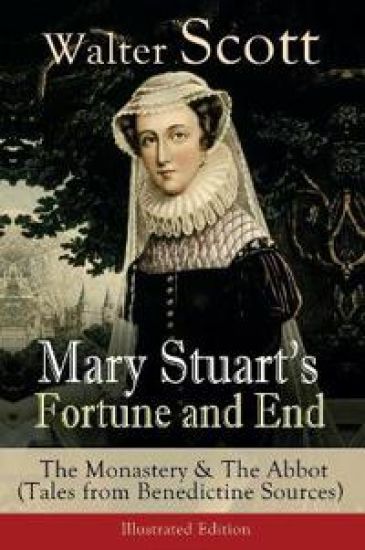
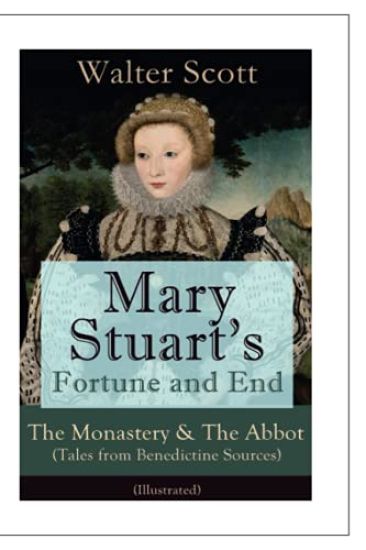
The Monastery: A Romance is one of Scott's Tales from Benedictine Sources and is set in the time of Mary, Queen of Scots, and the Elizabethan period. The action is centered on the Monastery of Kennaquhair, probably based on Melrose Abbey in south east Scotland, on the River Tweed. At this time, circa 1550, the Scottish Reformation is just beginning, and the monastery is in peril. A love story is interwoven as the Glendinning boys fall in love with Mary Avenel. Edward ends up becoming a monk, and Halbert finally marries Mary, after service with the Earl of Murray. A sequel to The Monastery, The Abbot is the second of Scott's Tales from Benedictine Sources. The story follows the fortunes of certain characters Scott introduced in The Monastery, but it also introduces new characters such as Roland Graeme. It is concerned mainly with Queen Mary's imprisonment at Loch Leven Castle in 1567, her escape, and her defeat. Parallel to this is the romance of Roland Graeme, a dim-witted but spirited youth. He is brought up at the castle of Avenel by Mary Avenel and her husband, Halbert Glendinning. Roland is sent by the Regent Murray to be page to Mary Stuart with directions to guard her. He falls in love with Catherine Seyton, who is one of the ladies-in-waiting to the queen. He is found later to be the heir to Avenel. Edward Glendinning, the brother of Halbert, is the abbot of the title, the last abbot of the monastery described in the preceding novel. Sir Walter Scott (1771-1832) was a Scottish historical novelist, playwright and poet.
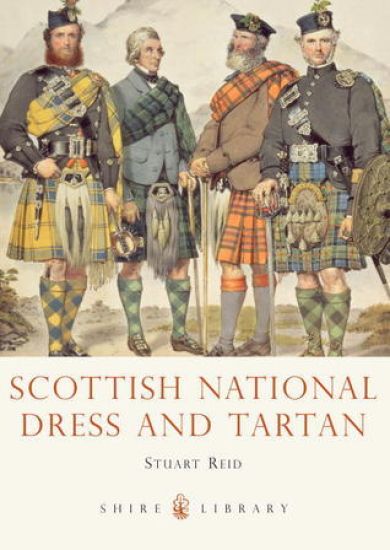
Tartan is an enormously popular pattern in modern fashion. Beginning as Highland dress, it was originally peculiar to certain areas of Scotland, but is now generally accepted as its national costume: what was once ordinary working clothing of a distinctive local style has been formalised into a ceremonial dress, with tartans once woven according to the fancy of those who wore them becoming fixed with certain patterns prescribed for different families, areas or institutions. This process was not, as is popularly thought, a phenomenon begun by the romantic novels of Sir Walter Scott, but began long before as a reaction to the union with England in 1707. This book traces not only the early stages of that evolution, but the process by which the various tartans became icons of Scottish identity.
The last 15 years have seen many changes in Scotland's rail network, including the replacement of old rolling stock, an explosion of colourful liveries, the opening of routes, the demise of coal trains and a boom in container freight traffic. Furthermore, electrification has changed a number of the lines beyond recognition. These changes have led to new electric units ousting the diesels and the introduction of HSTs on services between the Scottish cities. Illustrated with over 180 images, this book details the huge variety of trains, ranging from the everyday to the unusual, that have been seen on Scotland's rails in the last 15 years.
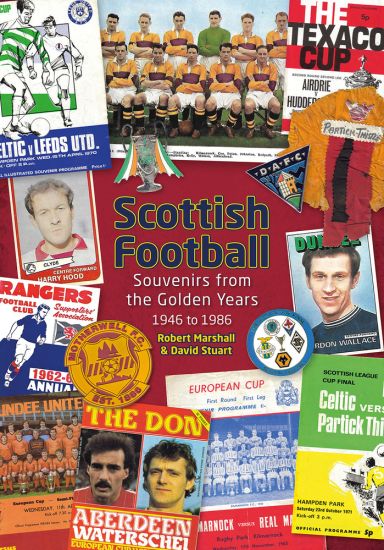
Scottish Football: Souvenirs from the Golden Years - 1946 to 1986 takes a nostalgic look at Scottish football and mementoes from four decades when the game was at its (almost) egalitarian and entertaining best. It was a period with a wide spread of trophy winners: eight different league champions, 14 clubs sharing the two main domestic cup competitions, plus trophy successes in Europe for Celtic, Rangers and Aberdeen, and semi-final near-misses for Dundee, Dundee United, Dunfermline Athletic, Hibs and Kilmarnock. This fascinating book also spotlights the British Championship, the Summer, Drybrough and Texaco Cups plus a host of cult heroes, lost stadia - and Quiz Ball! Alongside this colourful history are collectable treasures. It was a time when programmes were succinct sought-after souvenirs and not bloated corporate catalogues, when trading cards were useful and informative. Annuals, magazines and club handbooks also added to our wisdom. We'll never see an era like '46 to '86 again, so here's your chance to savour it once more.