OSCEs for Intensive Care Medicine is a comprehensive revision resource for doctors preparing to take the Fellowship of the Faculty of Intensive Care Medicine (FFICM) and the European Diploma in Intensive Care Medicine (EDIC). Written by a team of practicing intensive care consultants with extensive experience running a successful FFCIM course, this book features over 100 practice questions organised into eight mock OSCE exams and is mapped to both the FFCIM and CoBaTrICE curricula. Reflecting the real exams, they are divided into stations on professionalism, data, resuscitation, and equipment, each of which are accompanied by further reading to ensure high-quality self-assessment. With hints and tips throughout to help candidates avoid common mistakes and misconceptions, this book is essential reading for any doctor preparing for the FFCIM or EDIC OSCE exams.
Is there such a thing as an 'entrepreneurial personality'? What makes someone an entrepreneur is a question that has intrigued the lay person and the scholar for many years, but can such a personality be identified or is it simply a socially constructed phenomenon? Elizabeth Chell pursues an alternative line of argument: to show that the entrepreneurial personality is, on the one hand, socially constructed, but on the other hand, presents consistency in behaviours, skills and competencies. This second edition of the highly acclaimed The Entrepreneurial Personality revisits the topic and updates the evidence from a multi-disciplinary perspective. The book carefully weaves together the arguments and views from economists, sociologists and psychologists in order to develop a strong conceptual foundation. It discusses the inferences that these experts have made about the nature of entrepreneurs and the entrepreneurial process, and explores whether such evidence has enabled psychometricians to develop robust instruments for assessing the characteristics of entrepreneurs. The evidence for a range of purported traits is reviewed and the models and research designs of interested social scientists are explained and evaluated. Throughout, Chell laces her argument richly with a set of cases derived from primary and secondary sources.This book presents a timely set of views on the entrepreneurial personality, and will be of great interest to academics in the fields of entrepreneurship, economics, management, applied psychology and sociology. This accessible text will also appeal to the interested general reader, as well as practitioners and consultants dealing with entrepreneurs in the field.
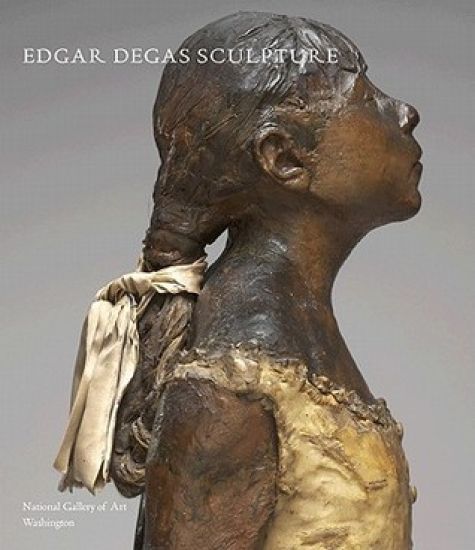
As an artist, Edgar Degas (1834-1917) defies easy description. Allied with the French impressionists through his commitment to portraying modern life, he also took an independent course, preferring line over color and the visible brushstroke, and working in a studio instead of out-of-doors. He is perhaps best known as a painter, but his most widely known work is a sculpture, Little Dancer Aged Fourteen. Executed in wax, near life-sized, dressed in a ballerina's tutu, with real ballet slippers and real hair, the sculpture caused a sensation when it was exhibited in 1881. It is the only sculpture Degas ever showed publicly, though more than one hundred--of dancers, horses, and bathers--were found in his studio after he died, all dusty, some fallen apart. For almost forty years after his death, these works were known only through the bronzes his heirs had cast from the originals.Then, in 1955, the waxes themselves appeared on the art market. Thanks to the discernment and generosity of Paul Mellon, the majority are now preserved at the National Gallery of Art, Washington, most on permanent display. This groundbreaking volume honors this extraordinary gift by linking art and science. It brings together the insights of a distinguished art historian of nineteenth-century painting and sculpture and the specialized knowledge of National Gallery conservators and scientists who have published pioneering technical studies. Including essays on Degas' life and work, his sculptural technique and materials, and the story of the sculptures after his death, it features art-historical and technical discussions of every work in the collection as well as indispensable concordances and bibliography. The richly illustrated text is intended for both art lover and specialist. Was Degas the sculptor technically inept or unusually inventive? How do we understand his sculpture in light of his paintings, prints, and photographs? These questions and many others are explored with originality and depth, adding immeasurably to our understanding of the artistic avant-garde in the late nineteenth century and to our appreciation of this controversial artist.
What makes a person confess to a crime he did not commit? Was he coerced? Is he trying to protect someone else? Interrogation has come under attack as opponents focus on false confessions. However, most cases are still resolved by confession, not forensic evidence. Among the new topics covered in the Second Edition of this bestselling book, Practical Aspects of Interview and Interrogation focuses on why false confessions exist and how to avoid them. Written by two experts who have conducted over 15,000 interviews and interrogations from theft to homicide, this book expands on the valuable topics in the previous edition to include discussions of: Telephone interviewing False Confessions Field Interviewing Sexual Harassment Interviewing Confronting the Alleged Harrasser Pre-employment Interviewing New Legal Aspects Frequently Asked Questions Covering the entire sequence of events that occur during the interview and interrogation process, this book provides a realistic building block approach that allows you to move from a preliminary accusation to an ultimate confession by applying practical rules to the process. It gives you the flexibility to select a number of different paths to proceed in an interrogation of a suspect. Useful in both the law enforcement and private sectors, Practical Aspects of Interview and Interrogation, Second Edition allows you to deal effectively with the complex problems of interviewing and interrogating victims, witnesses, suspects, and even potential employees.
Managing Hospitality Organizations: Achieving Excellence in the Guest Experience, Third Edition takes students on a journey through the evolving service industry. Each chapter focuses on a core principle of hospitality management and is packed with practical advice, examples, and cases from some of the best companies in the service sector. Authors Robert C. Ford and Michael Sturman emphasize the critical importance of focusing on the guest and creating an unforgettable customer experience. Whether your students will be managing a neighborhood café, a convention center, or a high-end resort hotel, they will learn invaluable skills for managing the guest experience in today’s ultracompetitive environment. Included with this title: LMS Cartridge: Import this title’s instructor resources into your school’s learning management system (LMS) and save time. Don’t use an LMS? You can still access all of the same online resources for this title via the password-protected Instructor Resource Site.
Daphne S. Barbour; Barbara Hepburn Berrie; John K. Delaney; Kathryn A. Dooley; Michelle Facini; Ann Hoenigswald; Kimberly Jones; Richard Kendall; Suzanne Quillen Lomax; Alison Luchs; Michael Palmer; Kimberly Schenck; Shelley G. Sturman
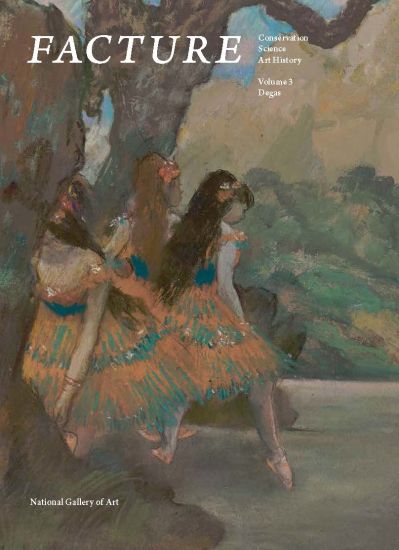
This volume of Facture, a biennial journal that presents the latest conservation research on works of art at the National Gallery of Art, Washington, focuses exclusively on conservation treatment, technical art history, and scientific research related to masterpieces by the beloved French artist Edgar Degas (1834–1917). The National Gallery’s extraordinary collection of sculptures, paintings, and works on paper by Degas, including an incomparable group of his wax sculptures—among them his iconic Little Dancer Aged Fourteen—allows the institution to contribute significantly to understanding the artist’s methods and intentions. This volume features discussions of the notion of “finish” in Degas’s paintings, the complex makeup of his wax sculptures, the casting of posthumous bronzes, his innovative use of multiple layers of pastel and fixative in a late work on paper, and even a sonnet that Degas wrote to his “little dancer.” Distributed for the National Gallery of Art, Washington