Kirjojen hintavertailu. Mukana 12 363 183 kirjaa ja 12 kauppaa.

Kirjahaku

Etsi kirjoja tekijän nimen, kirjan nimen tai ISBN:n perusteella.

1000 tulosta hakusanalla Sultan Alshaali

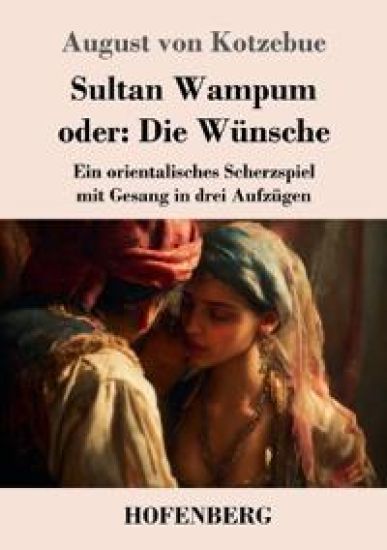
Sultan Wampum oder: Die Wünsche: Ein orientalisches Scherzspiel mit Gesang in drei Aufzügen

Sultan Wampum oder: Die Wünsche: Ein orientalisches Scherzspiel mit Gesang in drei Aufzügen

August Von Kotzebue

Henricus - Edition Deutsche Klassik Gmbh, Ber
2025
sidottu
August von Kotzebue: Sultan Wampum oder: Die W nsche. Ein orientalisches Scherzspiel mit Gesang in drei Aufz gen Erstdruck: Leipzig, Paul Gotthelf Kummer, 1794. Neuausgabe. Herausgegeben von Karl-Maria Guth. Berlin 2025. Der Text dieser Ausgabe wurde behutsam an die neue deutsche Rechtschreibung angepasst. Umschlaggestaltung von Thomas Schultz-Overhage. Gesetzt aus der Minion Pro, 11 pt. Henricus - Edition Deutsche Klassik GmbH Sultan Wampum, ein m ig kluger, aber h chst selbstverliebter Herrscher von Schiras, leidet unter einer eigenwilligen Krankheit: chronischer Langeweile. In seiner Suche nach Zerstreuung begegnet er der Waise Alma, die er gegen ihren Willen seinem Harem zuf hren l sst. Doch Alma liebt den jungen Kaufmann Nurraddin, und ihre Gegenwehr bringt das fragile Machtgef ge des Sultans ins Wanken. Zwischen Intrigen, Gesang und philosophischer Satire entfaltet sich eine temporeiche Geschichte ber Macht, Begierde und die Grenzen der Herrscherwillk r. Mit feiner Ironie und klarem Blick demontiert Kotzebue das Bild des allm chtigen Orient-Herrschers - und entlarvt dabei universelle menschliche Schw chen.
Sultan Mehmet II.

Sultan Mehmet II.

Bohlau Verlag
2009
sidottu
Fatih - der Eroberer lautet der klangvolle Beiname Mehmets II. (1430-1481), seit es ihm am 29. Mai 1453 gelang, Konstantinopel einzunehmen. Die Erschutterung der westlichen Welt war gewaltig, und noch heute wird das Ereignis als epochaler Wendepunkt gesehen. Dabei hatte Mehmet keineswegs die Zerstorung des byzantinischen Reiches im Sinn. Vielmehr beanspruchte er dessen Fortsetzung - freilich unter islamischen Vorzeichen. Das Engagement fur die verschiedenen Kunste, seien es Architektur, bildende Kunst oder Literatur, gehorte zum Selbstverstandnis des machtigen Herrschers. Auch die Wissenschaften, insbesondere die Ingenieurskunst und die Naturwissenschaften, lagen ihm am Herzen. Kaum etwas blieb unversucht, um Kunstler und Gelehrte aus aller Welt an den Sultanshof nach Konstantinopel zu locken. Bereits zu Lebzeiten war die historische Gestalt Mehmets umstritten. Auch in heutiger Zeit dominiert der kriegerische Aspekt die Wahrnehmung des Osmanenherrschers. Mit diesem Band wird nun ein grundlegend neues Bild entworfen: Mehmet II. erscheint als massgeblicher Forderer einer Renaissancekultur, die sich aus ganz unterschiedlichen Traditionen speist.
Sultan of Egypt

Sultan of Egypt

VDM Publishing House
2010
nidottu
Observera att förlaget som ger ut denna produkt baserar innehållet i sina produkter på fria källor som Wikipedia. Boken är med stor sannolikhet endast ett utdrag ur dessa informationskällor, alltså inte en vanlig bok i den bemärkelsen.
The Sultan's Renegades

The Sultan's Renegades

Tobias P. Graf

Oxford University Press
2017
sidottu
The figure of the renegade - a European Christian or Jew who had converted to Islam and was now serving the Ottoman sultan - is omnipresent in all genres produced by those early modern Christian Europeans who wrote about the Ottoman Empire. As few contemporaries failed to remark, converts were disproportionately represented among those who governed, administered, and fought for the sultan. Unsurprisingly, therefore, renegades have attracted considerable attention from historians of Europe as well as students of European literature. Until very recently, however, Ottomanists have been surprisingly silent on the presence of Christian-European converts in the Ottoman military-administrative elite. The Sultan's Renegades inserts these 'foreign' converts into the context of Ottoman elite life to reorient the discussion of these individuals away from the present focus on their exceptionality, towards a qualified appreciation of their place in the Ottoman imperial enterprise and the Empire's relations with its neighbours in Christian Europe. Drawing heavily on Central European sources, this study highlights the deep political, religious, and cultural entanglements between the Ottoman Empire and Christian Europe beyond the Mediterranean Basin as the 'shared world' par excellence. The existence of such trans-imperial subjects is not only symptomatic of the Empire's ability to attract and integrate people of a great diversity of backgrounds, it also illustrates the extent to which the Ottomans participated in processes of religious polarization usually considered typical of Christian Europe in this period. Nevertheless, Christian Europeans remained ambivalent about those they dismissed as apostates and traitors, frequently relying on them for support in the pursuit of familial and political interests.
Tippoo Sultan's Incredible White-Man-Eating Tiger Toy-Machine!!!
Look We Have Coming to Dover!, the remarkable debut by Daljit Nagra, marked the arrival of a thrilling new voice in poetry and won the Forward Prize for Best First Collection along the way. In this, his second volume, his writing shows every bit the same verve and excitement that made his first book an unmissable event. Tippoo Sultan's Incredible White-Man-Eating Tiger Toy-Machine!!! takes its cue from the eighteenth-century automaton (a tiger savaging a British soldier) in a series of poems that begin at the throat of the old British Empire. In these vivid, real and sometimes surreal pieces, Daljit Nagra creates his own inimitable linguistic bhaji: where Shakespeare meets the Subcontinent in a range of forms from English sonnets to spectacular displays of 'bollyverse' or the tender love songs of the monsoon. The poems take their bearings from cornershops and classrooms, the strange, part-arcadian, part-hellish streets of 'Londonstan' and the places where the north of England collides with the Punjab: from Larkin to the ladoos in Raja t'Wonder Dog. Little escapes Nagra's tigerish gaze: race relations, family feuds, cultural inheritance, religious bigotry, the British honours system, Rudyard Kipling, the blurring of Kevin Keegan with Kabbadi. Comic, hard-hitting, passionate, satirical, Daljit Nagra has written a book that is as powerfully thought-provoking as it is delightful.
The Sultan's Daughter

The Sultan's Daughter

Jane Downing

Obiter Publishing
2020
pokkari
It is 1866 and Zanzibar is momentarily quiet after a rebellion against the Sultan. Sayyida Salm waits in the harem hoping to be forgiven for her part in the uprising against her brother. When she hears merchant Heinrich Ruete singing from across the narrow Stone Town street, Salm lifts her veil to possibility.Set against the backdrop of the slave trade and the impossible wealth of the Sultans of Zanzibar, Salm 's story of forbidden love unfolds dramatically and takes her further into exile. The Sultan's Daughter follows real life events. It is a story of great tenderness, and of great loss.
The Sultan's Eyes

The Sultan's Eyes

Kelly Gardiner

HarperCollins Publishers (Australia) Pty Ltd
2013
pokkari
THE SULTAN'S EYES is the sequel to ACT OF FAITH. the year is 1648 and life in Venice is serene for Isabella Hawkins and her friends Willem, Al-Qasim and Signora Contarini. together they publish fine books like the controversial encyclopaedia, the Sum of All Knowledge. When a new Inquisitor declares war on free speech however, they are forced to flee across the seas to the wondrous capital of the Ottoman Empire, Constantinople, which is ruled by the infamous Sultanate of the Women. Old friends and new, including the boy Sultan and his sister, welcome them to the world's greatest city. But Isabella is soon entangled in poisonous palace intrigues, while her friends secretly play perilous games of their own. the fascinating and page-turning sequel to Act of Faith, which was shortlisted for the 2012 NSW Premier's Literary awards, the 2012 Gold Inky awards and highly commended in the 2012 Barbara Jefferis Awards. Praise for Act of Faith: the novel is expansive and impressive, and with Gardiners eloquent words and literary flair she acts as fictional tour-guide breathing life into these cobblestoned walkways and Ghetto communities...a divine story, dripping in history and delivering a wonderful message of freedom, loyalty and bravery. the Alpha Reader Highly recommended...It is fast paced and the intriguing and well researched detail of life on the Continent in the 17th Century will be enjoyed by readers.' ReadPlus
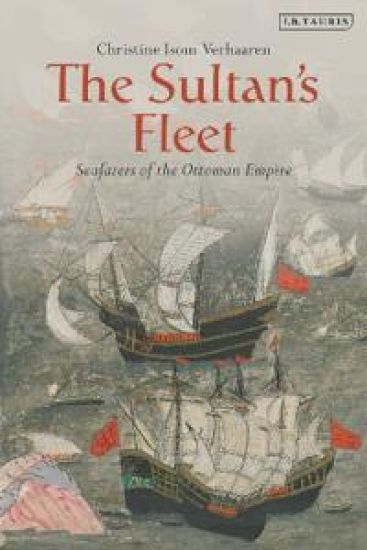
The Sultan's Fleet

The Sultan's Fleet

Christine Isom-Verhaaren

BLOOMSBURY PUBLISHING PLC
2021
nidottu
While the Ottoman Empire is most often recognized today as a land power, for four centuries the seas of the Eastern Mediterranean were dominated by the Ottoman Navy. Yet to date, little is known about the seafarers who made up the sultans' fleet, the men whose naval mastery ensured that an empire from North Africa to Black Sea expanded and was protected, allowing global trading networks to flourish in the face of piracy and the Sublime Porte's wars with the Italian city states and continental European powers.In this book, Christine Isom-Verhaaren provides a history of the major events and engagements of the navy, from its origins as the fleets of Anatolian Turkish beyliks to major turning points such as the Battle of Lepanto. But the book also puts together a picture of the structure of the Ottoman navy as an institution, revealing the personal stories of the North African corsairs and Greek sailors recruited as admirals. Rich in detail drawn from a variety of sources, the book provides a comprehensive account of the Ottoman Navy, the forgotten contingent in the empire's period of supremacy from the 14th century to the 18th century.
A Sultan in Autumn

A Sultan in Autumn

Soner Cagaptay

BLOOMSBURY PUBLISHING PLC
2021
sidottu
"Informative." - Foreign Affairs Recep Tayyip Erdogan has ruled Turkey for nearly two decades. Here, Soner Cagaptay, a leading authority on the country, offers insights on the next phase of Erdogan’s rule. His dwindling support base at home, coupled with rising opposition, the impact of the Covid-19 pandemic, and Turkey’s weak economy, would appear to threaten his grip on power.How will he react?In this astute analysis, Cagaptay casts Erdogan as an inventor of nativist populist politics in the twenty-first century. The Turkish president knows how to polarize the electorate to boost his base, and how to wield oppressive tactics when polarization alone cannot win elections. Cagaptay contends that Erdogan will cling to power—with severe costs for Turkey’s citizens, institutions, and allies. The associated dynamics, which carry implications far beyond Turkey’s borders—and what they portend for the United States—make A Sultan in Autumn a must-read for all those interested in Turkey and the geopolitics of the next decade.
A Sultan in Autumn

A Sultan in Autumn

Soner Cagaptay

BLOOMSBURY PUBLISHING PLC
2021
nidottu
"Informative." - Foreign Affairs Recep Tayyip Erdogan has ruled Turkey for nearly two decades. Here, Soner Cagaptay, a leading authority on the country, offers insights on the next phase of Erdogan’s rule. His dwindling support base at home, coupled with rising opposition, the impact of the Covid-19 pandemic, and Turkey’s weak economy, would appear to threaten his grip on power.How will he react?In this astute analysis, Cagaptay casts Erdogan as an inventor of nativist populist politics in the twenty-first century. The Turkish president knows how to polarize the electorate to boost his base, and how to wield oppressive tactics when polarization alone cannot win elections. Cagaptay contends that Erdogan will cling to power—with severe costs for Turkey’s citizens, institutions, and allies. The associated dynamics, which carry implications far beyond Turkey’s borders—and what they portend for the United States—make A Sultan in Autumn a must-read for all those interested in Turkey and the geopolitics of the next decade.
The Sultan's Jew

The Sultan's Jew

Daniel J. Schroeter

Stanford University Press
2002
sidottu
This pathbreaking study uses the extraordinary life of Meir Macnin, a prosperous Jewish merchant, as a lens for examining the Jewish community of Morocco and its relationship to the Sephardi world in the late eighteenth and early nineteenth centuries. Macnin, a member of one of the most prominent Jewish families in Marrakesh, became the most important merchant for the sultans who ruled Morocco, and was their chief intermediary between Morocco and Europe. He lived in London for about twenty years, and then shuttled between Morocco and England for fifteen years until his death in 1835. This book challenges accepted views of Muslim-Jewish relations by emphasizing the ambivalence in the relationship. It shows how elite Jews maneuvered themselves into important positions in the Moroccan state by linking themselves to politically powerful Muslims and by establishing key positions in networks of trade. The elite Jews of Morocco were also part of a wider Sephardi world that transcended national boundaries. However, Macnin remained more connected to Morocco, where Jews were, according to Islamic law, protégés of the ruler and still subject to specific legal disabilities. The early-nineteenth-century sultan Mawlay Sulayman confined Jews in a number of Moroccan cities to newly created Jewish quarters as part of a policy of defining boundaries between Muslims and Jews. Yet Macnin remained closely tied to royal power, and in 1822 he became the principal intermediary between Morocco and the European powers for Mawlay Sulayman's successor, Mawlay 'Abd al-Rahman. At the beginning of the period covered in this book, Meir Macnin belonged to a wide, transnational Sephardi world, and moved easily between Morocco and Europe. By the end of his life, however, this Sephardi diaspora had virtually come to an end. Emancipation in Western Europe and the growing identification of European Jews with the nations in which they lived meant that their affinity to their Sephardi heritage no longer transcended their national attachments. The gap between Moroccan and European Jewry grew, and a new kind of division—between "Western" and "Oriental" Jews—now existed within the Jewish world.
Yavuz Sultan Selim Bridge

Yavuz Sultan Selim Bridge

Grima Joseph

Rizzoli International Publications
2017
sidottu
This book chronicles in detail the various phases of the Yavuz Sultan Selim Bridge, which is the third to connect Europe and Asia over the Bosphorus straits. From its design and engineering concept to its realisation, this book offers detailed insights through a historical essay, texts, interviews, illustrations, diagrams, and stunning photography. The book pays particular attention to the engineering accomplishments of the bridge, through a series of drawings and photographs that explain the process of its realisation and its operative functionality. It also captures, through specially commissioned images by renowned photographer Michel Denance, the experience of the traveler crossing the bridge from Europe to Asia, its presence as a major work of infrastructure in the landscape, and its relation to the city of Istanbul.