Kirjojen hintavertailu. Mukana 11 342 296 kirjaa ja 12 kauppaa.

Kirjahaku

Etsi kirjoja tekijän nimen, kirjan nimen tai ISBN:n perusteella.

1000 tulosta hakusanalla Sumit Sarin

Becoming Arab

Becoming Arab

Sumit K. Mandal

Cambridge University Press
2017
sidottu
Sumit K. Mandal uncovers the hybridity and transregional connections underlying modern Asian identities. By considering Arabs in the Malay world under European rule, Becoming Arab explores how a long history of inter-Asian interaction was altered by nineteenth-century racial categorisation and control. Mandal traces the transformation of Arabs from familiar and multi-faceted creole personages of Malay courts into alienated figures defined by economic and political function. The racialisation constrained but did not eliminate the fluid character of Arabness. Creole Arabs responded to the constraints by initiating transregional links with the Ottoman Empire and establishing modern social organisations, schools, and a press. Contentions emerged between organisations respectively based on Prophetic descent and egalitarianism, advancing empowering but conflicting representations of a modern Arab and Islamic identity. Mandal unsettles finite understandings of race and identity by demonstrating not only the incremental development of a modern identity, but the contested state of its birth.
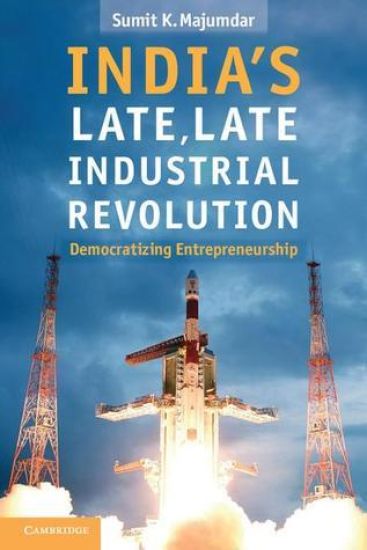
India's Late, Late Industrial Revolution

India's Late, Late Industrial Revolution

Sumit K. Majumdar

Cambridge University Press
2012
pokkari
There is a paradox at the heart of the Indian economy. Indian businessmen and traders are highly industrious and ingenious people, yet for many years Indian industry was sluggish and slow to develop. One of the major factors in this sluggish development was the command and control regime known as the License Raj. This regime has gradually been removed and, after two decades of reform, India is now awakening from its slumber and is experiencing a late, late industrial revolution. This important new book catalogues and explains this revolution through a combination of rigorous analysis and entertaining anecdotes about India's entrepreneurs, Indian firms' strategies and the changing role of government in Indian industry. This analysis shows that there is a strong case for a manufacturing focus so that India can replicate the success stories of Asian countries such as Japan, South Korea and China.
Homogeneous Catalysis

Homogeneous Catalysis

Sumit Bhaduri; Doble Mukesh

John Wiley Sons Inc
2014
sidottu
Over the last decade, the area of homogeneous catalysis with transition metal has grown in great scientific interest and technological promise, with research in this area earning three Nobel Prizes and filing thousands of patents relating to metallocene and non-metallocene single site catalysts, asymmetric catalysis, carbon-carbon bond forming metathesis and cross coupling reactions. This text explains these new developments in a unified, cogent, and comprehensible manner while also detailing earlier discoveries and the fundamentals of homogeneous catalysis. Serving as a self-study guide for students and all chemists seeking to gain entry into this field, it can also be used by experienced researchers from both academia and industry for referring to leading state of the art review articles and patents, and also as a quick self-study manual in an area that is outside their immediate expertise. The book features: • Topics including renewable feed stocks (biofuel, glycerol), carbon dioxide based processes (polycarbonates), fluorous solvents, ionic liquid, hydroformylation, polymerization, oxidation, asymmetric catalysis, and more • Basic principles of organometallic chemistry, homogeneous catalysis, and relevant technological issues • Problems and answers, industrial applications (case studies), and examples from proven industrial processes with clear discussions on environmental and techno-commercial issues • Extensive references to cutting edge research with application potential and leading patents • Tables and illustrations to help explain difficult concepts
Mechanics of Particle- and Fiber-Reinforced Polymer Nanocomposites
Learn to model your own problems for predicting the properties of polymer-based composites Mechanics of Particle- and Fiber-Reinforced Polymer Nanocomposites: Nanoscale to Continuum Simulations provides readers with a thorough and up-to-date overview of nano, micro, and continuum approaches for the multiscale modeling of polymer-based composites. Covering nanocomposite development, theoretical models, and common simulation methods, the text includes a variety of case studies and scripting tutorials that enable readers to apply and further develop the supplied simulations. The book describes the foundations of molecular dynamics and continuum mechanics methods, guides readers through the basic steps required for multiscale modeling of any material, and correlates the results between the experimental and theoretical work performed. Focused primarily on nanocomposites, the methods covered in the book are applicable to various other materials such as carbon nanotubes, polymers, metals, and ceramics. Throughout the book, readers are introduced to key topics of relevance to nanocomposite materials and structures—supported by journal articles that discuss recent developments in modeling techniques and in the prediction of mechanical and thermal properties. This timely, highly practical resource: Explains the molecular dynamics (MD) simulation procedure for nanofiber and nanoparticle reinforced polymer compositesCompares results of experimental and theoretical results from mechanical models at different length scalesCovers different types of fibers and matrix materials that constitute composite materials, including glass, boron, carbon, and KevlarReviews models that predict the stiffness of short-fiber composites, including the self-consistent model for finite-length fibers, bounding models, and the Halpin-Tsai equationDescribes various molecular modeling methods such as Monte Carlo, Brownian dynamics, dissipative particle dynamics, and lattice Boltzmann methodsHighlights the potential of nanocomposites for defense and space applications Perfect for materials scientists, materials engineers, polymer scientists, and mechanical engineers, Mechanics of Particle- and Fiber-Reinforced Polymer Nanocomposites is also a must-have reference for computer simulation scientists seeking to improve their understanding of reinforced polymer nanocomposites.
Becoming Arab

Becoming Arab

Sumit K. Mandal

Cambridge University Press
2017
pokkari
Sumit K. Mandal uncovers the hybridity and transregional connections underlying modern Asian identities. By considering Arabs in the Malay world under European rule, Becoming Arab explores how a long history of inter-Asian interaction was altered by nineteenth-century racial categorisation and control. Mandal traces the transformation of Arabs from familiar and multi-faceted creole personages of Malay courts into alienated figures defined by economic and political function. The racialisation constrained but did not eliminate the fluid character of Arabness. Creole Arabs responded to the constraints by initiating transregional links with the Ottoman Empire and establishing modern social organisations, schools, and a press. Contentions emerged between organisations respectively based on Prophetic descent and egalitarianism, advancing empowering but conflicting representations of a modern Arab and Islamic identity. Mandal unsettles finite understandings of race and identity by demonstrating not only the incremental development of a modern identity, but the contested state of its birth.
SPARK: A Parallelizing Approach to the High-Level Synthesis of Digital Circuits

SPARK: A Parallelizing Approach to the High-Level Synthesis of Digital Circuits

Sumit Gupta; Rajesh Gupta; Nikil D. Dutt; Alexandru Nicolau

Springer-Verlag New York Inc.
2004
sidottu
Rapid advances in microelectronic integration and the advent of Systems-on-Chip have fueled the need for high-level synthesis, i.e., an automated approach to the synthesis of hardware from behavioral descriptions. SPARK: A Parallelizing Approach to the High - Level Synthesis of Digital Circuits presents a novel approach to the high-level synthesis of digital circuits -- that of parallelizing high-level synthesis (PHLS). This approach uses aggressive code parallelizing and code motion techniques to discover circuit optimization opportunities beyond what is possible with traditional high-level synthesis. This PHLS approach addresses the problems of the poor quality of synthesis results and the lack of controllability over the transformations applied during the high-level synthesis of system descriptions with complex control flows, that is, with nested conditionals and loops. Also described are speculative code motion techniques and dynamic compiler transformations that optimize the circuit quality in terms of cycle time, circuit size and interconnect costs. We describe the SPARK parallelizing high-level synthesis framework in which we have implemented these techniques and demonstrate the utility of SPARK's PHLS approach using designs derived from multimedia and image processing applications. We also present a case study of an instruction length decoder derived from the Intel Pentium-class of microprocessors. This case study serves as an example of a typical microprocessor functional block with complex control flow and demonstrates how our techniques are useful for such designs. SPARK: A Parallelizing Approach to the High - Level Synthesis of Digital Circuits is targeted mainly to embedded system designers and researchers. This includes people working on design and design automation. The book is useful for researchers and design automation engineers who wish to understand how the main problems hindering the adoption of high-level synthesis among designers.
Essays of a Lifetime

Essays of a Lifetime

Sumit Sarkar

State University of New York Press
2020
pokkari
A distillation of the historian's finest writings on modern Indian historical themes.For the past forty years or more, the most influential, respected, and popular scholar of modern Indian history has been Sumit Sarkar. When his first monograph, The Swadeshi Movement in Bengal 1903–1908, appeared in 1973 it soon became obvious that the book represented a paradigm shift within its genre. As Dipesh Chakrabarty put it when the work was republished in 2010: "Very few monographs, if any, have ever rivalled the meticulous research and the thick description that characterized this book, or the lucidity of its exposition and the persuasive power of its overall argument."Ten years later, Sarkar published Modern India 1885–1947, a textbook for advanced students and teachers. Its synthesis and critique of everything significant that had been written about the period was seen as monumental, lucid, and the fashioning of a new way of looking at colonialism and nationalism.Sarkar, however, changed the face not only of modern Indian history monographs and textbooks, he also radically altered the capacity of the historical essay. As Beethoven stretched the sonata form beyond earlier conceivable limits, Sarkar can be said to have expanded the academic essay. In his hands, the shorter form becomes in miniature both monograph and textbook.The present collection, which reproduces many of Sarkar's finest writings, shows an intellectually scintillating, skeptical-Marxist mind at its sharpest.
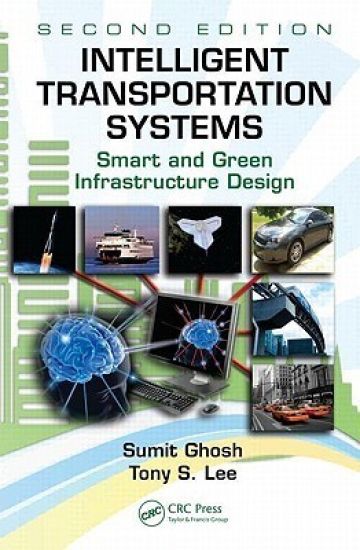
Intelligent Transportation Systems

Intelligent Transportation Systems

Sumit Ghosh; Tony S. Lee

CRC Press Inc
2010
sidottu
For many transportation systems, the cost of expanding the infrastructure is too high. Therefore, the focus must shift to improving the quality of transportation within the existing infrastructure. The second edition of a bestseller, Intelligent Transport Systems: Smart and Green Infrastructure Design critically examines the successes and failures of intelligent transportation systems (ITS) during the course of the past decade. The new subtitle reflects this edition’s focus on meta-principles critical to moving ahead and successfully building ITS infrastructures that take advantage of smart/green technologies. The book identifies challenging problems that must be addressed in order to bring real quality of life improvements and positively impact our environmental and civil infrastructure systems. New in the second edition: Coverage of new, efficient green strategiesCritical review of important developments and implementation of ITS Discussion of how to apply new insights and meta-principles to real-world ITS problemsThe authors argue strongly for the need to incorporate innovative and creative approaches to transportation problems, based on the fundamental principles and thorough scientific validation. They stress the need for computer modeling and simulation of a representative system to help design and validate such complex, large-scale systems, and the design of new performance metrics to estimate the performance of these systems. They provide a radically different approach to transportation systems design—one that closely resembles reality and promises to yield an architecture that delivers the highest efficiency.
Principles of Secure Network Systems Design

Principles of Secure Network Systems Design

Sumit Ghosh; H. Lawson

Springer-Verlag New York Inc.
2012
nidottu
As e-commerce becomes the norm of business transactions and information be­ comes an essential commodity, it is vital that extensive efforts be made to examine and rectify the problems with the underlying architectures, processes, methods, that are involved in providing and and tools, as well as organizational structures, utilizing services relating to information technology. Such a holistic view of the relevant structures is required in order to identify all of the key aspects that can affect network security. Unfortunately, today's systems and practices, although they have proved to be useful and become widespread, contain significant unnecessary complexity. This complexity provides many loopholes that make systems and practices vulnerable to malicious attacks by hackers as well as by individual and organized criminals. FUrther, there are enormous risks due to malfunction of the systems. The holes in the network system cannot simply be plugged up by the use of cryptography and firewalls. While many changes need to be made in operating systems and system software with respect to security, this alone does not solve the problem. The problems cannot be solved by addressing only a single key aspect of network security. A holistic approach is required. Sumit Ghosh has provided in this book such a holistic view of the area of network security. Thus, it is a most welcome contribution.
Low Power Design with High-Level Power Estimation and Power-Aware Synthesis

Low Power Design with High-Level Power Estimation and Power-Aware Synthesis

Sumit Ahuja; Avinash Lakshminarayana; Sandeep Kumar Shukla

Springer-Verlag New York Inc.
2011
sidottu
This book presents novel research techniques, algorithms, methodologies and experimental results for high level power estimation and power aware high-level synthesis. Readers will learn to apply such techniques to enable design flows resulting in shorter time to market and successful low power ASIC/FPGA design.
SPARK: A Parallelizing Approach to the High-Level Synthesis of Digital Circuits

SPARK: A Parallelizing Approach to the High-Level Synthesis of Digital Circuits

Sumit Gupta; Rajesh Gupta; Nikil D. Dutt; Alexandru Nicolau

Springer-Verlag New York Inc.
2013
nidottu
Rapid advances in microelectronic integration and the advent of Systems-on-Chip have fueled the need for high-level synthesis, i.e., an automated approach to the synthesis of hardware from behavioral descriptions. SPARK: A Parallelizing Approach to the High - Level Synthesis of Digital Circuits presents a novel approach to the high-level synthesis of digital circuits -- that of parallelizing high-level synthesis (PHLS). This approach uses aggressive code parallelizing and code motion techniques to discover circuit optimization opportunities beyond what is possible with traditional high-level synthesis. This PHLS approach addresses the problems of the poor quality of synthesis results and the lack of controllability over the transformations applied during the high-level synthesis of system descriptions with complex control flows, that is, with nested conditionals and loops. Also described are speculative code motion techniques and dynamic compiler transformations that optimize the circuit quality in terms of cycle time, circuit size and interconnect costs. We describe the SPARK parallelizing high-level synthesis framework in which we have implemented these techniques and demonstrate the utility of SPARK's PHLS approach using designs derived from multimedia and image processing applications. We also present a case study of an instruction length decoder derived from the Intel Pentium-class of microprocessors. This case study serves as an example of a typical microprocessor functional block with complex control flow and demonstrates how our techniques are useful for such designs. SPARK: A Parallelizing Approach to the High - Level Synthesis of Digital Circuits is targeted mainly to embedded system designers and researchers. This includes people working on design and design automation. The book is useful for researchers and design automation engineers who wish to understand how the main problems hindering the adoption of high-level synthesis among designers.
Algorithm Design for Networked Information Technology Systems

Algorithm Design for Networked Information Technology Systems

Sumit Ghosh; C.V. Ramamoorthy

Springer-Verlag New York Inc.
2013
nidottu
I felt deeply honored when Professor Sumit Ghosh asked me to write the foreword to his book with an extraordinary perspective. I have long admired him, ?rst as a student leader at Stanford, where he initiated the ?rst IEEE Computer Society’s student chapter, and later as an esteemed and inspiring friend whose transdisciplinary research broadened and enhanced the horizons of practitioners of computer science and engineering, including my own. His ideas, which are derived from his profound vision, deep critical thinking, and personal intuition, reach from information technology to bioscience, as - hibited in this excellent book. To me, an ordinary engineer, it opens up a panoramic view of the Universe of Knowledge that keeps expanding and - spiring,likethegoodIndianproverb,whichsays,“agoodbookinformsyou,an excellent book teaches you, and a great book changes you. ” I sincerely believe that Professor Ghosh’s book will help us change and advance the methods of systems engineering and technology. Vision Inspired vision sees ahead of others what will or may come to be, a vivid, imagined concept or anticipation. An inspired vision personi?es what is good and what like-minded individuals hope for. Our vision is one of creating an Internet of minds, where minds are Web sites or knowledge centers, which create, store, and radiate knowledge through interaction with other minds connected by a universal shared network. This vision will not just hasten the death of distance, but will also - carcerate ignorance.
SQL on Big Data

SQL on Big Data

Sumit Pal

APress
2016
nidottu
Learn various commercial and open source products that perform SQL on Big Data platforms. You will understand the architectures of the various SQL engines being used and how the tools work internally in terms of execution, data movement, latency, scalability, performance, and system requirements.This book consolidates in one place solutions to the challenges associated with the requirements of speed, scalability, and the variety of operations needed for data integration and SQL operations. After discussing the history of the how and why of SQL on Big Data, the book provides in-depth insight into the products, architectures, and innovations happening in this rapidly evolving space.SQL on Big Data discusses in detail the innovations happening, the capabilities on the horizon, and how they solve the issues of performance and scalability and the ability to handle different data types. The book covers how SQL on Big Data engines are permeating the OLTP, OLAP, and Operational analytics space and the rapidly evolving HTAP systems.You will learn the details of:Batch Architectures—Understand the internals and how the existing Hive engine is built and how it is evolving continually to support new features and provide lower latency on queriesInteractive Architectures—Understanding how SQL engines are architected to support low latency on large data setsStreaming Architectures—Understanding how SQL engines are architected to support queries on data in motion using in-memory and lock-free data structuresOperational Architectures—Understanding how SQL engines are architected for transactional and operational systems to support transactions on Big Data platformsInnovative Architectures—Explore the rapidly evolving newer SQL engines on Big Data with innovative ideas and conceptsWho This Book Is For:Business analysts, BI engineers, developers, data scientists and architects, and quality assurance professionals
Building Chatbots with Python
Build your own chatbot using Python and open source tools. This book begins with an introduction to chatbots where you will gain vital information on their architecture. You will then dive straight into natural language processing with the natural language toolkit (NLTK) for building a custom language processing platform for your chatbot. With this foundation, you will take a look at different natural language processing techniques so that you can choose the right one for you. The next stage is to learn to build a chatbot using the API.ai platform and define its intents and entities. During this example, you will learn to enable communication with your bot and also take a look at key points of its integration and deployment.The final chapter of Building Chatbots with Python teaches you how to build, train, and deploy your very own chatbot. Using open source libraries and machine learning techniques you will learnto predict conditions for your bot and develop a conversational agent as a web application. Finally you will deploy your chatbot on your own server with AWS. What You Will LearnGain the basics of natural language processing using Python Collect data and train your data for the chatbotBuild your chatbot from scratch as a web appIntegrate your chatbots with Facebook, Slack, and TelegramDeploy chatbots on your own serverWho This Book Is ForIntermediate Python developers who have no idea about chatbots. Developers with basic Python programming knowledge can also take advantage of the book.