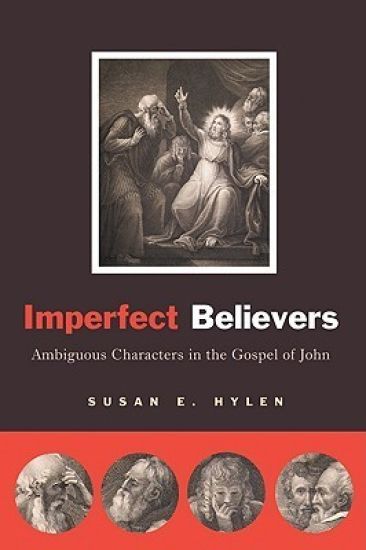
This book is a solid study of characters in the Gospel of John--Nicodemus, the Samaritan woman, the disciples, the Jews, Martha and Mary, Peter and the Beloved Disciple, and Jesus. Susan Hylen argues that John's characters are not simply one-dimensional depictions of belief and unbelief, but are in fact far more complex and ambiguous.This ambiguity has an important literary function: it invites the reader to understand biblical characters within the context of the inherent logic of the Gospel. The Gospel establishes ideals like believing and abiding in Jesus. The reader is left to decide to what extent a character's actions and speech reflect these aims. Individual character portraits explore what readers may learn from studying John's complex characters.This is an excellent secondary source for seminary classes on the fourth Gospel.
Children from poor families generally do a lot worse than children from affluent families. They are more likely to develop behavior problems, to score lower on standardized tests, and to become adults in need of public assistance.Susan Mayer asks whether income directly affects children's life chances, as many experts believe, or if the factors that cause parents to have low incomes also impede their children's life chances. She explores the question of causation with remarkable ingenuity. First, she compares the value of income from different sources to determine, for instance, if a dollar from welfare is as valuable as a dollar from wages. She then investigates whether parents' income after an event, such as teenage childbearing, can predict that event. If it can, this suggests that income is a proxy for unmeasured characteristics that affect both income and the event. Next she compares children living in states that pay high welfare benefits with children living in states with low benefits. Finally, she examines whether national income trends have the expected impact on children. Regardless of the research technique, the author finds that the effect of income on children's outcomes is smaller than many experts have thought.Mayer then shows that the things families purchase as their income increases, such as cars and restaurant meals, seldom help children succeed. On the other hand, many of the things that do benefit children, such as books and educational outings, cost so little that their consumption depends on taste rather than income. Money alone, Mayer concludes, does not buy either the material or the psychological well-being that children require to succeed.
War! Over his mother's objections Robert Henry Hendershot has joined the Union Army as a drummer boy. He wants to see battle and capture a confederate soldier -- but his company commander says he's too young and removes him from the pontoon carrying troops across the Rappahannock to face the rebels at Fredericksburg. Can Robert find a way to become a hero?
Texas Bound Hazelle has been living in the Grace Home, an orphanage in New York City, for almost a year. Now she and several other children have been put on a train headed for Texas, where they will be placed with families that want children. But Hazelle isn't an orphan, and her new home isn't what she expected. Will Hazelle find a place where she belongs? Hazelle Boxberg was a real eleven-year-old girl who traveled to Texas on an orphan train in 1918. Her story is as exciting as any novel.
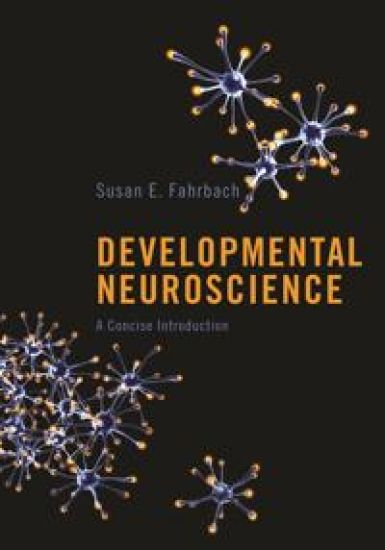
This textbook offers a concise introduction to the exciting field of developmental neuroscience, a discipline concerned with the mechanisms by which complex nervous systems emerge during embryonic growth. Bridging the divide between basic and clinical research, it captures the extraordinary progress that has been achieved in the field. It provides an opportunity for students to apply and extend what they have learned in their introductory biology courses while also directing them to the primary literature. This accessible textbook is unique in that it takes an in-depth look at a small number of key model systems and signaling pathways. The book's chapters logically follow the sequence of human brain development and explain how information obtained from models such as Drosophila and zebrafish addresses topics relevant to this area. Beginning with a brief presentation of methods for studying neural development, the book provides an overview of human development, followed by an introduction to animal models. Subsequent chapters consider the molecular mechanisms of selected earlier and later events, neurogenesis, and formation of synapses. Glial cells and postembryonic maturation of the nervous system round out later chapters. The book concludes by discussing the brain basis of human intellectual disabilities viewed from a developmental perspective. Focusing on the mechanistic and functional, this textbook will be invaluable to biology majors, neuroscience students, and premedical and pre-health-professions students. * An accessible introduction to nervous system development * Suitable for one-semester developmental neuroscience course * Thorough review of key model systems * Selective coverage of topics allows professors to personalize courses * Investigative reading exercises at the end of each chapter * An online illustration package is available to professors
Focusing on the Supreme Court as an integral part of the policy-making process, Susan Lawrence examines how a change in who has access to the Court, and the nature of the institutions that structure that access, has affected its agenda setting and doctrinal development. In her analysis of cases sponsored by the Legal Services Program (LSP) before the Supreme Court during the 1966 through 1974 terms, she explores the effect of this agency in creating a voice for the poor in the judicial policy-making process. The Court's response to cases presented by the LSP--as exemplified in its decisions to invalidate residency requirements for welfare recipients (Shapiro v. Thompson, 1969) but uphold maximum family grants (Dandridge v. Williams, 1970)--is described as emerging from a timely combination of new litigant claims, available legal bases, and judicial values and role conceptions, all of which were shaped by the political climate of the era. Lawrence convincingly argues that litigation before the Court is a powerful method of political participation for the disadvantaged. Originally published in 1990. The Princeton Legacy Library uses the latest print-on-demand technology to again make available previously out-of-print books from the distinguished backlist of Princeton University Press. These editions preserve the original texts of these important books while presenting them in durable paperback and hardcover editions. The goal of the Princeton Legacy Library is to vastly increase access to the rich scholarly heritage found in the thousands of books published by Princeton University Press since its founding in 1905.
Focusing on the Supreme Court as an integral part of the policy-making process, Susan Lawrence examines how a change in who has access to the Court, and the nature of the institutions that structure that access, has affected its agenda setting and doctrinal development. In her analysis of cases sponsored by the Legal Services Program (LSP) before the Supreme Court during the 1966 through 1974 terms, she explores the effect of this agency in creating a voice for the poor in the judicial policy-making process. The Court's response to cases presented by the LSP--as exemplified in its decisions to invalidate residency requirements for welfare recipients (Shapiro v. Thompson, 1969) but uphold maximum family grants (Dandridge v. Williams, 1970)--is described as emerging from a timely combination of new litigant claims, available legal bases, and judicial values and role conceptions, all of which were shaped by the political climate of the era. Lawrence convincingly argues that litigation before the Court is a powerful method of political participation for the disadvantaged. Originally published in 1990. The Princeton Legacy Library uses the latest print-on-demand technology to again make available previously out-of-print books from the distinguished backlist of Princeton University Press. These editions preserve the original texts of these important books while presenting them in durable paperback and hardcover editions. The goal of the Princeton Legacy Library is to vastly increase access to the rich scholarly heritage found in the thousands of books published by Princeton University Press since its founding in 1905.
This book considers the nature and exercise of moral imagination in situations in which our ability to act and choose meaningfully is limited by unarticulated expectations. Moral imagination is a cognitive attitude, in which we regard propositions as true. But it also involves orientation. In moral imagination, we regard propositions as true in order to make something else true, and we act and interpret as if it were true. The demand for explanatory unity in such situations - what I call 'explanatory burden' - involves self-constitution, with seeing oneself as a certain sort of person and developing relevant expectations. Whereas it is common to define human well-being in terms of choice and capacities, I suggest that meaningful choice and human capacities are sometimes defined in terms of the actual pursuit and achievement of human well-being. I draw upon examples from literature, film, and historical narrative to suggest that while we think autonomy and agency consist, at least in part, in taking control, we must sometimes be controlled by circumstances and relations in order to occupy an appropriate interpretive perspective for real freedom. I consider the implications of this point for such concepts as respect, friendship and democracy.
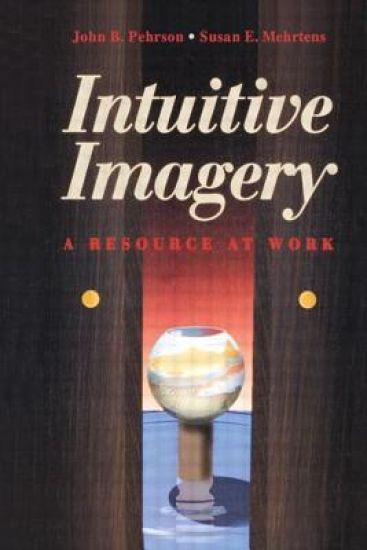
Intuitive Imagery puts the discoveries of modern science to work through a simple, proven technology to meet the challenges of our fast-paced changing world. This book shows you how to harness the wisdom of your inner images to achieve peak performance in both business and personal life. Results include greater creativity, better decision making, enhanced productivity, the unlocking of blocked potential, accelerated learning, increased success, and a sense of greater well-being. Learning to use intuitive imaging is like finding a new set of lenses through which to view the world. It helps us change our beliefs about how we know what we know so we can begin to restructure how we do what we do. John B. Pehrson is president of Creative Change Technologies, a training and consulting firm to individuals and organizations focusing in the areas of creativity, deep team building, and executive coaching. John is a former executive with DuPont and has over 20 years of broad international business experience that includes business and technology management, strategic planning, product development, manufacturing, sales and marketing. He lives in Signal Mountain, TN. Susan E. Mehrtons is president of The Potlatch Group, a research organization specializing in analysis of business trends related to global evolution and social change. Her clients range from Fortune 500 companies like AT&T, DuPont, General Motors, and Sears to smaller businesses, schools, and private foundations such as The Institute of Noetic Sciences and the World Business Academy. Sue is the co-author of Earthkeeping, an ecology text, and The Fourth Wave, a vision of business in the 21st century. She lives in Mineola, NY.
This represents the first study devoted to the life and after-life of St John of Beverley. John was bishop of Hexham and then York, after which he retired to his own monastery in Beverley and was buried there in 721. His cult was quickly established and spread to attract pilgrims from all over the British Isles, and even Europe. It was also established in Brittany by the tenth century, especially in the town of Saint-Jean-Brévelay, which is named after him. The great economic wealth of Beverley in the Middle Ages was largely due to it being a major ecclesiastical centre focused around John's relics. His reputation as a powerful saint was harnessed not only to protect Beverley and the surrounding areas and to give succour to pilgrims to his shrine, but also to further the ambitions of successive kings of England to the extent that Henry V raised him to the status of a patron saint of England following the battle of Agincourt, which was fought on the feast day of St John's translation. The hagiographic works on John extend over nearly six hundred years from that written by Bede c. 731, the Vita Sancti Johannis composed by a monk called Folcard c. 1066, then four separate collections of post-mortem miracle stories of the eleventh-thirteenth centuries, and a number of miracles recorded in the fourteenth and fifteenth centuries. This span is greater even than the hagiography relating to St Benedict, which had been believed to cover more years than any other collection in Europe. Dr Wilson uses these sources as a unique opportunity to examine the ways in which an Anglo-Saxon saint was promoted over a long period of time by different hagiographers, and how the saint was continually re-created in the image which the hagiographers or his community required, depending on their current needs and perceptions. The volume also includes the first English translations of the Life and the miracle stories.
Chronicling the history of the Daughters of Charity through the seventeenth century, this study examines how the community's existence outside of convents helped to change the nature of women's religious communities and the early modern Catholic church. Unusually for the time, this group of Catholic religious women remained uncloistered. They lived in private houses in the cities and towns of France, offering medical care, religious instruction and alms to the sick and the poor; by the end of the century, they were France's premier organization of nurses. This book places the Daughters of Charity within the context of early modern poor relief in France - the author shows how they played a critical role in shaping the system, and also how they were shaped by it. The study also examines the complicated relationship of the Daughters of Charity to the Catholic church of the time, analyzing it not only for what light it can shed on the history of the community, but also for what it can tell us about the Catholic Reformation more generally.
A significant contribution to the understanding of sixteenth-century English art in an historical context, this study by Susan James represents an intensive rethinking and restructuring of the Tudor art world based on a broad, detailed survey of women's diverse creative roles within that world. Through an extensive analysis of original documents, James examines and clarifies many of the misperceptions upon which modern discussions of Tudor art are based. The new evidence she lays out allows for a fresh investigation of the economics of art production, particularly in the images of Elizabeth I; of strategies for influencing political situations by carefully planned programs of portraiture; of the seminal importance of extended clans of immigrant Flemish artists and of careers of artists Susanna Horenboult and Lievine Teerlinc and their impact on the development of the portrait miniature. Drawn principally from primary sources, this book presents important new research which examines the contributions of Tudor women in the formation, distribution and popularization of the visual arts, particularly portraiture and the portrait miniature. James highlights the involvement of women as patrons, consumers and creators of art in sixteenth-century England and their use of the painted image as a statement of cultural worth. She explores and analyzes the amount of time, money, effort and ingenuity which women across all social classes invested in the development of art, in the uses they found for it, and the surprising and unexpected ways in which they exploited it.
The Therapist's Toolbox is like taking several years of seminars and reading a book or two. It is a time-saving and cost effective manual full of tried-and-tune techniques for enhancing therapeutic intervention with clients, written by a discerning and seasoned practitioner. Aimed at practice with individual adults and couples, this manual is a collection of nonsense, helpful techniques drawn from Susan E. Carrell's vast experience throughout her career. Each technique is complete and easy to implement in a single session. The author's jargon-free, down-to-earth writing style makes each technique easy to understand and effective to use. Carrell provides treatment objective and diagnostic aids to help the clinician meet requirements for treatment planning, as well extensive examples from her own practice.