Kirjojen hintavertailu. Mukana 12 595 353 kirjaa ja 12 kauppaa.

Kirjahaku

Etsi kirjoja tekijän nimen, kirjan nimen tai ISBN:n perusteella.

1000 tulosta hakusanalla Tariq Jaffer

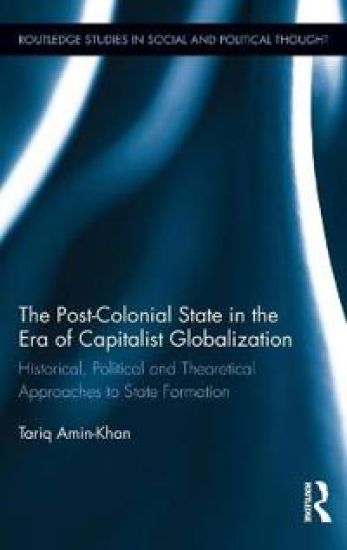
The Post-Colonial State in the Era of Capitalist Globalization
State formation in post-colonial societies differed greatly from the formation of the Western capitalist state. The latter has been extensively studied, while a coherent grasp of the post-colonial state has remained elusive. Amin-Khan provides a critical historical and contemporary understanding of post-colonial state formations in Asia and Africa, and suggests how this process differed from the formation of states in Latin America. In distinguishing between the post-colonial state and the Western capitalist state, the author argues that the unitary colonial state left a strong legacy on the decolonized states of Asia and Africa, reinscribing their subordination vis-à-vis Western states, transnational corporations and multilateral institutions. The indigenous elites' decision at the time of decolonization to retain colonial state structures meant the readaptation of capitalism-imperialism nexus to suit new post-colonial realities, which enabled the formation of clientelist relationships. This post-colonial reality and exploration of the contemporary context provides the basis of analyzing two post-colonial state forms, the capitalist and proto-capitalist varieties, which are examined using the case studies of India and Pakistan.

Ali and Dahlia

Ali and Dahlia

Tariq Jordan

Samuel French Ltd
2019
nidottu
Having been accused of rioting, Ali awaits his fate in an Israeli interrogation room. But when an old lover steps in to defend him, the two are forced to confront their past; finding themselves torn between bitter loyalties.A Palestinian-Israeli love story set against the backdrop of the construction of the West Bank wall. A story of love, sacri ce, and redemption.Ali and Dahlia explores the loss of innocence, the longing for lost homelands, and the political forces that shape our lives.
The Upcycled Self: A Memoir on the Art of Becoming Who We Are
NEW YORK TIMES BESTSELLER - "One of hip-hop's greatest MCs, unpacking his harrowing, remarkable journey in his own words, with enough insights for two lifetimes."--Lin-Manuel Miranda, award-winning songwriter, producer, director, and creator of In the Heights and Hamilton From one of our generation's most powerful artists and incisive storytellers comes a brilliantly crafted work about the art--and war--of becoming who we are.A ROLLING STONE BEST BOOK OF THE YEAR upcycle verbup-cy-cle ˈəp-ˌsī-kəl to recycle (something) in such a way that the resulting product is of a higher value than the original item to create an object of greater value from (a discarded object of lesser value) Today Tariq Trotter--better known as Black Thought--is the platinum-selling, Grammy-winning co-founder of The Roots and one of the most exhilaratingly skillful and profound rappers our culture has ever produced. But his story begins with a tragedy: as a child, Trotter burned down his family's home. The years that follow are the story of a life snatched from the flames, forged in fire. In The Upcycled Self, Trotter doesn't only narrate a riveting and moving portrait of the artist as a young man, he gives readers a courageous model of what it means to live an examined life. In vivid vignettes, he tells the dramatic stories of the four powerful relationships that shaped him--with community, friends, art, and family--each a complex weave of love, discovery, trauma, and loss. And beyond offering the compellingly poetic account of one artist's creative and emotional origins, Trotter explores the vital questions we all have to confront about our formative years: How can we see the story of our own young lives clearly? How do we use that story to understand who we've become? How do we forgive the people who loved and hurt us? How do we rediscover and honor our first dreams? And, finally, what do we take forward, what do we pass on, what do we leave behind? This is the beautifully bluesy story of a boy genius's coming-of-age that illuminates the redemptive power of the upcycle.
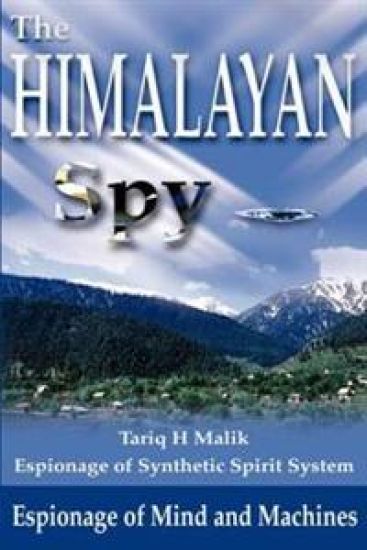
Himalayan Spy

Himalayan Spy

Tariq H Malik

iUniverse
2001
pokkari
Espionage by remote viewing.Bailey Shinnar, a five-year-old boy, leaves western Himalaya after his mother dies, and he crosses from China to Pamir. Two years in Pamir and a merciless earthquake changes the face of the mountain summit. He joins a nomadic caravan and ends up with a newly wedded couple in Kabul. At the age of nine, his master sees him hugging his wife. The jealous husband fires at him, but Shinnar escapes from a bullet. An Iranian landlord finds him at shrine and takes him to his fruit farm in Iran. At the age of merely ten, he is accused of a double rape. After escaping from there, he ends up in the hands of a gang that smuggles children to the Gulf States for camel jockeying. In his teenage years, his employer rips him off of his earnings and sends him to a prison. American embassy traces him through his job application to French Foreign Legion in the mid-eighties. He ends up at Hanger-01 in the U. S. During fifteen years, the Allied Intelligence Corporation transforms him into a new person and sends him to Iran for spying. He gets caught and then understands he is a spy after a drug reverts him to his original personality. After days of interrogation, he gets out alive from Persia. Back at Hanger-01, he finds out his chief is collaborating with Iranian and Chinese for money. The AIC sends him undercover to find about the blast near American bases Saudi Arabia. He finds out his chief wants to cash insurance on the project. It is only possible after Bailey's death. The circle narrows around him. He has no option but to escape from Saudi Arabia to Emirates. From Persian Gulf, he steals the saucer he was created for on the millennium night. He flies the so-called SOX to Himalayas. Chinese air force shoots his spaceship above the western province. He ejects before the crash and lands on the mountains he departed from decades earlier.
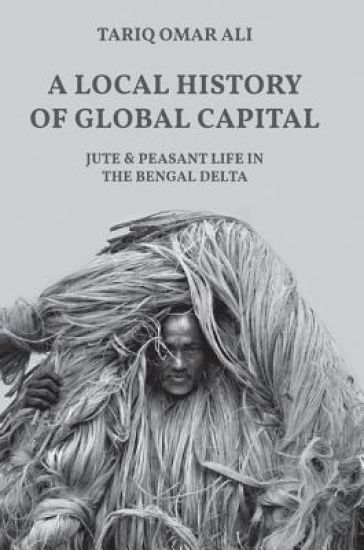
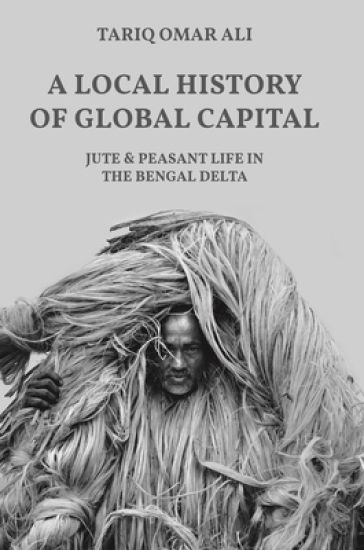
A Local History of Global Capital

A Local History of Global Capital

Tariq Omar Ali

PRINCETON UNIVERSITY PRESS
2018
sidottu
Before the advent of synthetic fibers and cargo containers, jute sacks were the preferred packaging material of global trade, transporting the world's grain, cotton, sugar, tobacco, coffee, wool, guano, and bacon. Jute was the second-most widely consumed fiber in the world, after cotton. While the sack circulated globally, the plant was cultivated almost exclusively by peasant smallholders in a small corner of the world: the Bengal delta. This book examines how jute fibers entangled the delta's peasantry in the rhythms and vicissitudes of global capital.Taking readers from the nineteenth-century high noon of the British Raj to the early years of post-partition Pakistan in the mid-twentieth century, Tariq Omar Ali traces how the global connections wrought by jute transformed every facet of peasant life: practices of work, leisure, domesticity, and sociality; ideas and discourses of justice, ethics, piety, and religiosity; and political commitments and actions. Ali examines how peasant life was structured and restructured with oscillations in global commodity markets, as the nineteenth-century period of peasant consumerism and prosperity gave way to debt and poverty in the twentieth century.A Local History of Global Capital traces how jute bound the Bengal delta's peasantry to turbulent global capital, and how global commodity markets shaped everyday peasant life and determined the difference between prosperity and poverty, survival and starvation.
A Local History of Global Capital

A Local History of Global Capital

Tariq Omar Ali

Princeton University Press
2020
pokkari
Before the advent of synthetic fibers and cargo containers, jute sacks were the preferred packaging material of global trade, transporting the world's grain, cotton, sugar, tobacco, coffee, wool, guano, and bacon. Jute was the second-most widely consumed fiber in the world, after cotton. While the sack circulated globally, the plant was cultivated almost exclusively by peasant smallholders in a small corner of the world: the Bengal delta. This book examines how jute fibers entangled the delta's peasantry in the rhythms and vicissitudes of global capital.Taking readers from the nineteenth-century high noon of the British Raj to the early years of post-partition Pakistan in the mid-twentieth century, Tariq Omar Ali traces how the global connections wrought by jute transformed every facet of peasant life: practices of work, leisure, domesticity, and sociality; ideas and discourses of justice, ethics, piety, and religiosity; and political commitments and actions. Ali examines how peasant life was structured and restructured with oscillations in global commodity markets, as the nineteenth-century period of peasant consumerism and prosperity gave way to debt and poverty in the twentieth century.A Local History of Global Capital traces how jute bound the Bengal delta's peasantry to turbulent global capital, and how global commodity markets shaped everyday peasant life and determined the difference between prosperity and poverty, survival and starvation.
Play Or Be Played

Play Or Be Played

Tariq 'King-Flex' Nasheed

Simon Schuster
2004
nidottu
Street-smart and straightforward, Play or Be Played will help you get with a king without being a hoochie, groupie, or a chickenhead.Got Game? It's a fact. Every woman needs game. Take Oprah, Jada Pinkett-Smith, and Beyoncé Knowles. All three of these women have the one intangible quality that every mack, male or female, must possess: they all have game. In other words, they have intelligence, hustle, and common sense that they apply to every aspect of their lives -- especially in their relationships. Play or Be Played is an instruction manual for women who are tired of being played by men and who want to be players themselves. Though women may not want to play games, the truth is men often do. So women who hope to win in the game of love must first learn the rules. Bestselling author and true mack, Tariq "K-Flex" Nasheed shares: -ways to spot a scrub -what it takes to get with a baller -why men cheat -how men really judge women -the top three mistakes women make in relationships
The New Governance of Religious Diversity

The New Governance of Religious Diversity

Tariq Modood; Thomas Sealy

JOHN WILEY AND SONS LTD
2024
sidottu
Religious diversity is a key feature of countries across the world today, but it also presents governments with very real challenges. Controversies around religious free speech, symbols, social values and morals, and the role of faith leaders as critical voices, are just a few of the issues that have given rise to fierce social, political and scholarly debate. So how do states include and accommodate religious diversity and should this change? What are the key difficulties facing states when it comes to governing religious diversity? Understanding this complex phenomenon means thinking through secularism, liberalism, multiculturalism and nationalism in theory and practice. In this new book, Tariq Modood and Thomas Sealy draw on original research to present new ways of analysing the governance of religious diversity in different regions of the world. Identifying the key challenges at stake, they also argue for a new statement of multiculturalism in relation to the governance of religious diversity, that of ‘multiculturalised secularism’, which represents a constructive and productive response to the reality of religiously plural societies.
The New Governance of Religious Diversity

The New Governance of Religious Diversity

Tariq Modood; Thomas Sealy

JOHN WILEY AND SONS LTD
2024
nidottu
Religious diversity is a key feature of countries across the world today, but it also presents governments with very real challenges. Controversies around religious free speech, symbols, social values and morals, and the role of faith leaders as critical voices, are just a few of the issues that have given rise to fierce social, political and scholarly debate. So how do states include and accommodate religious diversity and should this change? What are the key difficulties facing states when it comes to governing religious diversity? Understanding this complex phenomenon means thinking through secularism, liberalism, multiculturalism and nationalism in theory and practice. In this new book, Tariq Modood and Thomas Sealy draw on original research to present new ways of analysing the governance of religious diversity in different regions of the world. Identifying the key challenges at stake, they also argue for a new statement of multiculturalism in relation to the governance of religious diversity, that of ‘multiculturalised secularism’, which represents a constructive and productive response to the reality of religiously plural societies.
Multiculturalism

Multiculturalism

Tariq Modood

Polity Press
2013
sidottu
At a time when many public commentators are turning against multiculturalism in response to fears about militant Islam, immigration or social cohesion, Tariq Modood, one of the world's leading authorities on multiculturalism, provides a distinctive contribution to these debates. He contends that the rise of Islamic terrorism has neither discredited multiculturalism nor heralded a clash of civilizations. Instead, it has highlighted a central challenge for the 21st century - the urgent need to include Muslims in contemporary conceptions of democratic citizenship. In the second edition of this popular and compelling book, Modood updates his original argument with two new chapters. He reassesses the relationship between multiculturalism, cosmopolitanism and assimilation, demonstrating that multiculturalism is crucial for successful integration. He also argues that while multiculturalism poses a significant challenge to existing forms of secularism, this challenge should not be exaggerated into a crisis. In so doing, Modood adds new vigor to the claim that multiculturalism remains a living force which is shaping our polities, even as its death is repeatedly announced. This book will appeal to students, researchers and teachers of politics, sociology and public policy, as well as to anyone interested in the prospects of multiculturalism today.
Multiculturalism

Multiculturalism

Tariq Modood

Polity Press
2013
nidottu
At a time when many public commentators are turning against multiculturalism in response to fears about militant Islam, immigration or social cohesion, Tariq Modood, one of the world's leading authorities on multiculturalism, provides a distinctive contribution to these debates. He contends that the rise of Islamic terrorism has neither discredited multiculturalism nor heralded a clash of civilizations. Instead, it has highlighted a central challenge for the 21st century - the urgent need to include Muslims in contemporary conceptions of democratic citizenship. In the second edition of this popular and compelling book, Modood updates his original argument with two new chapters. He reassesses the relationship between multiculturalism, cosmopolitanism and assimilation, demonstrating that multiculturalism is crucial for successful integration. He also argues that while multiculturalism poses a significant challenge to existing forms of secularism, this challenge should not be exaggerated into a crisis. In so doing, Modood adds new vigor to the claim that multiculturalism remains a living force which is shaping our polities, even as its death is repeatedly announced. This book will appeal to students, researchers and teachers of politics, sociology and public policy, as well as to anyone interested in the prospects of multiculturalism today.
Multicultural Politics

Multicultural Politics

Tariq Modood

Edinburgh University Press
2005
nidottu
Muslims have come to be perceived as the 'Other' that is most threatening to British society. This book argues that what begins as a narrative of racial exclusion and black-white division has been complicated by cultural racism, Islamophobia and an unexpected challenge to secular modernity. Moreover, the idea of 'race' as underclass has had to contend with the creation of middle class formations and high levels of participation in higher education among some non-white groups. These plural divisions are not intractable but require us to rethink simplistic and monistic ideas about racism, secularism, liberalism and what it means to be British. Tariq Modood has developed a unique and influential perspective out of his sense that the concerns of South Asians lie at the heart of 'race relations' in Britain. This book gathers together a number of his key sociological, political and theoretical interventions, together with a substantial new Introduction and Conclusion, allowing readers to engage with a distinctive analysis of race and religion. Key Features: * Combines a discussion of racism and Muslim politics in Britain * Offers an interdisciplinary combination of empirical sociology with political theory of multiculturalism * Challenges the secularist bias of liberals and social scientists
Multicultural Politics

Multicultural Politics

Tariq Modood; Craig Calhoun

University of Minnesota Press
2005
nidottu
If, as W. E. B. Du Bois observed, the problem of the twentieth century was the problem of the color line, the problem of the twenty-first century may be one that reaches back to premodernity: religious identity. Even before 9/11 it was becoming evident that Muslims, not blacks, were perceived as the "other" most threatening to Western society, even in a relatively pluralist nation such as Britain. In Multcultural Politics, one of the most respected thinkers on ethnic minority experience in England describes how what began as a black-white division has been complicated by cultural racism, Islamophobia, and a challenge to secular modernity. Tariq Modood explores the tensions that have risen among advocates of multiculturalism as Muslims assert themselves to catch up with existing equality agendas while challenging some of the secularist, liberal, and feminist assumptions of multiculturalists. If an Islam-West divide is to be avoided in our time, Modood suggests, then Britain, with its relatively successful ethnic pluralism and its easygoing attitude toward religion, will provide a particularly revealing case and promising site for understanding.
The New Adventures of Don Quixote

The New Adventures of Don Quixote

Tariq Ali

Seagull Books London Ltd
2015
sidottu
MULE. Who created us? ROCINANTE. What kind of dumb question is that? The great master Cervantes, of course. Who else? MULE. God. ROCINANTE. Listen you obstinate fool. We're animals. We don't have to believe in God. That's meant for the superior species. MULE. Why did Cervantes create us? ROCINANTE. Because he was a genius. I think he made me a bit like himself. But those who ride us were not so lucky. Tariq Ali's latest play, The New Adventures of Don Quixote, can be read as homage to German poet and playwright Bertolt Brecht as much as a playful tribute to Cervantes's masterwork. The central characters from the original novel, Don Quixote and Sancho Panza, are mounted on their beasts of burden, Rocinante and the Mule, and Ali has them ride into the twenty-first century, where they are confronted by old vices familiar to them: war, greed, ethnic and religious prejudices, disappointed love, and economic crisis. Their story is satirical, and their songs are sad and angry. But there are odd moments of happiness for Quixote, when he imagines that a wounded US colonel is Dulcinea and allows himself to be seduced by her in a military hospital in Germany. Primarily interested in discovering the meaning of life and how it is molded by the world in which we live, Ali's theatrical device is the conversation between the two animals - Rocinante the philosopher and Mule the everyman who questions her relentlessly. Accompanied by numerous color performance stills of the play from its 2013 production in Germany, this volume is as intellectually stimulating as it is uproariously humorous.
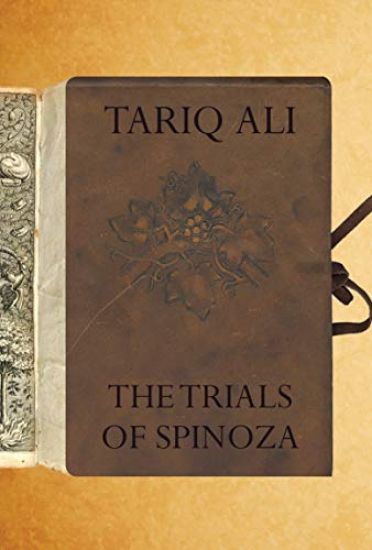
The Trials of Spinoza

The Trials of Spinoza

Tariq Ali

Seagull Books London Ltd
2019
nidottu
Baruch Spinoza (1632–77) is considered one of the great rationalist thinkers of the seventeenth century. His magnum opus, Ethics, in which he criticized the dualism of Descartes, solidified his reputation and greatly influenced the Enlightenment thinkers who would build from his work.Born in Amsterdam into a family of Sephardic Jews who had to take refuge there after they were expelled from Portugal, the precocious young scholar imbibed skepticism at an early age. By the time he was twenty-four, he had challenged what he called the “fairy tales” of the Old Testament and was excommunicated by the Synagogue. In this biographical play, Tariq Ali contextualizes Spinoza’s philosophy by linking it to the turbulent politics of the period, in which Spinoza was deeply involved. Ali originally wrote The Trials of Spinoza as part of a series on philosophy for British Channel Four television, and this publication also includes a DVD of that original television production. This work will be welcomed as a testament to the continuing interest in and relevance of Spinoza’s work and as an example of Ali’s eloquent and always politically engaged writing.
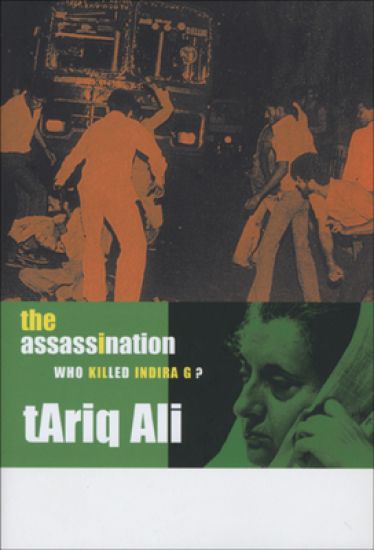
The Assassination

The Assassination

Tariq Ali

Seagull Books London Ltd
2019
nidottu
Who killed Mrs Gandhi? We know the name of the assassins, but did they act alone? In this fictional filmscript, Tariq Ali suggests that larger forces were at work, exploiting genuine Sikh grievances to settle their own score with a prime minister who, whatever her faults, was fiercely independent of Washington and safeguarded Indian sovereignty with a zeal inherited from her father. Provocative and suggestive, this script planned as the second of a series was never completed. The Assassination is published here for the first time and completes Ali’s trilogy, with The Leopard and The Fox and A Banker For All Seasons.