Title: Terence McGowan, the Irish Tenant.Publisher: British Library, Historical Print EditionsThe British Library is the national library of the United Kingdom. It is one of the world's largest research libraries holding over 150 million items in all known languages and formats: books, journals, newspapers, sound recordings, patents, maps, stamps, prints and much more. Its collections include around 14 million books, along with substantial additional collections of manuscripts and historical items dating back as far as 300 BC.The GENERAL HISTORICAL collection includes books from the British Library digitised by Microsoft. This varied collection includes material that gives readers a 19th century view of the world. Topics include health, education, economics, agriculture, environment, technology, culture, politics, labour and industry, mining, penal policy, and social order. ++++The below data was compiled from various identification fields in the bibliographic record of this title. This data is provided as an additional tool in helping to insure edition identification: ++++ British Library Tottenham, George L.; 1870. 2 vol.; 8 . 12628.bb.14.
Title: Terence McGowan, the Irish Tenant.Publisher: British Library, Historical Print EditionsThe British Library is the national library of the United Kingdom. It is one of the world's largest research libraries holding over 150 million items in all known languages and formats: books, journals, newspapers, sound recordings, patents, maps, stamps, prints and much more. Its collections include around 14 million books, along with substantial additional collections of manuscripts and historical items dating back as far as 300 BC.The HISTORY OF BRITAIN & IRELAND collection includes books from the British Library digitised by Microsoft. As well as historical works, this collection includes geographies, travelogues, and titles covering periods of competition and cooperation among the people of Great Britain and Ireland. Works also explore the countries' relations with France, Germany, the Low Countries, Denmark, and Scandinavia. ++++The below data was compiled from various identification fields in the bibliographic record of this title. This data is provided as an additional tool in helping to insure edition identification: ++++ British Library Tottenham, George; 1870. 2 vol.; 8 . 12628.bb.14.
Title: Terence ... With six illustrations by Sidney Paget.Publisher: British Library, Historical Print EditionsThe British Library is the national library of the United Kingdom. It is one of the world's largest research libraries holding over 150 million items in all known languages and formats: books, journals, newspapers, sound recordings, patents, maps, stamps, prints and much more. Its collections include around 14 million books, along with substantial additional collections of manuscripts and historical items dating back as far as 300 BC.The FICTION & PROSE LITERATURE collection includes books from the British Library digitised by Microsoft. The collection provides readers with a perspective of the world from some of the 18th and 19th century's most talented writers. Written for a range of audiences, these works are a treasure for any curious reader looking to see the world through the eyes of ages past. Beyond the main body of works the collection also includes song-books, comedy, and works of satire. ++++The below data was compiled from various identification fields in the bibliographic record of this title. This data is provided as an additional tool in helping to insure edition identification: ++++ British Library Croker, Bithia Mary; 1899.]. viii. 342 p.; 8 . 012622.f.53.
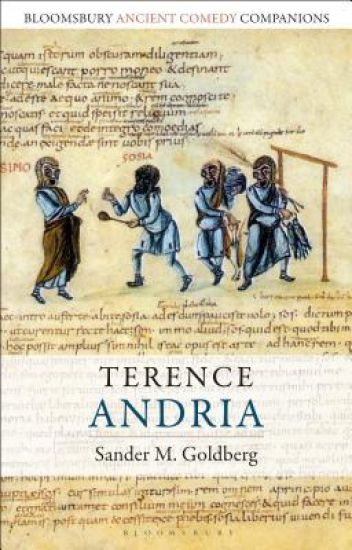
Launching a much-needed new series discussing each comedy that survives from the ancient world, this volume is a vital companion to Terence's earliest comedy, Andria, highlighting its context, themes, staging and legacy. Ideal for students it assumes no knowledge of Latin, but is helpful also for scholars wanting a quick introduction. This will be the first port of call for anyone studying or researching the play.Though Andria launched Terence’s career as a dramatist at Rome, it has attracted comparatively little attention from modern critics. It is nevertheless a play of great interest, not least for the sensitivity with which it portrays family relationships and for its influence on later dramatists. It also presents students of Roman comedy with all the features that came to characterize Terence’s particular version of traditional comedy, and it raises all the interpretive questions that have dogged the study of Terence for generations. This volume will use a close reading of the play to explore the central issues in understanding Terence’s style of play-making and its legacy.
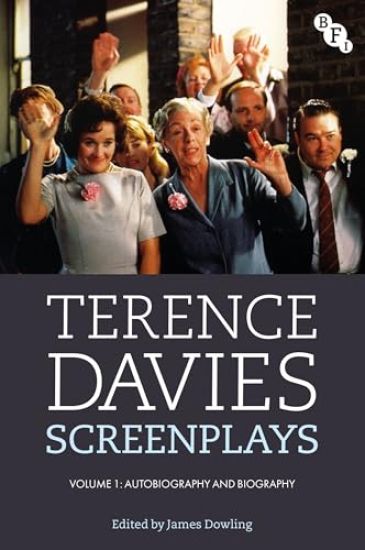
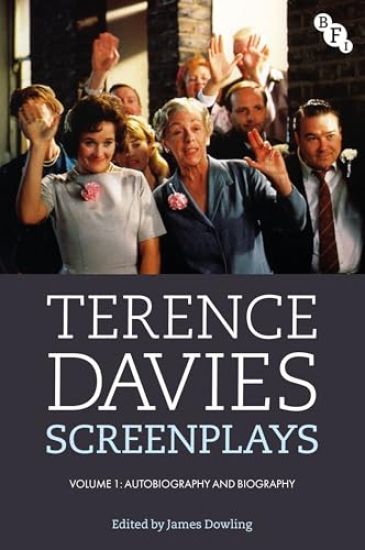
This collection of Terence Davies's screenplays brings together his powerful autobiographical work, from the films that comprise The Terence Davies Trilogy (1983) to his 2008 poetic documentary Of Time and the City of 2008, and his biopics of the poets Emily Dickinson and Siegfried Sassoon. The screenplays are supported by new critical introductions and by film stills and previously unpublished material from Terence Davies's personal archive.
This collection of Terence Davies's screenplays brings together his powerful autobiographical work, from the films that comprise The Terence Davies Trilogy (1983) to his 2008 poetic documentary Of Time and the City of 2008, and his biopics of the poets Emily Dickinson and Siegfried Sassoon. The screenplays are supported by new critical introductions and by film stills and previously unpublished material from Terence Davies's personal archive.
The 18th century was a wealth of knowledge, exploration and rapidly growing technology and expanding record-keeping made possible by advances in the printing press. In its determination to preserve the century of revolution, Gale initiated a revolution of its own: digitization of epic proportions to preserve these invaluable works in the largest archive of its kind. Now for the first time these high-quality digital copies of original 18th century manuscripts are available in print, making them highly accessible to libraries, undergraduate students, and independent scholars.Western literary study flows out of eighteenth-century works by Alexander Pope, Daniel Defoe, Henry Fielding, Frances Burney, Denis Diderot, Johann Gottfried Herder, Johann Wolfgang von Goethe, and others. Experience the birth of the modern novel, or compare the development of language using dictionaries and grammar discourses. ++++The below data was compiled from various identification fields in the bibliographic record of this title. This data is provided as an additional tool in helping to insure edition identification: ++++Bodleian Library (Oxford)T175369Dublin: printed by A. Reilly, for George Ewing, 1741. xxvi, 2],296p.; 12
The 18th century was a wealth of knowledge, exploration and rapidly growing technology and expanding record-keeping made possible by advances in the printing press. In its determination to preserve the century of revolution, Gale initiated a revolution of its own: digitization of epic proportions to preserve these invaluable works in the largest archive of its kind. Now for the first time these high-quality digital copies of original 18th century manuscripts are available in print, making them highly accessible to libraries, undergraduate students, and independent scholars.Western literary study flows out of eighteenth-century works by Alexander Pope, Daniel Defoe, Henry Fielding, Frances Burney, Denis Diderot, Johann Gottfried Herder, Johann Wolfgang von Goethe, and others. Experience the birth of the modern novel, or compare the development of language using dictionaries and grammar discourses. ++++The below data was compiled from various identification fields in the bibliographic record of this title. This data is provided as an additional tool in helping to insure edition identification: ++++British LibraryT137481Half-title to each volume: 'Publii Terentii Comoediae. Terence's Comedys. .. ' with a Latin titlepage on the verso: 'Publii Terentii Afri Comoediae, nuper primum editae ad hoc exemplar. Editio secunda. Opera et studio Thomae Cooke. .. ' - A reissue of theLondon: printed for T. Cox, 1749. 2v., plate: port.; 12
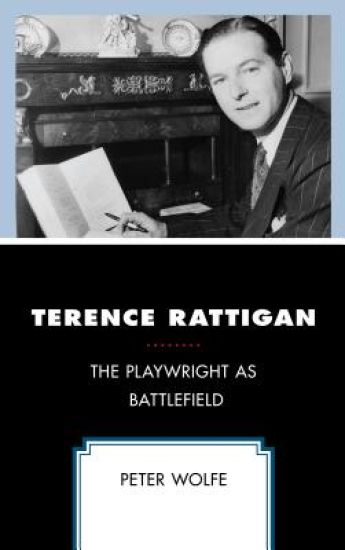
The theatrical world Terence Rattigan built is vital but disturbing and uniquely constructed. His sentences are not impacted or fractured, and his plots usually obey a linear time sequence. Yet his realism isn't all that real. Though sentence by sentence, his dialogue sounds natural, the creative pulse behind it is idiosyncratic and self-lacerating. As a gay man writing at a time when homosexuality was a felony in the UK, Rattigan wrote at a skewed angle to his culture, making his plays at times easy to follow but hard to fathom. Terence Rattigan: The Playwright as Battlefield examines the ways in which Rattigan’s works turn their audiences into participants, encouraging intellectual independence and freeing them to make decisions for themselves as to the deeper meanings of the works. The playwright’s omission of outright explanations deepens the audience’s emotional commitment to the outcomes of the performance, and walks a fine line between restraint and invention. His works convey subtly and deceptively the cold obstinacy that thwarts our everyday actions in a way which that is felt viscerally by the audience. This book engages works from throughout Rattigan’s early and late career to examine the unique methods by which the playwright conveys meaning to various audiences within an ever-changing sociocultural context.
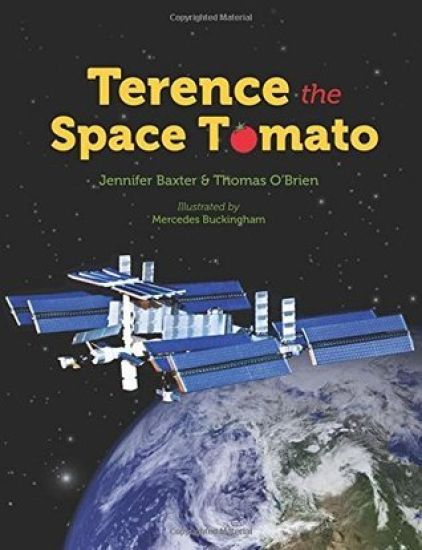
Terence, a tomato plant growing in the hydroponic chamber, feels pretty comfortable in his home on the International Space Station until a glimpse of the Earth through a window on the Space Station catches Terence's curiosity. Terence did not realize that he will soon be on an adventure to discover the differences between living in the hydroponic chamber in space and a garden on Earth Terence the Space Tomato can serve as a "launching pad" to a variety of interdisciplinary, in-class, at-home, and hands-on/minds on activities that address specific discipline-based standards. Part two provides extensive ideas and resources on how to develop the story with classroom and home activities. There are also notes on correlations to Common Core Standards as well as ideas to link the story to studies in areas such as ELA, Math, Social Studies, and further exploration of the Science behind the story.