Presents an alphabetical reference for craftspeople, artisans, repair workers, restoration experts, artists, and mail order services in the areas of home repair and decorating, antiques, jewelry, clothing, and tableware. Original. 25,000 first printing.
I'm a 64-year-old retired lawyer and former Assistant Attorney General with an extraordinary story to tell. Every word of it is true. For fear of losing my job and damage to my reputation in the legal community, I kept a secret. I was silent for forty years until circumstances in 2012 compelled me to eventually speak out. In 1977, a friend and I went on a two-night camping trip to a state park known as Devils Den. We had planned the trip as a wilderness adventure. Instead of a wilderness adventure we experienced an encounter with something unknown and unimaginable. Hoping to photograph eagles we sought a remote area of high ground. With the road no more than a trail we came to a high plateau. It was the perfect location with the forest to our back and a large open meadow in front of us. We made camp and settled in for an evening around the campfire. Late in the evening I noticed the usual forest sounds of crickets and tree frogs had stopped. It was dead silent. The silence unnerved me but my friend Toby assured me our laughter and chatter had quieted them and they'd soon return. But I still felt unsettled.Looking to the west Toby asked, "Where those lights there before?" I turned to look. There on the horizon sat a perfect tight triangle of three very bright stars. We studied them for a few minutes and speculated what they might be. We first thought they were airplane lights but dismissed the idea because of the odd formation. Then they began to move. They rotated once as if on an axis and began a slow ascent into the night sky. They moved in sync as if a single object instead of three. After a few minutes it became obvious that this was one object and not three separate lights. We watched it for some time. The lights on each point of the triangle grew brighter and expanded. The points stayed equidistant to one another as it gained altitude and speed. The area inside the triangle was solid black, much darker than the surrounding night sky. As it traveled over stars they would blink-out and blink back on again as it moved by. Soon, it grew large enough to devour entire fields of stars. We watched as the triangle made a steady trek toward our campsite, growing exponentially as it approached. At a height of about 2,000 feet above us it came to a halt. It was enormous. It was as if someone cut a perfect triangle from a sky filled with a billion stars.As we watched this giant triangle over our heads I recall that I suddenly felt disinterested. My friend was equally apathetic and hardly a word was spoken between us. The crickets and tree frogs had not returned but I no longer felt unnerved. Picking up a flashlight Toby said, "I wonder what will happen happen if I try to signal it?" I was too slow to snatch it from his hand. Holding it up and he flashed his light three times at the center of the triangle. We waited to see if anything would happen. We didn't have long to wait.From the center of the triangle a beacon of light about the diameter of a softball came down as if someone had flipped a switch. The light was centered on our campfire, not much more than embers by now. It was intense, like a high power searchlight cutting through fog. We watched disinterested like casual observers. Then as quickly as it appeared it switched off. In its place came a laser-like beam of light no broader than a pencil. It darted quickly and danced about the campsite as if scanning us. The beam struck my chest and head. I recall it struck Toby as well as it darted around the campsite. Then it occurred to me that Toby had been wrong. The nighttime noises of the forest had not returned. But something would take its place ...Sometimes a bad dream isn't just a bad dream. Sometimes it's you're worst nightmare..
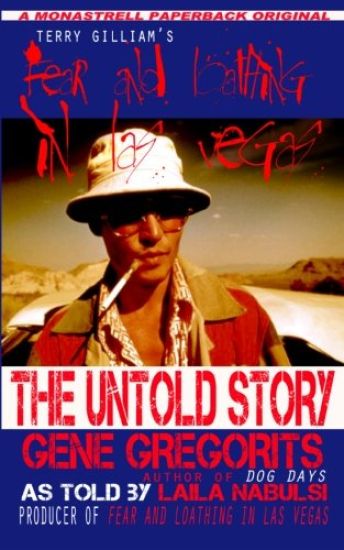
In the summer of 2001, cult novelist and rogue journalist Gene Gregorits sat down with Laila Nabulsi, producer of Terry Gilliam's controversial 1998 film "Fear and Loathing In Las Vegas". Their conversation lasted six hours, covering the entire history of that film's troubled production, which took nearly a decade to fully be realized, eventually with Terry Gilliam and Johnny Depp attached. From Benicio Del Toro's self-inflicted cigarette burns and Alex Cox's anti-social incompetence to midget porn pranks and touching personal anecdotes about the legendary "king of fun" himself, "Fear and Loathing In Las Vegas: The Untold Story" is the first time that this raunchy, rowdy, and in-depth long-form interview has been published in its entirety, and it includes an introduction by its creator, Gene Gregorits.
Pirates in the Caribbean? That's just the stuff of movies or amusement park rides. At least that's what Terry thought before he washed up on a remote Caribbean island in front of the Booby Bay Cafe and found himself caught up in a cockeyed 21st century pirate adventure. Terry and the Pirate traces his idyllic days in an island paradise where he is befriended by Albert Lafitte, the amiable proprietor of the cafe ("Our wallet did float in with us, did it not?"), beguiled by the beautiful Remy ("May I ask how long you're going to stare at my breasts?"), nearly killed by her jealous suitors ("Hangin' be a proper death. "), and finally lured into the ways of piracy. When Albert's cafe and sailing ship are nearly destroyed by the evil Murchison Keyes, Albert sinks into a deep Gallic depression, and Remy, Terry and the other Booby Bay irregulars set out to avenge him. The brave but maladroit buccaneers restore Albert's sailing ship, hoist the pirate flag and sail into misadventure amid romance, danger and plenty of gratuitous swashbuckling. Richard Daybell is the author of Voodoo Love Song and Calypso: Stories of the Caribbean. His stories and short humor have appeared in a variety of commercial and literary publications. CARIBE BOOKS
Read William Shakespeare's best-loved plays like never before – a perfect mix of comedy, tragedy, magic and romance, retold for younger readers. Terry Deary's Best Ever Shakespeare Tales tells you more than just what happens in everyone’s favourite Shakespeare plays – it tells you the stories behind them. From how the plays were originally staged to what Shakespeare himself might have thought of his work being taught in schools – there’s so much to find out. Discover more out about: A Midsummer Night’s Dream King Lear Twelfth Night The Tempest The Merchant of Venice Romeo and Juliet Julius Caesar The Taming of the Shrew Macbeth Hamlet An engaging, easy-to-use and informative collection of Shakespeare's tales with humorous illustrations.
The latest in the Little People, BIG DREAMS series, Terry Fox celebrates the life of the brave young Canadian who, despite having lost a leg to cancer, embarked on a Marathon of Hope across the whole of Canada to raise awareness and money for those living with the disease
This is the first in-depth study of the science fiction television devised and written by Terry Nation. Terry Nation was the inventor of the Daleks and wrote other serials for 'Doctor Who'; he also wrote the BBC's 1970s post-apocalyptic drama 'Survivors' and created the space adventure series 'Blake's 7'. Previously television science fiction in Britain has received little critical attention. This book fills that gap and places Nation's work in the context of its production. Using Terry Nation's science fiction work as a case study, the boundaries around the authorship and authority of the television writer are explored in detail. The authors make use of BBC's archival research and specially conducted interviews with television producers and other production staff, to discuss how the programmes that Terry Nation created and wrote were commissioned, produced and brought to the screen. The book makes an important contribution to the study of British television history and will be of interest to enthusiasts of Terry Nation's landmark drama series as well as students of Television Studies.
Terry Gilliam presents a sustained examination of one of cinema's most challenging and lauded auteurs, proposing fresh ways of seeing Gilliam that go beyond reductive readings of him as a gifted but manic fantasist. Analysing Gilliam's work over nearly four decades, from the brilliant anarchy of his Monty Python animations through the nightmarish masterpiece Brazil to the provocative Gothic horror of Tideland, it critically examines the variety and richness of Gilliam's sometimes troubled but always provocative output. The book situates Gilliam within the competing cultural contexts of the British, European and American film industries, examining his regular struggles against aesthetic and commercial pressures. He emerges as a passionate, immensely creative director, whose work encompasses a dizzying array of material: anarchic satire, childhood and adult fantasy, dystopia, romantic comedy, surrealism, road movie, fairy tale and the Gothic. The book charts how Gilliam interweaves these genres and forms to create magical interfaces between reality and the illuminating, frightening but liberating worlds of the imagination. Scrutinising the neglected importance of literature and adaptation in Gilliam's career, this study also observes him through the lenses of auteurism, genre, performance, design and national culture, explaining how someone born in Minnesota and raised in California came to be one of British television and film's most compelling figures.
Terry Eagleton is one of the most influential contemporary literary theorists and critics. His diverse body of work has been crucial to developments in cultural theory and literary critical practice in modern times, and for a generation of humanities students his writing has been a source of both provocation and enjoyment. This book undertakes a lucid and detailed analysis of Eagleton's oeuvre. It gives close attention to the full range of Eagleton's major publications, examining their arguments and implications, as well as how they have intervened in wider debates in cultural theory. It also investigates his less familiar works, such as his early writing on the Catholic left, as well as other as yet unpublished material, showing how these works can be understood alongside the more prominent areas of his thought. Through this, this book offers a cohesive overview of Eagleton's career to date, tracing the development of his theoretical positions, and an assessment of Eagleton's wider contributions to fields such as Marxist literary criticism and cultural theory. It will be essential reading for students of literary criticism, cultural theory, and intellectual history.
Terry Eagleton is one of the most influential contemporary literary theorists and critics. His diverse body of work has been crucial to developments in cultural theory and literary critical practice in modern times, and for a generation of humanities students his writing has been a source of both provocation and enjoyment. This book undertakes a lucid and detailed analysis of Eagleton's oeuvre. It gives close attention to the full range of Eagleton's major publications, examining their arguments and implications, as well as how they have intervened in wider debates in cultural theory. It also investigates his less familiar works, such as his early writing on the Catholic left, as well as other as yet unpublished material, showing how these works can be understood alongside the more prominent areas of his thought. Through this, this book offers a cohesive overview of Eagleton's career to date, tracing the development of his theoretical positions, and an assessment of Eagleton's wider contributions to fields such as Marxist literary criticism and cultural theory. It will be essential reading for students of literary criticism, cultural theory, and intellectual history.
Terry cloth was once relegated to towels for the kitchen and bathroom, but, after World War II, it was embraced as a bold, colorful, and comfortable fabric for everything from beachwear to evening wear. The first book devoted specifically to terry cloth, it contains more than 500 images that trace the fabric's history through vintage advertisements, sewing patterns, and terry apparel. The patterns feature designs from dainty florals to fabulous geometrics, especially from the 1950s to the 1970s. Chapters include techniques for sewing, caring for, and where to purchase terry cloth. This book is a great resource for fashion designers, students of fashion, and history buffs.
Terry Fox, the one-legged runner from Port Coquitlam, British Columbia, made an indelible impression upon people across Canada and around the world. An outstanding athlete with a stubborn and competitive spirit, he lost his leg to cancer at 19, but said "nobody is ever going to call me a quitter." On April 12, 1980, Terry Fox set out from St. John's, Newfoundland to begin the run across Canada that he named the Marathon of Hope. His ambition was to raise a million dollars for cancer research. It wasn't easy. Initial support from communities varied from terrific to nothing at all. His prosthetic leg was painful to run on, and there were always traffic and extreme weather conditions to deal with. But, by the time he reached Ontario - a journey of more than 3,000 kilometres - word of his achievement had spread, and thousands cheered him and followed his progress. Terry's spirits soared, and now he hoped to raise $22 million dollars - one dollar for every Canadian. He succeeded in this ambition, but the Marathon of Hope ended near Thunder Bay, Ontario on September 1, 1980. The cancer had spread to his lungs, and, after running 24 miles in one day, on the next he could run no further. When cancer finally claimed his life in 1981, Canada mourned the loss of a hero, but the Terry Fox Marathon of Hope lives on. The Terry Fox Foundation raised more than $17 million in 1999, and support for the event nationally and around the world is growing.
This work offers a critical biography and analysis of the varied literary output of novels, short stories, screenplays, poetry, articles and essays of the American writer Terry Southern. The book explores Southern's career from his early days in Paris with friends like Samuel Beckett, to swinging London in such company as the Rolling Stones, to filmmaking in Los Angeles and Europe with luminaries like Stanley Kubrick. His writings are examined in chronological order. David Tully was granted unprecedented access by Terry Southern's family to rare, unpublished work from his private archives. This study offers the first comprehensive examination of the career of this major American writer.
Terry Sanford (1917–1998) was one of the most important public figures of the postwar South. First as North Carolina’s governor and later as president of Duke University, he demonstrated a dynamic style of progressive leadership marked by compassion and creativity. This book tells the story of Sanford’s beginnings, his political aspirations, his experiences in office, and, of course, his numerous accomplishments in the context of a period of revolutionary change in the South. After defeating a segregationist campaign in 1960 to win the governorship, Sanford used his years in office to boost public education and advance race relations. A decade later, at the height of tumult on American campuses, Sanford assumed the presidency of Duke University and led it to its position as one of the top universities in the nation. During his more than fifty years as a public servant he was associated with presidents John F. Kennedy, Lyndon B. Johnson, Richard Nixon, and Jimmy Carter. Sanford was a presidential candidate himself in 1972 and 1976, and he won election to the United States Senate in 1986 where his international commission produced an economic recovery plan for Central America. As one of the last New Deal Democrats in the Senate, he remained passionate about the opportunity for leaders to use government to improve people’s lives.Terry Sanford draws on Sanford’s considerable private and public archive as well as on the recollections of Sanford himself and his family, colleagues, and friends. This biography offers a unique perspective on North Carolina life, politics, political personalities, and the shifting public allegiances of the second half of the twentieth century that transformed life both in North Carolina and throughout the American South.
This first full-career monograph, featuring two decades of iconic fashion and celebrity editorial photographs, reveals the enormous influence and impact that Richardson has made on contemporary style, culture, and photography. Since Terry Richardson first rose to prominence in the 1990s, he has shocked and intrigued the world with his singular view and signature style of bold lighting, hypersexualized styling, and striking, off-kilter glamour. From glossy, high-end fashion photographs to raw in-studio portraits, Richardson's work has had an unmistakable impact on contemporary visual culture. This much-anticipated monograph is the first to cover Richardson's complete career to date. It chronicles more than twenty years of photographs, advertising campaigns, and editorial work, revealing the evolution of Richardson's style, an unexpected mix of glamour and rawness. This two-volume set, which is separated into Richardson's fashion photography and celebrity portraiture, features more than 600 photographs and includes early, rarely seen magazine work from now-defunct publications; iconic and influential work for magazines such as Vogue, Harper's Bazaar, The Face, i-D, Vice, and Interview; advertising work for brands such as Gucci, Yves Saint Laurent, Chloe, and A.P.C.; and very intimate studio portraits. This compilation is an intriguing look at the mark Richardson's work has made on fashion, photography, and pop culture, and it captures his edgy, provocative style in a book that is as unusual and unforgettable as the photographer himself.
Written by Tom Mann, arguably one of the greatest socialists and certainly the greatest internationalist that this country has ever produced, these pamphlets in support of the 8-hour day ring as true today as when they were first published over a century ago. With an introduction by Terry McCarthy
Terry is the bright and happy sun. When Terry's sunshine isn't as bright as usual, she seeks the advice of a Blue Wizard, a Magic Scope, and a Green Sage (because it's always good to get a second opinion). From them, Terry learns that an invisible monster is nibbling on her. They tell her to go to the Monster-Beaters to drive away the monster. Terry travels to a castle and through a mysterious maze to find the masked Monster-Beaters. Terry is afraid but she discovers that even though the Monster-Beaters look scary, they are smart, helpful, and kind.
One of the great conceptual artists of the twenty-first century, Terry Adkins (1953–2014) was renowned for his pioneering work across mediums, from sculpture, drawing, and site-specific installation to photography, video, and performance. Terry Adkins: Infinity is Always Less Than One accompanies the first institutional posthumous exhibition of Adkins's sculptural production. While Adkins is often recognized for his musical and performative practice, this exhibition focuses on his complex memorials and monuments to historical figures. The exhibition showcases four of his major series, dedicated to four distinct figures: Bessie Smith, John Brown, Zora Neale Hurston, and Jimi Hendrix. These series are presented alongside a group of early sculptures to reveal the development of the Adkins's mature practice. The exhibition highlights Adkins's crucial contributions to sculpture and to cultural protest, featuring major works that have not been viewed in decades. It explores significant periods and influences in Adkins's career, beginning with transitional hand-wrought sculptures and continuing with his major immersive installations. His often elegiac and always resonant objects challenge dominant historical narratives and prompt a rethinking of ways of being and moving in the world that are shaped by the legacies of displacement and the sociability and community that happen despite it. Adkins's work also enlarges the historical legacies of the postwar avant-garde while reminding us of the immaterial legacies that are passed on through ritual and sound. Contributors. Alex Gartenfeld, Kobena Mercer, Gean Moreno, Nizan Shaked, and Greg Tate A Publication of ICA Miami Distributed by Duke University Press