Kirjojen hintavertailu. Mukana 11 244 527 kirjaa ja 12 kauppaa.

Kirjahaku

Etsi kirjoja tekijän nimen, kirjan nimen tai ISBN:n perusteella.

1000 tulosta hakusanalla Theodore Besterman

Theodore Roosevelt, the U.S. Navy and the Spanish-American War
In the 1890s, Assistant Secretary of the Navy Theodore Roosevelt led a campaign to modernize the navy. Paramount in Roosevelt's vision was the creation of a fleet of modern, steel-hulled warships armed with the most powerful weapons available. The future president and his intellectual soul mate, Captain Alfred Thayer Mahan, firmly believed that America's emerging global expansion would only reach its full potential through sea. power. The swift and overwhelming US victor in the Spanish-American War of 1898 vindicated the views of Theodore Roosevelt and Captain Mahan, and marked the debut on the world stage of the modern US Navy. Theodore Roosevelt, the U.S. Navy and the Spanish American War considers the impact Roosevelt had on the US navy in general and how his reforms affected the course and outcome of the Spanish-American war in particular. The nine contributors to this volume include leading historians, and prominent naval officers from the US and Spain. With essays ranging from the Roosevelt family's naval heritage to the impact of the Spanish-American War on enlisted forces in the navy, this work is a major contribution to our understanding of Theodore Roosevelt and 'his' navy.
Theodore Roosevelt and the Rhetoric of Militant Decency

Theodore Roosevelt and the Rhetoric of Militant Decency

Robert V. Friedenberg

Greenwood Press
1990
sidottu
Friedenberg brings to this study of Theodore Roosevelt a thorough grounding in the criticism of American public address. Basing his findings on his own detailed reading of Roosevelt's speeches and supplementing it with his own research in the primary collections of Roosevelt's manuscripts, Robert V. Friedenberg reveals the depth of Roosevelt's fascinating rhetorical career. Friedenberg's astute analysis of Roosevelt's use of classic rhetorical method shows how dependent the president was on the style of the classical masters as well as American predecessors such as Washington and Lincoln.This book demonstrates and analyzes the persuasive and expressive public speaking of the first great orator of this century, Theodore Roosevelt. Following a foreword by Halford R. Ryan and a preface by Friedenberg, the book provides critical analysis of Roosevelt's rhetoric of militant decency. After an overview, Friedenberg applies his analysis, which is followed by the application of militant decency rhetoric to foreign policy, responsible citizenship, and progressive reform. A series of Roosevelt's collected speeches forms the second part of the volume and provides concrete examples of Roosevelt's rhetorical style. A speech chronology and a bibliography close the work. As we Americans look to the twenty-first century, we might do well to look for guidance and inspiration in the writings and speeches of the man who led us into the twentieth century, Theodore Roosevelt.
Theodore M. Hesburgh

Theodore M. Hesburgh

Charlott Ames

Greenwood Press
1989
sidottu
Priest, educator, and public servant, Theodore M. Hesburgh, C.S.C., President Emeritus of the University of Notre Dame, is internationally recognized as one of the most influential leaders of the American Catholic Church not only because of his commitment to Catholic education but also because of his passion for ensuring the protection and preservation of human rights everywhere. The present volume consists of a biography of Father Hesburgh; a detailed and comprehensive description of archival and manuscript materials held in The Archives of the University of Notre Dame, the official repository of Father Hesburgh's papers, prepared by William Kevin Cawley; and a bibliography of major published and unpublished works by Father Hesburgh, as well as selected works about him. Making a selection from the wealth of material contained in The Archives and other sources, compiler Charlotte A. Ames has created an invaluable bridge to Father Hesburgh's life and work. Much of this work was written as a response to the various challenges posed by national and global crises: the civil rights movement, starving millions worldwide, refugees in need of resettlement, the specter of nuclear war, the need to find peaceful uses for nuclear power, the most productive use of science and technology for Third World development, and the need for quality and equality in higher education.The bibliographical section includes works issued from 1940 through February 1989. Published works include books, articles and essays, forewords, prefaces and introductions, newspaper articles, interviews, selected U.S. government documents, and non-print media. Among the unpublished works are addresses, papers, speeches, and diaries. Works about Father Hesburgh consist not only of books, articles, and newspaper articles, both biographical and reportorial, but also of theses and dissertations relating to him. The volume is arranged to provide easy access, with citations for selected works to be found in three distinct locations at the University of Notre Dame. Three appendices cite awards and honors, honorary degrees, and current and past board and committee memberships held by Father Hesburgh. A useful resource for students and scholars of Education, American Studies, and American Religious History.
Theodore Parker

Theodore Parker

David B. Chesebrough

Greenwood Press
1999
sidottu
Theodore Parker, a great orator of the mid-19th century, was a Unitarian clergyman who directed much of his oratory towards ecclesiastical and social reform. Parker challenged slavery and other social ills. As a volume in the Great American Orators series, the focus is on Parker's oratory and its effect on theology and the social structures of the mid-19th century. Biographical information pertains to those aspects of Parker's life that influenced and shaped his elocution and ideas. Parker's rhetoric and rhetorical techniques are examined. Three of Parker's important speeches are included, each with an introduction that places it in its proper context.This study will appeal to students of rhetoric, theology, and mid-nineteenth-century American religious history. The book is divided into two sections. The first concentrates on Parker's life, his role as an abolitionist, social reformer, and public order. Part Two scrutinizes three of Parker's most famous discourses. The author establishes Parker's place among mid-19th-century preachers.
Theodore Gray's Completely Mad Science

Theodore Gray's Completely Mad Science

Theodore Gray

Black Dog Leventhal Publishers Inc
2016
sidottu
Bestselling author Theodore Gray has spent more than a decade dreaming up, executing, photographing, and writing about extreme scientific experiments, which he then published between 2009 and 2014 in his monthly Popular Science column "Gray Matter." Previously published in book form by Black Dog in two separate volumes (Mad Science and Mad Science 2), these experiments, plus 5 more all-new ones, will now be combined in one complete book.Packaged in a smaller, chunkier format Completely Mad Science is 432 pages of dazzling chemical demonstrations, illustrated in spectacular full-color photographs. Some of the completely mad experiments in the book include: Casting a model fish out of mercury (demonstrating how this element behaves very differently depending upon temperature); the famous Flaming Bacon Lance that can cut through steel (demonstrating the amount of energy contained in fatty foods like bacon); creating nylon thread out of pure liquid by combining molecules of hexamethylenediamine and sebacoyl chloride; making homemade ice cream using a fire extinguisher and a pillow case; powering your iPhone using 150 pennies and an apple, and many, many more. It's the ultimate collection for Gray's millions of fans.
Selected Speeches and Writings of Theodore Roosevelt

Selected Speeches and Writings of Theodore Roosevelt

Theodore Roosevelt

Random House Inc
2014
pokkari
Theodore Roosevelt (1858-1919) was America's most published president with an incredible output of writing including forty books, over a thousand articles, and countless speeches and letters. Collected here in one volume are examples of Roosevelt's voluminous writings over a dazzling array of topics. Organized by general categories, readers can sample writings on subjects as varied as the environment, the danger of professional sports; the famous charge of San Juan Hill, and Roosevelt's passion for literary criticism. From addresses and presidential messages on public policy and national ideals, to biography, to travel writing, to ecological concerns, to writings on hunting, to international politics and history, Roosevelt's talents and achievements as a writer went far beyond what we now expect of our public leaders. Roosevelt's legacy as one of the first progressive American politicians, his concerns about environmentalism, his internationalism, and his unflinching belief in the American character and destiny uncannily speak to the issues of our own day and can be found in the pages of this representative and judicious anthology of his work.
Theodore Gericault, Painting Black Bodies
This book examines Théodore Géricault’s images of black men, women and children who suffered slavery’s trans-Atlantic passage in the late eighteenth and early nineteenth centuries, including his 1819 painting The Raft of the Medusa. The book focuses on Géricault’s depiction of black people, his approach towards slavery, and the voices that advanced or denigrated them. By turning to documents, essays and critiques, both before and after Waterloo (1815), and, most importantly, Géricault’s own oeuvre, this study explores the fetters of slavery that Gericault challenged—alongside a growing number of abolitionists—overtly or covertly. This book will be of interest to scholars in art history, race and ethnic studies and students of modernism.
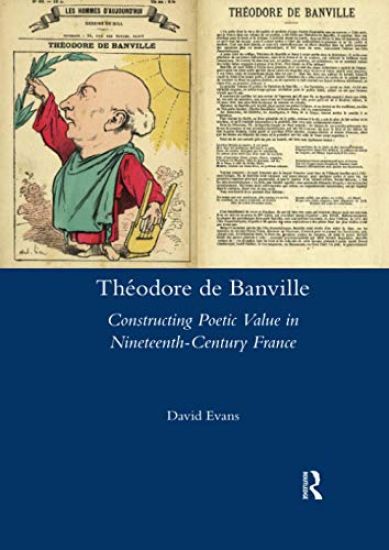
Theodore De Banville

Theodore De Banville

David Evans

Routledge
2020
nidottu
This book explores how Theodore de Banville's remarkably coherent body of verse theory and practice, shaped debates about poetic value and how to identify it during a period of aesthetic uncertainty caused by diverse social, economic, political and artistic factors.
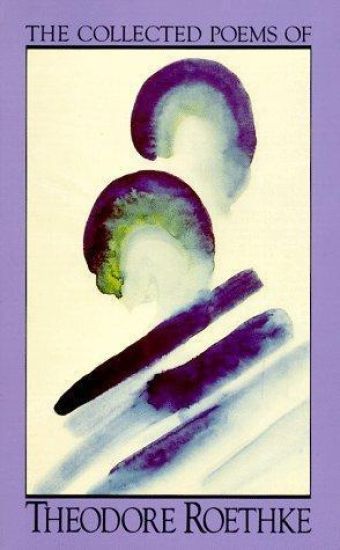
The Collected Poems of Theodore Roethke

The Collected Poems of Theodore Roethke

Theodore Roethke

Bantam Dell Publishing Group, Div of Random House, Inc
2004
nidottu
This paperback edition contains the complete text of Roethke's seven published volumes plus sixteen previously uncollected poems. Included are his Pulitzer Prize and National Book Award winners The Walking, Words for the Wind, and The Far Field.
Theodore Rex

Theodore Rex

Edmund Morris

Random House USA Inc
2001
sidottu
The most eagerly awaited presidential biography in years, Theodore Rex is a sequel to Edmund Morris's classic bestseller The Rise of Theodore Roosevelt. It begins by following the new President (still the youngest in American history) as he comes down from Mount Marcy, New York, to take his emergency oath of office in Buffalo, one hundred years ago. A detailed prologue describes TR's assumption of power and journey to Washington, with the assassinated President McKinley riding behind him like a ghost of the nineteenth century. (Trains rumble throughout this irresistibly moving narrative, as TR crosses and recrosses the nation.) Traveling south through a succession of haunting landscapes, TR encounters harbingers of all the major issues of the new century-Imperialism, Industrialism, Conservation, Immigration, Labor, Race-plus the overall challenge that intimidated McKinley: how to harness America's new power as the world's richest nation. Theodore Rex (the title is taken from a quip by Henry James) tells the story of the following seven and a half years-years in which TR entertains, infuriates, amuses, strong-arms, and seduces the body politic into a state of almost total subservience to his will. It is not always a pretty story: one of the revelations here is that TR was hated and feared by a substantial minority of his fellow citizens. Wall Street, the white South, Western lumber barons, even his own Republican leadership in Congress strive to harness his steadily increasing power. Within weeks of arrival in Washington, TR causes a nationwide sensation by becoming the first President to invite a black man to dinner in the White House. Next, he launches his famous prosecution of the Northern Securities Company, and follows up with landmark antitrust legislation. He liberates Cuba, determines the route of the Panama Canal, mediates the great Anthracite Strike, and resolves the Venezuela Crisis of 1902-1903 with such masterful secrecy that the world at large is unaware how near the United States and Germany have come to war. During an epic national tour in the spring of 1903, TR's conservation philosophy (his single greatest gift to posterity) comes into full flower. He also bestows on countless Americans the richness of a personality without parallel-evangelical and passionate, yet lusty and funny; adroitly political, winningly natural, intellectually overwhelming. The most famous father of his time, he is adored by his six children (although beautiful, willful "Princess" Alice rebelled against him) and accepted as an honorary member of the White House Gang of seditious small boys. Theodore Rex, full of cinematic detail, moves with the exhilarating pace of a novel, yet it rides on a granite base of scholarship. TR's own voice is constantly heard, as the President was a gifted letter writer and raconteur. Also heard are the many witticisms, sometimes mocking, yet always affectionate, of such Roosevelt intimates as Henry Adams, John Hay, and Elihu Root. ("Theodore is never sober," said Adams, "only he is drunk with himself and not with rum.") TR's speed of thought and action, and his total command of all aspects of presidential leadership, from bureaucratic subterfuge to manipulation of the press, make him all but invincible in 1904, when he wins a second term by a historic landslide. Surprisingly, this victory transforms him from a patrician conservative to a progressive, responsible between 1905 and 1908 for a raft of enlightened legislation, including the Pure Food and Employer Liability acts. Even more surprising, to critics who have caricatured TR as a swinger of the Big Stick, is his emergence as a diplomat. He wins the Nobel Peace Prize for bringing about an end to the Russo-Japanese War in 1905. Interspersed with many stories of Rooseveltian triumphs are some bitter episodes-notably a devastating lynching-that remind us of America's deep prejudices and fears. Theodore Rex does not attempt to justify TR's notorious action following the Brownsville Incident of 1906-his worst mistake as President-but neither does this resolutely honest biography indulge in the easy wisdom of hindsight. It is written throughout in real time, reflecting the world as TR saw it. By the final chapter, as the great "Teddy" prepares to quit the White House in 1909, it will be a hard-hearted reader who does not share the sentiment of Henry Adams: "The old house will seem dull and sad when my Theodore has gone."
Theodore of Mopsuestia

Theodore of Mopsuestia

Frederick McLeod

Routledge
2008
sidottu
Theodore, bishop of Mopsuestia, (c.350-428) stands out as the pre-eminent exponent of the School of Antioch’s literal, historical and rational emphases in exegesis and of its staunch defence of Christ’s humanity. At his death, he was hailed as one of the outstanding, prolific biblical theologians of his time. However, after his works and person were later condemned at the Second Council of Constantinople in 553, he is known today primarily as the "Father of Nestorianism."This addition to the Early Church Fathers series provides in one place new extensive translations of Theodore’s major extant works that have not been available in English up unto the present. It also summarizes the secondary literature and discusses at length the fundamental features of his theological thinking, especially regarding his method of exegesis and his functional stress on the union of Christ’s natures as occurring in ‘one common prosopon.’ Frederick G. McLeod presents passages from Theodore’s major works ‘On the Incarnation’ and his ‘Cathechetical Homilies;’ his commentaries on Psalm 8, Adam’s creation, John, Philippians 2, Galatians, Ephesians, and Colossians; and his rejection of the allegorists and Apollinaris, as well as providing all the anathemas of Constantinople II against Theodore’s works and person. This book will be invaluable to any scholar who wishes to read firsthand what this influential and controversial figure has actually written.
Theodore of Mopsuestia

Theodore of Mopsuestia

Frederick McLeod

Routledge
2008
nidottu
Theodore, bishop of Mopsuestia, (c.350-428) stands out as the pre-eminent exponent of the School of Antioch’s literal, historical and rational emphases in exegesis and of its staunch defence of Christ’s humanity. At his death, he was hailed as one of the outstanding, prolific biblical theologians of his time. However, after his works and person were later condemned at the Second Council of Constantinople in 553, he is known today primarily as the "Father of Nestorianism."This addition to the Early Church Fathers series provides in one place new extensive translations of Theodore’s major extant works that have not been available in English up unto the present. It also summarizes the secondary literature and discusses at length the fundamental features of his theological thinking, especially regarding his method of exegesis and his functional stress on the union of Christ’s natures as occurring in ‘one common prosopon.’ Frederick G. McLeod presents passages from Theodore’s major works ‘On the Incarnation’ and his ‘Cathechetical Homilies;’ his commentaries on Psalm 8, Adam’s creation, John, Philippians 2, Galatians, Ephesians, and Colossians; and his rejection of the allegorists and Apollinaris, as well as providing all the anathemas of Constantinople II against Theodore’s works and person. This book will be invaluable to any scholar who wishes to read firsthand what this influential and controversial figure has actually written.
Theodore Roosevelt

Theodore Roosevelt

Neil Cogan

Routledge
2020
sidottu
Theodore Roosevelt explores the personal and political life of the 26th President of the United States. It considers among other things his "manliness," a gendered framework of traits for the Gilded Age and Progressive Period guiding him and other men in business, politics, and war, and shows how the development of these traits transformed Roosevelt’s personal and political decisions.The work covers a storied personal life and emphasizes mental and physical challenges from depression, asthma, partial blindness, and attempted assassination. Cogan addresses the political transformation from traditional, to "Square Deal" Republican, to "Bull Moose" Progressive. The text also reviews initiatives dismissing corrupt officials, closing saloons, and arresting pimps; busting monopolies and bettering workplaces and consumer products; and conserving wildlife and natural resources. Contrary to popular conception, Roosevelt’s manliness was not macho masculinity. Rather, it was an evolving framework of traits, including courage, service, and Christian morality. Supported by a series of intriguing primary source documents, this book is essential reading for understanding Roosevelt, his era, and his manliness. It is an accessible tool for students studying and instructors teaching courses on the Gilded Age and Progressive Period in American history.
Theodore Roosevelt

Theodore Roosevelt

Neil Cogan

Routledge
2020
nidottu
Theodore Roosevelt explores the personal and political life of the 26th President of the United States. It considers among other things his "manliness," a gendered framework of traits for the Gilded Age and Progressive Period guiding him and other men in business, politics, and war, and shows how the development of these traits transformed Roosevelt’s personal and political decisions.The work covers a storied personal life and emphasizes mental and physical challenges from depression, asthma, partial blindness, and attempted assassination. Cogan addresses the political transformation from traditional, to "Square Deal" Republican, to "Bull Moose" Progressive. The text also reviews initiatives dismissing corrupt officials, closing saloons, and arresting pimps; busting monopolies and bettering workplaces and consumer products; and conserving wildlife and natural resources. Contrary to popular conception, Roosevelt’s manliness was not macho masculinity. Rather, it was an evolving framework of traits, including courage, service, and Christian morality. Supported by a series of intriguing primary source documents, this book is essential reading for understanding Roosevelt, his era, and his manliness. It is an accessible tool for students studying and instructors teaching courses on the Gilded Age and Progressive Period in American history.
Theodore Spandounes: On the Origins of the Ottoman Emperors

Theodore Spandounes: On the Origins of the Ottoman Emperors

Donald M. Nicol

Cambridge University Press
2009
pokkari
Theodore Spandounes belonged to a Byzantine refugee family who had settled in Venice after the Ottoman conquest of Constantinople in 1453. He wrote an account of the origins of the Turkish rulers and of their phenomenal rise to power. It was partly a plea to the Popes and princes of western Christendom to unite against the infidel and one of the earliest works of its kind. The first version of the book, written in Italian, appeared in 1509 and was translated into French in 1519. The final version was made in 1538 and a full Italian text was published in 1890 though without any historical commentary. This book presents an English translation of the full text with a preface, commentary and notes; a discussion of the sources which Spandounes might have consulted and an assessment of the value and interest of this hitherto neglected and undervalued treatise.
Theodore Spandounes: On the Origins of the Ottoman Emperors

Theodore Spandounes: On the Origins of the Ottoman Emperors

Donald M. Nicol

Cambridge University Press
1997
sidottu
Theodore Spandounes belonged to a Byzantine refugee family who had settled in Venice after the Ottoman conquest of Constantinople in 1453. He wrote an account of the origins of the Turkish rulers and of their phenomenal rise to power. It was partly a plea to the Popes and princes of western Christendom to unite against the infidel and one of the earliest works of its kind. The first version of the book, written in Italian, appeared in 1509 and was translated into French in 1519. The final version was made in 1538 and a full Italian text was published in 1890 though without any historical commentary. This book presents an English translation of the full text with a preface, commentary and notes; a discussion of the sources which Spandounes might have consulted and an assessment of the value and interest of this hitherto neglected and undervalued treatise.
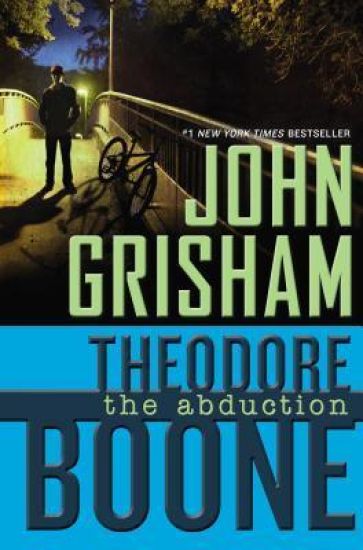
Theodore Boone: The Abduction

Theodore Boone: The Abduction

John Grisham

Dutton Books for Young Readers
2011
sidottu
Visit www.theodoreboone.com Watch a video Theodore Boone is back in a new adventure and the stakes are higher than ever.When his best friend April disappears from her bedroom in the middle of the night, no one, not even Theo Boone--who knows April better than anyone--has answers. As fear ripples through his small hometown and the police hit dead ends, it's up to Theo to use his legal knowledge and investigative skills to chase down the truth and save his best friend.Filled with the page-turning suspense that made John Grisham a #1 international bestseller and the undisputed master of the legal thriller, Theodore Boone's trials and triumphs will keep readers guessing until the very end.
Theodore Boone: The Fugitive

Theodore Boone: The Fugitive

John Grisham

Dutton Books for Young Readers
2015
sidottu
"Not since Nancy Drew has a nosy, crime-obsessed kid been so hard to resist." --The New York Times Thirteen-year-old Theodore Boone thought the danger had passed, but he's about to face off against an old adversary: accused mur­derer and fugitive Pete Duffy. On a field trip to Washington, DC, Theo spots a familiar face on the Metro: Duffy, who jumped bail and was never seen again. Theo's quick thinking helps bring Duffy back to Strattenburg to stand trial. But now that Duffy knows who he is, Theo is in greater danger than he's ever been in before. Even when every­thing is on the line, Theodore Boone will stop at nothing to make sure a killer is brought to justice. This smart, fast-paced legal thriller for young readers is the newest adventure for clever and determined kid lawyer Theo Boone.
Theodore Boone: The Accomplice

Theodore Boone: The Accomplice

John Grisham

Penguin Young Readers Group
2020
nidottu
Theodore Boone is back on the case in an all-new adventure Bestselling author John Grisham delivers a page-turning legal thriller for a new generation of readers. Theo has been worried about his good friend Woody Lambert. Woody is struggling at school and making bad choices. But when Woody is arrested--an unwitting accomplice to armed robbery--Theo knows he is innocent. Racing the clock while Woody sits in jail, Theo will do everything in his power to help his friend and save Woody from an unforgiving system where justice is not equal for all. Brimming with the intrigue and suspense that made John Grisham a #1 international bestseller and undisputed master of the modern legal thriller, Theodore Boone's trials and triumphs will keep readers hooked until the very last page.