Kirjojen hintavertailu. Mukana 12 390 323 kirjaa ja 12 kauppaa.

Kirjahaku

Etsi kirjoja tekijän nimen, kirjan nimen tai ISBN:n perusteella.

1000 tulosta hakusanalla Thomas C. Schelling

How to Read Literature Like a Professor [Third Edition]

How to Read Literature Like a Professor [Third Edition]

Thomas C Foster

HARPERCOLLINS PUBLISHERS INC
2024
nidottu
Thoroughly revised and expanded for a new generation of readers, this classic guide to enjoying literature to its fullest—a lively, enlightening, and entertaining introduction to a diverse range of writing and literary devices that enrich these works, including symbols, themes, and contexts—teaches you how to make your everyday reading experience richer and more rewarding. While books can be enjoyed for their basic stories, there are often deeper literary meanings beneath the surface. How to Read Literature Like a Professor helps us to discover those hidden truths by looking at literature with the practiced analytical eye—and the literary codes—of a college professor.What does it mean when a protagonist is traveling along a dusty road? When he hands a drink to his companion? When he’s drenched in a sudden rain shower? Thomas C. Foster provides answers to these questions as he explores every aspect of fiction, from major themes to literary models, narrative devices, and form. Offering a broad overview of literature—a world where a road leads to a quest, a shared meal may signify a communion, and rain, whether cleansing or destructive, is never just a shower—he shows us how to make our reading experience more intellectually satisfying and fun.The world, and curricula, have changed. This third edition has been thoroughly revised to reflect those changes, and features new chapters, a new preface and epilogue, as well as fresh teaching points Foster has developed over the past decade. Foster updates the books he discusses to include more diverse, inclusive, and modern works, such as Angie Thomas’s The Hate U Give; Emily St. John Mandel’s Station Eleven; Neil Gaiman’s Neverwhere; Elizabeth Acevedo’s The Poet X; Helen Oyeyemi's Mr. Fox and Boy, Snow, Bird; Sandra Cisneros’s The House on Mango Street; Zora Neale Hurston’s Their Eyes Were Watching God; Maggie O’Farrell’s Hamnet; Madeline Miller’s Circe; Pat Barker’s The Silence of the Girls; and Tahereh Mafi’s A Very Large Expanse of Sea.
Theory and Practice of Archaeology

Theory and Practice of Archaeology

Thomas C Patterson

Routledge Member of the Taylor and Francis Group
2004
nidottu
For courses in Introduction to Archaeology Theory and Methods.Intended for the Introductory Archaeology course with the goal of teaching students how to think like archaeologists, this workbook includes activities that challenge students to interpret and explain field findings and help them to see the link between theory and practice.
The Civil Rights Movement

The Civil Rights Movement

Thomas C. Holt

OXFORD UNIVERSITY PRESS INC
2023
nidottu
The Civil Rights Movement was among the most important historical developments of the twentieth century and one of the most remarkable mass movements in American history. Not only did it decisively change the legal and political status of African Americans, but it prefigured as well the moral premises and methods of struggle for other historically oppressed groups seeking equal standing in American society. And, yet, despite a vague, sometimes begrudging recognition of its immense import, more often than not the movement has been misrepresented and misunderstood. For many, a singular moment, frozen in time at the Lincoln Memorial, sums up much of what Americans and the world know about that remarkable decade of struggle. In The Civil Rights Movement: A Very Short Introduction, Thomas C. Holt provides an informed and nuanced understanding of the origins, character, and objectives of the mid-twentieth-century freedom struggle, privileging the aspirations and initiatives of the ordinary, grassroots people who made it. Holt conveys a sense of these developments as a social movement, one that shaped its participants even as they shaped it. He emphasizes the conditions of possibility that enabled the heroic initiatives of the common folk over those of their more celebrated leaders. This groundbreaking book reinserts the critical concept of "movement" back into our image and understanding of the Civil Rights Movement.
Cartesian Truth

Cartesian Truth

Thomas C. Vinci

Oxford University Press Inc
1998
sidottu
This book argues that science and metaphysics are closely and inseparably interwoven in the work of Descartes, so that the metaphysics cannot be understood without the science and vice versa. In order to make his case, Thomas Vinci offers a careful philosophical reconstruction of central parts of Descartes' metaphysics and of his theory of perception, each considered in relation to his epistemology. Vinci aims to show that Descartes gave an important positive role to sense-perception in his epistemology, and also that he used his reflections on sense-perception to frame his criticism of previous theories of the sensory qualities of objects.
The Movement

The Movement

Thomas C. Holt

Oxford University Press Inc
2021
sidottu
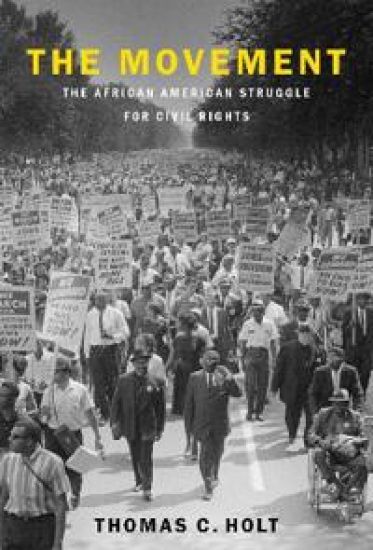
The civil rights movement was among the most important historical developments of the twentieth century and one of the most remarkable mass movements in American history. Not only did it decisively change the legal and political status of African Americans, but it prefigured as well the moral premises and methods of struggle for other historically oppressed groups seeking equal standing in American society. And, yet, despite a vague, sometimes begrudging recognition of its immense import, more often than not the movement has been misrepresented and misunderstood. For the general public, a singular moment, frozen in time at the Lincoln Memorial, sums up much of what Americans know about that remarkable decade of struggle. In The Movement, Thomas C. Holt provides an informed and nuanced understanding of the origins, character, and objectives of the mid-twentieth-century freedom struggle, privileging the aspirations and initiatives of the ordinary, grassroots people who made it. Holt conveys a sense of these developments as a social movement, one that shaped its participants even as they shaped it. He emphasizes the conditions of possibility that enabled the heroic initiatives of the common folk over those of their more celebrated leaders. This groundbreaking book reinserts the critical concept of "movement" back into our image and understanding of the civil rights movement.
Socrates on Trial

Socrates on Trial

Thomas C. Brickhouse; Nicholas D. Smith

Clarendon Press
1991
nidottu
Brickhouse and Smith argue, contrary to virtually every modern interpretation of Plato's Apology of Socrates, that Plato's Socrates offers a sincere defence against the charges he faces. In doing so the book offers an exhaustive historical and philosophical interpretation of and commentary on Plato's Apology. The authors demonstrate that Socrates' moral and religious principles prohibit him from needlessly risking a negative vote at his trial. By providing a complete commentary, they show that each specific claim Socrates makes in the Apology can be construed as a sincere attempt to inform the jury of the truth and convince the jurors of his blamelessness. The effect of these two strategies is a novel interpretation of the Apology which sheds new light on various aspects of Socrates' life and philosophy.
Space, Geometry, and Kant's Transcendental Deduction of the Categories
Thomas C. Vinci aims to reveal and assess the structure of Kant's argument in the Critique of Pure Reason called the "Transcendental Deduction of the Categories." At the end of the first part of the Deduction in the B-edition Kant states that his purpose is achieved: to show that all intuitions in general are subject to the categories. On the standard reading, this means that all of our mental representations, including those originating in sense-experience, are structured by conceptualization. But this reading encounters an exegetical problem: Kant states in the second part of the Deduction that a major part of what remains to be shown is that empirical intuitions are subject to the categories. How can this be if it has already been shown that intuitions in general are subject to the categories? Vinci calls this the Triviality Problem, and he argues that solving it requires denying the standard reading. In its place he proposes that intuitions in general and empirical intuitions constitute disjoint classes and that, while all intuitions for Kant are unified, there are two kinds of unification: logical unification vs. aesthetic unification. Only the former is due to the categories. A second major theme of the book is that Kant's Idealism comes in two versions-for laws of nature and for objects of empirical intuition-and that demonstrating these versions is the ultimate goal of the Deduction of the Categories and the similarly structured Deduction of the Concepts of Space, respectively. Vinci shows that the Deductions have the argument structure of an inference to the best explanation for correlated domains of explananda, each arrived at by independent applications of Kantian epistemic and geometrical methods.
Aligning for Advantage

Aligning for Advantage

Thomas C. Lawton; Jonathan P. Doh; Tazeeb Rajwani

Oxford University Press
2014
sidottu
In today's multipolar world economy, strategic alignment is a key determinant of competitive advantage. Coca-Cola, Danone, Diageo, DuPont, Lufthansa and Tata are some of the companies that strive for a pragmatic approach to balancing competitive strategies with political and social obligations. Aligning for Advantage argues that to build and sustain corporate success, companies must synchronize business objectives and market positions with political and regulatory activism and social and environmental engagement. Moreover, to be credible and realizable, these external market and nonmarket strategies need to be equally attuned with corporate vision, values, and culture. The book advances a managerial process and conceptual framework for aligning corporate strategy. In some cases alignment may mean deep, strategically embedded partnerships with governments, NGOs, or other stakeholders. In others, alignment may take the form of looser, temporary collaborations with outside organizations. No matter the approach, the relationship between nonmarket and market strategies should be deliberate and genuine, not accidental or artificial. Truly aligned strategies should reconcile and modulate sometimes conflicting external demands in a way that is appropriate for the corporation's geographic and market positions. In the end, companies must leverage their overall nonmarket strategy as a source of competitive advantage.
Aligning for Advantage

Aligning for Advantage

Thomas C. Lawton; Jonathan P. Doh; Tazeeb Rajwani

Oxford University Press
2014
nidottu
In today's multipolar world economy, strategic alignment is a key determinant of competitive advantage. Coca-Cola, Danone, Diageo, DuPont, Lufthansa and Tata are some of the companies that strive for a pragmatic approach to balancing competitive strategies with political and social obligations. Aligning for Advantage argues that to build and sustain corporate success, companies must synchronize business objectives and market positions with political and regulatory activism and social and environmental engagement. Moreover, to be credible and realizable, these external market and nonmarket strategies need to be equally attuned with corporate vision, values, and culture. The book advances a managerial process and conceptual framework for aligning corporate strategy. In some cases alignment may mean deep, strategically embedded partnerships with governments, NGOs, or other stakeholders. In others, alignment may take the form of looser, temporary collaborations with outside organizations. No matter the approach, the relationship between nonmarket and market strategies should be deliberate and genuine, not accidental or artificial. Truly aligned strategies should reconcile and modulate sometimes conflicting external demands in a way that is appropriate for the corporation's geographic and market positions. In the end, companies must leverage their overall nonmarket strategy as a source of competitive advantage.
Governing Soviet Journalism

Governing Soviet Journalism

Thomas C. Wolfe

Indiana University Press
2005
sidottu
The Soviet project of creating a new culture and society entailed a plan for the modeling of "new" persons who embodied and fulfilled the promise of socialism, and this vision was expressed in the institutions of government. Using archival sources, essays, and interviews with journalists, Thomas C. Wolfe provides an account of the final four decades of Soviet history viewed through the lens of journalism and media. Whereas most studies of the Soviet press approach its history in terms of propaganda or ideology, Wolfe's focus is on the effort to imagine a different kind of person and polity. Foucault's concept of governmentality illuminates the relationship between the idea of the socialist person and everyday journalistic representation, from the Khrushchev period to the 1990s and the appearance of the tabloid press. This thought-provoking study provides insights into the institutions of the Soviet press and the lives of journalists who experienced important transformations of their work.
Managing Command and Control in the Persian Gulf War

Managing Command and Control in the Persian Gulf War

Thomas C. Hone; Mark D. Mandeles; Sanford S. Terry

Praeger Publishers Inc
1996
sidottu
During Desert Shield, the Air Force built a very complicated organizational architecture to control large numbers of air sorties. During the air campaign itself, officers at each level of the Central Command Air Forces believed they were managing the chaos of war. Yet, when the activities of the many significant participants are pieced together, it appears that neither the planners nor Lt. Gen. Charles A. Horner, the Joint Force Air Component Commander, knew the details of what was happening in the air campaign or how well the campaign was going. There was little appreciation of the implications of complex organizational architectures for military command and control. Against a smarter and more aggressive foe, the system may well have failed.
Irreconcilable Differences?

Irreconcilable Differences?

Thomas C. Caramagno

Praeger Publishers Inc
2002
sidottu
In recent year, pro-gay and anti-gay rights activists have engaged in a struggle to sway public opinion in their favor through the use of ideologically charged rhetoric in an effort to win support from an undecided public. The author contends, however, that the debate is stalemated precisely because each side stereotypes and pathologizes the other's perspective, thereby becoming perfect enemies divided on every issue and with such intensity that consensus seems nearly impossible. Providing a panoramic view of both perspectives, this unique book traces the contested issues to fundamental conceptual differences within the field of religious, scientific, and political studies. Caramagno carefully examines the centuries of thought behind the questions involved and encourages readers to consider the arguments in order to draw their own conclusions.This book is not about the wrongs or rights of the gay-rights debate. Nor is it a condemnation of the sides involved in the debate. Instead, it shows how the two sides have engaged in the battle and how they have marshaled evidence from a variety of sources (often the same ones) to muster public support but without addressing the conceptual changes needed to conduct a more profitable dialog. Treating both sides of the debate respectfully and objectively, Irreconcilable Differences? opens the discussion up so that all ideas and arguments can be understood as having something valuable to bring to the table. In this way, readers are challenged to consider the ways arguments are formed, how culture disseminates ideas, and how a debate can be shaped so that consensus-building is a real, not an imagined, outcome.
Irreconcilable Differences?

Irreconcilable Differences?

Thomas C. Caramagno

Praeger Publishers Inc
2002
nidottu
In recent year, pro-gay and anti-gay rights activists have engaged in a struggle to sway public opinion in their favor through the use of ideologically charged rhetoric in an effort to win support from an undecided public. The author contends, however, that the debate is stalemated precisely because each side stereotypes and pathologizes the other's perspective, thereby becoming perfect enemies divided on every issue and with such intensity that consensus seems nearly impossible. Providing a panoramic view of both perspectives, this unique book traces the contested issues to fundamental conceptual differences within the field of religious, scientific, and political studies. Caramagno carefully examines the centuries of thought behind the questions involved and encourages readers to consider the arguments in order to draw their own conclusions. This book is not about the wrongs or rights of the gay-rights debate. Nor is it a condemnation of the sides involved in the debate. Instead, it shows how the two sides have engaged in the battle and how they have marshaled evidence from a variety of sources (often the same ones) to muster public support but without addressing the conceptual changes needed to conduct a more profitable dialog. Treating both sides of the debate respectfully and objectively, Irreconcilable Differences? opens the discussion up so that all ideas and arguments can be understood as having something valuable to bring to the table. In this way, readers are challenged to consider the ways arguments are formed, how culture disseminates ideas, and how a debate can be shaped so that consensus-building is a real, not an imagined, outcome.
Maras

Maras

Thomas C. Bruneau; Lucía Dammert; Elizabeth Skinner

University of Texas Press
2011
nidottu
Sensational headlines have publicized the drug trafficking, brutal violence, and other organized crime elements associated with Central America's mara gangs, but there have been few clear-eyed analyses of the history, hierarchies, and future of the mara phenomenon. The first book to look specifically at the Central American gang problem by drawing on the perspectives of researchers from different disciplinary backgrounds, Maras: Gang Violence and Security in Central America provides much-needed insight. These essays trace the development of the gangs, from Mara Salvatrucha to the 18th Street Gang, in Los Angeles and their spread to El Salvador, Honduras, Guatemala, and Nicaragua as the result of members' deportation to Central America; there, they account for high homicide rates and threaten the democratic stability of the region. With expertise in areas ranging from political science to law enforcement and human rights, the contributors also explore the spread of mara violence in the United States. Their findings comprise a complete documentation that spans sexualized violence, case studies of individual gangs, economic factors, varied responses to gang violence, the use of intelligence gathering, the limits of state power, and the role of policy makers. Raising crucial questions for a wide readership, these essays are sure to spark productive international dialogues.
The Church in Brazil

The Church in Brazil

Thomas C. Bruneau

University of Texas Press
1982
nidottu
In 1980, Brazil was the largest Roman Catholic country in the world, with 90 percent of its more than 120 million people numbered among the faithful. The Church hierarchy became aware, however, that the religion practiced by the majority of its members was not that promoted by the institution, a point dramatized by the rapid growth of other religious movements in Brazil-particularly Protestant sects and spirit-possession cults. In response, the Church created and assumed new roles. The Church in Brazil is a case study of the changes within the Church and their impact on Brazilian society. In an original and illuminating discussion, Thomas Bruneau combines institutional analysis and survey data to explore the relationship between structural changes in the Church and evolving patterns of practice and belief. His discussion displays the richness and variety of devotion in Brazil-characteristics recognized by many observers-and examines the Church's potential for influencing the people's religious life. Moving from the historical and national to the regional, Bruneau analyzes and compares changes among eight dioceses. He concludes that the Church is actively promoting a progressive social role for itself and, by backing its statements with actions, is perceived as being socially effective by both supporters and opponents. The first study in which the national and diocesan levels of the Church are analyzed together, it is also the first to inspect systematically the Basic Christian Communities, thought by some to be the most significant grass-roots movement in the Catholic world of that time.
The Mind of the Trout

The Mind of the Trout

Thomas C. Grubb

University of Wisconsin Press
2003
nidottu
How and why do trout think? How do they decide where to eat and which food to eat? Why do they refuse to behave as predicted, stumping anglers by rejecting a larger fly for a smaller one or not responding at all to anything in an angler's box? How do trout know to bolt to one particular covered area after being hooked or flushed? Why can trout smell better than humans but not remember as well? Citing the most recent scientific findings in a readily understandable form, Thomas C. Grubb, Jr. addresses these questions and more in The Mind of the Trout. It is the first book to bring together many varied concepts of cognitive ecology as applied to trout and their salmonid relatives: char, salmon, grayling, and whitefish.
John Wesley's Teachings, Volume 1

John Wesley's Teachings, Volume 1

Thomas C. Oden

Zondervan
2012
nidottu
John Wesley’s Teaching is the first systematic exposition of John Wesley's theology that is also faithful to Wesley's own writings. Wesley was a prolific writer and commentator on Scripture—his collected works fill eighteen volumes—and yet it is commonly held that he was not systematic or consistent in his theology and teachings. On the contrary, Thomas C. Oden demonstrates that Wesley displayed a remarkable degree of internal consistency over sixty years of preaching and ministry. This series of 4 volumes is a text-by-text guide to John Wesley’s teaching. It introduces Wesley’s thought on the basic tenets of Christian teaching: God, providence, and man (volume 1), Christ and salvation (volume 2), the practice of pastoral care (volume 3), and issues of ethics and society (volume 4). In everyday modern English, Oden clarifies Wesley’s explicit intent and communicates his meaning clearly to a contemporary audience. Both lay and professional readers will find this series useful for devotional reading, moral reflection, sermon preparation, and for referencing Wesley’s opinions on a broad range of pressing issues of contemporary society.