Kirjojen hintavertailu. Mukana 11 457 497 kirjaa ja 12 kauppaa.

Kirjahaku

Etsi kirjoja tekijän nimen, kirjan nimen tai ISBN:n perusteella.

1000 tulosta hakusanalla Thomas M Cockrill

Principles of Paleoclimatology

Principles of Paleoclimatology

Thomas M. Cronin

Columbia University Press
1999
sidottu
Greenhouse gases, global warming, thinning ozone layers-understanding the Earth's climatic changes is one of today's most pressing international concerns. How fast has the climate changed? Where and why is it changing? What is the impact of climate change on our ecosystems, coastal regions, glaciers, forests, and lakes, and even on the evolution of our own species? This introduction to the rapidly emerging field of paleoclimatology explains the patterns and processes in the history of the Earth's climate to answer such essential questions. Using the geologic records of ocean and lake sediment, ice cores, corals, and other natural archives, Principles of Paleoclimatology describes the history of the Earth's climate-the ice age cycles, sea level changes, volcanic activity, changes in atmosphere and solar radiation-and the resulting, sometimes catastrophic, biotic responses. These paleoclimate records provide a baseline against which we can compare modern climate trends. Designed to give a fundamental background-including both history and methodology-to the discipline of paleoclimatology, this book is the first to advance our understanding of how climate change develops, how those changes are detected, and how the climate of the past can shape the climate of the future.
Principles of Paleoclimatology

Principles of Paleoclimatology

Thomas M. Cronin

Columbia University Press
1999
pokkari
Greenhouse gases, global warming, thinning ozone layers-understanding the Earth's climatic changes is one of today's most pressing international concerns. How fast has the climate changed? Where and why is it changing? What is the impact of climate change on our ecosystems, coastal regions, glaciers, forests, and lakes, and even on the evolution of our own species? This introduction to the rapidly emerging field of paleoclimatology explains the patterns and processes in the history of the Earth's climate to answer such essential questions. Using the geologic records of ocean and lake sediment, ice cores, corals, and other natural archives, Principles of Paleoclimatology describes the history of the Earth's climate-the ice age cycles, sea level changes, volcanic activity, changes in atmosphere and solar radiation-and the resulting, sometimes catastrophic, biotic responses. These paleoclimate records provide a baseline against which we can compare modern climate trends. Designed to give a fundamental background-including both history and methodology-to the discipline of paleoclimatology, this book is the first to advance our understanding of how climate change develops, how those changes are detected, and how the climate of the past can shape the climate of the future.
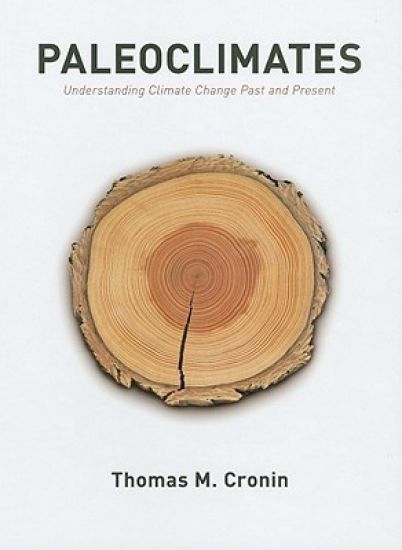
Paleoclimates

Paleoclimates

Thomas M. Cronin

Columbia University Press
2009
sidottu
The field of paleoclimatology relies on physical, chemical, and biological proxies of past climate changes that have been preserved in natural archives such as glacial ice, tree rings, sediments, corals, and speleothems. Paleoclimate archives obtained through field investigations, ocean sediment coring expeditions, ice sheet coring programs, and other projects allow scientists to reconstruct climate change over much of earth's history. When combined with computer model simulations, paleoclimatic reconstructions are used to test hypotheses about the causes of climatic change, such as greenhouse gases, solar variability, earth's orbital variations, and hydrological, oceanic, and tectonic processes. This book is a comprehensive, state-of-the art synthesis of paleoclimate research covering all geological timescales, emphasizing topics that shed light on modern trends in the earth's climate. Thomas M. Cronin discusses recent discoveries about past periods of global warmth, changes in atmospheric greenhouse gas concentrations, abrupt climate and sea-level change, natural temperature variability, and other topics directly relevant to controversies over the causes and impacts of climate change. This text is geared toward advanced undergraduate and graduate students and researchers in geology, geography, biology, glaciology, oceanography, atmospheric sciences, and climate modeling, fields that contribute to paleoclimatology. This volume can also serve as a reference for those requiring a general background on natural climate variability.
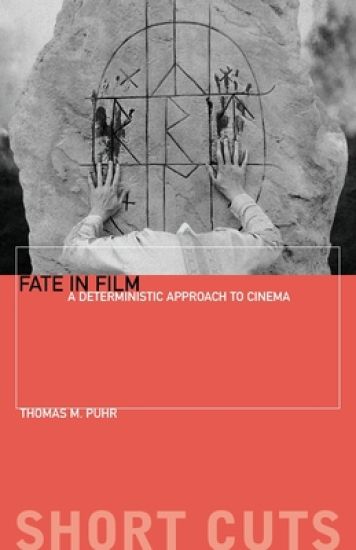
Fate in Film

Fate in Film

Thomas M. Puhr

Columbia University Press
2022
pokkari
The course of events is predetermined and cannot be changed. Forces beyond our control—or even our comprehension—shape our fates. Such is the deterministic worldview embedded in a wide swath of contemporary cinema, from arthouse experiments to popular genre films, through both thematic concerns and narrative structures. These films, especially the recent spate of “elevated” science fiction and horror, tap into this deep-seated anxiety by focusing on characters who ultimately fail to transcend the patterns and structures that define them.Thomas M. Puhr identifies and analyzes the ways that cinema has dealt with the tension between fate and free will, from Stanley Kubrick’s The Shining to Christopher Nolan’s Tenet. He examines films that express deterministic ideas, including circular narratives of stasis or confinement and fatalistic portraits of external forces dictating characters’ lives. Puhr considers determinism at the levels of the individual, the family, and society, reading films in which characters are trapped by past or alternate selves, the burdens of family histories, or oppressive social structures. He explores how films such as Joel and Ethan Coen’s Inside Llewyn Davis, Ari Aster’s Hereditary, Jordan Peele’s Us, and Lucrecia Martel’s Zama confront the limits of human agency. Puhr relates deterministic themes to the nature of moviegoing: In denying characters any ability to choose alternative paths, these films mirror how viewers themselves can only sit and watch.Recasting the works of some of today’s most compelling directors, Fate in Film is an innovative critical account of an unrecognized yet crucial aspect of contemporary cinema.
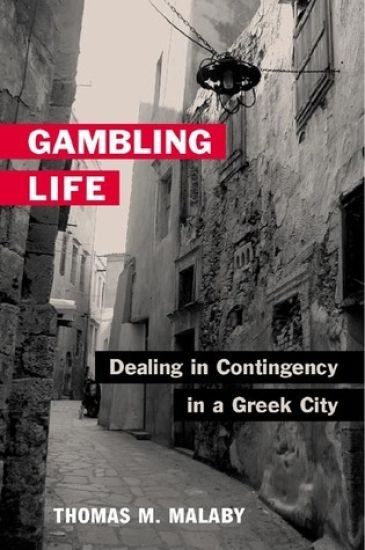
Gambling Life

Gambling Life

Thomas M. Malaby

University of Illinois Press
2003
sidottu
The first ethnography devoted to the practice of gambling as its core subject, Gambling Life considers the stakes of social action in one community on the island of Crete. Backgammon cafés, card clubs, and hidden gambling rooms in the city of Chania provide the context for Thomas M. Malaby to examine the ways in which people confront uncertainty in their lives. He shows how the dynamics of gambling -- risk, fate, uncertainty, and luck -- are reflected in other aspects of gamblers' lives from courtship and mortality to state bureaucracy and national identity. By moving beyond risk and fate as unexamined analytical categories, Malaby presents a new model for research concerning indeterminacy, seeing it as arising from stochastic, performative, and other sources. Gambling Life questions the longstanding valorization of order and pattern in the social sciences.
Jung's Four and Some Philosophers

Jung's Four and Some Philosophers

Thomas M. King

University of Notre Dame Press
1999
nidottu
Thomas M. King, S.J. uses Jungian/Myers-Briggs typology to understand the different starting points of twelve philosophers, then uses Jungian patterns of "integration" to show similarities in their development. Jung's Four and Some Philosophers provides a context in which to understand the widely differing claims of philosophers. The "four" in the title refers to the four faculties that Jung sees occurring in pairs in every psyche: thinking and its opposite, feeling; sensation and its opposite, intuition. One of these four will dominate (among philosophers it will characterize what they find self-evident), while the dominant's opposite is repressed into the mysterious unconscious. Thus, a thinker will repress one's feelings. To achieve wholeness, the philosopher must pass beyond what is known to seek the missing faculty and integrate it with the faculties of consciousness. King demonstrates this with highly documented studies of twelve philosophers: Plato, Locke, Sartre, Augustine, Descartes, Spinoza, Rousseau, Kant, Kierkegaard, Whitehead, Hume, and Teilhard, and a final reflection that considers the philosophic and religious quest.
Jung's Four and Some Philosophers: A Paradigm for Philosophy

Jung's Four and Some Philosophers: A Paradigm for Philosophy

Thomas M. King

UNIVERSITY OF NOTRE DAME PRESS
1999
sidottu
Thomas M. King, S.J. uses Jungian/Myers-Briggs typology to understand the different starting points of twelve philosophers, then uses Jungian patterns of "integration" to show similarities in their development.Jung's Four and Some Philosophers provides a context in which to understand the widely differing claims of philosophers. The "four" in the title refers to the four faculties that Jung sees occurring in pairs in every psyche: thinking and its opposite, feeling; sensation and its opposite, intuition. One of these four will dominate (among philosophers it will characterize what they find self-evident), while the dominant's opposite is repressed into the mysterious unconscious. Thus, a thinker will repress one's feelings. To achieve wholeness, the philosopher must pass beyond what is known to seek the missing faculty and integrate it with the faculties of consciousness. King demonstrates this with highly documented studies of twelve philosophers: Plato, Locke, Sartre, Augustine, Descartes, Spinoza, Rousseau, Kant, Kierkegaard, Whitehead, Hume, and Teilhard, and a final reflection that considers the philosophic and religious quest.
Theology at the Void

Theology at the Void

Thomas M. Kelly

University of Notre Dame Press
2002
nidottu
Theology at the Void explores the intersection of three central questions: What is human being? What is language? What is theology? Drawing on the writings of five major intellectuals from various religious and academic traditions, Thomas Kelly seeks to answer these questions by tracing the emergence of a problem that arises when various modes of thought disagree on the relationship between experience, language, and theological inquiry. Kelly begins the discussion with an analysis of Friedrich Schleiermacher's understanding of human experience, language, and theology to articulate the Christian faith. Twentieth-century thinkers Wayne Proudfoot and George Lindbeck are introduced early in the text as critics of Schleiermacher's approach, which, they maintain, is dependent upon a culturally limited theological anthropology. Kelly argues that contrary to Schleiermacher's "turn to the subject" theological methodology, postmodern thinkers assign no priority to experience but rather assert that languages and cultural systems construct experience. As one solution to the tension between these two camps, Kelly proposes two alternative approaches: George Steiner and Karl Rahner. In his book Real Presences, renowned literary critic George Steiner suggests a possibility for moving beyond the more radical anthropological elements of the postmodern critique. Karl Rahner offers a theological alternative that is sensitive both to the postmodern critique as well as to the nature of Catholic theology. Kelly demonstrates how both of these great thinkers provide a viable resolution to a major problem facing systematic theology. In the end, Kelly finds Rahner's resolution most persuasive. Theology at the Void is an engaging assessment of the problem of whether one can formulate a theology using human experience as its fundamental principle.
Love of Self and Love of God in Thirteenth-Century Ethics

Love of Self and Love of God in Thirteenth-Century Ethics

Thomas M. Osborne

University of Notre Dame Press
2005
nidottu
In this book, Thomas M. Osborne, Jr., covers an important, but often neglected, aspect of medieval ethics, namely the controversy over whether or not it is possible to love God more than oneself through natural powers alone. In debating this topic, thirteenth-century philosophers and theologians introduced a high level of sophistication to the study of how one's own good is achieved through virtuous action. The central issue for medieval scholars was how to adapt Aristotle's philosophical insights to a Christian framework. For Christians, loving God above all else was their central ethical duty. Most ancient and medieval Christians were also committed to eudaimonism, or the view that one's good is always maximized through virtuous action. The tension between these two aspects of Christian ethics reached its highest point in philosophical discussions about whether God can be naturally loved more than oneself. Osborne provides a history of these debates, based on a close analysis of primary texts, clarifies the concepts that are most important for understanding eudaimonism, and argues that the central difference between the ethical theories of such great thinkers as Thomas Aquinas and John Duns Scotus is not about morality and self-interest, but rather about the relationship between ethics and natural inclination. The arguments raised by the thirteenth-century philosophers and texts discussed in this book have important implications for natural law theories and virtue ethics and are essential for understanding the shift to modern moral theories. Love of Self and Love of God in Thirteenth-Century Ethics will be invaluable to philosophers and theologians, particularly those concerned with medieval philosophy, moral psychology, the history of ideas, and ethics.
Love of Self and Love of God in Thirteenth-Century Ethics

Love of Self and Love of God in Thirteenth-Century Ethics

Thomas M. Osborne

University of Notre Dame Press
2005
sidottu
In this book, Thomas M. Osborne, Jr., covers an important, but often neglected, aspect of medieval ethics, namely the controversy over whether or not it is possible to love God more than oneself through natural powers alone. In debating this topic, thirteenth-century philosophers and theologians introduced a high level of sophistication to the study of how one's own good is achieved through virtuous action. The central issue for medieval scholars was how to adapt Aristotle's philosophical insights to a Christian framework. For Christians, loving God above all else was their central ethical duty. Most ancient and medieval Christians were also committed to eudaimonism, or the view that one's good is always maximized through virtuous action. The tension between these two aspects of Christian ethics reached its highest point in philosophical discussions about whether God can be naturally loved more than oneself. Osborne provides a history of these debates, based on a close analysis of primary texts, clarifies the concepts that are most important for understanding eudaimonism, and argues that the central difference between the ethical theories of such great thinkers as Thomas Aquinas and John Duns Scotus is not about morality and self-interest, but rather about the relationship between ethics and natural inclination. The arguments raised by the thirteenth-century philosophers and texts discussed in this book have important implications for natural law theories and virtue ethics and are essential for understanding the shift to modern moral theories. Love of Self and Love of God in Thirteenth-Century Ethics will be invaluable to philosophers and theologians, particularly those concerned with medieval philosophy, moral psychology, the history of ideas, and ethics.
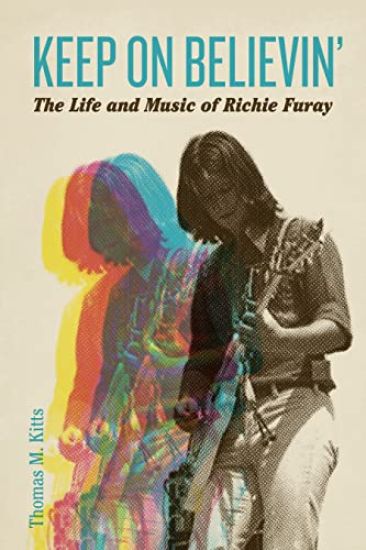
Keep on Believin’

Keep on Believin’

Thomas M. Kitts

Pennsylvania State University Press
2023
sidottu
One of America’s great rock and roll pioneers, Richie Furay played alongside Neil Young and Stephen Stills in Buffalo Springfield, producing some of the signature sounds of American folk rock. He went on to form Poco, one of the bands that founded California country rock, and then Souther-Hillman-Furay.After declaring himself a Christian in 1974, Furay released four solo albums before taking up the ministry in 1983. He began recording again in 1997, and over the next twenty-five years he released two Christian and five secular albums.In this biography of Rock & Roll Hall of Famer Richie Furay, Thomas Kitts provides an intimate look at Furay’s life and music. Kitts chronicles the musician’s upbringing, his musical career, and his Christianity, drawing on interviews with Furay and others close to him. In documenting Furay’s extraordinary talent as a songwriter, vocalist, and guitarist, Kitts argues that although he never attained the level of stardom of many of his bandmates, Furay is a pivotal figure in American popular music.Fans of Buffalo Springfield, Poco, and country-rock music will enjoy this quintessentially American story of a young man on a quest to fulfill his rock-and-roll dreams.
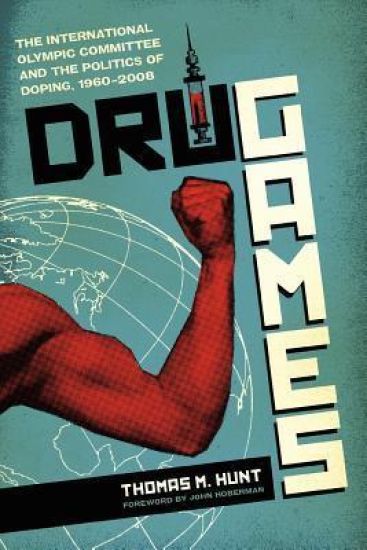
Drug Games

Drug Games

Thomas M. Hunt

University of Texas Press
2011
pokkari
On August 26, 1960, twenty-three-year-old Danish cyclist Knud Jensen, competing in that year's Rome Olympic Games, suddenly fell from his bike and fractured his skull. His death hours later led to rumors that performance-enhancing drugs were in his system. Though certainly not the first instance of doping in the Olympic Games, Jensen's death serves as the starting point for Thomas M. Hunt's thoroughly researched, chronological history of the modern relationship of doping to the Olympics. Utilizing concepts derived from international relations theory, diplomatic history, and administrative law, this work connects the issue to global political relations.During the Cold War, national governments had little reason to support effective anti-doping controls in the Olympics. Both the United States and the Soviet Union conceptualized power in sport as a means of impressing both friends and rivals abroad. The resulting medals race motivated nations on both sides of the Iron Curtain to allow drug regulatory powers to remain with private sport authorities. Given the costs involved in testing and the repercussions of drug scandals, these authorities tried to avoid the issue whenever possible. But toward the end of the Cold War, governments became more involved in the issue of testing. Having historically been a combined scientific, ethical, and political dilemma, obstacles to the elimination of doping in the Olympics are becoming less restrained by political inertia.
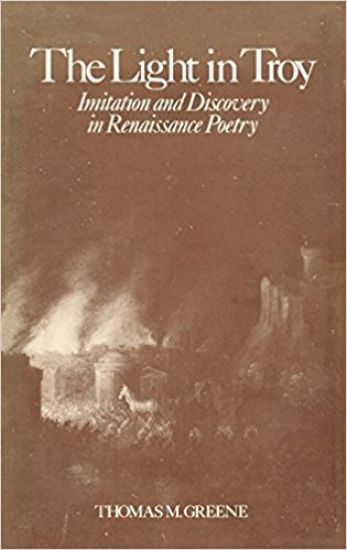
The Light in Troy

The Light in Troy

Thomas M. Greene

Yale University Press
2016
sidottu
“Extraordinarily rich and awesomely learned…. The complexity of its subject matter is here mastered in an exemplary fashion. The study offers detailed, concrete, and perceptive assessments of individual writers within a lucid and carefully balanced design…. As a work of striking originality as well as formidable yet lively scholarship,… Green’s book will become a central, even classic, text for students of Renaissance poetry and of a cardinal topos in the history of criticism and hermeneutics.” –From the citation for the award of the Harry Levin Prize of the American Comparative Literature Association, 1982 “An outstanding example of learning fully commanded and applied with uncommon perception, a lively sense of historical continuity, and, not least important, productive familiarity with modern literary theory. In its breadth of knowledge, the interplay of literary history and theory, the maturity of its judgments and the urbanity of its style, Professor Greene’s study is a most distinguished achievement of American scholarship.” –From the citation for the award of the Annual James Russell Lowell Prize, given by the Modern Language Association of America, 1983
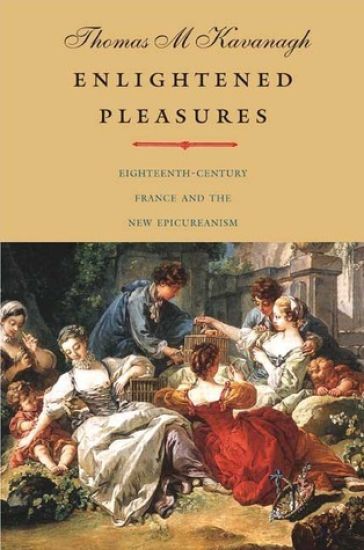
Enlightened Pleasures

Enlightened Pleasures

Thomas M. Kavanagh

Yale University Press
2010
sidottu
Novelists, artists, and philosophers of the eighteenth century understood pleasure as a virtue—a gift to be shared with one’s companion, with a reader, or with the public. In this daring new book, Thomas Kavanagh overturns the prevailing scholarly tradition that views eighteenth-century France primarily as the incubator of the Revolution. Instead, Kavanagh demonstrates how the art and literature of the era put the experience of pleasure at the center of the cultural agenda, leading to advances in both ethics and aesthetics. Kavanagh shows that pleasure is not necessarily hedonistic or opposed to Enlightenment ideals in general; rather, he argues that the pleasure of individuals is necessary for the welfare of their community.
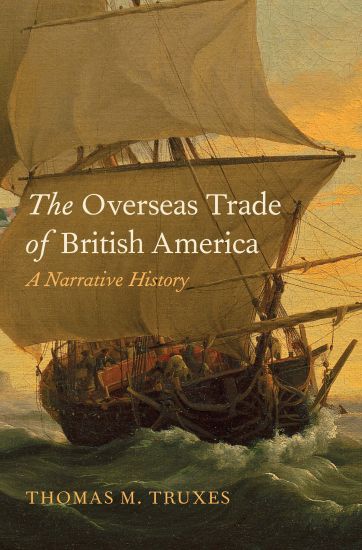
The Overseas Trade of British America

The Overseas Trade of British America

Thomas M. Truxes

Yale University Press
2022
sidottu
A sweeping history of early American trade and the foundation of the American economy “We could have no better guide than Truxes explaining incisively how American colonial merchants enriched their communities through licit and illicit trade, and how this enrichment was the product of slavery and the slave trade.”—Nicholas Canny, author of Imagining Ireland’s Pasts In a single, readily digestible, coherent narrative, historian Thomas M. Truxes presents the three-hundred-year history of the overseas trade of British America. Born from seeds planted in Tudor England in the sixteenth century, Atlantic trade allowed the initial survival, economic expansion, and later prosperity of British America, and brought vastly different geographical regions, each with a distinctive identity and economic structure, into a single fabric. Truxes shows how colonial American prosperity was possible only because of the labor of enslaved Africans, how the colonial economy became dependent on free and open markets, and how the young United States owed its survival in the struggle of the American Revolution to Atlantic trade.
Defying Empire

Defying Empire

Thomas M. Truxes

Yale University Press
2010
pokkari
A dramatic account of illicit trading by New York City merchants, some of whom became America’s Founding Fathers, during the French and Indian War This enthralling book is the first to uncover the story of New York City merchants who engaged in forbidden trade with the enemy before and during the Seven Years’ War (also known as the French and Indian War). Ignoring British prohibitions designed to end North America’s wartime trade with the French, New York’s merchant elite conducted a thriving business in the French West Indies, insisting that their behavior was protected by long practice and British commercial law. But the government in London viewed it as treachery, and its subsequent efforts to discipline North American commerce inflamed the colonists.Through fast-moving events and unforgettable characters, historian Thomas M. Truxes brings eighteenth-century New York and the Atlantic world to life. There are spies, street riots, exotic settings, informers, courtroom dramas, interdictions on the high seas, ruthless businessmen, political intrigues, and more. The author traces each phase of the city’s trade with the enemy and details the frustrations that affected both British officials and independent-minded New Yorkers. The first book to focus on New York City during the Seven Years’ War, Defying Empire reveals the important role the city played in hastening the colonies’ march toward revolution.
A Guide to Central American Collections in the United States
Since the late 1970s, events in Central America have brought increased scholarly interest in the six isthmus nations--Costa Rica, El Salvador, Guatemala, Honduras, Nicaragua, and Panama. Conceived in response to that scholarly interest, this volume provides a guide to collections of archival and manuscript materials in this country. Although most research in this country has focused on the sources available at the United States National Archives, there is a vast amount of underutilized research materials in smaller collections throughout this country. This work provides access to these lesser known collections as well as to the larger collections holding vast quantities of material. The book will be a valuable tool to researchers seeking primary material on Central America.In addition to historical documents regarding politics, society, economics, and foreign affairs, this volume also surveys materials regarding ecology and indigenous people. Although Catholicism remains the religion of the region, the guide also includes protestant and other missionary work. Map collections, oral histories, photographs, and other visual materials are also covered. The book is arranged alphabetically by state, with the repositories appearing under each state heading. Each entry includes a brief description of the collection's holdings.
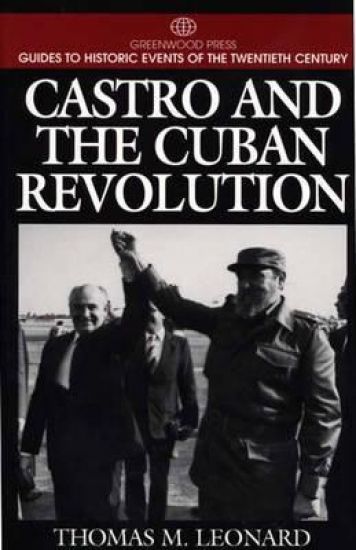
Castro and the Cuban Revolution

Castro and the Cuban Revolution

Thomas M. Leonard

Greenwood Press
1999
sidottu
Fidel Castro's triumphant march into Havana on January 8, 1959 signaled the end to Cuba's old order and the beginning of a new era. This one-stop guide to the Cuban revolution analyzes Castro's drive to oust Cuban dictator Fulgencio Batista. The reader will gain an understanding of the revolt and its causes and consequences. Two additional chapters examine Castro's efforts to pursue an independent foreign policy and an analysis of the ever-changing characteristics of the Cuban-American community and its relationship to the homeland. A variety of selected documents supplement the main points of each chapter. Ready-reference features include: a chronology of events in the history of Cuba and the Cuban revolution; lengthy biographical profiles of 23 major figures in the history of Cuba and the revolution that provide the reader with insights into the political thinking and contributions each made to the Cuban historical experience; and the text of 15 key primary documents on the topics, including statements by Fidel Castro, President John F. Kennedy, and President Bill Clinton. A glossary of frequently cited terms, an annotated bibliography, and photos make this work ideally suited for student research.
Drama and Discovery

Drama and Discovery

Thomas M. Daniel; Gerald L. Baum

Praeger Publishers Inc
2002
sidottu
Histoplasmosis is a fungal disease that is widely endemic in much of the world. In the central United States, including the broad reaches of the Ohio and Mississippi River valleys, the majority of adults are infected with the causative fungus. Most infected individuals handle this infection well, but a few do become sick. Over the years there have been a number of outbreaks or epidemics with many persons becoming severely ill and some dying as a result. This is the story of the discovery of histoplasmosis in 1905 and the subsequent development of knowledge concerning its etiology, pathogenesis, epidemiology, diagnostic challenges, clinical manifestations, and treatment. Uniquely qualified to tell this tale, Daniel and Baum base their study on original source material not previously available.The story of histoplasmosis spans the twentieth century, from its discovery by Samuel Taylor Darling in Panama to the development of effective drug treatment near the century's end. The book epitomizes the growth of medical knowledge through the confluence of ideas and information arising from the work of many individual investigators, a recurrent theme in the history of medicine. Daniel and Baum include much original and previously unreported material derived from Baum's direct involvement with the unraveling of the pathogenesis of the disease and his personal knowledge of the people and events detailed in this book.