Kirjojen hintavertailu. Mukana 11 244 527 kirjaa ja 12 kauppaa.

Kirjahaku

Etsi kirjoja tekijän nimen, kirjan nimen tai ISBN:n perusteella.

1000 tulosta hakusanalla Thomas W. Foley

Hsieh Liang-Tso and the Analects of Confucius

Hsieh Liang-Tso and the Analects of Confucius

Thomas W. Selover; Tu Wei-ming

Oxford University Press Inc
2005
sidottu
Hsieh Liang-tso (c.1050-c.1120, known as master Shang-ts'ai) was one of the leading direct disciples of Ch'eng Hao and Ch'eng I, the two brothers who were the early leaders of the Confucian revival known as Neo-Confucianism in Northern Sung China. Hsieh was thus among the first to recognize and follow the insights of the Ch'eng brothers as definitive of the authentic Confucian tradition, a recognition that became the conviction of the majority of later Confucian scholars and practitioners. The present book is a focused analysis of the core value of Confucian thought, namely jen (humanity or co-humanity), through an investigation of Hsieh Liang-tso's analysis of the Analects of Confucius. Selover argues that Hsieh's handling of key issues in interpreting and applying the Confucian Analects, his experiential reasoning and his deference to scriptural classics and earlier tradition, bear important similarities to the practice of theology in Western religious traditions. The volume also contains a translation of Hsieh's commentary on the Analects, as well as a foreword by the renowned scholar of Confucianism, Tu Wei-ming.
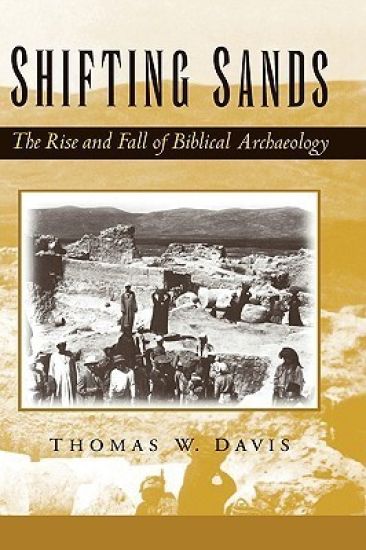
Shifting Sands

Shifting Sands

Thomas W. Davis

Oxford University Press Inc
2004
sidottu
Before the 1970s, biblical archaeology was the dominant research paradigm for those excavating the history of Palestine. Today most people prefer to speak of Syro/Palestinian archaeology. This is not just a normal shift but reflects a major theoretical and methodological change. It has even been labelled a revolution. In the popular mind, however, biblical archaeology is still alive and well. In Shifting Sands, Thomas W. Davis charts the evolution and the demise of the discipline. Biblical archaeology, he writes, was an attempt to ground the historical witness of the Bible in demonstrable historical reality.
Social Networks and Health

Social Networks and Health

Thomas W. Valente

Oxford University Press Inc
2010
sidottu
Relationships and the pattern of relationships have a large and varied influence on both individual and group action. The fundamental distinction of social network analysis research is that relationships are of paramount importance in explaining behavior. Because of this, social network analysis offers many exciting tools and techniques for research and practice in a wide variety of medical and public health situations including organizational improvements, understanding risk behaviors, coordinating coalitions, and the delivery of health care services. This book provides an introduction to the major theories, methods, models, and findings of social network analysis research and application. In three sections, it presents a comprehensive overview of the topic; first in a survey of its historical and theoretical foundations, then in practical descriptions of the variety of methods currently in use, and finally in a discussion of its specific applications for behavior change in a public health context. Throughout, the text has been kept clear, concise, and comprehensible, with short mathematical formulas for some key indicators or concepts. Researchers and students alike will find it an invaluable resource for understanding and implementing social network analysis in their own practice.
The Oxford Introductions to U.S. Law

The Oxford Introductions to U.S. Law

Thomas W. Merrill; Henry E. Smith

Oxford University Press Inc
2010
nidottu
The Oxford Introductions to U.S. Law: Property provides both a bird's eye overview of property law and an introduction to how property law affects larger concerns with individual autonomy, personhood, and economic organization. Written by two authorities on property law, this book gives students of property a coherent account of how property law works, with an emphasis on describing the central issues and policy debates. It is designed for law students who want a short and theoretically integrated treatment of the subject, as well as for lawyers who are interested in the conceptual foundations of the law of property.
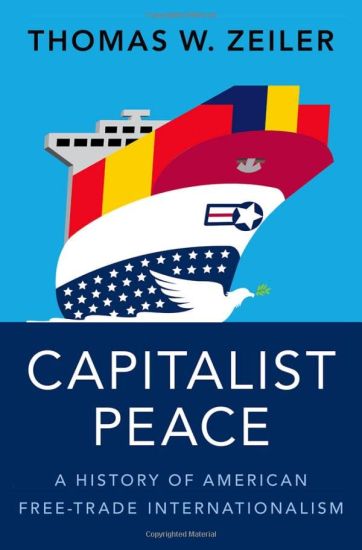
Capitalist Peace

Capitalist Peace

Thomas W. Zeiler

OXFORD UNIVERSITY PRESS INC
2022
sidottu
A wide-ranging history of modern America that argues that free trade has been an engine of US foreign policy and the key to global prosperity. Surprisingly, exports and imports, tariffs and quotas, and trade deficits and surpluses are central to American foreign relations. Ever since Franklin D. Roosevelt took office during the Great Depression, the United States has linked trade to its long-term diplomatic objectives and national security. Washington, DC saw free trade as underscoring its international leadership and as instrumental to global prosperity, to winning wars and peace, and to shaping the liberal internationalist world order. Free trade, in short, was a cornerstone of an ideology of "capitalist peace." Covering nearly a century, Capitalist Peace provides the first chronologically sweeping look at the intersection of trade and diplomacy. This policy has been pursued oftentimes at a cost to US producers and workers, whose interests were sacrificed to serve the purpose of grand strategy. To be sure, capitalists sought a particular type of global trade, which harnessed the market through free trade. This liberal trade policy sought the common good as defined by the needs, aims, and strengths of the capitalist and democratic world. Leaders believed that free trade advanced private enterprise, which, in turn, promoted prosperity, democracy, security, and attendant by-products like development, cooperation, integration, and human rights. The capitalist peace took liberalization as integral to cooperation among nations and even to morality in global affairs. Drawing on new research from the Reagan, George H.W. Bush, Clinton, and George W. Bush presidential libraries, as well as business/ industry and civic association archives, Thomas W. Zeiler narrates this history from the road to World War II, through the Cold War, to the resurgent protectionism of the Trump era and up to the present. Offering a new interpretation of diplomatic history, Capitalist Peace shows how US power, interests, and values were projected into the international arena even as capitalism brought both positive and negative results to the global order.
The Multiple Realization Book

The Multiple Realization Book

Thomas W. Polger; Lawrence A. Shapiro

Oxford University Press
2016
sidottu
Since Hilary Putnam offered multiple realization as an empirical hypothesis in the 1960s, philosophical consensus has turned against the idea that mental processes could be identified with brain processes, and multiple realization has become the keystone of the 'antireductive consensus' across philosophy of science broadly. Thomas W. Polger and Lawrence A. Shapiro offer the first book-length investigation of multiple realization. Their analysis of multiple realization serves as a starting point to a series of philosophically sophisticated and empirically informed arguments that cast doubt on the generality of multiple realization in the cognitive sciences. In the course of making their case, they respond to classic defenses of multiple realization that Jerry Fodor, Ned Block, and other prominent philosophers of psychology have offered. Polger and Shapiro conclude that the identity theory, once left for dead, remains a viable theory of mind--one that, when suitably framed, enjoys the benefits typically thought to accrue only to theories of mind that presuppose the truth of multiple realization. As Polger and Shapiro see matters, mind-brain identities have played an important role in the growth and achievements of the cognitive sciences, and they see little prospect--or need--for multiple realization in an empirically-based theory of mind. This leads Polger and Shapiro to offer an alternative framework for understanding explanations in the cognitive sciences, as well as in chemistry, biology, and other non-basic sciences.
The Multiple Realization Book

The Multiple Realization Book

Thomas W. Polger; Lawrence A. Shapiro

Oxford University Press
2016
nidottu
Since Hilary Putnam offered multiple realization as an empirical hypothesis in the 1960s, philosophical consensus has turned against the idea that mental processes could be identified with brain processes, and multiple realization has become the keystone of the 'antireductive consensus' across philosophy of science broadly. Thomas W. Polger and Lawrence A. Shapiro offer the first book-length investigation of multiple realization. Their analysis of multiple realization serves as a starting point to a series of philosophically sophisticated and empirically informed arguments that cast doubt on the generality of multiple realization in the cognitive sciences. In the course of making their case, they respond to classic defenses of multiple realization that Jerry Fodor, Ned Block, and other prominent philosophers of psychology have offered. Polger and Shapiro conclude that the identity theory, once left for dead, remains a viable theory of mind--one that, when suitably framed, enjoys the benefits typically thought to accrue only to theories of mind that presuppose the truth of multiple realization. As Polger and Shapiro see matters, mind-brain identities have played an important role in the growth and achievements of the cognitive sciences, and they see little prospect--or need--for multiple realization in an empirically-based theory of mind. This leads Polger and Shapiro to offer an alternative framework for understanding explanations in the cognitive sciences, as well as in chemistry, biology, and other non-basic sciences.
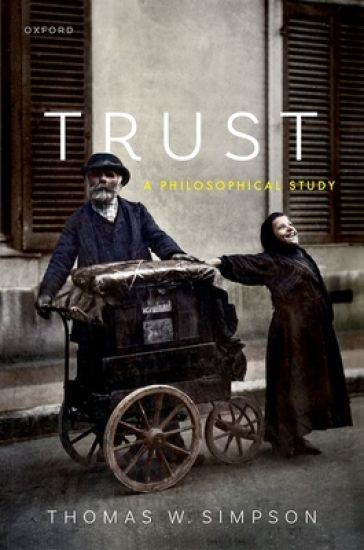
Trust

Trust

Thomas W. Simpson

Oxford University Press
2023
sidottu
Trust and trustworthiness are core social phenomena, at the heart of most everyday interactions. Yet they are also puzzling: while it matters to us that we place trust well, trusting people who will not let us down, both also seem to involve morally driven attitudes and behaviours. Confronted by whether I should trust another, this tension creates very practical dilemmas. In Trust, Thomas Simpson addresses the foundational question, why should I trust? Philosophical treatments of trust have tended to focus on trying to identify what the attitude of trust consists in. Simpson argues that this approach is misguided, giving rise to merely linguistic debates about how the term 'trust' is used. Instead, he focuses attention on the ways that trust is valuable. The answer defended comprises two claims, which at first seem to be in tension. One is a form of evidentialism about trust: normally, your trust should be based on the evidence you have for someone's trustworthiness. But, second, someone's word is normally enough to settle for you whether you should trust them. Social norms of trustworthiness explain why both are normal. Methodologically innovative, Trust also applies the account , addressing how cultures of trust can be sustained, and the implications of trust in God. While it is a philosophical essay, the book is written in a way that presumes no prior knowledge of philosophy, to be accessible to the scholars from the many disciplines also attracted and puzzled by trust.
Thriving Under Stress

Thriving Under Stress

Thomas W. Britt; Steve M. Jex

Oxford University Press Inc
2015
sidottu
What helps employees to perform well and stay healthy under high levels of stress? What are the factors that distinguish those employees? What are the best ways to recover from a stressful day at work? How can employees proactively address stressors they encounter at work, and how can they move from "coping" to "thriving"? Can stress even have positive consequences? Most employees can recall times when they have dealt with the stress they were under at work, even coming out stronger as a result of performing well under difficult conditions. Yet many approaches to stress at work view stress as a toxic experience that should be avoided at all costs, and do not recognize how stress might be used to facilitate personal growth, professional development, and higher levels of performance. In this book, Britt and Jex describe how stressful working conditions can produce positive outcomes when employees approach demands in the right way, focus on the meaning and significance of their work, and recover appropriately from stressful working conditions, both during the day and when at home. The book encourages employees to view themselves as active constructors of their work environment who are capable of proactively addressing many of the demands they encounter, instead of being passive recipients of work stressors. To help readers reach the goal of thriving under stressful work, application exercises are provided in each chapter of the book. In these exercises, employees consider how they are currently responding to work stressors, how they might identify the significance and importance of their work, and identify ways they can better recover from work demands. Given the importance of managers in creating the conditions necessary for employees to thrive under stressful conditions, each chapter also includes a box with recommendations for managers who are looking to reduce the negative effects of stress at work, enhance the positive effects, and create a work environment where employees can thrive.
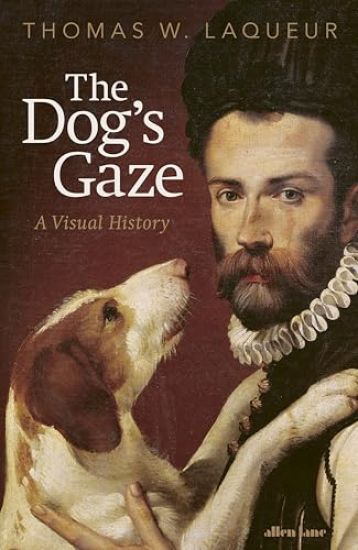
The Dog's Gaze

The Dog's Gaze

Thomas W. Laqueur

PENGUIN BOOKS LTD
2026
sidottu
What do dogs do in art? Long before the phrase ‘man’s best friend’ became common parlance, dogs were already standing beside us in art as in life. In The Dog’s Gaze, the historian Thomas W. Laqueur invites us to explore why they feature more than any other animal in the ways in which we picture ourselves and our stories. Dogs have been ubiquitous in the worldmaking of visual artists as far back as the Palaeolithic age. Looking across the western tradition, from Giotto to Goya and Rubens to Rego, Laqueur shows what their presence – as hunting partners, beloved friends and even conduits to the afterlife – reveals about our own ways of seeing and how we want to be remembered. Far from being mere motifs, dogs are an integral and intentional element of the images in which they appear: they provide narrative coherence; they look out and bear witness, often on the artist’s behalf; they illuminate our understanding of morality and melancholy and some, like us, become celebrities. Indeed, as the author shows, dogs in art are our social doppelgängers, our companions in looking and being. Richly illustrated and lovingly written, The Dog’s Gaze is a unique visual history that examines the shared social history of our two species and offers fresh insights into the human condition through the eyes of our canine companions.
The Power of Consciousness and the Force of Circumstances in Sartre's Philosophy
"Displaying a masterful grasp of the texts, the author shows how otherness forces itself upon the existentialist Sartre, gradually constraining him to modify his understanding of consciousness as omnipotent. The issue is Sartre's discovery of the social and its conceptual assimilation into his individualistic, consciousness-oriented philosophy." —Thomas R. Flynn "This very successful and accessible scholarly book . . . is simultaneously a succinct and clear overview of Sartre's philosophical works. . . . and a fresh consideration of Sartre's body of work." —Choice "Busch's admirably clear and compact discussion is essential reading for Sartre scholars, since it powerfully addresses many issues dividing them . . . " —Ethics " . . . a useful overview of the evolution of Sartre's thought . . . " —Review of Politics " . . . a thought provoking reassessment of Sartre's philosophical career." —Man and World " . . . succinct, richly documented survey . . . " —International Studies in Philosophy
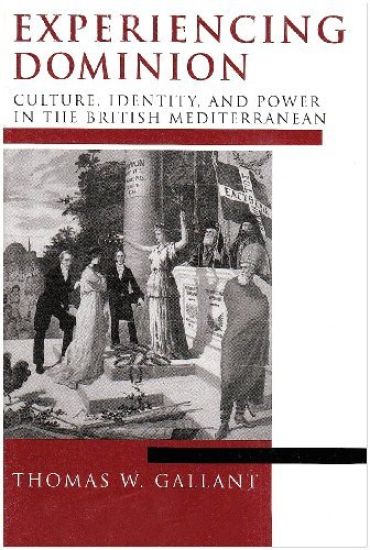
Experiencing Dominion

Experiencing Dominion

Thomas W. Gallant

University of Notre Dame Press
2002
sidottu
Experiencing Dominion contributes to ongoing debates on hegemony, power, and identity in contemporary historical and anthropological literature through an examination of the imperial encounter between the British and the Greeks of the Ionian Islands during the nineteenth century. Each chapter focuses on a different aspect of the imperial encounter, with topics including identity construction, the contestation over civil society, gender and the manipulation of public space, hegemony and accommodation, the role of law and of the institutions of criminal justice, and religion and imperial dominion. Thomas Gallant—widely recognized as one of the leading scholars in historical anthropology— argues that a great deal can be learned about colonialism in general through an analysis of the Ionian Islands, precisely because that colonial encounter was so atypical. For example, Gallant demonstrates that because the Ionian Greeks were racially white, Christian, and descendents of Europe's classical forebears, the process of colonial identity formation was more ambiguous and complex than elsewhere in the Empire where physical and cultural distinctions were more obvious. Colonial officers finally decided the Ionian Greeks were "Mediterranean Irish" who should be treated like European savages. Experiencing Dominion pushes contemporary literature on historical anthropology in a new direction by moving the discussion away from an emphasis on a simple polarity between hegemony and resistance, and instead focusing on the shared interactions between colonizers and colonized, rulers and ruled, foreigners and locals. In this important study, Gallant emphasizes contingency and historical agency, examines intentionality, and explores the processes of accommodation and, when warranted, resistance. In so doing, he reconstructs the world Britons and Greeks made together on the Ionian Islands during the nineteenth century through their shared experience of dominion.
Experiencing Dominion

Experiencing Dominion

Thomas W. Gallant

University of Notre Dame Press
2002
nidottu
Experiencing Dominion contributes to ongoing debates on hegemony, power, and identity in contemporary historical and anthropological literature through an examination of the imperial encounter between the British and the Greeks of the Ionian Islands during the nineteenth century. Each chapter focuses on a different aspect of the imperial encounter, with topics including identity construction, the contestation over civil society, gender and the manipulation of public space, hegemony and accommodation, the role of law and of the institutions of criminal justice, and religion and imperial dominion. Thomas Gallant—widely recognized as one of the leading scholars in historical anthropology— argues that a great deal can be learned about colonialism in general through an analysis of the Ionian Islands, precisely because that colonial encounter was so atypical. For example, Gallant demonstrates that because the Ionian Greeks were racially white, Christian, and descendents of Europe's classical forebears, the process of colonial identity formation was more ambiguous and complex than elsewhere in the Empire where physical and cultural distinctions were more obvious. Colonial officers finally decided the Ionian Greeks were "Mediterranean Irish" who should be treated like European savages. Experiencing Dominion pushes contemporary literature on historical anthropology in a new direction by moving the discussion away from an emphasis on a simple polarity between hegemony and resistance, and instead focusing on the shared interactions between colonizers and colonized, rulers and ruled, foreigners and locals. In this important study, Gallant emphasizes contingency and historical agency, examines intentionality, and explores the processes of accommodation and, when warranted, resistance. In so doing, he reconstructs the world Britons and Greeks made together on the Ionian Islands during the nineteenth century through their shared experience of dominion.
Contested Treasure

Contested Treasure

Thomas W. Barton

Pennsylvania State University Press
2014
sidottu
In Contested Treasure, Thomas Barton examines how the Jews in the Crown of Aragon in the twelfth through fourteenth centuries negotiated the overlapping jurisdictions and power relations of local lords and the crown. The thirteenth century was a formative period for the growth of royal bureaucracy and the development of the crown’s legal claims regarding the Jews. While many Jews were under direct royal authority, significant numbers of Jews also lived under nonroyal and seigniorial jurisdiction. Barton argues that royal authority over the Jews (as well as Muslims) was far more modest and contingent on local factors than is usually recognized. Diverse case studies reveal that the monarchy’s Jewish policy emerged slowly, faced considerable resistance, and witnessed limited application within numerous localities under nonroyal control, thus allowing for more highly differentiated local modes of Jewish administration and coexistence. Contested Treasure refines and complicates our portrait of interfaith relations and the limits of royal authority in medieval Spain, and it presents a new approach to the study of ethnoreligious relations and administrative history in medieval European society.
Contested Treasure

Contested Treasure

Thomas W. Barton

Pennsylvania State University Press
2015
pokkari
In Contested Treasure, Thomas Barton examines how the Jews in the Crown of Aragon in the twelfth through fourteenth centuries negotiated the overlapping jurisdictions and power relations of local lords and the crown. The thirteenth century was a formative period for the growth of royal bureaucracy and the development of the crown’s legal claims regarding the Jews. While many Jews were under direct royal authority, significant numbers of Jews also lived under nonroyal and seigniorial jurisdiction. Barton argues that royal authority over the Jews (as well as Muslims) was far more modest and contingent on local factors than is usually recognized. Diverse case studies reveal that the monarchy’s Jewish policy emerged slowly, faced considerable resistance, and witnessed limited application within numerous localities under nonroyal control, thus allowing for more highly differentiated local modes of Jewish administration and coexistence. Contested Treasure refines and complicates our portrait of interfaith relations and the limits of royal authority in medieval Spain, and it presents a new approach to the study of ethnoreligious relations and administrative history in medieval European society.
Posters for Peace

Posters for Peace

Thomas W. Benson

Pennsylvania State University Press
2015
sidottu
By the spring of 1970, Americans were frustrated by continuing war in Vietnam and turmoil in the inner cities. Students on American college campuses opposed the war in growing numbers and joined with other citizens in ever-larger public demonstrations against the war. Some politicians-including Ronald Reagan, Spiro Agnew, and Richard Nixon-exploited the situation to cultivate anger against students. At the University of California at Berkeley, student leaders devoted themselves, along with many sympathetic faculty, to studying the war and working for peace. A group of art students designed, produced, and freely distributed thousands of antiwar posters. Posters for Peace tells the story of those posters, bringing to life their rhetorical iconography and restoring them to their place in the history of poster art and political street art. The posters are vivid, simple, direct, ironic, and often graphically beautiful. Thomas Benson shows that the student posters from Berkeley appealed to core patriotic values and to the legitimacy of democratic deliberation in a democracy-even in a time of war.
Posters for Peace

Posters for Peace

Thomas W. Benson

Pennsylvania State University Press
2016
pokkari
By the spring of 1970, Americans were frustrated by continuing war in Vietnam and turmoil in the inner cities. Students on American college campuses opposed the war in growing numbers and joined with other citizens in ever-larger public demonstrations against the war. Some politicians—including Ronald Reagan, Spiro Agnew, and Richard Nixon—exploited the situation to cultivate anger against students. At the University of California at Berkeley, student leaders devoted themselves, along with many sympathetic faculty, to studying the war and working for peace. A group of art students designed, produced, and freely distributed thousands of antiwar posters. Posters for Peace tells the story of those posters, bringing to life their rhetorical iconography and restoring them to their place in the history of poster art and political street art. The posters are vivid, simple, direct, ironic, and often graphically beautiful. Thomas Benson shows that the student posters from Berkeley appealed to core patriotic values and to the legitimacy of democratic deliberation in a democracy—even in a time of war.
Nicaragua

Nicaragua

Thomas W. Walker

Praeger Publishers Inc
1985
sidottu
This timely book, with its useful and comprehensive index, is an insightful study of Nicaragua that should be read by any student of foreign affairs. Journal of Internal Law & PoliticsThis book is an examination of the evolving social and political atmosphere during the first half decade after the Sandinist revolution. Written by eminent scholars and participants Nicaragua documents the rapid social change that has occurred during the last five years. The essays focus on agrarian reform, education, health care, food policy, and Nicaragua's relations with the U.S., Latin America, Europe, and the non-alligned and socialist bloc nations.
The Laws of Genocide

The Laws of Genocide

Thomas W. Simon

Praeger Publishers Inc
2007
sidottu
The tools of reason offer the best hope for the international community to confront the increasing incidents of hate throughout the world. A historically informed, normative examination of the elements of the crime of genocide provides an excellent case study of how the law, reason's handmaiden, enhances understanding and improves practical ways of dealing with global injustices.How should we confront hate? As political activists, we could resort to fighting hate with hate. As concerned citizens, we could consciously ignore or actively protest hate. As committed educators, we could put the implements and survivors of hate on display. As committed scholars, we could resuscitate the idea of evil. As humanitarian jurists, we could put individual hate-mongers on trial. Part I of this book makes a case for making the maximum use of reason to deal with hate. This means that we should actively debate those who promote hate. Further, as a close look at the history of applying law to incidents of hate and violence illustrates, the courtroom proves to be an excellent place to demonstrate the virtues of applying the tools of reason, not to global evils, but to the grave injustices of the world.In Part II, Simon demonstrates the power of legal analysis in enhancing our understanding of genocide, probably the worst injustice imaginable. A close examination of each purported element of the crime of genocide redirects misguided turns taken by international jurists. Contrary to a more realistic perspective adopted at the Nuremberg trials, jurists have mistakenly modeled international criminal law on national criminal law, which focuses on individual responsibility. However, the cases of grave injustices throughout the 20th century amply demonstrate the primary collective responsibility underlying incidences of genocide. The failure to prosecute criminal organizations for genocide has and will continue to have disastrous results. While the Nuremberg tribunal at least disbanded the responsible Nazi organizations, current war crimes tribunals have allowed organizations responsible for the Rwandan genocide to continue to wreak havoc throughout Central Africa. If the international community cannot forge a common understanding of genocide, then it has little hope of establishing an international legal order or a global ethics.