A second hand Volvo ... really? Yes! Forget about what you thought you knew – the right 700 or 900 series could be the best car you’ve ever bought, and this book is your essential guide to finding, assessing and buying the best car for you. Packed with information, illustrations and advice from a real marque expert, you’ll be taken through detailed sections on what you need to know to decide which model is for you. Find out what it’s like living with the car, how much you should be paying and how, when, and where to inspect models for sale, including a comprehensive condition checklist and guide to common concerns. You’ll also discover what’s involved in restoring, the main problems caused by lack of use, and potential for modification. For reference, there’s a vital statistics list for each model, shape and engine, and a guide to the key people, organisations and companies within the Volvo community that you can look to for further advice.
He was hoping for some excitement. Time-jumping to the Bolshevik Revolution was not what he had in mind... 2008. Sterling Ryder's best response to his unrelenting boss and his mean ex is his bottomless well of sarcasm. So when his witty retorts seem to have little effect, he jets off to Russia in the hope of some far-flung fun. But the welcoming committee consists of some sickly old guy offering a medallion capable of traveling through time... Skeptical at first, a quick trip to 1917 and Rasputin's assassination has Ryder returning to the present convinced. But when his next excursion takes him to 1932 Leningrad, he's plagued by uncontrollable bouts of deep sleep, pursued by a British agent, and protected by a talking, vodka-swilling hedgehog. And just when he thinks it can't get worse, someone steals the amulet. Can Ryder bumble his way back to where he belongs before he's dead to the world for good? Sidewise is the hilarious first book in The Time Ryder Cycles time-travel fantasy series. If you like quirky characters, snappy banter, and a giant Slavic splash of hijinks, then you'll love Tim A. Mills's madcap caper.
Provides everything there is to know about plastics - comprehensively compiled in a compact and well organised format. From material properties to machines, processing, and applications, the user will find detailed information that will allow the successful implementation of new materials and technologies.
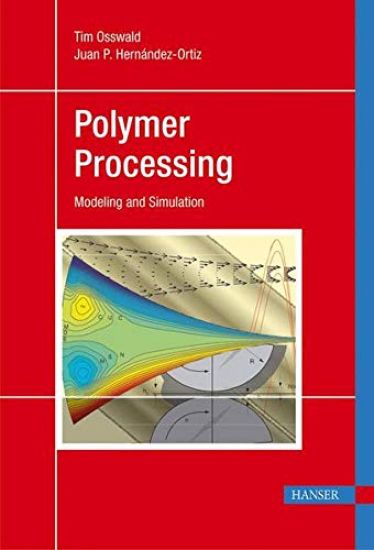
Addresses traditional polymer processing as well as the emerging technologies associated with the plastics industry in the 21st century, and combines engineering modelling aspects with computer simulation of realistic polymer processes. The book is designed to provide a polymer processing background to engineering students and practicing engineers.
?Software is continuously increasing in complexity. Paradigmatic shifts and new development frameworks make it easier to implement software – but not to test it. Software testing remains to be a topic with many open questions with regard to both technical low-level aspects and to the organizational embedding of testing. However, a desired level of software quality cannot be achieved by either choosing a technical procedure or by optimizing testing processes. In fact, it requires a holistic approach.This Brief summarizes the current knowledge of software testing and introduces three current research approaches. The base of knowledge is presented comprehensively in scope but concise in length; thereby the volume can be used as a reference. Research is highlighted from different points of view. Firstly, progress on developing a tool for automated test case generation (TCG) based on a program’s structure is introduced. Secondly, results from a project with industry partners on testing best practices are highlighted. Thirdly, embedding testing into e-assessment of programming exercises is described.
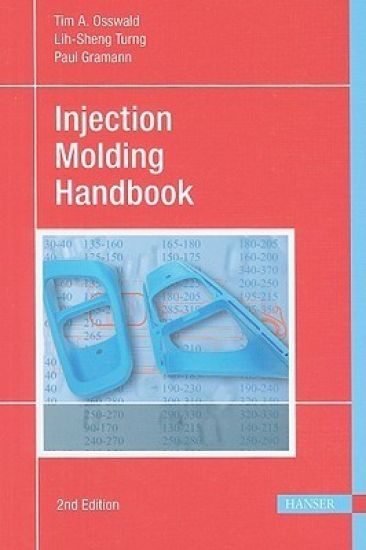
The injection molding industry has a new, up-to-date, comprehensive handbook. Serving engineers, professionals, and others involved in this important industry sector, the handbook thoroughly covers every detail of the machine and the process. This all-encompassing resource also includes the topics directly affecting the injection molding process, such as materials, process control, simulation, design, and troubleshooting. The handbook presents a well-rounded overview of the underlying theory and physics that control the common injection molding process variation, without losing the practical hands-on presentation used throughout. This important book was written by a specifically chosen group of authors with a wide range of experience and perspective on the injection molding process - authors who are leading practitioners and researchers both in industry and academia. Contents: Injection Molding Materials. Processing. Plasticating Unit. Clamping Unit. Mold Design. Materials Handling and Auxiliary Equipment. SPC in Injection Molding. Special Injection Molding Processes. Injection Molded Part Design. Simulation in Injection Molding. Process Trouble Shooting. Materials Trouble Shooting.
This book addresses traditional polymer processing as well as the emerging technologies associated with the plastics industry in the 21st century and combines engineering modeling aspects with computer simulation of realistic polymer processes. This book provides a polymer processing background to engineering students and practicing engineers. It is a three-part textbook written for a two-semester polymer processing series in mechanical and chemical engineering. The first and second part of the book are designed for a senior- to graduate-level course, introducing polymer processing, and the third part is for a graduate course on simulation in polymer processing. Throughout the book, many applications are presented in form of examples and illustrations. These also serve the practicing engineer as a guide when determining important parameters and factors during the design process or when optimizing a process. Examples are presented throughout the book, and problems and solutions are available.
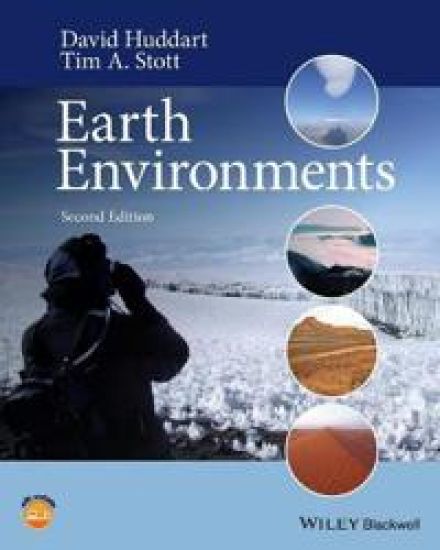
Comprehensive coverage of the whole Earth system throughout its entire existence and beyond Complete with a new introduction by the authors, this updated edition helps provide an understanding of the past, present, and future processes that occur on and in our Earth—the fascinating, yet potentially lethal, set of atmospheric, surface, and internal processes that interact to produce our living environment. It introduces students to our planet’s four key interdependent systems: the atmosphere, lithosphere, hydrosphere and biosphere, focusing on their key components, the interactions between them, and environmental change. The book also uses geological case studies throughout, in addition to the modern processes. Topics covered in the Second Edition of Earth Environments: Past, Present and Future include: an Earth systems model; components systems and processes; atmospheric systems; oceanography; surface and internal geological systems; biogeography; and aspects of Earth's record. The book also discusses the impact of climate and environmental change in a final chapter that draws together Earth's systems and their evolution, and looks ahead to potential future changes in Earth’s environments. Updated to include all the major developments since 2008Features research boxes containing summaries based on recent key journal articlesIncludes a companion web site containing multiple choice revision quizzes for students, PowerPoint slides for lecturers, useful links, and morePresents further reading for each topic so that students can build their knowledge base to underpin their own undergraduate research project/dissertationOffers additional case studies in each chapter for enhanced reader understanding Earth Environments: Past, Present and Future is an excellent text for undergraduates in geosciences, environmental science, physical geography, natural hazards, and ecology.
Justice, mercy, and the public good all find meaning in relationshipâa relationship dependent upon fidelity, but endlessly open to the betrayals of infidelity. This paradox defines the story of God and Israel in the Old Testament. Yet the arc of this story reaches ever forward, and its trajectory confers meaning upon human relationships and communities in the present. The Old Testament still speaks. Israel, in the Old Testament, bears witness to a God who initiates and then sustains covenantal relationships. God, in mercy, does so by making promises for a just well-being and prescribing stipulations for the covenant partner's obedience. The nature of the relationship itself decisively depends upon the conduct, practice, and policy of the covenant partner, yet is radically rooted in the character and agency of Godâthe One who makes promises, initiates covenant, and sustains relationship. This reflexive, asymmetrical relationship, kept alive in the texts and tradition, now fires contemporary imagination. Justice becomes shaped by the practice of neighborliness, mercy reaches beyond a pervasive quid pro quo calculus, and law becomes a dynamic norming of the community. The well-being of the neighborhood, inspired by the biblical texts, makes possibleâand even insists uponâan alternative to the ideology of individualism that governs our society's practice and policy. This kind of community life returns us to the arc of God's giftsâmercy, justice, and law. The covenant of God in the witness of biblical faith speaks now and demands that its interpreting community resist individualism, overcome commoditization, and thwart the rule of empire through a life of radical neighbor love.
This book is designed to provide a background in polymer rheology to both engineering students and practicing engineers. It is written at an intermediate level with sufficient technical information and practical examples to enable the reader to understand the interesting and complex rheological behavior of polymers, to make the right decisions regarding rheological testing methods, and to troubleshoot rheology related problems encountered in polymer processing. The organization of the book and the practical examples throughout make it an ideal textbook and reference source. Processors and raw material suppliers will find the information within particularly valuable. Rheology is a rapidly growing and industrially important field, playing a significant role not only in polymer processing, but also in food processing, coating and printing, and many other manufacturing processes.
A comprehensive introduction to optimization with a focus on practical algorithms for the design of engineering systems.This book offers a comprehensive introduction to optimization with a focus on practical algorithms. The book approaches optimization from an engineering perspective, where the objective is to design a system that optimizes a set of metrics subject to constraints. Readers will learn about computational approaches for a range of challenges, including searching high-dimensional spaces, handling problems where there are multiple competing objectives, and accommodating uncertainty in the metrics. Figures, examples, and exercises convey the intuition behind the mathematical approaches. The text provides concrete implementations in the Julia programming language. Topics covered include derivatives and their generalization to multiple dimensions; local descent and first- and second-order methods that inform local descent; stochastic methods, which introduce randomness into the optimization process; linear constrained optimization, when both the objective function and the constraints are linear; surrogate models, probabilistic surrogate models, and using probabilistic surrogate models to guide optimization; optimization under uncertainty; uncertainty propagation; expression optimization; and multidisciplinary design optimization. Appendixes offer an introduction to the Julia language, test functions for evaluating algorithm performance, and mathematical concepts used in the derivation and analysis of the optimization methods discussed in the text. The book can be used by advanced undergraduates and graduate students in mathematics, statistics, computer science, any engineering field, (including electrical engineering and aerospace engineering), and operations research, and as a reference for professionals.
A broad introduction to algorithms for decision making under uncertainty, introducing the underlying mathematical problem formulations and the algorithms for solving them. Automated decision-making systems or decision-support systems--used in applications that range from aircraft collision avoidance to breast cancer screening--must be designed to account for various sources of uncertainty while carefully balancing multiple objectives. This textbook provides a broad introduction to algorithms for decision making under uncertainty, covering the underlying mathematical problem formulations and the algorithms for solving them. The book first addresses the problem of reasoning about uncertainty and objectives in simple decisions at a single point in time, and then turns to sequential decision problems in stochastic environments where the outcomes of our actions are uncertain. It goes on to address model uncertainty, when we do not start with a known model and must learn how to act through interaction with the environment; state uncertainty, in which we do not know the current state of the environment due to imperfect perceptual information; and decision contexts involving multiple agents. The book focuses primarily on planning and reinforcement learning, although some of the techniques presented draw on elements of supervised learning and optimization. Algorithms are implemented in the Julia programming language. Figures, examples, and exercises convey the intuition behind the various approaches presented.
Coal and Coalbed Gas: Future Directions and Opportunities, Second Edition introduces the latest in coal geology research and the engineering of gas extraction. Importantly, the second edition examines how, over the last 10 years, research has both changed focus and where it is conducted. This shift essentially depicts "a tale of two worlds"—one half (Western Europe, North America) moving away from coal and coalbed gas research and production towards cleaner energy resources, and the other half (Asia–Pacific region, Eastern Europe, South America) increasing both research and usage of coal. These changes are marked by a precipitous fall in coalbed gas production in North America; however, at the same time there has been a significant rise in coal and coalbed gas production in Australia, China, and India. The driver for higher production and its associated research is a quest for affordable energy and economic security that a large resource base brings to any country like Australia’s first large-scale coalbed gas to liquid natural gas projects supplying the demand for cleaner burning LNG to the Asian-Pacific region. Since the last edition of this book, global climate change policies have more forcibly emphasized the impact of methane from coal mines and placed these emissions equal to, or even more harmful than, CO2 emissions from fossil fuels in general. Governmental policies have prioritized capture, use, and storage of CO2, burning coal in new highly efficient low emission power plants, and gas pre-drainage of coal mines. The Organization for Economic Cooperation and Development (OECD) countries and China are also introducing new research into alternative, non-fuel uses for coal, such as carbon fibers, nanocarbons, graphene, soil amendments, and as an unconventional ore for critical elements. New to this edition: Each chapter is substantially changed from the 1st edition including expanded and new literature citations and reviews, important new data and information, new features and materials, as well as re-organized and re-designed themes. Importantly, three new chapters cover global coal endowment and gas potential, groundwater systems related to coalbed gas production and biogenic gas generation as well as the changing landscape of coal and coalbed gas influenced by global climate change and net-zero carbon greenhouse gas emissions. FOREWORD When I reviewed the first edition of this book, my initial thought was, "Do we need another book on coal geology?" and then I read it and realised, "Yes, we need this book" and my students downloaded copies as soon as it was available. So now we come to 2023, and a lot has happened in the past decade. For a different reason we might ask if we still need this book, or even coal geoscientists and engineers, as the world aims for rapid decarbonisation of the energy sector and a reduction of coal as a feedstock for industrial resources, like steel manufacture. Natural gas is earmarked as a transition fuel to enable the shift to renewables. In some basins, the source of that gas is directly from coalbed gas production or from conventional reservoirs that were charged by coal and terrestrial organic source rocks. Although the transition is escalating, there are projections that coal will remain part of our future, even after 2050, and can also provide alternative non-fuel resources (e.g., critical elements and carbon-based nanomaterials). Between now and then, we’d best ensure that we extract and utilise coal and coalbed gas as efficiently and safely as possible, that we mitigate any environmental and social impact of the process, and that we improve our certainty of predicting the behaviour of the material and material impacts. To do this we need to understand coal as a material and the inherent variability of its quality and behaviour as a source rock and host of coalbed gas. One can change the technologies but not the geological ground conditions or coal character of the targeted resource. The authors have taken on this ambitious endeavour during their careers and have attempted to capture their knowledge gained from first-hand experience in countries around the world and comprehensive review of published material, within this book. At least three generations of knowledge are drawn upon here. Tim Moore was a student of both Romeo Flores and his supervisor John Ferm, who was the "Warrior of Gentleness" when it came to coal research, teaching, and supervision. This book also reflects the broad and multidisciplinary aspects of coal geology and coal science and provides the tenets for one to understand different disciplines and how they interact to form an integrated view of the resource—technically, economically, and politically. Each chapter takes the reader through different concepts, first setting the scene by examining the status of coal and coalbed gas in a carbon-conscious world, then looking at the science behind coal as a source of gas and as a reservoir- in its own right. Further reading leads to learning about geological settings and the processes through time that led to present-day endowments around the globe and this theme continues throughout the book with detailed examples from different countries. Personally, I like the emphasis on the depositional environments that lead to peat accumulation and preservation—it’s all about the ingredients—which leads nicely into the world of coal macerals and minerals, and why they matter. Coalification and its role in changing the chemistry and material properties of coal is covered from a reservoir perspective, as is the role of biogenic processes. These have produced some of the enormous gas resources we exploit today and could also provide a future circular economy for neo-biogenic gas. The role of groundwater in this past and potentially future endeavour is presented, along with possible adverse effects where there is unexpected communication with regional and local aquifers and surface assets that detract from environmental and social licence. In addition to describing the geology and engineering technologies required to explore for, access, and utilise these resources, the book also provides insights into geostatistical and economic modelling for reserves estimation and challenges as reservoirs become more geologically and politically complex for extraction and alternatively, for injection and carbon sequestration. The final chapters revisit and integrate concepts presented in the book in order to examine global gas production and the geographic shifts in production and research that have occurred over the past decade(s). The also show how government and the market play a role, and project future trends. The authors provide discussion points for the outlook of coal as a fuel feedstock in a carbon-constrained world and the ongoing search for options and alternative non-fuel uses of coal while highlighting the important role that coal and coalbed gas still play during the transition period and beyond. There is much to learn from this book, which is based on decades of observing and interpreting patterns and trends in coal and coal-bearing basins. There is a growing trend towards using machine learning and artificial intelligence to find patterns in data and provide solutions. I’d suggest that domain intelligence, such as that provided in this book, is critical to supervising this process and is required for understanding and validating the outputs upon which many decisions are made and will continue to be made in the future. So yes, we need this book and I invite you to read, learn, and form your own ideas. If you find any gaps—write about them. Joan S. Esterle Emeritus Professor Vale Chair of Coal Geosciences The University of Queensland, AustraliaMay 2023