When it comes to swimming holes, we can define pros in a variety of ways. You may have already purchased this book's predecessor, Swimming Holes of California, and visited many, if not all, of its swimming holes. This makes you a pro based on experience. Another type of pro seeks out swimming holes with cliffs for jumping, while other pros like to backpack miles into the wilderness in search of freedom and solitude. Whether you enjoy one or all of the above activities, we've designed this book to meet your needs. No matter which pro option you pursue, this book will have something for you.
Volume II documents a nineteenth-century literary celebrity's decision to commit herself to the cause of woman's rights. The first volume of this series revealed a feminist sensibility in the subtexts of Elizabeth Oakes Smith's early poetry, fiction, and memoir. Volume II traces the sharp turn in her career at mid-century: a multidimensional effort involving newspaper editorial, a lecture career extending as far as Louisville and Chicago, and throughout these efforts, an attempt to garner the support to inaugurate the first journal owned and edited by women dedicated to the cause of woman's empowerment. Featured are fully annotated editions of two of Oakes Smith's treatises published in the early 1850s (Woman and Her Needs and Hints on Dress and Beauty), along with her most popular lecture, ""The Dignity of Labor."" Correspondence collected and edited here for the first time between Oakes Smith and Wendell Phillips, William Lloyd Garrison, Lucretia Mott, Horace Greeley, and other reform leaders of the period regarding her projected journal, the The Egeria, reveal the economic challenges faced by radical leaders in the Antebellum period.
Have you ever wondered how the Lord sustained Martin Luther through one of the most personally and spiritually intense times in the history of Christendom? And does God still do this today? The answer is yes They Need Not Go Away is a practical book identifying and teaching modern-day Millennials and Gen Zers about Lutheran spirituality. It offers prayer practices designed and applied by Martin Luther, the Reformer, for modern families, individuals, adults, and teenagers. These spiritual practices are also applied to the modern Christian. To support these practices and the Lutheran contribution to Christian spirituality, this volume traces the influences of Martin Luther's piety from pre-Reformation influencers to Dr. Luther as he navigated the tremendous social, cultural, and ecclesiastical pressures of his time. His spirituality is then traced through the next generations of Orthodoxy and Pietism identifying the shifts away from the affective aspects of Lutheran spirituality and elevation of the academic and more cognitive characteristics received in the twentieth century. The goal is to recapture the wholistic spirituality including the cognitive, affective, and experiential features. These are still useful in the hands of the Lord for today's believers.
Have you ever wondered how the Lord sustained Martin Luther through one of the most personally and spiritually intense times in the history of Christendom? And does God still do this today? The answer is yes They Need Not Go Away is a practical book identifying and teaching modern-day Millennials and Gen Zers about Lutheran spirituality. It offers prayer practices designed and applied by Martin Luther, the Reformer, for modern families, individuals, adults, and teenagers. These spiritual practices are also applied to the modern Christian. To support these practices and the Lutheran contribution to Christian spirituality, this volume traces the influences of Martin Luther's piety from pre-Reformation influencers to Dr. Luther as he navigated the tremendous social, cultural, and ecclesiastical pressures of his time. His spirituality is then traced through the next generations of Orthodoxy and Pietism identifying the shifts away from the affective aspects of Lutheran spirituality and elevation of the academic and more cognitive characteristics received in the twentieth century. The goal is to recapture the wholistic spirituality including the cognitive, affective, and experiential features. These are still useful in the hands of the Lord for today's believers.
This volume is one of several that examines the National Gallery of Art's distinguished collection of decorative arts. (The second volume will be published in 1996.) The group treated here is composed primarily of works acquired from the Widener Collection, and amplified by holdings acquired from the Kress family. Included are more than eighty Medieval, Renaissance, and later historic objects in a wide variety of media, encompassing metalwork, stained glass, enamels, ceramics, and jewels. Among the highlights are a Limoges reliquary chasse, a Mosan lion aquamanile, thirty-eight pieces in a remarkable cohesive group of Italian maiolica, three of the very rare pottery objects known as 'Saint-Porchaire', and, the centerpiece of the collection, the Suger chalice, an ancient sardonyx cup to which the Abbot Suger added a bejewelled golden setting in the twelfth century. Like other volumes in the Systematic Catalogue of the National Gallery of Art Collections,Western Decorative Arts includes a thoroughly researched entry for each object, together with an artist biography, up-to-date bibliography, and a technical analysis.
THE CRITICAL WORK IN GLOBAL HEALTH, NOW COMPLETELY REVISED AND IN PAPERBACK "This book compels us to better understand the contexts in which health problems emerge and the forces that underlie and propel them." -Archbishop Emeritus Desmond Mpilo Tutu H1N1. Diabetes. Ebola. Zika. Each of these health problems is rooted in a confluence of social, political, economic, and biomedical factors that together inform our understanding of global health. The imperative for those who study global health is to understand these factors individually and, especially, synergistically. Fully revised and updated, this fourth edition of Oxford's Textbook of Global Health offers a critical examination of the array of societal factors that shape health within and across countries, including how health inequities create consequences that must be addressed by public health, international aid, and social and economic policymaking. The text equips students, activists, and health professionals with the building blocks for a contextualized understanding of global health, including essential threads that are combined in no other work: · historical dynamics of the field · the political economy of health and development · analysis of the current global health structure, including its actors, agencies, and activities · societal determinants of health, from global trade and investment treaties to social policies to living and working conditions · the role of health data and measuring health inequities · major causes of global illness and death, including under crises, from a political economy of health vantage point that goes beyond communicable vs. non-communicable diseases to incorporate contexts of social and economic deprivation, work, and globalization · the role of trade/investment and financial liberalization, precarious work, and environmental degradation and contamination · principles of health systems and the politics of health financing · community, national, and transnational social justice approaches to building healthy societies and practicing global health ethically and equitably Through this approach the Textbook of Global Health encourages the reader -- be it student, professional, or advocate -- to embrace a wider view of the global health paradigm, one that draws from political economy considerations at community, national, and transnational levels. It is essential and current reading for anyone working in or around global health.
The Critial Work in Global Heath, Now Completely Revised and Updated "This book compels us to better understand the contexts in which health problems emerge and the forces that underlie and propel them." -Archbishop Emeritus Desmond Mpilo Tutu H1N1. Diabetes. Ebola. Zika. Each of these health problems is rooted in a confluence of social, political, economic, and biomedical factors that together inform our understanding of global health. The imperative for those who study global health is to understand these factors individually and, especially, synergistically. Fully revised and updated, this fourth edition of Oxford's Textbook of Global Health offers a critical examination of the array of societal factors that shape health within and across countries, including how health inequities create consequences that must be addressed by public health, international aid, and social and economic policymaking. The text equips students, activists, and health professionals with the building blocks for a contextualized understanding of global health, including essential threads that are combined in no other work: DT historical dynamics of the field DT the political economy of health and development DT analysis of the current global health structure, including its actors, agencies, and activities DT societal determinants of health, from global trade and investment treaties to social policies to living and working conditions DT the role of health data and measuring health inequities DT major causes of global illness and death, including under crises, from a political economy of health vantage point that goes beyond communicable vs. non-communicable diseases to incorporate contexts of social and economic deprivation, work, and globalization DT the role of trade/investment and financial liberalization, precarious work, and environmental degradation and contamination DT principles of health systems and the politics of health financing DT community, national, and transnational social justice approaches to building healthy societies and practicing global health ethically and equitably Through this approach the Textbook of Global Health encourages the reader -- be it student, professional, or advocate -- to embrace a wider view of the global health paradigm, one that draws from political economy considerations at community, national, and transnational levels. It is essential and current reading for anyone working in or around global health.
Surgical Pathology Dissection, Second Edition fills the need for a comprehensive, fully illustrated guide to the preparation, dissection, and handling of surgical pathology specimens. The authors share their wealth of talent and experiences by providing general principles that can be employed to resolve even the most complex problems in dissection and tissue sampling. The descriptive text is augmented by 62 exclusive, detailed illustrations printed as full-page plates depicting proper specimen handling techniques that add a unique vitality and multidimensional effect. Each chapter features a section on Important Issues to Address in Your Surgical Pathology Report and references selected for their pertinent coverage of specimen handling for each organ system. Updated and revised, this second edition includes four new chapters and expanded discussions on: Preparation of Tissues for Molecular Analysis; Craniofacial Bones; Heart; Transplantation Specimens; The Sentinel Lymph Node. Revisions have been made to conform to suggested guidelines proposed by the College of American Pathologists. From reviews of the first edition: "Hruban, Westra and Isacson, working with a superb medical illustrator did an admirable job in taking the Johns Hopkins' gross room manual and translating it into a practical, concise, and easily accessible guide to contemporary practice in the surgical pathology laboratory." (Modern Pathology)
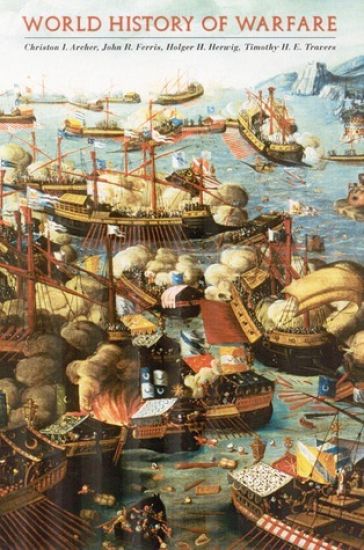
World History of Warfare is designed as a textbook for introductory college courses in military history. The text covers worldwide military history from ancient times to the present. Its principal theme is an exploration of change and continuity, revolution and tradition, in three thousand years of warfare. The work teaches students and general readers how warfare evolved and how that evolution affected human society, with emphasis on major turning points in the conduct of warfare rather than a superficial general history of wars. This volume addresses traditional subjects such as generals and tactics, but each chapter also includes discussions of the idea of war, the role of the common soldier, and the changing interpretations of the military's place in society and politics. Of special value is the authors' treatment of non-Western societies. Too often military history has meant the study of warfare in England, France, and Germany, especially as it was shaped by the Napoleonic conflicts. In contrast, the authors of this volume examine the role that military forces have played in shaping societies worldwide.
World History of Warfare is designed as a textbook for introductory college courses in military history. The text covers worldwide military history from ancient times to the present. Its principal theme is an exploration of change and continuity, revolution and tradition, in three thousand years of warfare. The work teaches students and general readers how warfare evolved and how that evolution affected human society, with emphasis on major turning points in the conduct of warfare rather than a superficial general history of wars. This volume addresses traditional subjects such as generals and tactics, but each chapter also includes discussions of the idea of war, the role of the common soldier, and the changing interpretations of the military's place in society and politics. Of special value is the authors' treatment of non-Western societies. Too often military history has meant the study of warfare in England, France, and Germany, especially as it was shaped by the Napoleonic conflicts. In contrast, the authors of this volume examine the role that military forces have played in shaping societies worldwide.
"Ecosystem" is an intuitively appealing concept to most ecologists, but, in spite of its widespread use, the term remains diffuse and ambiguous. The authors of this book argue that previous attempts to define the concept have been derived from particular viewpoints to the exclusion of others equally possible. They offer instead a more general line of thought based on hierarchy theory. Their contribution should help to counteract the present separation of subdisciplines in ecology and to bring functional and population/community ecologists closer to a common approach. Developed as a way of understanding highly complex organized systems, hierarchy theory has at its center the idea that organization results from differences in process rates. To the authors the theory suggests an objective way of decomposing ecosystems into their component parts. The results thus obtained offer a rewarding method for integrating various schools of ecology.
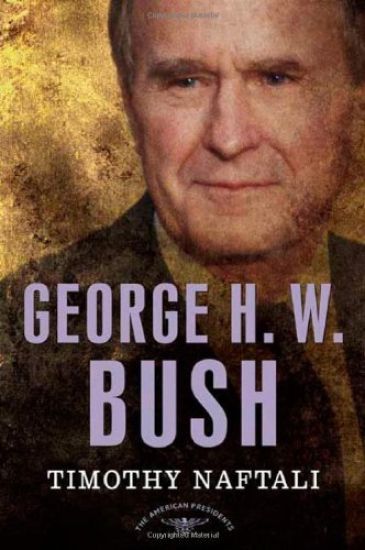
The judicious statesman who won victories abroad but suffered defeat at home, whose wisdom and demeanor served America well at a critical timeGeorge Bush was a throwback to a different era. A patrician figure not known for eloquence, Bush dismissed ideology as "the vision thing." Yet, as Timothy Naftali argues, no one of his generation was better prepared for the challenges facing the United States as the Cold War ended. Bush wisely encouraged the liberalization of the Soviet system and skillfully orchestrated the reunification of Germany. And following Iraq's invasion of Kuwait in 1990, he united the global community to defeat Saddam Hussein. At home, Bush reasserted fiscal discipline after the excesses of the Reagan years. It was ultimately his political awkwardness that cost Bush a second term. His toughest decisions widened fractures in the Republican Party, and with his party divided, Bush lost his bid for reelection in 1992. In a final irony, the conservatives who scorned him would return to power eight years later, under his son and namesake, with the result that the elder George Bush would see his reputation soar.
This newest "NICNT" volume explores Paul's three letters to Timothy and Titus within their historical, religious, and cultural settings. Significantly, Philip Towner treats these texts principally as communications from the apostle himself to his coworkers as they carried out assignments in the Pauline mission. Towner's introduction sets out the rationale for this historical approach, questions certain assumptions of recent critical scholarship, and establishes the uniqueness and individuality of each letter. The commentary itself displays a wide array of fresh insights. In treating Paul's concern with his opponents in Timothy, for example, Towner suggests that dangerous trends outside the church were also in Paul's mind as he addressed the behavior of women who were active as teachers in the church. Centered on a superb translation of the Greek text and complemented with thorough footnotes, bibliographical citations, and indexes, this commentary will soon become a standard reference for busy pastors, students, and scholars.