Kirjojen hintavertailu. Mukana 11 244 527 kirjaa ja 12 kauppaa.

Kirjahaku

Etsi kirjoja tekijän nimen, kirjan nimen tai ISBN:n perusteella.

642 tulosta hakusanalla Tito Perdue

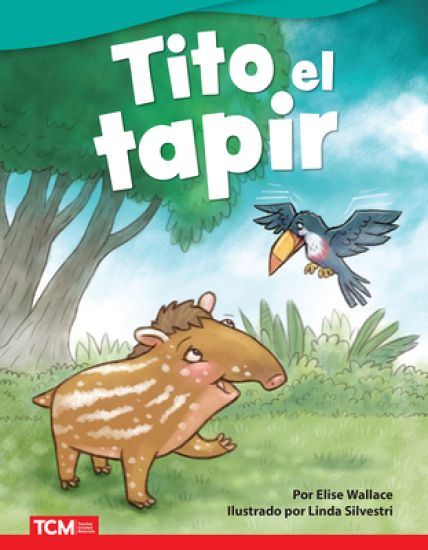
Tito El Tapir

Tito El Tapir

Elise Wallace

Teacher Created Materials
2023
nidottu
Tito is a young tapir whose spots and stripes help him in the wild. What will happen to his spots and stripes when he grows up? Introduce the concepts of growth and change to students with this beautifully illustrated Spanish picture book. Early readers can follow the simple story and bright illustrations as they learn that our differences are what make us special. With pre-reading questions, this fiction book is ideal for guided reading and builds early Spanish literacy skills. This picture book is written in Spanish.
Tito's Lost Children. A Tale of the Yugoslav Wars. War One

Tito's Lost Children. A Tale of the Yugoslav Wars. War One

Andrew Anzur Clement

Independently Published
2019
pokkari
Yugoslav People's Army brats Jovana and Hristijan grew up in a secluded border-watch compound, dreaming of grander horizons. They get their wish in the worst way possible when Predrag, a rogue Army captain, kidnaps Jovana for no apparent reason. Hristijan manages to rescue her, but their ordeals are far from over.On the run, they uncover the shocking secret behind Jovana's upbringing: she is the chosen successor to Marsal Josip Broz Tito. With Yugoslavia on the brink of collapse, it is her duty to keep order among the country's quarrelsome nationalities - and stop the Serbs from grabbing power. There's only one tiny problem: Jovana was never trained to take on her new role as the only hope for a unified Yugoslavia.Joining forces with a hard-fighting mute girl, Jovana and Hristijan must make their way to Slovenia to prevent its secession from the Yugoslav Federation. To get there, they will have to outwit Predrag, who is determined to capture Jovana and win the approval of his Serb nationalist father.The fate of Yugoslavia now rests with a band of snarky teenagers. Armed with nothing but a few guns and an old Army truck, they are about to make their mark on history.
Tito and RuRu

Tito and RuRu

Norma Wilkinson

Christian Faith Publishing, Inc
2021
pokkari
Even though RuRu was a toy, he was Tito's best friend. They went everywhere and did everything together RuRu took vacations with Tito, slept with Tito, and played with him. Tito felt there was no one else in world like RuRu They were inseparable until life changes tore them apart
Tito: The Man Who Defied Hitler and Stalin

Tito: The Man Who Defied Hitler and Stalin

Fitzroy MacLean

Literary Licensing, LLC
2011
sidottu
Tito: The Man Who Defied Hitler And Stalin is a biography written by Fitzroy MacLean that tells the story of Josip Broz Tito, the leader of Yugoslavia during World War II and the Cold War. The book details Tito's rise to power, his leadership during the war, and his efforts to maintain Yugoslavia's independence during the post-war era.MacLean provides a detailed account of Tito's life, from his early years as a worker and union leader to his rise to power as the leader of the Yugoslav Partisans, a resistance movement that fought against the Nazi occupation of Yugoslavia. The book also delves into Tito's relationship with Stalin and the Soviet Union, which was initially supportive but later turned hostile.Throughout the book, MacLean emphasizes Tito's determination to maintain Yugoslavia's independence and his willingness to defy both Hitler and Stalin in order to do so. He also explores Tito's complex personality, including his strengths as a leader and his flaws as a man.Tito: The Man Who Defied Hitler And Stalin is a well-researched and engaging biography that offers a fascinating look at one of the most important figures of the 20th century. It is a must-read for anyone interested in World War II, the Cold War, or the history of Yugoslavia.A Full Biography Of Marshall Tito.This scarce antiquarian book is a facsimile reprint of the old original and may contain some imperfections such as library marks and notations. Because we believe this work is culturally important, we have made it available as part of our commitment for protecting, preserving, and promoting the world's literature in affordable, high quality, modern editions, that are true to their original work.
Tito's Communism

Tito's Communism

Josef Korbel

Literary Licensing, LLC
2013
sidottu
Tito's Communism is a book written by Josef Korbel that provides an in-depth analysis of the political ideology and leadership style of Josip Broz Tito, the former president of Yugoslavia. The book explores Tito's rise to power and his role in shaping the Communist movement in Yugoslavia. It also delves into Tito's unique approach to Communism, which was characterized by a strong emphasis on national identity and a rejection of Soviet-style centralization. Korbel draws on his own personal experiences working with Tito and his extensive research to provide a comprehensive portrait of the man and his political philosophy. This book is an essential read for anyone interested in the history of Communism, Yugoslavia, or Tito's legacy.This scarce antiquarian book is a facsimile reprint of the old original and may contain some imperfections such as library marks and notations. Because we believe this work is culturally important, we have made it available as part of our commitment for protecting, preserving, and promoting the world's literature in affordable, high quality, modern editions, that are true to their original work.
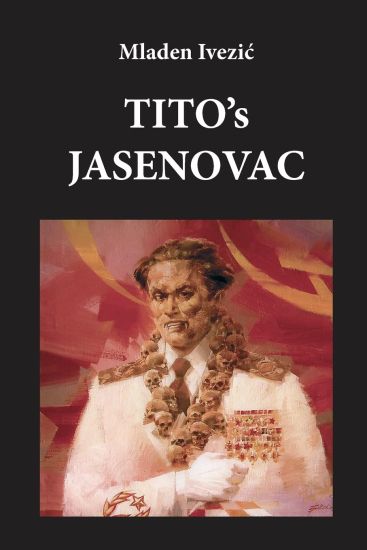
TITO's JASENOVAC

TITO's JASENOVAC

Mladen Ivezic

Lulu.com
2021
pokkari
Croatian historian Mladen Ivezic (Zagreb, 1957) with his book Jasenovac-Numbers Jasenovac - Brojke] defeated the communist (anti-fascist, as they are called in today's Croatia) falsehood that 700,000 and even 2,000,000 people were killed in the Collection and Work Camp Jasenovac between 1941 and 1945 during the Independent State of Croatia. Ivezic demonstrated convincingly that there could not have been more than 3,000 dead. In his second book, Tito's art of hatred Titova umjetnost mrznje], he has documented how Tito and his anti-fascists incited and executed the real and proven genocide against the Croats in 1945 and later years. The book in front of you, Tito's Jasenovac Titov Jasenovac], establishes the existence of Tito's liquidation camp for masses of Croatian and German prisoners from 1945 to 1948, and deals with the exploitation of the genocidal pernicious damage of the Jasenovac myth in Tito's Yugoslavia. The fabricated numbers of victims in this myth were always used against the Croats as the main means in any argument and indisputably dominate the most dangerous of Tito's slogans: the victims which we suffered in the people's liberation war and the socialist revolution. In the full knowledge of the heads of the Communist Party that it was all lies, the myth opened the door to the single party, police, military, secret police, and all other kinds of frightening terrorism. Ivezic points to the continuity of that myth up to the present day. Ivezic's follows a perfect methodology with great diligence, studies many archives and funds, records written proofs, and very rarely passes on other people's opinions, but quotes anti-Croatian literature, pointing out to its illogicality, mendacity, internal, and mutual contradiction without decontextualization, wrong interpretation, omissions of the important facts. Ivezic's painstaking work on the span of the Jasenovac myth is illustrated well by a statistic regarding the number of victims in the Collection and Work Camp Jasenovac from Tito's federal Statistical Office, which was immediately proclaimed a frightful secret in 1966, but which the great Croat-eater, Tito's General Jefto Sasic publicised in 1986: Lets mention also that the Statistical office ''established'' that in the four years of the Ustasha in Jasenovac only 262 died, and in Stara Gradiska 141 prisoners (...) that in all the camps in Yugoslavia there are a total of (only) 2,620 dead prisoners.
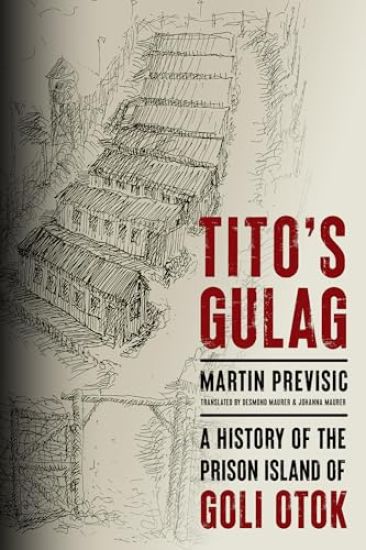
Tito's Gulag

Tito's Gulag

Martin Previšic

STANFORD UNIVERSITY PRESS
2025
sidottu
In 1948, the Cominform, the Soviet-dominated organization that represented communist parties throughout Eastern Europe, expelled its Yugoslav branch, the Communist Party of Yugoslavia, for "nationalist" tendencies. The following year, Josip Broz Tito, Yugoslavia's leader, began mass arrests of suspected Stalinists. Prior to the expulsion, everyone in Yugoslavia had been a Stalin supporter—or claimed to be—and the result was a campaign comparable to the Stalinist terror of the 1930s. Using previously unexamined archival material and drawing on interviews with the few remaining survivors of Goli Otok, historian Martin Previšic delves into the origins of political repression under Tito and the daily workings of the prison camp island. Over this period, Yugoslav security forces arrested some 13,000 people and imprisoned them on Goli Otok, or "Barren Island," a desolate prison island off the coast of Croatia, where they were subjected to brutal treatment rivaling that in any Soviet gulag. Originally published in Croatian in 2019, this book is the first in English to fully examine this shocking and revealing episode from the region's past.