
Kirjahaku
Etsi kirjoja tekijän nimen, kirjan nimen tai ISBN:n perusteella.
1000 tulosta hakusanalla Traci
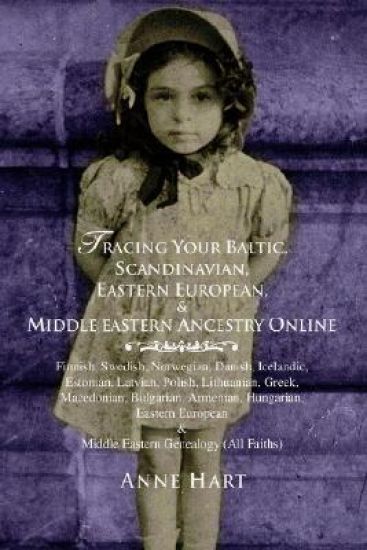
Tracing Your Baltic, Scandinavian, Eastern European, & Middle Eastern Ancestry Online
Anne Hart
iUniverse
2005
pokkari
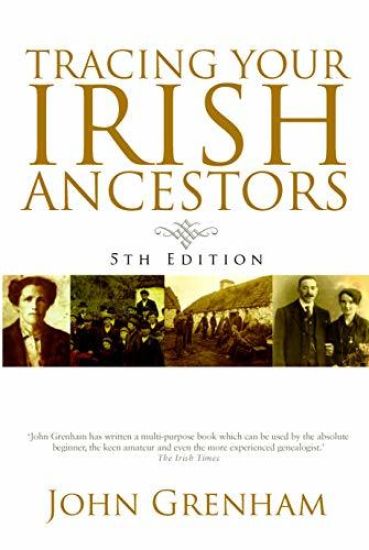
The fifth edition of Tracing Your Irish Ancestors retains its familiar three-part structure, combining a detailed guide for beginners with thorough descriptions of all the useful sources and county-by-county reference lists.

Family genealogy research has grown exponentially over the past decade, making it an area worthy of scholarly inquest. Tracing Family Lines: The Impact of Genealogy Research on Family Communication, by Amy M. Smith, explores the connection between women and genealogy by examining the ways inherited familial narratives and data work to position women within American culture. Although studies of women’s lives are on the rise, the standpoint(s) of women has historically been marginalized, particularly as women continue to be relegated to domestic and family care. Through researching these standpoints, we are better able to see the political constructions of sexist oppression, as well as the ways genealogy offers a possible site for resistance. Interviewing women who are engaged in the act of researching their own family genealogy provides insight into their motivation for doing so. In documenting the family communication that surrounds the genealogical data, as well as studying the family organizational structure, this study contributes to the existing research regarding family history and family narrative. As many of these women are members of local genealogical societies, they are also able to address aspects of community membership, and the positioning of women within these organizations. As women and genealogy are both under-researched, Tracing Family Lines illuminates the experiences of women genealogists, to understand the impact of genealogical data upon family communication, and to explore family genealogy as a site of feminist resistance to the socio-political marginalization of women.
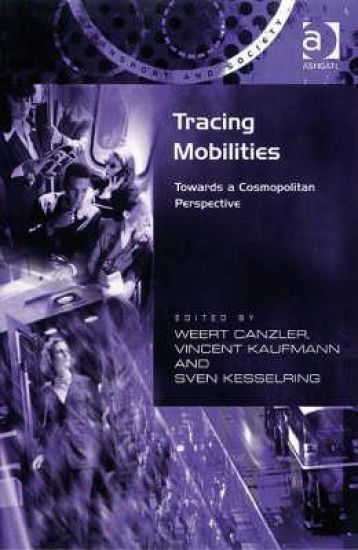
Mobility is a basic principle of modernity besides others like individuality, rationality, equality and globality. Taking its cue from this concept, this book presents a movement that begins with the macro-social transformations linked to mobility and ends with empirical discussions on the new forms of mobility and their implications for everyday life. The book opens with a study of the social changes unique to the second age of modernity, with contributions from Ulrich Beck, John Urry, Wolfgang Bonss and Sven Kesselring. It continues with a discussion of the implications of these changes for sociological research. Authors such as Vincent Kaufmann, Weert Canzler, Norbert Schneider, Beate Collet, Ruth Limmer and Gerlinde Vogl focus on a series of field examinations, both qualitative and quantitative, of emerging mobilities. The book is a foray into the exciting new field of interdisciplinary mobility research informed by theoretical reflection and empirical investigation.
Tracing the Footprints is aimed at students, teachers, practitioners and lecturers involved in the documentation of practice. On a surface level, it documents the construction of a performance project, 'At Last Sight,' which was made with a group of final year UK undergraduates. Beyond this, and more importantly, the book serves as a unique document of the activities involved in articulating the processes of live performance. What the book demonstrates is that theatre making is not just one process but many; all linked, interwoven, impossible to disentangle.
How can Africans escape the control of the complex power relationships established during Colonization and successfully achieve self-development? More importantly, and the primary concern of this book, can African female characters ever hope to arrive at such individuation given the dual challenges of the power structures defined and enforced by European colonizers and the patriarchal structures that contort issues related to gender? Tracing Personal Expansion reads late 20th Century works by African female novelists Buchi Emecheta, Tsitsi Dangarembga, and Calixthe Beyala as modern Bildungsromane, novels of self-development, to reveal the dynamics, complexities, and challenges the characters and authors experience. By exploring the possibility of self-development in African female protagonists, this engrossing work augments existing feminist critiques that have analyzed the possibilities and potentials for the individuation of mostly Western, mostly European female characters.
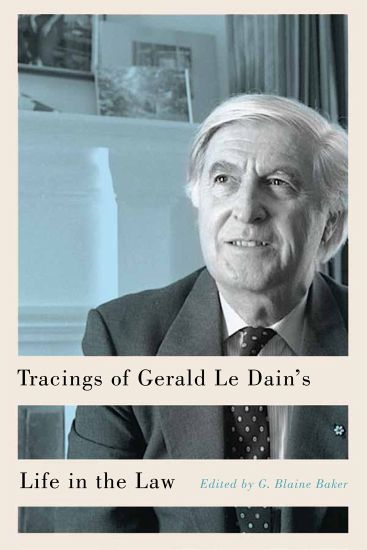
Tracings of Gerald Le Dain's Life in the Law
McGill-Queen's University Press
2019
sidottu
Gerald Le Dain (1924–2007) was appointed to the Supreme Court of Canada in 1984. This collectively written biography traces fifty years of his steady, creative, and conciliatory involvement with military service, the legal academy, legislative reform, university administration, and judicial decision-making. This book assembles contributions from the in-house historian of the law firm where Le Dain first practised, from students and colleagues in the law schools where he taught, from a research associate in his Commission of Inquiry into the non-medical use of drugs, from two of his successors on the Federal Court of Appeal, and from three judicial clerks to Le Dain at the Supreme Court of Canada. Also reproduced here is a transcript of a recent CBC documentary about his 1988 forced resignation from the Supreme Court following a short-term depressive illness, with commentary from Le Dain’s family and co-workers. Gerald Le Dain was a tireless worker and a highly respected judge. In a series of essays that cover the different periods and dimensions of his career, Tracings of Gerald Le Dain’s Life in the Law is an important and compassionate account of one man's commitment to the law in Canada. Contributors include Harry W. Arthurs, G. Blaine Baker, Bonnie Brown, Rosemary Cairns-Way, John M. Evans, Melvyn Green, Bernard J. Hibbitts, Peter W. Hogg, Richard A. Janda, C. Ian Kyer, Andree Lajoie, Gerald E. Le Dain, Allen M. Linden, Roderick A. Macdonald, Louise Rolland, and Stephen A. Scott.
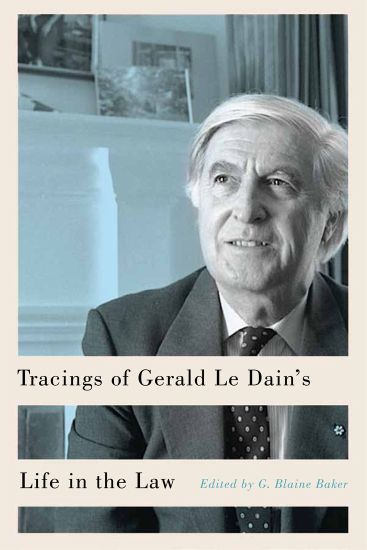
Tracings of Gerald Le Dain's Life in the Law
McGill-Queen's University Press
2019
nidottu
Gerald Le Dain (1924–2007) was appointed to the Supreme Court of Canada in 1984. This collectively written biography traces fifty years of his steady, creative, and conciliatory involvement with military service, the legal academy, legislative reform, university administration, and judicial decision-making. This book assembles contributions from the in-house historian of the law firm where Le Dain first practised, from students and colleagues in the law schools where he taught, from a research associate in his Commission of Inquiry into the non-medical use of drugs, from two of his successors on the Federal Court of Appeal, and from three judicial clerks to Le Dain at the Supreme Court of Canada. Also reproduced here is a transcript of a recent CBC documentary about his 1988 forced resignation from the Supreme Court following a short-term depressive illness, with commentary from Le Dain’s family and co-workers. Gerald Le Dain was a tireless worker and a highly respected judge. In a series of essays that cover the different periods and dimensions of his career, Tracings of Gerald Le Dain’s Life in the Law is an important and compassionate account of one man's commitment to the law in Canada. Contributors include Harry W. Arthurs, G. Blaine Baker, Bonnie Brown, Rosemary Cairns-Way, John M. Evans, Melvyn Green, Bernard J. Hibbitts, Peter W. Hogg, Richard A. Janda, C. Ian Kyer, Andree Lajoie, Gerald E. Le Dain, Allen M. Linden, Roderick A. Macdonald, Louise Rolland, and Stephen A. Scott.

This title helps readers pose ten of the most anguishing, nettling, perplexing issues of faith, some that arise perennially and others newly sharpened by a postmodern age rife with questions.
Tracing Ancestors Among the Five Civilized Tribes
Rachal Mills Lennon
Genealogical Publishing Company
2009
pokkari

Tracing Your Scottish Ancestry. 3rd Edition
Kathleen B. Cory
Genealogical Publishing Company
2009
pokkari
Tracing Your Ancestors in Barbados. A Practical Guide
Geraldine Lane
Genealogical Publishing Company
2009
pokkari

Tracing Your Scottish Ancestry. 3rd Edition
Kathleen B Cory
Genealogical Publishing Company
2014
sidottu

Tracing Ancestors Among the Five Civilized Tribes
Rachal Mills Lennon
Genealogical Publishing Company
2012
sidottu
Tracing Your Irish Ancestors. Fifth Edition
John Grenham
Genealogical Publishing Company
2019
pokkari
Genealogical research in Ireland has always depended on records that are more fragmented, localised and difficult to access than anywhere else. The internet is changing that. More and more records are coming online and this book is an indispensable guide to what these records are, where they are, and what they mean. This fourth edition of Tracing Your Irish Ancestors embraces online research as an essential part of any Irish family history project. Grenham includes detailed guides to Irish online records throughout the book, discussing the idiosyncrasies of the digital versions of sources and outlining research strategies. The sheer scale of digitisation can make it both easier and more confusing to do research, and makes a guide such as this all the more essential. John Grenham's well-established and detailed guide has thorough descriptions of all the relevant sources and county-by-county reference lists -- all expanded, updated and indexed to make the book easier to use than ever before.
The French philosopher Renaud Barbaras remarked that late in Maurice Merleau-Ponty’s career, “The phenomenology of perception fulfills itself as a philosophy of expression.” In Tracing Expression in Merleau-Ponty: Aesthetics, Philosophy of Biology and Ontology, Véronique M. Fóti addresses the guiding yet neglected theme of expression in Merleau-Ponty’s thought. She traces Merleau-Ponty’s ideas about how individuals express creative or artistic impulses through his three essays on aesthetics, his engagement with animality and the “new biology” in the second of his lecture courses on nature of 1957–58, and in his late ontology, articulated in 1964 in the fragmentary text of Le visible et l’invisible (The Visible and the Invisible). With the exception of a discussion of Merleau-Ponty’s 1945 essay “Cezanne’s Doubt,” Fóti engages with Merleau-Ponty’s late and final thought, with close attention to both his scientific and philosophical interlocutors, especially the continental rationalists. Expression shows itself, in Merleau-Ponty’s thought, to be primordial, and this innate and fundamental nature of expression has implications for his understanding of artistic creation, science, and philosophy.
The French philosopher Renaud Barbaras remarked that late in Maurice Merleau-Ponty’s career, “The phenomenology of perception fulfills itself as a philosophy of expression.” In Tracing Expression in Merleau-Ponty: Aesthetics, Philosophy of Biology and Ontology, Véronique M. Fóti addresses the guiding yet neglected theme of expression in Merleau-Ponty’s thought. She traces Merleau-Ponty’s ideas about how individuals express creative or artistic impulses through his three essays on aesthetics, his engagement with animality and the “new biology” in the second of his lecture courses on nature of 1957–58, and in his late ontology, articulated in 1964 in the fragmentary text of Le visible et l’invisible (The Visible and the Invisible) . With the exception of a discussion of Merleau-Ponty’s 1945 essay “Cezanne’s Doubt,” Fóti engages with Merleau-Ponty’s late and final thought, with close attention to both his scientific and philosophical interlocutors, especially the continental rationalists. Expression shows itself, in Merleau-Ponty’s thought, to be primordial, and this innate and fundamental nature of expression has implications for his understanding of artistic creation, science, and philosophy.