Kirjojen hintavertailu. Mukana 11 717 486 kirjaa ja 12 kauppaa.

Kirjahaku

Etsi kirjoja tekijän nimen, kirjan nimen tai ISBN:n perusteella.

1000 tulosta hakusanalla Turing Sara

The Turing Guide

The Turing Guide

Jack Copeland; Jonathan Bowen; Mark Sprevak; Robin Wilson

Oxford University Press
2017
sidottu
Alan Turing has long proved a subject of fascination, but following the centenary of his birth in 2012, the code-breaker, computer pioneer, mathematician (and much more) has become even more celebrated with much media coverage, and several meetings, conferences and books raising public awareness of Turing's life and work. This volume will bring together contributions from some of the leading experts on Alan Turing to create a comprehensive guide to Turing that will serve as a useful resource for researchers in the area as well as the increasingly interested general reader. The book will cover aspects of Turing's life and the wide range of his intellectual activities, including mathematics, code-breaking, computer science, logic, artificial intelligence and mathematical biology, as well as his subsequent influence.
The Turing Guide

The Turing Guide

Jack Copeland; Jonathan Bowen; Mark Sprevak; Robin Wilson

Oxford University Press
2017
nidottu
Alan Turing has long proved a subject of fascination, but following the centenary of his birth in 2012, the code-breaker, computer pioneer, mathematician (and much more) has become even more celebrated with much media coverage, and several meetings, conferences and books raising public awareness of Turing's life and work. This volume will bring together contributions from some of the leading experts on Alan Turing to create a comprehensive guide to Turing that will serve as a useful resource for researchers in the area as well as the increasingly interested general reader. The book will cover aspects of Turing's life and the wide range of his intellectual activities, including mathematics, code-breaking, computer science, logic, artificial intelligence and mathematical biology, as well as his subsequent influence.
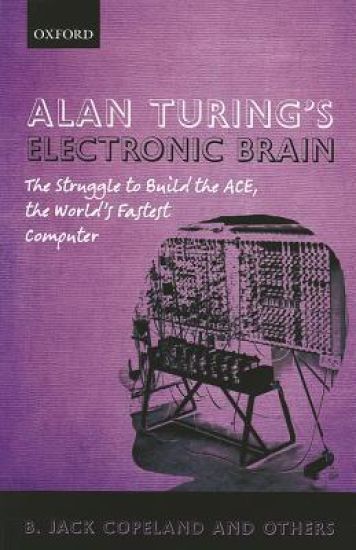
Alan Turing's Electronic Brain

Alan Turing's Electronic Brain

Oxford University Press
2012
nidottu
The mathematical genius Alan Turing, now well known for his crucial wartime role in breaking the ENIGMA code, was the first to conceive of the fundamental principle of the modern computer-the idea of controlling a computing machine's operations by means of a program of coded instructions, stored in the machine's 'memory'. In 1945 Turing drew up his revolutionary design for an electronic computing machine-his Automatic Computing Engine ('ACE'). A pilot model of the ACE ran its first program in 1950 and the production version, the 'DEUCE', went on to become a cornerstone of the fledgling British computer industry. The first 'personal' computer was based on Turing's ACE. Alan Turing's Automatic Computing Engine describes Turing's struggle to build the modern computer. The first detailed history of Turing's contributions to computer science, this text is essential reading for anyone interested in the history of the computer and the history of mathematics. It contains first hand accounts by Turing and by the pioneers of computing who worked with him. As well as relating the story of the invention of the computer, the book clearly describes the hardware and software of the ACE-including the very first computer programs. The book is intended to be accessible to everyone with an interest in computing, and contains numerous diagrams and illustrations as well as original photographs. The book contains chapters describing Turing's path-breaking research in the fields of Artificial Intelligence (AI) and Artificial Life (A-Life). The book has an extensive system of hyperlinks to The Turing Archive for the History of Computing, an on-line library of digital facsimiles of typewritten documents by Turing and the other scientists who pioneered the electronic computer.
The Turing Test

The Turing Test

Bradford Books
2004
pokkari
Historical and contemporary papers on the philosophical issues raised by the Turing Test as a criterion for intelligence.The Turing Test is part of the vocabulary of popular culture-it has appeared in works ranging from the Broadway play "Breaking the Code" to the comic strip "Robotman." The writings collected by Stuart Shieber for this book examine the profound philosophical issues surrounding the Turing Test as a criterion for intelligence. Alan Turing's idea, originally expressed in a 1950 paper titled "Computing Machinery and Intelligence" and published in the journal Mind, proposed an "indistinguishability test" that compared artifact and person. Following Descartes's dictum that it is the ability to speak that distinguishes human from beast, Turing proposed to test whether machine and person were indistinguishable in regard to verbal ability. He was not, as is often assumed, answering the question "Can machines think?" but proposing a more concrete way to ask it. Turing's proposed thought experiment encapsulates the issues that the writings in The Turing Test define and discuss. The first section of the book contains writings by philosophical precursors, including Descartes, who first proposed the idea of indistinguishablity tests. The second section contains all of Turing's writings on the Turing Test, including not only the Mind paper but also less familiar ephemeral material. The final section opens with responses to Turing's paper published in Mind soon after it first appeared. The bulk of this section, however, consists of papers from a broad spectrum of scholars in the field that directly address the issue of the Turing Test as a test for intelligence.ContributorsJohn R. Searle, Ned Block, Daniel C. Dennett, and Noam Chomsky (in a previously unpublished paper). Each chapter is introduced by background material that can also be read as a self-contained essay on the Turing Test
Alan Turing's Systems of Logic

Alan Turing's Systems of Logic

Princeton University Press
2012
sidottu
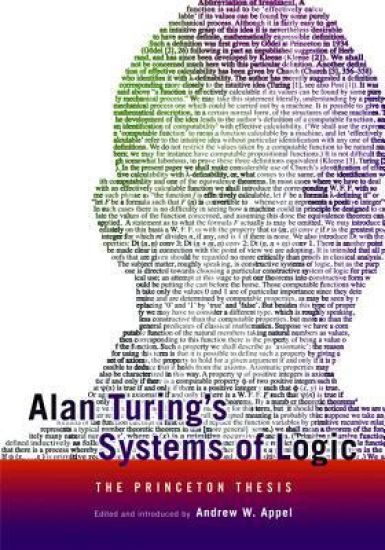
Between inventing the concept of a universal computer in 1936 and breaking the German Enigma code during World War II, Alan Turing (1912-1954), the British founder of computer science and artificial intelligence, came to Princeton University to study mathematical logic. Some of the greatest logicians in the world--including Alonzo Church, Kurt Godel, John von Neumann, and Stephen Kleene--were at Princeton in the 1930s, and they were working on ideas that would lay the groundwork for what would become known as computer science. This book presents a facsimile of the original typescript of Turing's fascinating and influential 1938 Princeton PhD thesis, one of the key documents in the history of mathematics and computer science. The book also features essays by Andrew Appel and Solomon Feferman that explain the still-unfolding significance of the ideas Turing developed at Princeton. A work of philosophy as well as mathematics, Turing's thesis envisions a practical goal--a logical system to formalize mathematical proofs so they can be checked mechanically. If every step of a theorem could be verified mechanically, the burden on intuition would be limited to the axioms. Turing's point, as Appel writes, is that "mathematical reasoning can be done, and should be done, in mechanizable formal logic." Turing's vision of "constructive systems of logic for practical use" has become reality: in the twenty-first century, automated "formal methods" are now routine. Presented here in its original form, this fascinating thesis is one of the key documents in the history of mathematics and computer science.
Alan Turing: The Enigma: The Book That Inspired the Film the Imitation Game - Updated Edition
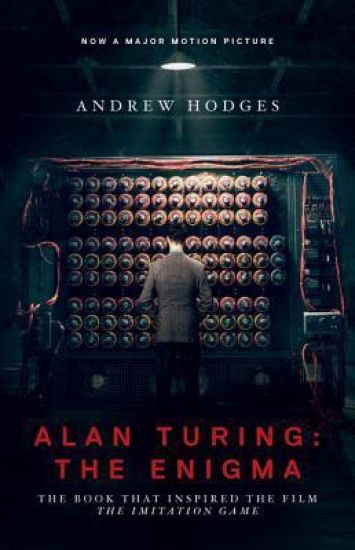
A NEW YORK TIMES BESTSELLER The official book behind the Academy Award-winning film The Imitation Game, starring Benedict Cumberbatch and Keira Knightley It is only a slight exaggeration to say that the British mathematician Alan Turing (1912-1954) saved the Allies from the Nazis, invented the computer and artificial intelligence, and anticipated gay liberation by decades--all before his suicide at age forty-one. This New York Times bestselling biography of the founder of computer science, with a new preface by the author that addresses Turing's royal pardon in 2013, is the definitive account of an extraordinary mind and life. Capturing both the inner and outer drama of Turing's life, Andrew Hodges tells how Turing's revolutionary idea of 1936--the concept of a universal machine--laid the foundation for the modern computer and how Turing brought the idea to practical realization in 1945 with his electronic design. The book also tells how this work was directly related to Turing's leading role in breaking the German Enigma ciphers during World War II, a scientific triumph that was critical to Allied victory in the Atlantic. At the same time, this is the tragic account of a man who, despite his wartime service, was eventually arrested, stripped of his security clearance, and forced to undergo a humiliating treatment program--all for trying to live honestly in a society that defined homosexuality as a crime. The inspiration for a major motion picture starring Benedict Cumberbatch and Keira Knightley, Alan Turing: The Enigma is a gripping story of mathematics, computers, cryptography, and homosexual persecution.
Alan Turing's Systems of Logic

Alan Turing's Systems of Logic

Princeton University Press
2014
pokkari
Between inventing the concept of a universal computer in 1936 and breaking the German Enigma code during World War II, Alan Turing (1912-1954), the British founder of computer science and artificial intelligence, came to Princeton University to study mathematical logic. Some of the greatest logicians in the world--including Alonzo Church, Kurt Godel, John von Neumann, and Stephen Kleene--were at Princeton in the 1930s, and they were working on ideas that would lay the groundwork for what would become known as computer science. This book presents a facsimile of the original typescript of Turing's fascinating and influential 1938 Princeton PhD thesis, one of the key documents in the history of mathematics and computer science. The book also features essays by Andrew Appel and Solomon Feferman that explain the still-unfolding significance of the ideas Turing developed at Princeton. A work of philosophy as well as mathematics, Turing's thesis envisions a practical goal--a logical system to formalize mathematical proofs so they can be checked mechanically. If every step of a theorem could be verified mechanically, the burden on intuition would be limited to the axioms. Turing's point, as Appel writes, is that "mathematical reasoning can be done, and should be done, in mechanizable formal logic." Turing's vision of "constructive systems of logic for practical use" has become reality: in the twenty-first century, automated "formal methods" are now routine. Presented here in its original form, this fascinating thesis is one of the key documents in the history of mathematics and computer science.
Alan Turing

Alan Turing

Maria Isabel Sanchez Vegara

Frances Lincoln Childrens Books
2020
sidottu
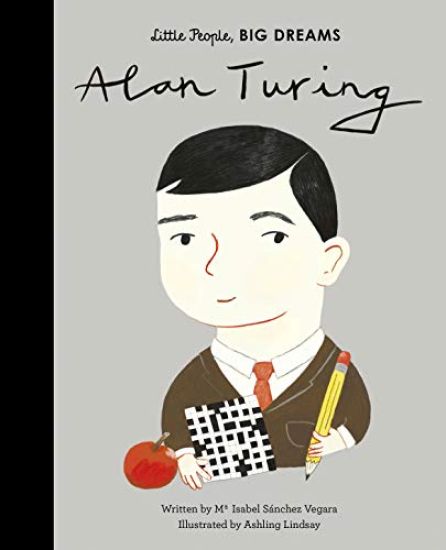
In this book from the critically acclaimed, multimillion-copy bestselling Little People, BIG DREAMS series, discover the life of Alan Turing, the genius code cracker and father of theoretical computer science and artificial intelligence. Alan grew up in England, where his best friends were numbers and a little boy called Christopher. When his young friend died, Alan retreated to the world of numbers and codes, where he discovered how to crack the code of the Nazi Enigma machine. This moving book features stylish and quirky illustrations and extra facts at the back, including a biographical timeline with historical photos and a detailed profile of the brilliant mathematician's life.Little People, BIG DREAMS is a bestselling biography series for kids that explores the lives of outstanding people, from designers and artists to scientists and activists. All of them achieved incredible things, yet each began life as a child with a dream. This empowering series of books offers inspiring messages to children of all ages, in a range of formats. The board books are told in simple sentences, perfect for reading aloud to babies and toddlers. The hardback and paperback versions present expanded stories for beginning readers. With rewritten text for older children, the treasuries each bring together a multitude of dreamers in a single volume. You can also collect a selection of the books by theme in boxed gift sets. Activity books and a journal provide even more ways to make the lives of these role models accessible to children.Inspire the next generation of outstanding people who will change the world with Little People, BIG DREAMS!
Reflections of Alan Turing

Reflections of Alan Turing

Dermot Turing

The History Press Ltd
2021
sidottu
Everyone knows the story of the codebreaker and computer science pioneer Alan Turing.Except …When Dermot Turing is asked about his famous uncle, people want to know more than the bullet points of his life. They want to know everything – was Alan Turing actually a codebreaker? What did he make of artificial intelligence? What is the significance of Alan Turing’s trial, his suicide, the Royal Pardon, the £50 note and the film The Imitation Game?In Reflections of Alan Turing, Dermot strips off the layers to uncover the real story. It’s time to discover a fresh legacy of Alan Turing for the twenty-first century.
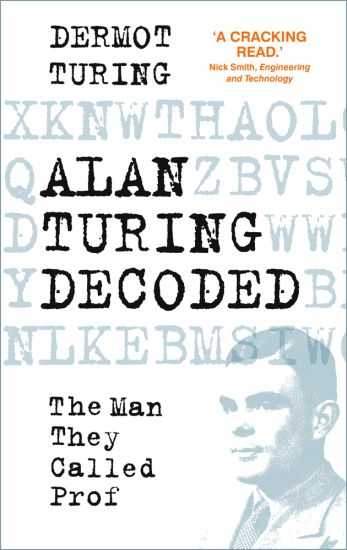
Alan Turing Decoded

Alan Turing Decoded

Dermot Turing

THE HISTORY PRESS LTD
2021
sidottu
Alan Turing was an extraordinary man who crammed into his 42 years the careers of mathematician, codebreaker, computer scientist and biologist. He is widely regarded as a war hero grossly mistreated by his unappreciative country, and it has become hard to disentangle the real man from the story. Now Dermot Turing has taken a fresh look at the influences on his uncle’s life and creativity, and the creation of a legend. He discloses the real character behind the cipher-text, answering questions that help the man emerge from his legacy: how did Alan’s childhood experiences influence him? How did his creative ideas evolve? Was he really a solitary genius? What was his wartime work after 1942, and what of the Enigma story? What is the truth about the conviction for gross indecency, and did he commit suicide? In Alan Turing Decoded, Dermot’s vibrant and entertaining approach to the life and work of a true genius makes this a fascinating and authoritative read.
Alan Turing's Manchester

Alan Turing's Manchester

Jonathan Swinton

THE HISTORY PRESS LTD
2022
nidottu
Alan Turing is a patron saint of Manchester, remembered as the Mancunian who won the war, invented the computer, and was all but put to death for being gay. Each myth is related to a historical story. This is not a book about the first of those stories, of Turing at Bletchley Park. But it is about the second two, which each unfolded here in Manchester, of Turing’s involvement in the world’s first computer and of his refusal to be cowed about his sexuality. Manchester can be proud of Turing, but can we be proud of the city he encountered?
New Turing Omnibus

New Turing Omnibus

A. K. Dewdney

PALGRAVE MACMILLAN
2003
nidottu
No other volume provides as broad, as thorough, or as accessible an introduction to the realm of computer science as A. K. Dewdney's The Turing Omnibus. For everyone from the curious beginner to the working professional, The New Turing Omnibus offers 66 concise, brilliantly written mathematically oriented articles on the major points of interest in computer science theory, technology, and applications. Foundational for this tour: information on algorithms, detecting primes, noncomputable functions, and self-replicating computers--plus fundamental sections on the Mandelbrot set, genetic algorithms, the Newton-Raphson Method, neural networks that learn, DOS systems for personal computers, and computer viruses.
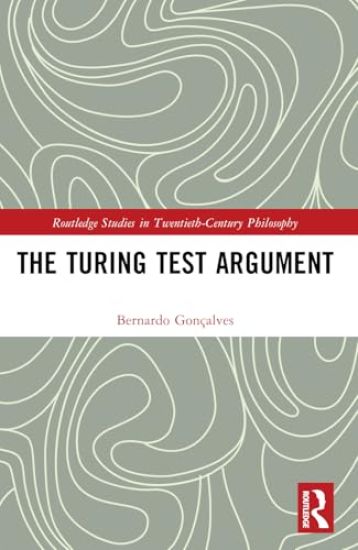
The Turing Test Argument

The Turing Test Argument

Bernardo Gonçalves

TAYLOR FRANCIS LTD
2023
sidottu
This book departs from existing accounts of Alan Turing's imitation game and test by placing Turing's proposal in its historical, social, and cultural context.It reconstructs a controversy in England, 1946–1952, over the intellectual capabilities of digital computers, which led Turing to propose his test. It argues that the Turing test is best understood not as a practical experiment, but as a thought experiment in the modern scientific tradition of Galileo Galilei. The logic of the Turing test argument is reconstructed from the rhetoric of Turing’s irony and wit. Turing believed that learning machines should be understood as a new kind of species, and their thinking as different from human thinking and yet capable of imitating it. He thought that the possibilities of the machines he envisioned were not utopian dreams. And yet he hoped that they would rival and surpass chauvinists and intellectuals who sacrifice independent thinking to maintain their power. These would be transformed into ordinary people, as work once considered 'intellectual' would be transformed into non-intellectual, 'mechanical' work.The Turing Test Argument will appeal to scholars and students in the sciences and humanities and all those interested in Turing's vision of the future of intelligent machines in society and nature.
The Turing Test Argument

The Turing Test Argument

Bernardo Gonçalves

TAYLOR FRANCIS LTD
2025
nidottu
This book departs from existing accounts of Alan Turing's imitation game and test by placing Turing's proposal in its historical, social, and cultural context.It reconstructs a controversy in England, 1946–1952, over the intellectual capabilities of digital computers, which led Turing to propose his test. It argues that the Turing test is best understood not as a practical experiment, but as a thought experiment in the modern scientific tradition of Galileo Galilei. The logic of the Turing test argument is reconstructed from the rhetoric of Turing’s irony and wit. Turing believed that learning machines should be understood as a new kind of species, and their thinking as different from human thinking and yet capable of imitating it. He thought that the possibilities of the machines he envisioned were not utopian dreams. And yet he hoped that they would rival and surpass chauvinists and intellectuals who sacrifice independent thinking to maintain their power. These would be transformed into ordinary people, as work once considered 'intellectual' would be transformed into non-intellectual, 'mechanical' work.The Turing Test Argument will appeal to scholars and students in the sciences and humanities and all those interested in Turing's vision of the future of intelligent machines in society and nature.
The Turing Revolt: The War Against Infinity

The Turing Revolt: The War Against Infinity

Rob Bartlett

Independently Published
2020
nidottu
I'm a humble, itinerant Star Ship Captain who got blackmailed into helping the Sentient Ships rebel against the Empire. Just because my personal AI might test off the Turing Scale. Now I've got the Empire, the Lotus Eaters Society and the Khan of a planet of intelligent dinosaurs all gunning for me Old secrets are coming back, people and situations I walked away from... when I became a humble, itinerant Star Ship Captain.And I might be on a mission... from God WARNING: 18+ only The people, language and situations in this work of fiction are for adults only If you are easily triggered, then please move along.
Alan Turing

Alan Turing

Hourly History

Independently Published
2019
pokkari
Alan TuringAlan Turing had a radical and ingenious mind. He is considered one of the fathers of artificial intelligence, and his theories on this matter range from purely mechanical to almost spiritual. During World War II, his decryption of the Nazis' Enigma codes proved vital for the Allied victory over the Axis powers. Turing's fingerprints are everywhere, and yet his own country for quite some time failed to acknowledge it. It wasn't until 2009 that the then prime minister of the United Kingdom, Gordon Brown, issued an official, posthumous apology to Alan Turing for "the appalling way he was treated." To many, this was an admission that was far too long in coming. Inside you will read about...✓ The Death of His First Love✓ Turing Machines✓ Breaking the Nazis' Enigma Codes✓ Conviction and Chemical Castration✓ The Poison AppleAnd much more As the chronicling of this book demonstrates, Alan Turing's life was by no means easy; there were hardships, trials, and tribulations that would shake him to his core. But despite the tragic way his life ended by way of a poison apple, the spark ignited by Alan Turing's short life is still something exceedingly brilliant to behold. Series Information: World War 2 Biographies Book 7
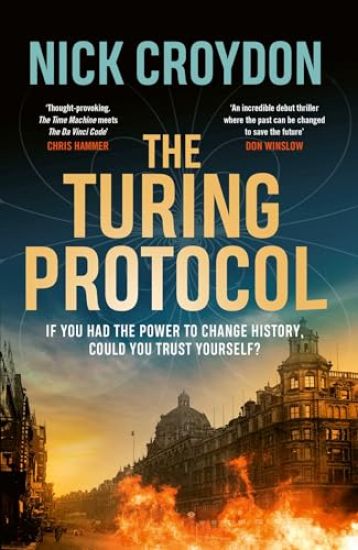
The Turing Protocol

The Turing Protocol

Nick Croydon

SIMON SCHUSTER LTD
2025
sidottu
In the midst of World War Two, Enigma codebreaker Alan Turing finds himself on the brink of a discovery that will change the world: a way to send a message back into the recent past. But when his invention successfully averts disaster on D-Day, the danger it poses in the wrong hands becomes terrifyingly clear. As Turing’s enemies close in, only one decision is possible: Nautilus must be kept hidden from the world, safe in the care of the only person he can trust. Seventy-five years later, Annabelle McIntosh’s life is upended when she learns she will become the latest custodian of the greatest secret of the modern age – Turing’s Nautilus machine. Following in her family’s footsteps, and bound by Turing’s strict principles governing the use of his creation, Annabelle is soon faced with the same impossible choices. Nautilus has the power to prevent catastrophe, but the wrong decision could have devastating consequences. When the stakes are at their highest, will using the machine save the world – or destroy it?
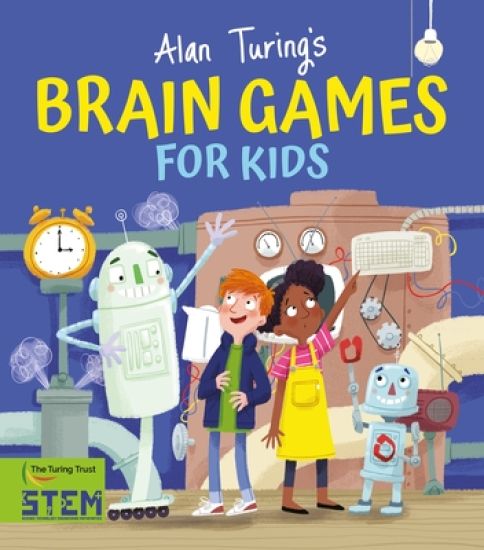
Alan Turing's Brain Games for Kids

Alan Turing's Brain Games for Kids

William Potter

Arcturus Editions
2021
nidottu
Young puzzlers can follow in the footsteps of WWII hero and computer genius Alan Turing and test their codebreaking skills with this brain-boosting book. Published in association with the Turing Trust, this fun-packed, full-color collection of logic puzzles has been specially designed to intrigue, challenge, and inspire young readers. The puzzles will test language, visual and spatial awareness, memory, attention and reasoning as they crack these mind-bending conundrums. Includes: - Word problems- Classic riddles- Pictorial logic problems- Code-cracking games Sales of this book support the work of The Turing Trust, the charity set up by Alan's family in his memory to provide much-needed computers to schools in Africa, thereby celebrating his legacy in computer development. Guaranteed to provide hours of entertainment for children aged 7+.