Kirjojen hintavertailu. Mukana 12 390 323 kirjaa ja 12 kauppaa.

Kirjahaku

Etsi kirjoja tekijän nimen, kirjan nimen tai ISBN:n perusteella.

1000 tulosta hakusanalla U. Mukherjee

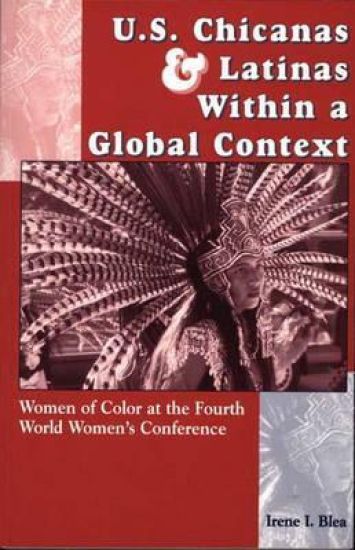
U.S. Chicanas and Latinas Within a Global Context

U.S. Chicanas and Latinas Within a Global Context

Irene I. Blea

Praeger Publishers Inc
1997
sidottu
Using her observations of the United Nation's Fourth World Women's Conference held in China in 1995 as a foundation, the author examines the history and current situation of Latinas and attempts to place them in a global context. After examining the goals, objectives, and atmosphere of the Conference, she analyzes the Chicana feminist movement and its legacy and how Chicanas have struggled to relate to the Conference and its human rights platform. She then profiles U.S. Latinas and presents data on their reality in today's world. The response to U.S. expansionist policies and the Americanization process is examined and related to the Chicana feminist movement and its legacy. An important synthesis for students and researchers in Ethnic and Race Relations and Women's Studies.
U.S. Chicanas and Latinas Within a Global Context

U.S. Chicanas and Latinas Within a Global Context

Irene I. Blea

Praeger Publishers Inc
1997
nidottu
Using her observations of the United Nation's Fourth World Women's Conference held in China in 1995 as a foundation, the author examines the history and current situation of Latinas and attempts to place them in a global context. After examining the goals, objectives, and atmosphere of the Conference, she analyzes the Chicana feminist movement and its legacy and how Chicanas have struggled to relate to the Conference and its human rights platform. She then profiles U.S. Latinas and presents data on their reality in today's world. The response to U.S. expansionist policies and the Americanization process is examined and related to the Chicana feminist movement and its legacy. An important synthesis for students and researchers in Ethnic and Race Relations and Women's Studies.
U.S.-Caribbean Relations

U.S.-Caribbean Relations

Ransford Palmer

Praeger Publishers Inc
1998
sidottu
Challenging the traditional focus on economic development, this book emphasizes the importance of cultural development in any development strategy. It examines the interaction of the American and Caribbean populations and the influence that interaction has had on their perceptions of each other and of themselves. Although trade is an important component of U.S.-Caribbean relations, the book underscores that population movements and their attendant cultural influences are powerful factors in those relations. While trade, population movements, and security considerations have traditionally been the three main components of U.S.-Caribbean relations, the chapters in this contributed book emphasize the importance of a fourth—culture. U.S.-Caribbean relations influence and are influenced by Caribbean perceptions of themselves and of the United States; perceptions that are being transformed by American telecommunications, the movements of American tourists to the Caribbean and of Caribbean immigrants to America. Out of these interactions, a new Caribbean cultural identity is emerging, one that will influence the traditional relationship between the U.S. and the Caribbean.
U.S. Foreign Policy and the Four Horsemen of the Apocalypse

U.S. Foreign Policy and the Four Horsemen of the Apocalypse

Andrew S. Natsios

Praeger Publishers Inc
1997
sidottu
This book explores the emerging phenomenon of complex humanitarian emergencies and the evolving policies of the United States in responding to these emergencies. In addition, Andrew Natsios examines the relationship of disaster response to U.S. foreign policy and national interest, and makes suggestions for improving both relief strategies and systems for designing those strategies. To these issues Natsios brings his first-hand experience in numerous key positions. Mr. Natsios provides case study analysis from these experiences over the past five years to illustrate the arguments presented in the book, particularly regarding Somalia, Angola, Sudan, Panama, and Kuwait and Kurdistan following the Gulf War. As former president George Bush indicates in his foreword to the volume, this book will make a substantive contribution to continuing and enhancing vitally important work. Of great interest to scholars, researchers, and policy makers in the areas of contemporary American foreign policy and humanitarian activities abroad.
U.S. Foreign Policy and the Four Horsemen of the Apocalypse

U.S. Foreign Policy and the Four Horsemen of the Apocalypse

Andrew S. Natsios

Praeger Publishers Inc
1997
nidottu
This book explores the emerging phenomenon of complex humanitarian emergencies and the evolving policies of the United States in responding to these emergencies. In addition, Andrew Natsios examines the relationship of disaster response to U.S. foreign policy and national interest, and makes suggestions for improving both relief strategies and systems for designing those strategies.To these issues Natsios brings his first-hand experience in numerous key positions. Mr. Natsios provides case study analysis from these experiences over the past five years to illustrate the arguments presented in the book, particularly regarding Somalia, Angola, Sudan, Panama, and Kuwait and Kurdistan following the Gulf War. As former president George Bush indicates in his foreword to the volume, this book will make a substantive contribution to continuing and enhancing vitally important work. Of great interest to scholars, researchers, and policy makers in the areas of contemporary American foreign policy and humanitarian activities abroad.
U.S. Immigration Policy in an Age of Rights

U.S. Immigration Policy in an Age of Rights

Debra L. DeLaet

Praeger Publishers Inc
2000
sidottu
Civil rights rhetoric has been central to the debate over U.S. immigration policy since at least the 1960s. A coalition of interest groups, including churches, ethnic organizations, civil rights groups, and employer associations has played a fundamental role in advancing civil rights norms in the immigration arena. The growing importance of civil rights rhetoric in the debate over U.S. immigration policy, DeLaet asserts, helps to explain the liberalization of U.S. immigration policy in spite of growing evidence that the public opposition to immigration has grown during the same period. In turn, the liberalization of U.S. immigration policy has contributed to rising numbers of both legal and illegal immigrants. Thus, high levels of immigration reflect the basic provisions of current U.S. immigration policy, rather than a loss of governmental control.Many analysts have suggested that the immigration policy reforms passed by Congress in 1996 marked the beginning of a new era of restrictionism. However, as DeLaet illustrates, the new restrictions adopted in 1996 contain many of the same loopholes as previous legislation, indicating the coalition of interest groups supporting immigration still pose a significant obstacle to efforts to restrict immigration.
U.S. Immigration Policy in an Age of Rights

U.S. Immigration Policy in an Age of Rights

Debra L. DeLaet

Praeger Publishers Inc
2000
nidottu
Civil rights rhetoric has been central to the debate over U.S. immigration policy since at least the 1960s. A coalition of interest groups, including churches, ethnic organizations, civil rights groups, and employer associations has played a fundamental role in advancing civil rights norms in the immigration arena. The growing importance of civil rights rhetoric in the debate over U.S. immigration policy, DeLaet asserts, helps to explain the liberalization of U.S. immigration policy in spite of growing evidence that the public opposition to immigration has grown during the same period. In turn, the liberalization of U.S. immigration policy has contributed to rising numbers of both legal and illegal immigrants. Thus, high levels of immigration reflect the basic provisions of current U.S. immigration policy, rather than a loss of governmental control.Many analysts have suggested that the immigration policy reforms passed by Congress in 1996 marked the beginning of a new era of restrictionism. However, as DeLaet illustrates, the new restrictions adopted in 1996 contain many of the same loopholes as previous legislation, indicating the coalition of interest groups supporting immigration still pose a significant obstacle to efforts to restrict immigration.
U.S. Manufacturing

U.S. Manufacturing

Praeger Publishers Inc
2003
sidottu
Evolving rapidly from a mass-produced product orientation to a flexible, solutions-oriented model, the changing manufacturing sector is poised to lead a global economic recovery. Truly an insider's guide to the future of this critical sector, this book provides policy recommendations based on a wealth of information.Despite the appearance of difficult economic times for U.S. manufacturing, that sector of the American economy is actually the most innovative and competitive in the world. Far from being confined to the tired stereotype of Industrial Age commodities, such as steel and mass-produced consumer products, U.S. manufacturing has long been an engine for growth. In the 1990s, this central role was strengthened as new technology development and application spurred higher levels of growth throughout the economy. In its present configuration, manufacturing includes such high-tech industries as fiberoptics and microchips. Globalization has accelerated the growth of the manufacturing sector by increasing competitive pressures to cut costs and develop new products faster, spreading out the fixed costs of R&D and investment.Truly an insider's guide to the future of this critical sector, this book provides policy recommendations based on a wealth of information. Evolving rapidly from a mass-produced product orientation to a flexible, solutions-oriented model, the changing manufacturing sector is poised to lead a global economic recovery. But it can do so only if the right policies are in place in the United States. To that end, the editors of this volume recommend fiscal and tort reform, higher educational achievement, and continued deregulation. At the international level, further trade liberalization and steps to reduce the trade deficit are recommended to ensure the staying power of U.S. competitiveness, particularly for technology-intensive industries.
U.S.-Latin American Relations, 4th Edition

U.S.-Latin American Relations, 4th Edition

Michael J. Kryzanek

Praeger Publishers Inc
2008
nidottu
Since the third edition was published in 1996, there have been significant developments in this key strategic and economic relationship. Kryzanek builds on the text and themes of previous editions and further examines the ties between the United States and the nations of Latin America. These ties reveal new opportunities, challenges, and tensions. During the second term of President Bill Clinton and now in the Bush presidency, hemispheric relations have been centered on issues of trade, investment, and resource development. The impact of globalization on the region was only beginning to be felt when the third edition of the text went to print, but now it is clear that the rules and demands of a globalized economy have changed the face of Latin America. Numerous areas of public policy that are critical ingredients to the national interests of both the United States and Latin America, such as immigration, drug smuggling, gang violence, leftist revolution, cultural transformations, and regional security continue to test the relationships between the United States and Latin American governments.Because this text has in the past concentrated on the foreign policy process within the United States government, the proposed new edition will not only update this process but add discussion of new participants in the shaping and implementation of policies toward Latin America. For example, there will be an accent on the growing role of Hispanics within the United States in pressuring for changes in United States policy in a number of areas. Institutionally, there will be new discussion of the role that the Department of Homeland Security plays in United States-Latin American relations, particularly with respect to border and anti-terrorism issues. Key chapters will be reformulated in order to show how the United States makes policy toward Latin America and how the Latin Americans respond to policy initiatives. Presenting how policy is made toward the region is an essential pathway toward understanding how this relationship has evolved and why there have been both successes and failures between the United States and the countries of Latin America.
U.S.-Latin American Relations, 4th Edition

U.S.-Latin American Relations, 4th Edition

Michael J. Kryzanek

Praeger Publishers Inc
2008
sidottu
Since the third edition was published in 1996, there have been significant developments in this key strategic and economic relationship. Kryzanek builds on the text and themes of previous editions and further examines the ties between the United States and the nations of Latin America. These ties reveal new opportunities, challenges, and tensions. During the second term of President Bill Clinton and now in the Bush presidency, hemispheric relations have been centered on issues of trade, investment, and resource development. The impact of globalization on the region was only beginning to be felt when the third edition of the text went to print, but now it is clear that the rules and demands of a globalized economy have changed the face of Latin America. Numerous areas of public policy that are critical ingredients to the national interests of both the United States and Latin America, such as immigration, drug smuggling, gang violence, leftist revolution, cultural transformations, and regional security continue to test the relationships between the United States and Latin American governments.Because this text has in the past concentrated on the foreign policy process within the United States government, the proposed new edition will not only update this process but add discussion of new participants in the shaping and implementation of policies toward Latin America. For example, there will be an accent on the growing role of Hispanics within the United States in pressuring for changes in United States policy in a number of areas. Institutionally, there will be new discussion of the role that the Department of Homeland Security plays in United States-Latin American relations, particularly with respect to border and anti-terrorism issues. Key chapters will be reformulated in order to show how the United States makes policy toward Latin America and how the Latin Americans respond to policy initiatives. Presenting how policy is made toward the region is an essential pathway toward understanding how this relationship has evolved and why there have been both successes and failures between the United States and the countries of Latin America.
U.S. Foreign Policy and Peru

U.S. Foreign Policy and Peru

Daniel A. Sharp

University of Texas Press
2014
nidottu
This book presents the first authoritative and comprehensive account of the development of the Peruvian revolution of 1968. The study resulted from a team experiment in applied political science, economics, and sociology that maintained effective communications between Peru and the United States at many levels during the difficult years following the revolution. Each chapter is the result of continuous interaction between a leading authority and the major sectors of both societies. History is here presented in its diplomatic, social, economic, and cultural context.The Peruvian and U.S. governments helped to define the subjects of greatest interest to their respective countries, and a systematic effort was made to find the leading authorities on each issue. Since one purpose of this volume is to affect policy by identifying new alternative policies, the papers included here were prepared specifically to be of value to policy makers.This book was produced by a citizens’ constituency on U.S. foreign policy under the auspices of the Adlai Stevenson Institute of International Affairs, the Chicago Council on Foreign Relations, and the Johnson Foundation.
U.S. Special Forces

U.S. Special Forces

Samuel Southworth

Da Capo Press Inc
2002
pokkari
A compendium on today's American fighting forces profiles the SOFs, or Special Operations Forces, tracing its creation in the mid-1980s to consist of special units from other military branches and describing its sophisticated training, technical equipment use, and missions. Original.
U.S. Armed Forces Arsenal

U.S. Armed Forces Arsenal

Samuel Southworth

Da Capo Press Inc
2004
pokkari
Today's arsenal of war contains some of the most sophisticated weapons ever seen on the battlefield. The technological revolution has drastically altered how war is fought and brought about the invention of some highly unusual (and effective) weapons. In the recent war with Iraq, we caught a glimpse of the new high-tech weapons in America's arsenal and the wide-ranging array of modern equipment and transportation used by our armed forces. America's modern military hardware is the envy -and fear-of the world.In U.S. Armed Forces Arsenal, noted military historian Samuel A. Southworth takes the reader on an informal and informative guided tour of this new arsenal of weaponry. He explains in clear and concise prose the new generation of military hardware, from rifles to mortars, jeeps to tanks, robotic drones to night vision sensors, and all manner of bombs, missiles and rockets-the arms and armaments that have reshaped the way the U.S. goes to war, on land and sea and in the air.
U.S. Special Warfare

U.S. Special Warfare

Samuel Southworth

Da Capo Press Inc
2004
pokkari
For many centuries, the job of everyday soldiers, the "grunts," was the same-"see the hill, take the hill." But the combat role of today's U.S. soldier has undergone a radical change. The recent revolution in the art of soldiering in America emphasizes a smaller, but more highly specialized and technologically equipped, armed force. Now, even everyday soldiers in America's armed forces specialize in elite combat skills that use the very latest high-tech equipment.After basic training, many of today's recruits continue advanced training in one of the new emerging combat specialties, such as urban, mountain and arctic warfare amphibious, underwater and small boat operations modern cavalry combat sniping military intelligence and psychological warfare search and rescue procedures, and combat engineering.In lively and entertaining prose, military historian Sam Southworth describes these emerging combat specialties-as well as the training and equipment for each-that characterize America's fighting force today.
U.S. Nuclear Engineering Education

U.S. Nuclear Engineering Education

National Academies Press
1990
nidottu
Given current downward trends in graduate and undergraduate enrollment in the nuclear engineering curriculum, there is a fundamental concern that there will not be enough nuclear engineering graduates available to meet future needs. This book characterizes the status of nuclear engineering education in the United States, estimates the supply and demand for nuclear engineers—both graduate and undergraduate—over the next 5 to 20 years, addresses the range of material that the nuclear engineering curriculum should cover and how it should relate to allied disciplines, and recommends actions to help ensure that the nation's needs for competent graduate and undergraduate nuclear engineers can be met. Table of Contents FRONT MATTER EXECUTIVE SUMMARY 1 INTRODUCTION 2 EVOLUTION OF NUCLEAR TECHNOLOGY AND THE NUCLEAR ENGINEERING PROFESSION 3 THE NUCLEAR ENGINEERING JOB MARKET 4 STATUS OF NUCLEAR ENGINEERING EDUCATION 5 OUTLOOK FOR SUPPLY OF NUCLEAR ENGINEERS 6 IMPLICATIONS OF FUTURE DEMAND FOR NUCLEAR ENGINEERING EDUCATION 7 SUMMARY AND RECOMMENDATIONS APPENDIXES REFERENCES AND BIBLIOGRAPHY
U.S.-Japan Technology Linkages in Biotechnology
U.S.-Japan Technology Linkages in Biotechnology provides an assessment of the extent and nature of the rapidly expanding linkages between the United States and Japan in biotechnology. Through analysis of aggregate data and case studies, the book assesses the implications of these linkages for the competitiveness of the U.S. biotechnology industry and provides concrete suggestions on what can be done to ensure that the linkages bring benefits to the United States. Table of Contents FRONT MATTER 1. INTRODUCTION 2. TECHNOLOGY LINKAGES-DEFINITIONS AND APPROACHES TO ANALYSIS 3. TECHNOLOGY LINKAGES-SCOPE, SIGNIFICANCE AND TRENDS 4. PROSPECTS FOR THE FUTURE 5. CONCLUSIONS APPENDIXES
U.S.-Japan Strategic Alliances in the Semiconductor Industry
This book reviews the evolution of strategic alliances involving U.S. and Japanese companies in the semiconductor industry and analyzes whether alliances can contribute to the renewal of an industry faced with stiff competition from Japan. It includes case studies, alternative future scenarios, and suggestions for government and industry. Table of Contents Front Matter 1 Introduction 2 Background: Technology Transfer and Latecomer Catch-Up 3 Strategic Alliances and Technology Transfer 4 Forces Driving the Formation of Strategic Alliances 5 A Typology of Alliances 6 Issues for U.S. Policy: Japanese Investments and U.S. Competitiveness 7 Issues for U.S. Policy: National Security 8 Issues for U.S. Policy: Global Technological Stratification and U.S. Technological Capabilities 9 Possible Scenarios for U.S.-Japan Alliances and Their Implications for the United States 10 Conclusions Appendix A: Case Studies of U.S.-Japan Technology Linkages in Semiconductors Appendix B: Examples of Japanese Acquisitions and Investments in U.S. Semiconductor Companies Appendix C: Examples of Japanese Acquisitions and Investments in U.S. Semiconductor Equipment and Materials Companies Appendix D: Workshop on U.S.-Japan Technology Linkages in Semiconductors: Agenda and Participants
U.S. Industry in 2000

U.S. Industry in 2000

National Academies Press
1999
sidottu
U.S. industry faced a gloomy outlook in the late 1980s. Then, industrial performance improved dramatically through the 1990s and appears pervasively brighter today. A look at any group of industries, however, reveals important differences in the factors behind the resurgence—in industry structure and strategy, research performance, and location of activities—as well as similarities in the national policy environment, impact of information technology, and other factors. U.S. Industry in 2000 examines eleven key manufacturing and service industries and explores how they arrived at the present and what they face in the future. It assesses changing practices in research and innovation, technology adoption, and international operations. Industry analyses shed light on how science and technology are applied in the marketplace, how workers fare as jobs require greater knowledge, and how U.S. firms responded to their chief competitors in Europe and Asia. The book will be important to a wide range of readers with a stake in U.S. industrial performance: corporate executives, investors, labor representatives, faculty and students in business and economics, and public policymakers. Table of Contents Front Matter 1 America's Industrial Resurgence (?): An Overview 2 The Dynamics of Long-Term Growth: Gaining and Losing Advantage in the Chemical Industry 3 Chemicals 4 Steel 5 Powder Metallurgy Parts 6 Trucking 7 Grocery Retailing 8 Retail Banking 9 Computing 10 Semiconductors 11 Hard Disk Drives 12 Apparel 13 Pharmaceuticals and Biotechnology Index