Kirjojen hintavertailu. Mukana 11 244 527 kirjaa ja 12 kauppaa.

Kirjahaku

Etsi kirjoja tekijän nimen, kirjan nimen tai ISBN:n perusteella.

1000 tulosta hakusanalla Vector Hasting

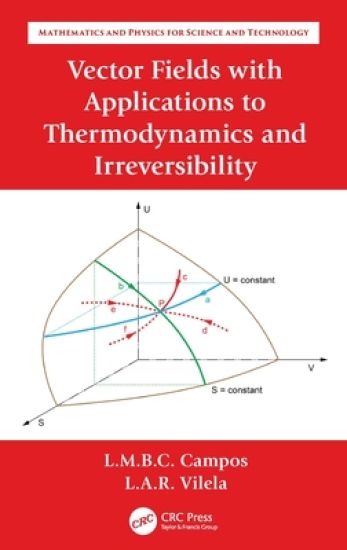
Vector Fields with Applications to Thermodynamics and Irreversibility

Vector Fields with Applications to Thermodynamics and Irreversibility

Luis Manuel Braga da Costa Campos; Luís António Raio Vilela

Taylor Francis Ltd
2022
sidottu
Vector Fields with Applications to Thermodynamics and Irreversibility is part of the series "Mathematics and Physics for Science and Technology", which combines rigorous mathematics with general physical principles to model practical engineering systems with a detailed derivation and interpretation of results. Volume V presents the mathematical theory of partial differential equations and methods of solution satisfying initial and boundary conditions, and includes applications to: acoustic, elastic, water, electromagnetic and other waves; the diffusion of heat, mass and electricity; and their interactions. This is the first book of the volume.The second book of volume V continues this book on thermodynamics, focusing on the equation of state and energy transfer processes including adiabatic, isothermal, isobaric and isochoric. These are applied to thermodynamic cycles, like the Carnot, Atkinson, Stirling and Barber-Brayton cycles, that are used in thermal devices, including refrigerators, heat pumps, and piston, jet and rocket engines. In connection with jet propulsion, adiabatic flows and normal and oblique shock waves in free space and nozzles with variable cross-section are considered. The equations of fluid mechanics are derived for compressible two-phase flow in the presence of shear and bulk viscosity, thermal conduction and mass diffusion. The thermodynamic cycles are illustrated by detailed calculations modelling the operation of piston, turbojet and rocket engines in various ambient conditions, ranging from sea level, the atmosphere of the earth at altitude and vacuum of space, for the propulsion of land, sea, air and space vehicles. The book is intended for graduate students and engineers working with mathematical models and can be applied to problems in mechanical, aerospace, electrical and other branches of engineering dealing with advanced technology, and also in the physical sciences and applied mathematics.This book:Simultaneously covers rigorous mathematics, general physical principles and engineering applications with practical interestProvides interpretation of results with the help of illustrationsIncludes detailed proofs of all resultsL.M.B.C. Campos was chair professor and the Coordinator of the Scientific Area of Applied and Aerospace Mechanics in the Department of Mechanical Engineering and also the director (and founder) of the Center for Aeronautical and Space Science and Technology until retirement in 2020.L.A.R.Vilela is currently completing an Integrated Master's degree in Aerospace Engineering at Institute Superior Tecnico (1ST) of Lisbon University.
Vector Fields with Applications to Thermodynamics and Irreversibility

Vector Fields with Applications to Thermodynamics and Irreversibility

Luis Manuel Braga da Costa Campos; Luís António Raio Vilela

TAYLOR FRANCIS LTD
2024
nidottu
Vector Fields with Applications to Thermodynamics and Irreversibility is part of the series "Mathematics and Physics for Science and Technology", which combines rigorous mathematics with general physical principles to model practical engineering systems with a detailed derivation and interpretation of results. Volume V presents the mathematical theory of partial differential equations and methods of solution satisfying initial and boundary conditions, and includes applications to: acoustic, elastic, water, electromagnetic and other waves; the diffusion of heat, mass and electricity; and their interactions. This is the first book of the volume.The second book of volume V continues this book on thermodynamics, focusing on the equation of state and energy transfer processes including adiabatic, isothermal, isobaric and isochoric. These are applied to thermodynamic cycles, like the Carnot, Atkinson, Stirling and Barber-Brayton cycles, that are used in thermal devices, including refrigerators, heat pumps, and piston, jet and rocket engines. In connection with jet propulsion, adiabatic flows and normal and oblique shock waves in free space and nozzles with variable cross-section are considered. The equations of fluid mechanics are derived for compressible two-phase flow in the presence of shear and bulk viscosity, thermal conduction and mass diffusion. The thermodynamic cycles are illustrated by detailed calculations modelling the operation of piston, turbojet and rocket engines in various ambient conditions, ranging from sea level, the atmosphere of the earth at altitude and vacuum of space, for the propulsion of land, sea, air and space vehicles. The book is intended for graduate students and engineers working with mathematical models and can be applied to problems in mechanical, aerospace, electrical and other branches of engineering dealing with advanced technology, and also in the physical sciences and applied mathematics.This book:Simultaneously covers rigorous mathematics, general physical principles and engineering applications with practical interestProvides interpretation of results with the help of illustrationsIncludes detailed proofs of all resultsL.M.B.C. Campos was chair professor and the Coordinator of the Scientific Area of Applied and Aerospace Mechanics in the Department of Mechanical Engineering and also the director (and founder) of the Center for Aeronautical and Space Science and Technology until retirement in 2020.L.A.R.Vilela is currently completing an Integrated Master's degree in Aerospace Engineering at Institute Superior Tecnico (1ST) of Lisbon University.
Vector Calculus

Vector Calculus

Steven G. Krantz; Harold Parks

TAYLOR FRANCIS LTD
2024
sidottu
Using meaningful examples, credible applications, and incisive technology, Vector Calculus strives to empower students, enhance their critical thinking skills, and equip them with the knowledge and skills to succeed in the major or discipline they ultimately choose to study. This text is intended to be a cornerstone of that process. An engaging style and clear writing make the language of mathematics accessible, understandable, and enjoyable, with a high standard for mathematical rigor.A calculus book must tell the truth. This book is carefully written in the accepted language of mathematics in a readable exposition. It includes useful and fascinating applications, acquaints students with the history of the subject, and offers a sense of what mathematics is all about.Technique is presented, yet so are ideas. The authors help students to master basic methods and discover and build their own concepts in a scientific subject. There is an emphasis on using modeling and numerical calculation. Additional features include:A Quick Quiz and Problems for Practice, Further Theory and Practice, and Calculator/Computer Exercises appear at the end of each sectionAll exercise sets are step laddered A Look Back and A Look Forward help students put the ideas in contextEvery chapter ends with a Genesis and Development section, giving history and perspective on key topics in the evolution of calculusBoxed Insights clear up points or answer commonly asked questionsThe text has an extra-large offering of examplesExamples are illustrated with meaningful and useful graphicsThe pedagogical features make the subject more interesting and accessible to students than other texts, while maintaining an appropriate rigor. —Daniel Cunningham, CSU-FresnoThis text is truly well written and organized. I do like the fact the book is quite rigorous, yet full of illustrative examples. —Bob Devaney, Boston University
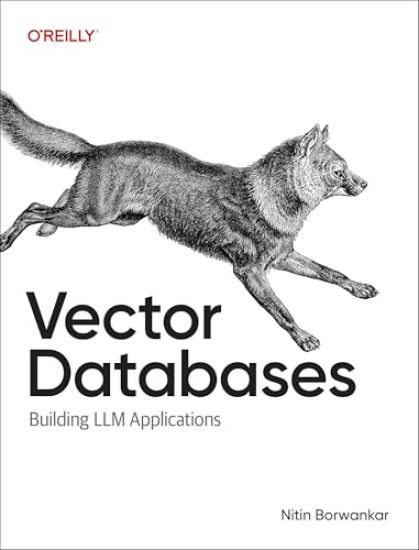
Vector Databases: A Practical Introduction

Vector Databases: A Practical Introduction

Nitin Borwankar

O'Reilly Media
2026
nidottu
The AI revolution is here, and at its core lies a game-changing technology that most developers haven't fully explored: vector databases. From powering semantic search to enabling large language models (LLMs) and generative AI, vector databases are reshaping how we build applications with unstructured data like text, images, and audio. But how do you go from curious to capable with this vital technology? That's where this book comes in. In this hands-on guide, author Nitin Borwankar takes you through the "why, what, and how" of vector databases, starting with the basic theory behind vector embeddings and progressing to building applications with real-world tools. You'll learn about Word2vec, how to convert open source SQL databases like SQLite3 and PostgreSQL into vector databases, and integrate them into retrieval-augmented generation (RAG) applications. Whether you're a Python developer, data engineer, or ML practitioner, this book gives you the foundation to leverage vector databases confidently in your AI projects. Understand the connection between vector databases, embeddings, and LLMs Learn practical approaches for transforming SQL databases into vector databases Build RAG applications for both personal and enterprise use Apply vector databases to solve real-world AI challenges Learn how to use vector databases with LLMs to build applications
Vector Analysis and Cartesian Tensors, Third edition
This is a comprehensive and self-contained text suitable for use by undergraduate mathematics, science and engineering students. Vectors are introduced in terms of cartesian components, making the concepts of gradient, divergent and curl particularly simple. The text is supported by copious examples and progress can be checked by completing the many problems at the end of each section. Answers are provided at the back of the book.
Vector Geometry

Vector Geometry

Gilbert De Beauregard Robinson

Literary Licensing, LLC
2012
sidottu
""Vector Geometry"" by Gilbert De Beauregard Robinson is a comprehensive guide to the study of vectors and their application in geometry. The book covers a wide range of topics, including vector algebra, scalar products, vector products, triple products, and applications of vectors in geometry. It also delves into the geometry of lines, planes, and surfaces, as well as the geometry of curves and surfaces in three-dimensional space. The book is designed for students and professionals in mathematics, physics, engineering, and other related fields who are interested in learning about vectors and their applications in geometry. With clear explanations and numerous examples, ""Vector Geometry"" is an essential resource for anyone seeking a deeper understanding of this important mathematical concept.This scarce antiquarian book is a facsimile reprint of the old original and may contain some imperfections such as library marks and notations. Because we believe this work is culturally important, we have made it available as part of our commitment for protecting, preserving, and promoting the world's literature in affordable, high quality, modern editions, that are true to their original work.
Vector Mechanics for Engineers: Statics and Dynamics

Vector Mechanics for Engineers: Statics and Dynamics

Ferdinand Beer; E. Johnston; David Mazurek; Phillip Cornwell; Brian Self

McGraw-Hill Education
2018
sidottu
Vector Mechanics for Engineers helps students analyze problems in a simple and logical manner and then apply basic principles to their solutions, encouraging a strong conceptual understanding of these basic principles. Offering a unified presentation of the principles of kinetics and a systematic problem-solving approach, the text has proven to be an effective teaching tool, especially when paired with the digital resources available in Connect.
Vector Mechanics for Engineers: Statics

Vector Mechanics for Engineers: Statics

Ferdinand Beer; E. Johnston; David Mazurek

McGraw-Hill Education
2018
sidottu
A primary objective in a first course in mechanics is to help develop a student's ability first to analyze problems in a simple and logical manner, and then to apply basic principles to their solutions. A strong conceptual understanding of these basic mechanics principles is essential for successfully solving mechanics problems. This edition of Vector Mechanics for Engineers will help instructors achieve these goals. Continuing in the spirit of its successful previous editions, this edition provides conceptually accurate and thorough coverage together with a significant refreshment of the exercise sets and online delivery of homework problems to your students. The 12th edition has new case studies and enhancements in the text and in Connect. The hallmark of the Beer-Johnston series has been the problem sets.This edition is no different. Over 650 of the homework problems in the text are new or revised. One of the characteristics of the approach used in this book is that mechanics of particles is clearly separated from the mechanics of rigid bodies. This approach makes it possible to consider simple practical applications at an early stage and to postpone the introduction of the more difficult concepts. Additionally, Connect has over 100 Free-Body Diagram Tool Problems and Process-Oriented Problems.McGraw-Hill's Connect, is also available. Connect is the only integrated learning system that empowers students by continuously adapting to deliver precisely what they need, when they need it, how they need it, so that class time is more effective. Connect allows the professor to assign homework, quizzes, and tests easily and automatically grades and records the scores of the student's work. Problems are randomized to prevent sharing of answers an may also have a "multi-step solution" which helps move the students' learning along if they experience difficulty.
Vector Analysis and Cartesian Tensors

Vector Analysis and Cartesian Tensors

Donald Edward Bourne

Taylor Francis Ltd
2017
sidottu
This is a comprehensive self-contained text suitable for use by undergraduate mathematics, science and engineering students following courses in vector analysis. The earlier editions have been used extensively in the design and teaching of may undergraduate courses. Vectors are introduced in terms of Cartesian components, an approach which is found to appeal to many students because of the basic algebraic rules of composition of vectors and the definitions of gradient divergence and curl are thus made particularly simple. The theory is complete, and intended to be as rigorous as possible at the level at which it is aimed.
Vector Analysis

Vector Analysis

Klaus Jänich

Springer-Verlag New York Inc.
2010
nidottu
Classical vector analysis deals with vector fields; the gradient, divergence, and curl operators; line, surface, and volume integrals; and the integral theorems of Gauss, Stokes, and Green. Modern vector analysis distills these into the Cartan calculus and a general form of Stokes' theorem. This essentially modern text carefully develops vector analysis on manifolds and reinterprets it from the classical viewpoint (and with the classical notation) for three-dimensional Euclidean space, then goes on to introduce de Rham cohomology and Hodge theory. The material is accessible to an undergraduate student with calculus, linear algebra, and some topology as prerequisites. The many figures, exercises with detailed hints, and tests with answers make this book particularly suitable for anyone studying the subject independently.
Vector Bundles and Their Applications

Vector Bundles and Their Applications

Glenys Luke; Alexander S. Mishchenko

Springer-Verlag New York Inc.
2010
nidottu
In the last few years the use of geometrie methods has permeated many more branehes of mathematies and the seiences. Briefly its role may be eharaeterized as folIows. Whereas methods of mathematieal analysis deseribe phenomena 'in the sm all " geometrie methods eontribute to giving the picture 'in the large'. A seeond no less important property of geometrie methods is the eonvenienee of using its language to deseribe and give qualitative explanations for diverse mathematieal phenomena and patterns. From this point of view, the theory of veetor bundles together with mathematieal analysis on manifolds (global anal- ysis and differential geometry) has provided a major stimulus. Its language turned out to be extremely fruitful: connections on prineipal veetor bundles (in terms of whieh various field theories are deseribed), transformation groups including the various symmetry groups that arise in eonneetion with physieal problems, in asymptotie methods of partial differential equations with small parameter, in elliptie operator theory, in mathematieal methods of classieal meehanies and in mathematieal methods in eeonomies. There are other eur- rently less signifieant applieations in other fields. Over a similar period, uni- versity edueation has ehanged eonsiderably with the appearanee of new courses on differential geometry and topology. New textbooks have been published but 'geometry and topology' has not, in our opinion, been wen eovered from a prae- tieal applieations point of view.
Vector Control of Induction Machines

Vector Control of Induction Machines

Benoît Robyns; Bruno Francois; Philippe Degobert; Jean Paul Hautier

Springer London Ltd
2014
nidottu
After a brief introduction to the main law of physics and fundamental concepts inherent in electromechanical conversion, Vector Control of Induction Machines introduces the standard mathematical models for induction machines – whichever rotor technology is used – as well as several squirrel-cage induction machine vector-control strategies. The use of causal ordering graphs allows systematization of the design stage, as well as standardization of the structure of control devices.Vector Control of Induction Machines suggests a unique approach aimed at reducing parameter sensitivity for vector controls based on a theoretical analysis of this sensitivity. This analysis naturally leads to the introduction of control strategies that are based on the combination of different controls with different robustness properties, through the use of fuzzy logic supervisors. Numerous applications and experiments confirm the validity of this simple solution, which is both reproducible and applicable to other complex systems.Vector Control of Induction Machines is written for researchers and postgraduate students in electrical engineering and motor drive design.
Vector Analysis for Computer Graphics

Vector Analysis for Computer Graphics

John Vince

Springer London Ltd
2021
sidottu
This second edition has been completely restructured, resulting in a compelling description of vector analysis from its first appearance as a byproduct of Hamilton’s quaternions to the use of vectors in solving geometric problems. The result provides readers from different backgrounds with a complete introduction to vector analysis. The author shows why vectors are so useful and how it is possible to develop analytical skills in manipulating vector algebra.Using over 150 full-colour illustrations, the author demonstrates in worked examples how this relatively young branch of mathematics has become a powerful and central tool in describing and solving a wide range of geometric problems. These may be in the form of lines, surfaces and volumes, which may touch, collide, intersect, or create shadows upon complex surfaces. The book is divided into eleven chapters covering the history of vector analysis, linear equations, vector algebra, vector products, differentiating vector-valued functions, vector differential operators, tangent and normal vectors, straight lines, planes, intersections and rotating vectors. The new chapters are about the history, differentiating vector-valued functions, differential operators and tangent and normal vectors. The original chapters have been reworked and illustrated.
Vector Analysis for Computer Graphics

Vector Analysis for Computer Graphics

John Vince

SPRINGER LONDON LTD
2022
nidottu
This second edition has been completely restructured, resulting in a compelling description of vector analysis from its first appearance as a byproduct of Hamilton’s quaternions to the use of vectors in solving geometric problems. The result provides readers from different backgrounds with a complete introduction to vector analysis. The author shows why vectors are so useful and how it is possible to develop analytical skills in manipulating vector algebra.Using over 150 full-colour illustrations, the author demonstrates in worked examples how this relatively young branch of mathematics has become a powerful and central tool in describing and solving a wide range of geometric problems. These may be in the form of lines, surfaces and volumes, which may touch, collide, intersect, or create shadows upon complex surfaces. The book is divided into eleven chapters covering the history of vector analysis, linear equations, vector algebra, vector products, differentiating vector-valued functions, vector differential operators, tangent and normal vectors, straight lines, planes, intersections and rotating vectors. The new chapters are about the history, differentiating vector-valued functions, differential operators and tangent and normal vectors. The original chapters have been reworked and illustrated.
Vector Quantization and Signal Compression

Vector Quantization and Signal Compression

Allen Gersho; Robert M. Gray

Springer-Verlag New York Inc.
2012
nidottu
Herb Caen, a popular columnist for the San Francisco Chronicle, recently quoted a Voice of America press release as saying that it was reorganizing in order to "eliminate duplication and redundancy. " This quote both states a goal of data compression and illustrates its common need: the removal of duplication (or redundancy) can provide a more efficient representation of data and the quoted phrase is itself a candidate for such surgery. Not only can the number of words in the quote be reduced without losing informa­ tion, but the statement would actually be enhanced by such compression since it will no longer exemplify the wrong that the policy is supposed to correct. Here compression can streamline the phrase and minimize the em­ barassment while improving the English style. Compression in general is intended to provide efficient representations of data while preserving the essential information contained in the data. This book is devoted to the theory and practice of signal compression, i. e. , data compression applied to signals such as speech, audio, images, and video signals (excluding other data types such as financial data or general­ purpose computer data). The emphasis is on the conversion of analog waveforms into efficient digital representations and on the compression of digital information into the fewest possible bits. Both operations should yield the highest possible reconstruction fidelity subject to constraints on the bit rate and implementation complexity.
Vector Variational Inequalities and Vector Equilibria
In the fifties and sixties, several real problems, old and new, especially in Physics, Mechanics, Fluidodynamics, Structural Engi- neering, have shown the need of new mathematical models for study- ing the equilibrium of a system. This has led to the formulation of Variational Inequalities (by G. Stampacchia), and to the develop- ment of Complementarity Systems (by W.S. Dorn, G.B. Dantzig, R.W. Cottle, O.L. Mangasarian et al.) with important applications in the elasto-plastic field (initiated by G. Maier). The great advan- tage of these models is that the equilibrium is not necessarily the extremum of functional, like energy, so that no such functional must be supposed to exist. In the same decades, in some fields like Control Theory, Net- works, Industrial Systems, Logistics, Management Science, there has been a strong request of mathmatical models for optimizing situa- tions where there are concurrent objectives, so that Vector Optimiza- tion (initiated by W. Pareto) has received new impetus. With regard to equilibrium problems, Vector Optimization has the above - mentioned drawback of being obliged to assume the exis- tence of a (vector) functional. Therefore, at the end of the seventies the study of Vector Variational Inequalities began with the scope of exploiting the advantages of both variational and vector models. This volume puts together most of the recent mathematical results in Vector Variational Inequalities with the purpose of contributing to further research.