Kirjojen hintavertailu. Mukana 11 342 296 kirjaa ja 12 kauppaa.

Kirjahaku

Etsi kirjoja tekijän nimen, kirjan nimen tai ISBN:n perusteella.

1000 tulosta hakusanalla Vivek Sachdeva

The Class Matrix

The Class Matrix

Vivek Chibber

HARVARD UNIVERSITY PRESS
2024
nidottu
“A quite thorough and impressive work, not only a compelling defense of materialism but also a fair-minded if highly critical engagement with cultural theory. It isn’t clear how culturalists—especially the anti-Marxist ones—can effectively respond to this broadside, tightly and cogently argued as it is.”—Chris Wright, CounterPunch “Chibber…has developed a sophisticated, elegant, and readable defense of the sociological significance of class structure in understanding and addressing the key problems inherent in capitalism.”—Choice “[A] clear, compelling, and systematic statement of the view that class is an objective reality that predictably and rationally shapes human thought and action, one we need to grapple with seriously if we’re to comprehend contemporary society and its morbid symptoms.”—Jacobin Following the collapse of the Soviet Union, theorists argued that social and economic life is reducible to culture—that our choices reflect interpretations of the world around us rather than the limitations imposed by basic material facts. Today, gross inequalities in wealth and power have pushed scholars to reopen materialist lines of inquiry. But it would be a mistake to pretend that the cultural turn never happened. Vivek Chibber instead engages cultural theory seriously, proposing a fusion of materialism and the most useful insights of its rival. Chibber accommodates the main arguments from the cultural turn within a robust materialist framework, showing how one can agree that the making of meaning plays an important role in social agency while still recognizing the fundamental power of class structure and class formation. He vindicates classical materialism by demonstrating that it accounts for phenomena cultural theorists thought it was powerless to explain, while also showing that aspects of class are indeed centrally affected by cultural factors. The Class Matrix does not seek to displace culture from the analysis of modern capitalism. Rather, in prose of exemplary clarity, Chibber gives culture its due alongside what Marx called “the dull compulsion of economic relations.”

Bengali Harlem and the Lost Histories of South Asian America
Winner of the Theodore Saloutos Memorial Book AwardWinner of the Association for Asian American Studies Book Award for HistoryA Times Literary Supplement Book of the YearA Saveur “Essential Food Books That Define New York City” SelectionIn the final years of the nineteenth century, small groups of Muslim peddlers arrived at Ellis Island every summer, bags heavy with embroidered silks from their home villages in Bengal. The American demand for “Oriental goods” took these migrants on a curious path, from New Jersey’s beach boardwalks into the heart of the segregated South. Two decades later, hundreds of Indian Muslim seamen began jumping ship in New York and Baltimore, escaping the engine rooms of British steamers to find less brutal work onshore. As factory owners sought their labor and anti-Asian immigration laws closed in around them, these men built clandestine networks that stretched from the northeastern waterfront across the industrial Midwest.The stories of these early working-class migrants vividly contrast with our typical understanding of immigration. Vivek Bald’s meticulous reconstruction reveals a lost history of South Asian sojourning and life-making in the United States. At a time when Asian immigrants were vilified and criminalized, Bengali Muslims quietly became part of some of America’s most iconic neighborhoods of color, from Tremé in New Orleans to Detroit’s Black Bottom, from West Baltimore to Harlem. Many started families with Creole, Puerto Rican, and African American women.As steel and auto workers in the Midwest, as traders in the South, and as halal hot dog vendors on 125th Street, these immigrants created lives as remarkable as they are unknown. Their stories of ingenuity and intermixture challenge assumptions about assimilation and reveal cross-racial affinities beneath the surface of early twentieth-century America.
Locked in Place

Locked in Place

Vivek Chibber

Princeton University Press
2006
pokkari
Why were some countries able to build "developmental states" in the decades after World War II while others were not? Through a richly detailed examination of India's experience, Locked in Place argues that the critical factor was the reaction of domestic capitalists to the state-building project. During the 1950s and 1960s, India launched an extremely ambitious and highly regarded program of state-led development. But it soon became clear that the Indian state lacked the institutional capacity to carry out rapid industrialization. Drawing on newly available archival sources, Vivek Chibber mounts a forceful challenge to conventional arguments by showing that the insufficient state capacity stemmed mainly from Indian industrialists' massive campaign, in the years after Independence, against a strong developmental state. Chibber contrasts India's experience with the success of a similar program of state-building in South Korea, where political elites managed to harness domestic capitalists to their agenda. He then develops a theory of the structural conditions that can account for the different reactions of Indian and Korean capitalists as rational responses to the distinct development models adopted in each country. Provocative and marked by clarity of prose, this book is also the first historical study of India's post-colonial industrial strategy. Emphasizing the central role of capital in the state-building process, and restoring class analysis to the core of the political economy of development, Locked in Place is an innovative work of theoretical power that will interest development specialists, political scientists, and historians of the subcontinent.
I'm Afraid of Men

I'm Afraid of Men

Vivek Shraya

Prentice Hall Press
2018
sidottu
"Cultural rocket fuel." --Vanity Fair "Emotional and painful but also layered with humour, I'm Afraid of Men will widen your lens on gender and challenge you to do better. This challenge is a necessary one--one we must all take up. It is a gift to dive into Vivek's heart and mind." --Rupi Kaur, bestselling author of The Sun and Her Flowers and Milk and Honey A trans artist explores how masculinity was imposed on her as a boy and continues to haunt her as a girl--and how we might reimagine gender for the twenty-first century. Vivek Shraya has reason to be afraid. Throughout her life she's endured acts of cruelty and aggression for being too feminine as a boy and not feminine enough as a girl. In order to survive childhood, she had to learn to convincingly perform masculinity. As an adult, she makes daily compromises to steel herself against everything from verbal attacks to heartbreak. Now, with raw honesty, Shraya delivers an important record of the cumulative damage caused by misogyny, homophobia, and transphobia, releasing trauma from a body that has always refused to assimilate. I'm Afraid of Men is a journey from camouflage to a riot of colour and a blueprint for how we might cherish all that makes us different and conquer all that makes us afraid.
The Complete Verilog Book

The Complete Verilog Book

Vivek Sagdeo

Springer
1998
sidottu
The Verilog hardware description language (HDL) provides the ability to describe digital and analog systems. This ability spans the range from descriptions that express conceptual and architectural design to detailed descriptions of implementations in gates and transistors. Verilog was developed originally at Gateway Design Automation Corporation during the mid-eighties. Tools to verify designs expressed in Verilog were implemented at the same time and marketed. Now Verilog is an open standard of IEEE with the number 1364. Verilog HDL is now used universally for digital designs in ASIC, FPGA, microprocessor, DSP and many other kinds of design-centers and is supported by most of the EDA companies. The research and education that is conducted in many universities is also using Verilog. This book introduces the Verilog hardware description language and describes it in a comprehensive manner. Verilog HDL was originally developed and specified with the intent of use with a simulator. Semantics of the language had not been fully described until now. In this book, each feature of the language is described using semantic introduction, syntax and examples. Chapter 4 leads to the full semantics of the language by providing definitions of terms, and explaining data structures and algorithms. The book is written with the approach that Verilog is not only a simulation or synthesis language, or a formal method of describing design, but a complete language addressing all of these aspects. This book covers many aspects of Verilog HDL that are essential parts of any design process.
Confidence Intervals for Discrete Data in Clinical Research

Confidence Intervals for Discrete Data in Clinical Research

Vivek Pradhan; Ashis Gangopadhyay; Sandeep M. Menon; Cynthia Basu; Tathagata Banerjee

TAYLOR FRANCIS LTD
2024
nidottu
Confidence Intervals for Discrete Data in Clinical Research is designed as a toolbox for biomedical researchers. Analysis of discrete data is one of the most used yet vexing areas in clinical research. The array of methodologies available in the literature to address the inferential questions for binomial and multinomial data can be a double-edged sword. On the one hand, these methods open a rich avenue of exploration of data; on the other, the wide-ranging and competing methodologies potentially lead to conflicting inferences, adding to researchers' confusion and frustration and also leading to reporting bias. This book addresses the problems that many practitioners experience in choosing and implementing fit for purpose data analysis methods to answer critical inferential questions for binomial and count data. The book is an outgrowth of the authors' collective experience in biomedical research and provides an excellent overview of inferential questions of interest for binomial proportions and rates based on count data, and reviews various solutions to these problems available in the literature. Each chapter discusses the strengths and weaknesses of the methods and suggests practical recommendations. The book's primary focus is on applications in clinical research, and the goal is to provide direct benefit to the users involved in the biomedical field.
Dalit Studies and Dalit Movements in India

Dalit Studies and Dalit Movements in India

Vivek Kumar

TAYLOR FRANCIS LTD
2026
sidottu
This volume seeks to provide a philosophical and theoretical foundation for Dalit studies. It begins by formulating a philosophical and theoretical definition of the term ‘Dalit’, along with its empirical characteristics—structural location; the cumulative and collective nature of exclusion; the temporal history of exclusion; and the evolution and identification of icons and cultural symbols within Dalit society. The volume studies the Dalits through the lens of social mobility; highlights the triple exploitation of Dalit women; presents an epistemic and theoretical framework for evolving a ‘Dalit perspective’ and its functions to understand social reality from the point of view of Dalit experience; and engages with the different facets of the Dalit movement. Lucid, accessible, and thought-provoking, this book will be of great interest to scholars and researchers of social exclusion and discrimination studies, sociology, law and human rights, and South Asian studies.
Fruits and Vegetables as Nutraceutical

Fruits and Vegetables as Nutraceutical

Vivek Anumala; Arunkumar Phurailatpam; Pranabjyoti Sarma

Taylor Francis Ltd
2021
sidottu
Cognizing the significance of fruits and vegetables in the human diet. This book is designed to provide an insight into the nutritional importance of fruits and vegetables in human health, disease prevention, managing stress and boosting immunity, especially in this COVID-19 pandemic.The book contains a very concise and precise information on nutraceuticals, their sources and benefits. It also contains the best possible information regarding common health issues faced by humans and their prevention with the help of bioactive compounds, maintaining a focus throughout on how nutraceuticals influence human health.The information provided in this book is truly based on scientific records of scientists working in the arena of bioactive compounds of fruits and vegetables and their role in disease prevention of humans as well as Food Safety and Standards Authority of India (FSSAI) acts and regulations.Note: Taylor & Francis does not sell or distribute the hardback in India, Pakistan, Nepal, Bhutan, Bangladesh and Sri Lanka.
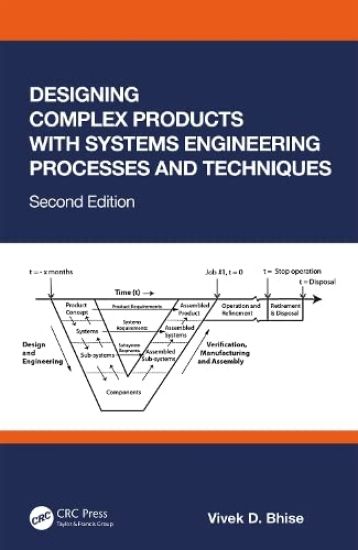
Designing Complex Products with Systems Engineering Processes and Techniques
Completely revised including six new chapters, this new edition presents a more comprehensive knowledge of issues facing developers of complex products and process management. It includes more tools for implementing a Systems Engineering approach to minimize the risks of delays and cost overruns and helps create the right product for its customers.Designing Complex Products with Systems Engineering Processes and Techniques, Second Edition highlights how to increase customer satisfaction, quality, safety, and usability to meet program timings and budgets using a Systems Engineering approach. It provides decision-making considerations and models for creating sustainable product design and describes many techniques and tools used in product development and the product life-cycle orientation. The book also offers techniques used in Design for Manufacturing, Design for Assembly, and product evaluation methods for verification and validation testing. Many new examples, case studies, six new chapters, and updated program and data charts held on our website are offered.The book targets practicing engineers, engineering management personnel, product designers, product planners, product and program managers in all industrialized and developing countries. In addition the book is also useful to undergraduate, graduate students, and faculty in engineering, product design, and product project and program management.
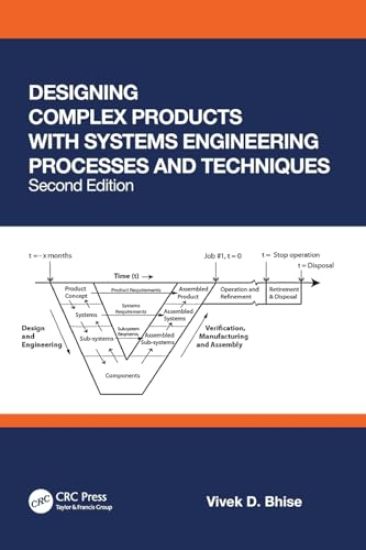
Designing Complex Products with Systems Engineering Processes and Techniques
Completely revised including six new chapters, this new edition presents a more comprehensive knowledge of issues facing developers of complex products and process management. It includes more tools for implementing a Systems Engineering approach to minimize the risks of delays and cost overruns and helps create the right product for its customers.Designing Complex Products with Systems Engineering Processes and Techniques, Second Edition highlights how to increase customer satisfaction, quality, safety, and usability to meet program timings and budgets using a Systems Engineering approach. It provides decision-making considerations and models for creating sustainable product design and describes many techniques and tools used in product development and the product life-cycle orientation. The book also offers techniques used in Design for Manufacturing, Design for Assembly, and product evaluation methods for verification and validation testing. Many new examples, case studies, six new chapters, and updated program and data charts held on our website are offered.The book targets practicing engineers, engineering management personnel, product designers, product planners, product and program managers in all industrialized and developing countries. In addition the book is also useful to undergraduate, graduate students, and faculty in engineering, product design, and product project and program management.
Comparative Analysis of Interim Measures – Interim Remedies (England & Wales) v Preservation Measures (China)
Interim remedies and provisional measures are a critical component of civil/commercial litigation and arbitration. The objective of this book is to set out not just the law and practice in relation to the primary interim remedies and preservation measures available in England & Wales and China, but also to provide the comparative analysis between the two jurisdictions concerning these interim measures.The system for interim remedies in England & Wales is well-established, but preservation measures in China are a work in progress and many differences exist between the two legal systems, both in terms of theory and practice. For example, China does not recognise the general concept of interim measures, if looked at from the English law point of view, though it does have similar concepts of Property preservation, evidence preservation and behaviour preservation. China has recently adopted Chinese Civil Code 2020 and in writing this book the authors have incorporated all the relevant elements from the new Code. There is no equivalent of Practice Directions in China, and this book provides provide much needed clarity on this area, drawing together the law and guidance which is presently scattered across numerous local courts in the different provinces.This is an important book that is likely to have a significant impact on existing scholarship regarding interim remedies in England, Wales and China, and be of interest of all parties involved in cross-border litigation. Its readership will include industry professionals, academics, policy-makers and government officials.
The Law of the Sea and Maritime Boundary Disputes in Areas of Hydrocarbon Potential
The United Nations Convention on the Law of Sea (‘UNCLOS’) is hailed as one of the most significant multilateral legal agreements executed in the past few decades. However, its shortcomings are neither trivial nor inconsequential, especially regarding maritime boundary disputes involving hydrocarbon resources. This monograph examines the relationship between UNCLOS and maritime boundaries in five non-polar regions, encompassing almost 90% of global unresolved disputes involving offshore hydrocarbon development. The regions, which include the eastern Mediterranean, the Caspian Sea, the Persian Gulf, northeast Asia, and the South China Sea, were chosen for their oil and gas resources potential and recent military skirmishes that have the potential to lead to wider regional confrontations. The book addresses each region’s maritime boundary status in the context of specific articles within UNCLOS that have been exploited by disputing states to justify their overlapping claims. The history and future applicability of multilateral Joint Development Area agreements for each region are evaluated for their potential to provide a cooperative solution to resolve ongoing tensions. Highlighting the limitations of current ‘gun-boat’ diplomacy, the monograph makes practical suggestions for new paradigms for resolving outstanding disputes, promoting lasting peace and generating economic benefits resulting from resource development.
The Law of the Sea and Maritime Boundary Disputes in Areas of Hydrocarbon Potential
The United Nations Convention on the Law of Sea (‘UNCLOS’) is hailed as one of the most significant multilateral legal agreements executed in the past few decades. However, its shortcomings are neither trivial nor inconsequential, especially regarding maritime boundary disputes involving hydrocarbon resources. This monograph examines the relationship between UNCLOS and maritime boundaries in five non-polar regions, encompassing almost 90% of global unresolved disputes involving offshore hydrocarbon development. The regions, which include the eastern Mediterranean, the Caspian Sea, the Persian Gulf, northeast Asia, and the South China Sea, were chosen for their oil and gas resources potential and recent military skirmishes that have the potential to lead to wider regional confrontations. The book addresses each region’s maritime boundary status in the context of specific articles within UNCLOS that have been exploited by disputing states to justify their overlapping claims. The history and future applicability of multilateral Joint Development Area agreements for each region are evaluated for their potential to provide a cooperative solution to resolve ongoing tensions. Highlighting the limitations of current ‘gun-boat’ diplomacy, the monograph makes practical suggestions for new paradigms for resolving outstanding disputes, promoting lasting peace and generating economic benefits resulting from resource development.
Railway Steel Structures

Railway Steel Structures

Vivek Bhushan Sood

TAYLOR FRANCIS LTD
2024
sidottu
This book covers the basics of fabrication of railway steel structures. It covers the various types of steels, steel sections and structures involved along with fabrication methods. Further, some basics of design, handling and launching of fabricated components are covered including case studies covering the consequences of errors or shortcuts adopted during fabrication. The latest trends in steel construction, adoption of steel for fast-paced construction, pre-engineered structures and use of steel for station redevelopment projects are also covered. This book aims to help the reader deliver economical and good-quality structures speedily without time and cost overruns.This book:• Introduces readers to the advantages and challenges of using steel as a material for railway bridges and other structures.• Covers instructions and practices for fabrication of railway steel bridges duly linking with other aspects like design and erection to provide 3600 view.• Reviews the latest developments in the field including new materials, fabrication techniques and types of structures being adopted.• Includes case studies to underline the importance of good fabrication practices and consequences of ignoring the same.This book is aimed at civil and mechanical engineering professionals connected with fabrication and erection of railway steel structures.
Creating Smart Enterprises

Creating Smart Enterprises

Vivek Kale

TAYLOR FRANCIS LTD
2023
nidottu
"Vivek Kale's Creating Smart Enterprises goes smack-dab at the heart of harnessing technology for competing in today's chaotic digital era. Actually, for him, it's SMACT-dab: SMACT (Social media, Mobile, Analytics and big data, Cloud computing, and internet of Things) technologies. This book is required reading for those that want to stay relevant and win, and optional for those that don't."—Peter Fingar, Author of Cognitive Computing and business technology consultantCreating Smart Enterprises unravels the mystery of social media, mobile, analytics and big data, cloud, and Internet of Things (SMACT) computing and explains how it can transform the operating context of business enterprises. It provides a clear understanding of what SMACT really means, what it can do for smart enterprises, and application areas where it is practical to use them.All IT professionals who are involved with any aspect of a SMACT computing project will profit by using this book as a roadmap to make a more meaningful contribution to the success of their computing initiatives.This pragmatic book: Introduces the VUCA (volatility, uncertainty, complexity, and ambiguity) business ecosystem confronted by the businesses today. Describes the challenges of defining business and IT strategies and of aligning them as well as their impact on enterprise governance.Provides a very wide treatment of the various components of SMACT computing, including the Internet of Things (IoT) and its constituting technologies like RFID, wireless networks, sensors, and wireless sensor networks (WSNs). This book addresses the key differentiator of SMACT computing environments and solutions that combine the power of an elastic infrastructure with analytics. The SMACT environment is cloud-based and inherently mobile. Information management processes can analyze and discern recurring patterns in colossal pools of operational and transactional data. Analytics, big data, and IoT computing leverage and transform these data patterns to help create successful, smart enterprises.
Enterprise Performance Intelligence and Decision Patterns
"Vivek Kale has written a great book on performance management that focuses on decision-making; on continuous, incremental improvement; and on identifying common patterns in becoming a more intelligent organization." —James Taylor, CEO of Decision Management Solutions and author of Real-World Decision Modeling with DMN"Introducing the concepts of decision patterns and performance intelligence, Vivek Kale has written another important book on the issues faced by contemporary organizations."—Gary Cokins, author of Predictive Business Analytics and Performance Management: Integrating Strategy Execution, Methodologies, Risk, and AnalyticsEnterprise Performance Intelligence and Decision Patterns unravels the mystery of enterprise performance intelligence (EPI) and explains how it can transform the operating context of business enterprises. It provides a clear understanding of what EPI means, what it can do, and application areas where it is practical to use.The need to be responsive to evolving customer needs and desires creates organizational structures where business intelligence (BI) and decision making is pushed out to operating units that are closest to the scene of the action. Closed-loop decision making resulting from a combination of on-going performance management with on-going BI can lead to an effective responsive enterprise; hence, the need for performance intelligence (PI).This pragmatic book:Introduces the technologies such as data warehousing, data mining, analytics, and business intelligence systems that are a first step toward enabling data-driven enterprises.Details decision patterns and performance decision patterns that pave the road for performance intelligence applications.Introduces the concepts, principles, and technologies related to performance measurement systems.Describes the concepts and principles related to balance scorecard systems (BCS).Introduces aspects of performance intelligence for the real-time enterprises.Enterprise Performance Intelligence and Decision Patterns shows how a company can design and implement instruments ranging from decision patterns to PI systems that can enable continuous correction of business unit behavior so companies can enhance levels of productivity and profitability.
Agile Network Businesses

Agile Network Businesses

Vivek Kale

TAYLOR FRANCIS LTD
2023
nidottu
"A highly readable and yet comprehensive book on network businesses that have become governable with the advent of cloud and big data computing. Vivek Kale is a master of simplifying the complex world of network theory and its relevance to business."—Jagdish N. Sheth, Charles H. Kellstadt Professor of Marketing, Emory University Agile Network Businesses: Collaboration, Coordination, and Competitive Advantage reflects the shift from traditional networks to virtual and agile networks that enable businesses to operate dynamically, thereby representing markets more closely. This book enables IT managers and business decision-makers to understand clearly what network businesses and enterprises are, what they can do for them, and how to realize them. Customers in geographically dispersed markets are demanding higher quality products in a greater variety, at lower cost, and in a shorter time. Thus, enterprises have moved from a few centralized and vertically integrated facilities to geographically dispersed networks of capabilities, competencies and resources, which are the core of network businesses. Enterprises are now constructing more fluid network businesses in which each member facility focuses on differentiation and relies increasingly on its partners, suppliers, and customers to provide the rest. Network businesses have emerged as an organizational paradigm for collaboration and coordination across loosely connected individual organizations.This pragmatic book: Introduces network solutions and distributed systems that are a first step towards enabling a network enterprise. It also gives a detailed description of networks and agent system that have paved the road to network enterprises.Describes the basics of service-oriented architecture (SOA), cloud computing, and big data that are essential to network enterprises.Details the distinguishing aspects of network enterprises, which include virtual enterprises, management of network enterprises, and collaborative network enterprises.Covers such major application areas as supply, manufacturing, e-business, platform, social and wireless sensor networks.Introduces decision networks in the context of supply chain networks This book reinterprets the traditional supply chain in terms of the flow of decisions, information, and materials, which leads to reconfiguring the traditional supply chain network into mutually separate decision networks (e.g., fourth-party logistics or 4PL), information networks (e.g., wireless sensor networks), and logistics networks (e.g., third-party logistics or 3PL).