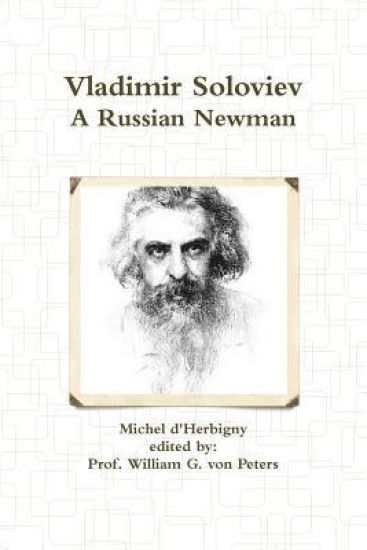
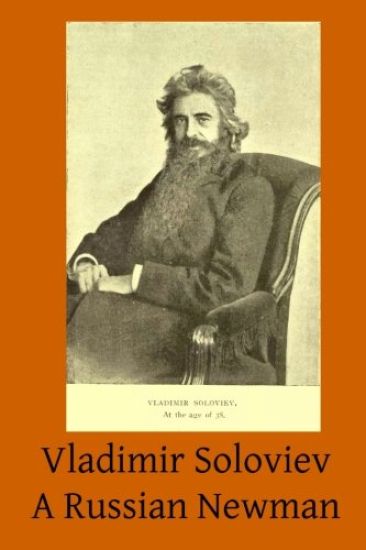
Vladimir Soloviev was a philosopher, poet, theologian and prophet. He was widely recognized as Russia's greatest thinker of the 19th Century. Michel d'Herbigny's biography allows us to experience Soloviev the man, in his struggles against censorship, the Tsarist police, and others who sought to keep the Russian people uninformed of Soloviev's work. Soloviev has been recognized by John Paul II and Benedict XVI for his personal holiness. His fervent drive for the reunion of the Russian Orthodox with the Catholic Church, and life of asceticism led to his early death as he poured out his life for Christ. Hated by Lenin, forbidden in his homeland until the 1990s, and lost in the clutter of modern life in the West, Soloviev is only now beginning to rise again among Russian Orthodox, Catholics and other Christians. Vladimir Soloviev is a thinker that will remain with you, and help you realize God's plan for mankind and yourself.
A clearly written, insightful study of Nabokov the novelist, providing an expert analysis of the 17 novels he wrote during a career spanning more than 50 years: one of the most impressive, challenging, and controversial literary achievements of our time.
Vladimir Burtsev and the Struggle for a Free Russia examines the life of the journalist, historian and revolutionary, Vladimir Burtsev. The book analyses his struggle to help liberate the Russian people from tsarist oppression in the latter half of the 19th century before going on to discuss his opposition to Bolshevism following the Russian Revolution of 1917. Robert Henderson traces Burtsev's political development during this time and explores his movements in Paris and London at different stages in an absorbing account of an extraordinary life.At all times Vladimir Burtsev and the Struggle for Free Russia sets Burtsev's life in the wider context of Russian and European history of the period. It uses Burtsev as a means to discuss topics such as European police collaboration, European prison systems, international diplomatic relations of the time and Russia's relationship with Europe specifically. Extensive original archival research and previously untranslated Russian source material is also incorporated throughout the text.This is an important study for all historians of modern Russia and the Russian Revolution.
Exploring the deeply translational and transnational nature of the writings of Vladimir Nabokov, this book argues that all his work is unified by the permanent presence of three cultures and languages: Russian, English and French. In particular, Julie Loison-Charles focusses on Nabokov’s dual nature as both an author and a translator, and the ways in which translation permeates his fictional writing from his very first Russian works to his last novels in English.Although self-translation has received a lot of attention in Nabokov criticism, this book considers his work as an author-translator, drawing particular attention to his often underappreciated and underestimated, but no less crucial, third language; French. Looking at Nabokov’s encounters with pseudotranslation, Julie Loison-Charles demonstrates the influence this had on his practice as both a translator and a writer, arguing that this experience was crucial to his ability to create bridges between the literary traditions of Europe, Russia and America. The book also triangulates his practice and theory of translation for Onegin with those of Chateaubriand and Venuti to illuminate Nabokov’s transnational vision of literature and his ethics of translation before presenting a robust case for reconsidering his collaborative translations in French as mediated self-translations.
Exploring the deeply translational and transnational nature of the writings of Vladimir Nabokov, this book argues that all his work is unified by the permanent presence of three cultures and languages: Russian, English and French. In particular, Julie Loison-Charles focusses on Nabokov’s dual nature as both an author and a translator, and the ways in which translation permeates his fictional writing from his very first Russian works to his last novels in English.Although self-translation has received a lot of attention in Nabokov criticism, this book considers his work as an author-translator, drawing particular attention to his often underappreciated and underestimated, but no less crucial, third language; French. Looking at Nabokov’s encounters with pseudotranslation, Julie Loison-Charles demonstrates the influence this had on his practice as both a translator and a writer, arguing that this experience was crucial to his ability to create bridges between the literary traditions of Europe, Russia and America. The book also triangulates his practice and theory of translation for Onegin with those of Chateaubriand and Venuti to illuminate Nabokov’s transnational vision of literature and his ethics of translation before presenting a robust case for reconsidering his collaborative translations in French as mediated self-translations.
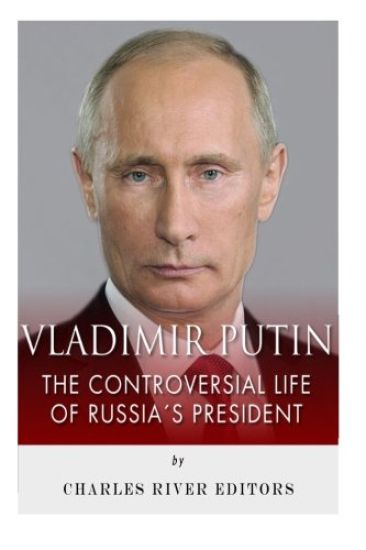
Following the celebrations of the Millennium and our entry into the 21st century, it was to be hoped that the days when a brutal dictator could bring mindless death and destruction to another country, and even to his own people, were over, and that the lessons of the past had been well and truly learned. A forlorn hope, as it transpires, for yet another monster has raised its ugly head above the slimy cesspit which such monsters inhabit, one to rival those of the past such as Stalin, Hitler, and Pol Pot. For now, we have Vladimir Putin, a depraved, deranged, warmongering megalomaniac who threatens the peace of the entire planet. In former times the appropriate description of Putin would have been 'evil'; 'a monster'; 'the Devil incarnate'; 'ghoulish', 'an excrescence', etcetera, but we no longer live in the Middle Ages and such appellations no longer suffice. And anyway, what adjective exists to describe a person who has no respect for human life? In their place we have the terminology of modern-day psychiatry. So, is it possible to get inside the mind of Putin and discover what makes this ruthless, brutal, and amoral dictator 'tick'? The answer is 'Yes', but it is not to be found in any textbook of psychiatry. Instead, the clues are to be found in a scientific paper, published by a female psychiatrist as long ago as the year 1997, and in the known side effects of the illness from which he is currently suffering. A new and unique insight is now offered into the mind of Putin, one which has not previously been advanced.
Glynn provides a new reading of Vladimir Nabokov s work by seeking to challenge the notion that he was a Symbolist writer concerned with a transcendent reality. Glynn argues that Nabokov s epistemology was in fact anti-Symbolist and that this aligned him with both Bergsonism and Russian Formalism, which intellectual systems were themselves hostile to a Symbolist epistemology. Symbolism may be seen to devalue material reality by presenting it as a mere adumbration of a higher realm. Nabokov, however, valued the immediate material world and was creatively engaged by the tendency of the deluded mind to efface that reality.
Almost three years after the first voluntary handover of power in Russian history, this book examines Putin's management of this complex agenda, and considers how Moscow's current approach to international relations resembles and differs from that under Yeltsin. Examines Putin's management of Russia's foreign policy two years after the first voluntary handover of power in Russian history. Considers how Moscow's current approach to international relations resembles and differs from that under Yeltsin. Analyses whether changes in foreign policy have been qualitative, or largely cosmetic. Explores growing talk of a ‘strategic partnership'' with the US and the West. Assesses the realism of such hopes and considers whether we are indeed witnessing a strategic shift in the mentality and conduct of such Russian foreign policy.
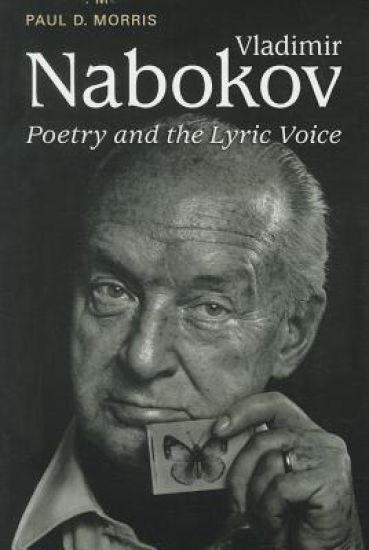
Vladimir Nabokov (1899-1977), the eminent Russian-American writer and intellectual, is best known for his novels, though he was also the author of plays, poems, and short stories. In this important new work, Paul D. Morris offers a comprehensive reading of Nabokov's Russian and English poetry, until now a neglected facet of his oeuvre. Morris' unique and insightful study re-evaluates Nabokov's poetry and demonstrates that poetry was in fact central to his identity as an author and was the source of his distinctive authorial - lyric - voice. After offering a critical overview of the multi-staged history of the reception of Nabokov's poetry and an extensive analysis of his poetic writing, Morris argues that Nabokov's poetry has largely been misinterpreted and its place in his oeuvre misunderstood. Through a detailed examination of the form and content of Nabokov's writings, Morris demonstrates that Nabokov's innovations in the realms of drama, the short story, and the novel were profoundly shaped by his lyric sensibility.
Hailed as a brilliant theoretician, Voldemars Matvejs (best known by his pen name Vladimir Markov) was a Latvian artist who spearheaded the Union of Youth, a dynamic group championing artistic change in Russia, 1910-14. His work had a formative impact on Malevich, Tatlin, and the Constructivists before it was censored during the era of Soviet realism. This volume introduces Markov as an innovative and pioneering art photographer and assembles, for the first time, five of his most important essays. The translations of these hard-to-find texts are fresh, unabridged, and authentically poetic. Critical essays by Jeremy Howard and Irena Buzinska situate his work in the larger phenomenon of Russian ’primitivism’, i.e. the search for the primal. This book challenges hardening narratives of primitivism by reexamining the enthusiasm for world art in the early modern period from the perspective of Russia rather than Western Europe. Markov composed what may be the first book on African art and Z.S. Strother analyzes both the text and its photographs for their unique interpretation of West African sculpture as a Kantian ’play of masses and weights’. The book will appeal to students of modernism, orientalism, ’primitivism’, historiography, African art, and the history of the photography of sculpture.
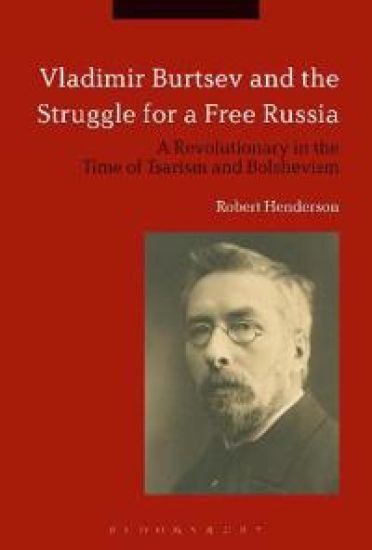
Vladimir Burtsev and the Struggle for a Free Russia examines the life of the journalist, historian and revolutionary, Vladimir Burtsev. The book analyses his struggle to help liberate the Russian people from tsarist oppression in the latter half of the 19th century before going on to discuss his opposition to Bolshevism following the Russian Revolution of 1917. Robert Henderson traces Burtsev's political development during this time and explores his movements in Paris and London at different stages in an absorbing account of an extraordinary life.At all times Vladimir Burtsev and the Struggle for Free Russia sets Burtsev's life in the wider context of Russian and European history of the period. It uses Burtsev as a means to discuss topics such as European police collaboration, European prison systems, international diplomatic relations of the time and Russia's relationship with Europe specifically. Extensive original archival research and previously untranslated Russian source material is also incorporated throughout the text.This is an important study for all historians of modern Russia and the Russian Revolution.
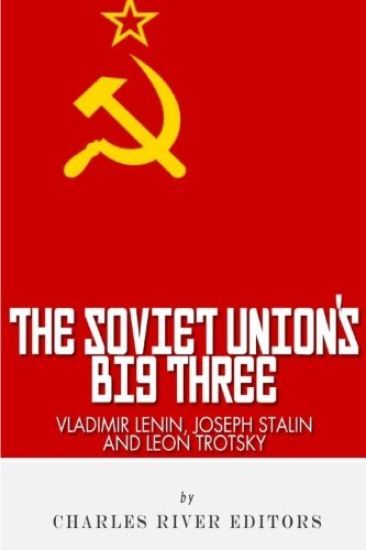
*Includes pictures of Lenin, Stalin, Trotsky and important people, places, and events in their lives. *Explains each man's role in the Revolution and its aftermath. *Discusses the conspiracy theories surrounding Stalin's death and how Stalin came to power against Lenin's wishes. *Includes a bibliography for further reading. Among the leaders of the 20th century, arguably none shaped the course of history as much as Vladimir Lenin (1870-1942), the Communist revolutionary and political theorist who led the Bolshevik Revolution that established the Soviet Union. In addition to shaping the Marxist-Leninist political thought that steered Soviet ideology, he was the first Soviet premier until his death and set the Soviet Union on its way to becoming one of the world's two superpowers for most of the century, in addition to being the West's Cold War adversary. As it turned out, the creation of the Soviet Union came near the end of Lenin's life, as he worked so hard that he had burned himself out by his 50s, dying in 1924 after a series of strokes had completely debilitated him. Near the end of his life, he expressly stated that the regime's power should not be put in the hands of the current General Secretary of the Communist Party, Joseph Stalin. Of course, Stalin managed to do just that, modernizing the Soviet Union at a breakneck pace on the backs of millions of poor laborers and prisoners. If Adolf Hitler had not inflicted the devastation of World War II upon Europe, it's quite likely that the West would consider Joseph Stalin (1878-1953) the 20th century's greatest tyrant. Before World War II, Stalin consolidated his position by frequently purging party leaders (most famously Leon Trotsky) and Red Army leaders, executing hundreds of thousands of people at the least. In one of history's greatest textbook examples of the idea that the enemy of my enemy is my friend, Stalin's Soviet Union allied with Britain and the United States to defeat Hitler in Europe, with the worst of the war's carnage coming on the eastern front during Germany's invasion of Russia. Nevertheless, the victory in World War II established the Soviet Union as of the world's two superpowers for nearly 50 years, in addition to being the West's Cold War adversary. Along with Vladimir Lenin, Trotsky led the October Bolshevik Revolution of 1917 and held crucial posts in the early Soviet governments, but after Lenin's death Trotsky was exiled, persecuted and finally murdered at the behest of his arch-rival, Joseph Stalin. For the final decade of his life, Trotsky was a man trapped in between two worlds. A communist seeking refuge in the capitalist West, Trotsky was deemed a secret agent of the capitalist powers by Stalin's propaganda, but the Soviet Union's enemies also viewed him with suspicion. In the initial aftermath of Lenin's death, Trotsky had been his ally's heir apparent, and for those inclined to believe the Soviet experiment had started promisingly but gone astray, Trotsky became the embodiment of the betrayed promise of the early Bolshevik revolution. There were certain ironies in this widespread sympathetic interpretation of Trotsky's legacy. For the Marxists and Marxist sympathizers appalled by Stalin's paranoid police state, Gulag concentration camps, and strict suppression of dissent, Trotsky was viewed as a humane and cosmopolitan opposite to Stalin. But Trotsky himself had overseen and spearheaded campaigns of persecution against Russians suspected of "counterrevolutionary" leanings, and he had written a long tract defending these "terroristic" measures as necessary safeguards of the revolution. The Soviet Union's Big Three explores the lives and legacies of Lenin, Trotsky and Stalin before the Bolshevik Revolution, as well as the crucial roles they played in establishing the Soviet Union and turning it into a modern superpower.