Kirjahaku
Etsi kirjoja tekijän nimen, kirjan nimen tai ISBN:n perusteella.
1000 tulosta hakusanalla W F Reed

I was in no way prepared for how totally addicting this novel would be, and the sheer magnitude of the new world, the intriguing characters, and the multi plots that break the mold." "Memories of Freedom" is an incredible book that introduces us to the unique world of author Gary W. Horton, and what a crazy, strange world it is It is imaginative and pulls no punches in drawing from almost every literary element available. This is a rare novel that I thought had almost everything from fight for survival, friendships, familial/ancestral connections, action, suspense, intellect...philosophical conversations and scientific/biological and even magical elements. Trust me when I say you've never read anything like this before It's not a fast and easy read by any stretch, but it will take you through whole different lives, perspectives, ideas and experiences that you've never read before. Fantastic Wow what an ending Indie Book Reviewers .

In 1948, Colonel David W. Irvin, Jr. volunteered for the Berlin Airlift and fLew 85 missions from Rhein-Main AB at Frankfurt, Germany. He later volunteered in the B-47 program and completed training in naviagation, radar and bombardier school to become what is respectively known as a 4 headed monster"" in the Air Force. This is his story.""

In 1948, Colonel David W. Irvin, Jr. volunteered for the Berlin Airlift and fLew 85 missions from Rhein-Main AB at Frankfurt, Germany. He later volunteered in the B-47 program and completed training in naviagation, radar and bombardier school to become what is respectively known as a 4 headed monster"" in the Air Force. This is his story.""

FreedomCivics Teacher Workbook: Foundations of American Government
Craig W. Rhyne; Richard O. Calkins; H. Summers
Freedom Education Foundation Inc
2022
nidottu

Raegan has taken over an ancient "Climate Warrior" Sisterhood. They're the hope of the nation. America 3016: Raegan has now had it with the Y-Wood Robotics Corporation. Their boy's club mentality and President are exploiting the country to the extreme.The Corporation has control of everything since the changing wars. The sisterhood must act, and Raegan James must lead them with great spiritual resolve.Yet, all faith these days is questioned, that is until a discovery might just change everything.Can Raegan and her sisterhood save America?This is it, the EPIC CONCLUSION in the Mystical Slayers fight against tyranny.The sisters and their allies have decided to take the fight right to the powerful, 31st century, robotics, Y-Wood Corporation; their sights now set on liberating the nation's one-time, historic, capital region, Washington D.C.GET READY FOR SOME BIG SURPRISESIt's going to be one crazy, tough battle, and our fearless leader Raegan and her companions will not stop until old glory waves again. Cover Design by: Vanesa Garkova


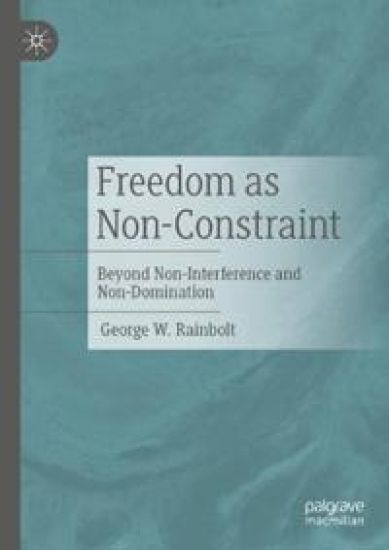
Compared to liberal and republican theories, freedom as non-constraint provides a better account of systemic and structural threats to freedom, a better picture of how market forces and governments impact freedom, and a better understanding of how the natural world constrains freedom.

Compared to liberal and republican theories, freedom as non-constraint provides a better account of systemic and structural threats to freedom, a better picture of how market forces and governments impact freedom, and a better understanding of how the natural world constrains freedom.
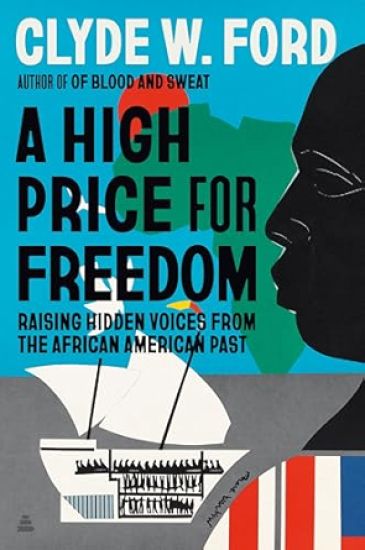
A High Price for Freedom: Raising Hidden Voices from the African American Past
Clyde W. Ford
Amistad Press
2026
sidottu
The author and director of the Martin Luther King, Jr. Library Publishing Project gives voice to long silent African Americans from the past, allowing them to tell their own stories that shed new light on critical moments in the Black Freedom Struggle, challenging what we think we know about Black history. History is at its best when new findings and perspectives challenge old ideas and notions about the past, and even overturn common wisdom.What if a former enslaved man in Galveston, Texas, witnessed the first Juneteenth and told a completely different story from what most of us know about that day? Why were slave ships most prone to rebellion, including those carrying the most African women? How has Islam found its way into R&B, soul, jazz, and other American popular music? Who was Benjamin Banneker, really?In A High Price for Freedom, historian Clyde W. Ford addresses these and other questions, amplifying little-known voices from the African American past. In this wide-ranging, impeccably researched book, Ford begins with the 1656 court case of a woman named Elizabeth Key, who won a verdict for her freedom against her would-be enslaver--a victory that would forever change the nature, brutality, and course of American slavery.Ford examines a range of topics, from the role of women in fomenting slave revolts to an in-depth look at how Selma was not really about voting rights or even Martin Luther King, Jr, but about a twenty-six-year-old Black man named Jimmie Lee Jackson who was killed by an Alabama state trooper. As he laying dying in the only hospital that would treat Black people in February 1965, Jimmie Lee whispered to his nurse, a Catholic nun, "Sister, isn't this a high price for freedom?"Eye-opening, enlightening, and often counterintuitive, this fascinating history includes compelling, heartrending, and factual accounts about people and events in the African American past that teach us things we never learned and challenge the stories we thought we knew.
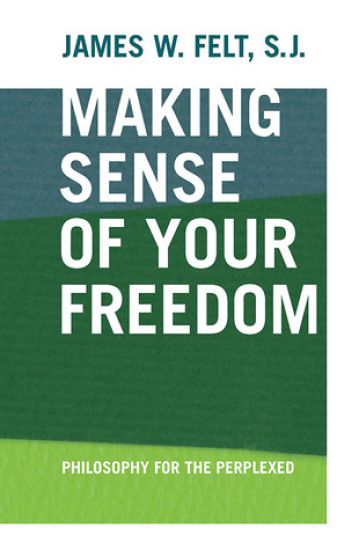
Written for general readers and students, this book provides an accessible and brief metaphysical defense of freedom. James W. Felt, S.J., invites his audience to consider that we are responsible for what we do precisely because we do it freely. His perspective runs counter to the philosophers who argue that the freedom humans feel in their actions is merely an illusion. Felt argues in detail that there are no compelling reasons for thinking we are not free, and very strong ones for thinking that we are. The view that Felt develops parallels that of the French philosopher Henri Bergson (1859–1941). In the course of his analysis, Felt considers determinism, compatibilism, agency, and the problem of evil. Featuring an updated suggested reading list, this clearly and engagingly written introductory work is ideal for the undergraduate classroom.
Written for general readers and students, this book provides an accessible and brief metaphysical defense of freedom. James W. Felt, S.J., invites his audience to consider that we are responsible for what we do precisely because we do it freely. His perspective runs counter to the philosophers who argue that the freedom humans feel in their actions is merely an illusion. Felt argues in detail that there are no compelling reasons for thinking we are not free, and very strong ones for thinking that we are. The view that Felt develops parallels that of the French philosopher Henri Bergson (1859–1941). In the course of his analysis, Felt considers determinism, compatibilism, agency, and the problem of evil. Featuring an updated suggested reading list, this clearly and engagingly written introductory work is ideal for the undergraduate classroom.
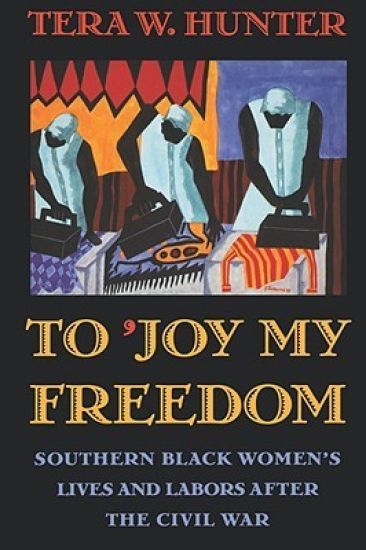
As the Civil War drew to a close, newly emancipated black women workers made their way to Atlanta—the economic hub of the newly emerging urban and industrial south—in order to build an independent and free life on the rubble of their enslaved past. In an original and dramatic work of scholarship, Tera Hunter traces their lives in the postbellum era and reveals the centrality of their labors to the African-American struggle for freedom and justice. Household laborers and washerwomen were constrained by their employers’ domestic worlds but constructed their own world of work, play, negotiation, resistance, and community organization.Hunter follows African-American working women from their newfound optimism and hope at the end of the Civil War to their struggles as free domestic laborers in the homes of their former masters. We witness their drive as they build neighborhoods and networks and their energy as they enjoy leisure hours in dance halls and clubs. We learn of their militance and the way they resisted efforts to keep them economically depressed and medically victimized. Finally, we understand the despair and defeat provoked by Jim Crow laws and segregation and how they spurred large numbers of black laboring women to migrate north.Hunter weaves a rich and diverse tapestry of the culture and experience of black women workers in the post–Civil War south. Through anecdote and data, analysis and interpretation, she manages to penetrate African-American life and labor and to reveal the centrality of women at the inception—and at the heart—of the new south.

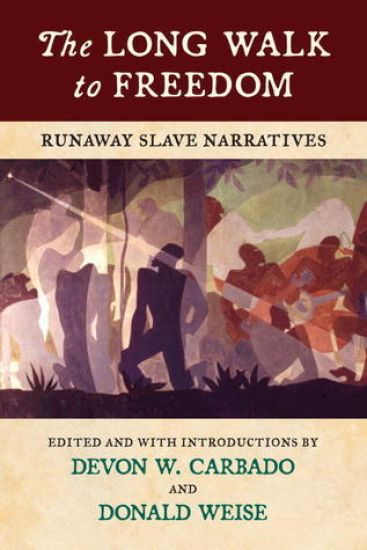
In this groundbreaking compilation of first-person accounts of the runaway slave phenomenon, editors Devon W. Carbado and Donald Weise have recovered twelve narratives spanning eight decades--more than half of which have been long out of print. Told in the voices of the runaway slaves themselves, these narratives reveal the extraordinary and often innovative ways that these men and women sought freedom and demanded citizenship. Also included is an essay by UCLA history professor Brenda Stevenson that contextualizes these narratives, providing a brief yet comprehensive history of slavery, as well as a look into the daily life of a slave. Divided into four categories--running away for family, running inspired by religion, running by any means necessary, and running to be free--these stories are a testament to the indelible spirit of these remarkable survivors. The Long Walk to Freedom presents excerpts from the narratives of well-known runaway slaves, like Frederick Douglass and Harriet Jacobs, as well as from the narratives of lesser-known and virtually unknown people. Several of these excerpts have not been published for more than a hundred years. But they all portray the courageous and sometimes shocking ways that these men and women sought their freedom and asserted power, often challenging many of the common assumptions about slaves' lack of agency. Among the remarkable and inspiring stories is the tense but triumphant tale of Henry Box Brown, who, with a white abolitionist's help, shipped himself in a box--over a twenty-seven-hour train ride, part of which he spent standing on his head--to freedom in Philadelphia. And there's the story of William and Ellen Craft, who fled across thousands of miles, with Ellen, who was light-skinned, disguised as a white male slave-owner so she and her husband could achieve their dream of raising their children as free people. Gripping, inspiring, and captivating, The Long Walk to Freedom is a remarkable collection that celebrates those who risked their lives in pursuit of basic human rights.
The Freedom Model for Addictions
Steven Slate; Mark W Scheeren; Michelle L Dunbar
Bri Publishing
2017
pokkari
Do you want an addiction - a lifelong diagnosis - or do you want to see yourself as having a habit that you can solve completely? Your answer tells you if The Freedom Model for Addictions is the answer you have been looking for.The Freedom Model debunks the addiction disease concept as well as the idea that "recovery" is needed after you've decided to abstain or moderate your use. Much of the content within the book may surprise you, maybe even shock you. For example: Did you know addiction IS NOT a disease? Did you know the brain disease theory is not based on sound science and is actually a myth? Did you know that addictions are habits, just like many other habits, and that as such are quite easy to break once you know the facts? Does your gut tell you that treatment is just another money grab from those who are vulnerable, and that something is drastically wrong with the rehab industry as a whole? If so, you'd be right - rehabs don't work, and The Freedom Model tells you exactly why and how this Western cultural institution came to gain such power over people's lives. For those immersed in the 12 step culture or in the rehab culture, this book provides a path out of those institutions, and into a much more empowered state of mind. Our experience of researching drug and alcohol use and helping thousands with these issues for more than 30 years tells us people desire to be completely free from addiction. They also want to be free from the idea of being "in recovery" just as much. Neither of these options: addiction or recovery - have held great favor with the masses. In fact, the vast majority of people with drug and alcohol problems (more than 90%) don't go to treatment nor do they enter the subculture of "recovery." They simply move past their addictions, and they do so without any treatment whatsoever. Did you know that? This is the great untold story in treatment circles, but one we unearth for your benefit. This fact alone demonstrates just how normal it is to break habits that we no longer want in our lives. Let's face it, people desire freedom; freedom to choose their own direction; freedom to move past habits that have them feeling trapped and in pain; freedom from the addict and alcoholic identity; freedom from the limits of 12 step culture and the drug and alcohol rehabilitation industry; freedom to be happier; freedom to move on past the struggles and challenges of life. The Freedom Model guides the reader on this path by offering the opposite of the treatment industry's empty promises - it offers real freedom The Freedom Model is an approach that deconstructs the construct of addiction and recovery and all that surrounds these beliefs. By doing so, you can be completely free to move on in your life without those constructs holding you back and keeping you needlessly trapped in an endless addiction/recovery/addiction cycle. The Freedom Model renders addiction and recovery as completely obsolete and unnecessary in both your personal life and as cultural constructs that keep the masses blind to the solutions that exist within the individual. While The Freedom Model is a book, it is the research and the message contained on those pages that are the real solution to an individual's struggles with drugs and alcohol.