Kirjojen hintavertailu. Mukana 11 244 527 kirjaa ja 12 kauppaa.

Kirjahaku

Etsi kirjoja tekijän nimen, kirjan nimen tai ISBN:n perusteella.

1000 tulosta hakusanalla W Timbrell Pierce

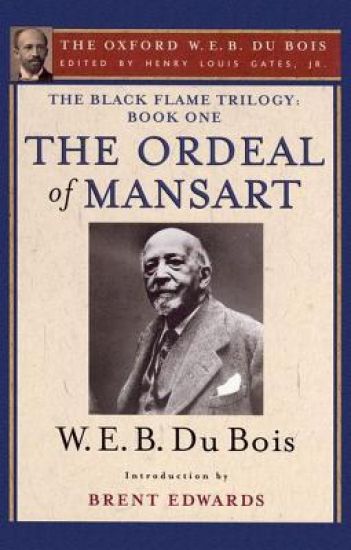
The Ordeal of Mansart (The Oxford W. E. B. Du Bois)

The Ordeal of Mansart (The Oxford W. E. B. Du Bois)

W. E. B. Du Bois; Brent Hayes Edwards

Oxford University Press Inc
2014
nidottu
W. E. B. Du Bois was a public intellectual, sociologist, and activist on behalf of the African American community. He profoundly shaped black political culture in the United States through his founding role in the NAACP, as well as internationally through the Pan-African movement. Du Bois's sociological and historical research on African-American communities and culture broke ground in many areas, including the history of the post-Civil War Reconstruction period. Du Bois was also a prolific author of novels, autobiographical accounts, innumerable editorials and journalistic pieces, and several works of history. Du Bois called his epic Black Flame trilogy a fiction of interpretation. It acts as a representative biography of African American history by following one man, Manuel Mansart, from his birth in 1876 until his death. The Black Flame attempts to use this historical fiction of interpretation to recast and revisit the African American experience. Readers will appreciate The Black Flame trilogy as a clear articulation of Du Bois's perspective at the end of his life. The first book in this profound trilogy, The Ordeal of Mansart, chronicles Mansart's early life during the time of Reconstruction through his involvement in black education in Atlanta. Written with lyrical, vivid prose and with accurate historical context, The Ordeal of Mansart offers readers a peek into African American life and struggle through the lens of Mansart's humble life. With a series introduction by editor Henry Louis Gates, Jr., and an introduction by Brent Hayes Edwards, this edition is essential for anyone interested in African American literature.
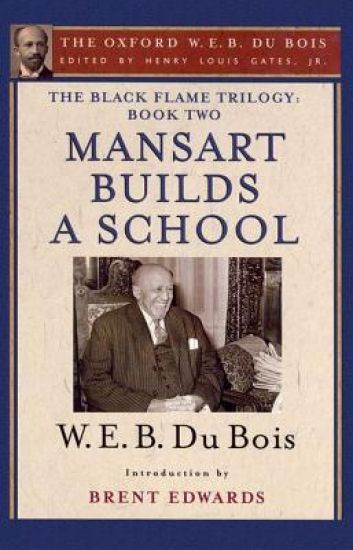
The Black Flame Trilogy: Book Two, Mansart Builds a School(The Oxford W. E. B. Du Bois)

The Black Flame Trilogy: Book Two, Mansart Builds a School(The Oxford W. E. B. Du Bois)

W. E. B. Du Bois; Brent Hayes Edwards

Oxford University Press Inc
2014
nidottu
W. E. B. Du Bois was a public intellectual, sociologist, and activist on behalf of the African American community. He profoundly shaped black political culture in the United States through his founding role in the NAACP, as well as internationally through the Pan-African movement. Du Bois's sociological and historical research on African-American communities and culture broke ground in many areas, including the history of the post-Civil War Reconstruction period. Du Bois was also a prolific author of novels, autobiographical accounts, innumerable editorials and journalistic pieces, and several works of history. Du Bois called his epic Black Flame trilogy a fiction of interpretation. It acts as a representative biography of African American history by following one man, Manuel Mansart, from his birth in 1876 until his death. The Black Flame attempts to use this historical fiction of interpretation to recast and revisit the African American experience. Readers will appreciate The Black Flame trilogy as a clear articulation of Du Bois's perspective at the end of his life. The second book in this profound trilogy, Mansart Builds a School, opens with Mansart's election to superintendent of Negro schools in Atlanta and follows him as he ascends to the position of president of Georgia State A&M College. The book provides a damning portrait of the state of education for African Americans in the south. Building upon the drama and intrigue of The Ordeal of Mansart in Du Bois's signature lyrical style, Mansart Builds a School delves into the realities of the ordinary southern black experience of the early twentieth century. With a series introduction by editor Henry Louis Gates, Jr., and an introduction by Brent Hayes Edwards, this edition is essential for anyone interested in African American literature.
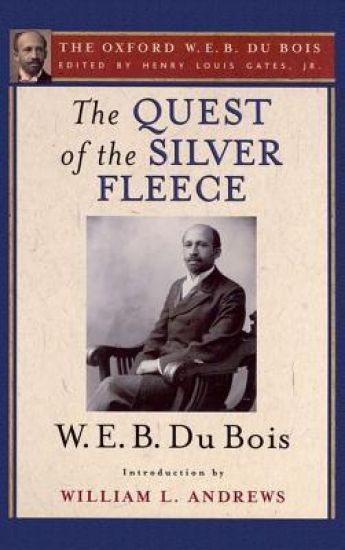
The Quest of the Silver Fleece (The Oxford W. E. B. Du Bois)

The Quest of the Silver Fleece (The Oxford W. E. B. Du Bois)

W. E. B. Du Bois; William L. Andrews

Oxford University Press Inc
2014
nidottu
W. E. B. Du Bois was a public intellectual, sociologist, and activist on behalf of the African American community. He profoundly shaped black political culture in the United States through his founding role in the NAACP, as well as internationally through the Pan-African movement. Du Bois's sociological and historical research on African-American communities and culture broke ground in many areas, including the history of the post-Civil War Reconstruction period. Du Bois was also a prolific author of novels, autobiographical accounts, innumerable editorials and journalistic pieces, and several works of history. Arguably a contender for the Great American Novel, The Quest of the Silver Fleece is W. E. B. Du Bois's powerful first novel about Zora, a determined, strong Southern black woman who seeks to transcend race and social class in the late nineteenth century. Following the same path of the Greek myth after which it was named, Du Bois's novel confronts not only economic and political circumstances, but also racial and social issues of the time. Over a century after its original publication, we return to The Quest again and again for its political boldness about sexual, gender, and economic institutions. Zora, a breakthrough in the portrayal of black women, stands as a model of courage in a volatile moment in history. The novel portrays not only a story of economics but also of love, gender, and race. With a series introduction by editor Henry Louis Gates, Jr., and an introduction by William L. Andrews, this edition is essential for anyone interested in African American history.
The Autobiography of W. E. B. Du Bois (The Oxford W. E. B. Du Bois)

The Autobiography of W. E. B. Du Bois (The Oxford W. E. B. Du Bois)

W. E. B. Du Bois; Werner Sollors

Oxford University Press Inc
2014
nidottu
W. E. B. Du Bois was a public intellectual, sociologist, and activist on behalf of the African American community. He profoundly shaped black political culture in the United States through his founding role in the NAACP, as well as internationally through the Pan-African movement. Du Bois's sociological and historical research on African-American communities and culture broke ground in many areas, including the history of the post-Civil War Reconstruction period. Du Bois was also a prolific author of novels, autobiographical accounts, innumerable editorials and journalistic pieces, and several works of history. Published posthumously in 1968, The Autobiography of W. E. B. Du Bois is his last and most complete autobiography. Covering his life over almost a century of living in America, it's the closest thing we have to a true autobiography of this important scholar and activist. The book, broken up into three parts, delves into the 90-year-old Du Bois's thoughts on everything from his relationship with sex to his storied association with the NAACP to his political persecution during the Cold War years to his many travels abroad. As Du Bois writes, he takes the reader on a journey to "view my life as frankly and fully as I can." With a series introduction by editor Henry Louis Gates, Jr., and an introduction by Werner Sollors, this edition is essential for anyone interested in African American history.
The Negro (The Oxford W. E. B. Du Bois)

The Negro (The Oxford W. E. B. Du Bois)

W. E. B. Du Bois; John K. Thorton

Oxford University Press Inc
2014
nidottu
W. E. B. Du Bois was a public intellectual, sociologist, and activist on behalf of the African American community. He profoundly shaped black political culture in the United States through his founding role in the NAACP, as well as internationally through the Pan-African movement. Du Bois's sociological and historical research on African-American communities and culture broke ground in many areas, including the history of the post-Civil War Reconstruction period. Du Bois was also a prolific author of novels, autobiographical accounts, innumerable editorials and journalistic pieces, and several works of history. Intended as an accessible, up-to-date introduction to African American history by its 1915 publisher, The Negro was much more to W. E. B. Du Bois. The chance to write on African American History for a wide audience became his chance to write a manifesto on African history worldwide. Du Bois focuses on the continent of Africa, giving justice to its oft-neglected positive history. Drawing on anthropological and linguistic literature of the time, Du Bois captures a succinct portrait of African and African American history ready for any reader no matter their prior knowledge. His argument enters the narrative fully, revealing his quest for the vindication of black history. With a series introduction by editor Henry Louis Gates, Jr., and an introduction by John K. Thornton, this edition is essential for anyone interested in African American history.
Darkwater (The Oxford W. E. B. Du Bois)

Darkwater (The Oxford W. E. B. Du Bois)

W. E. B. Du Bois; Evelyn Brooks Higginbotham

Oxford University Press Inc
2014
nidottu
W. E. B. Du Bois was a public intellectual, sociologist, and activist on behalf of the African American community. He profoundly shaped black political culture in the United States through his founding role in the NAACP, as well as internationally through the Pan-African movement. Du Bois's sociological and historical research on African-American communities and culture broke ground in many areas, including the history of the post-Civil War Reconstruction period. Du Bois was also a prolific author of novels, autobiographical accounts, innumerable editorials and journalistic pieces, and several works of history. Considered a sequel to Du Bois's wildly popular The Souls of Black Folks, Darkwater revisits many of the same themes with a more militant edge, even revising previously published essays and poems to include in this newer volume. Published in 1920, Darkwater focuses on the political climate following World War I. In ten carefully crafted chapters, Du Bois explores the important issues of that period- labor, capital, politics, gender, education, and international relations-in tandem with an overarching theme of race. Blending lyrical autobiography with political thoughts and even poetry, Du Bois makes a powerful, forceful argument regarding race and the color line. With a series introduction by editor Henry Louis Gates, Jr., and an introduction by Evelyn Brooks Higginbotham, this edition is essential for anyone interested in African American history.
The Black Flame Trilogy: Book Three, Worlds of Color (The Oxford W. E. B. Du Bois)

The Black Flame Trilogy: Book Three, Worlds of Color (The Oxford W. E. B. Du Bois)

W. E. B. Du Bois; Brent Hayes Edwards

Oxford University Press Inc
2014
nidottu
W. E. B. Du Bois was a public intellectual, sociologist, and activist on behalf of the African American community. He profoundly shaped black political culture in the United States through his founding role in the NAACP, as well as internationally through the Pan-African movement. Du Bois's sociological and historical research on African-American communities and culture broke ground in many areas, including the history of the post-Civil War Reconstruction period. Du Bois was also a prolific author of novels, autobiographical accounts, innumerable editorials and journalistic pieces, and several works of history. Du Bois called his epic Black Flame trilogy a fiction of interpretation. It acts as a representative biography of African American history by following one man, Manuel Mansart, from his birth in 1876 until his death. The Black Flame attempts to use this historical fiction of interpretation to recast and revisit the African American experience. Readers will appreciate The Black Flame trilogy as a clear articulation of Du Bois's perspective at the end of his life. The last book in this profound trilogy, Worlds of Color, opens when Mansart is sixty and a successful and established college president. Packed with political intrigue, romance, and social commentary, the book provides a dark, cynical view of the world and its relationship to the "Black Flame," or the potential of black civilization. Building upon the drama of the previous two books, Worlds of Color delves into a more sinister, bleak, and doubtful future. With a series introduction by editor Henry Louis Gates, Jr., and an introduction by Brent Hayes Edwards, this edition is essential for anyone interested in African American literature.
Dark Princess (The Oxford W. E. B. Du Bois)

Dark Princess (The Oxford W. E. B. Du Bois)

W. E. B. Du Bois; Homi Bhabha

Oxford University Press Inc
2014
nidottu
W. E. B. Du Bois was a public intellectual, sociologist, and activist on behalf of the African American community. He profoundly shaped black political culture in the United States through his founding role in the NAACP, as well as internationally through the Pan-African movement. Du Bois's sociological and historical research on African-American communities and culture broke ground in many areas, including the history of the post-Civil War Reconstruction period. Du Bois was also a prolific author of novels, autobiographical accounts, innumerable editorials and journalistic pieces, and several works of history. The Dark Princess is a story of magical love and radical politics, a romance facing obstacles in a white-dominated world. Du Bois's allegorical tale follows Mathew Townes from his political disillusionment to his association with a powerful and seductive revolutionary leader, Kautilya, the princess of the Tibetan Kingdom of Bwodpur. With Dark Princess, Du Bois explores the color line from a fantastical angle while inserting his signature sociological style. With a series introduction by editor Henry Louis Gates, Jr., and an introduction by Homi Bhahba, this edition is essential for anyone interested in African American history.
The Gift of Black Folk (The Oxford W. E. B. Du Bois)

The Gift of Black Folk (The Oxford W. E. B. Du Bois)

W. E. B. Du Bois; Glenda Carpio

Oxford University Press Inc
2014
nidottu
W. E. B. Du Bois was a public intellectual, sociologist, and activist on behalf of the African American community. He profoundly shaped black political culture in the United States through his founding role in the NAACP, as well as internationally through the Pan-African movement. Du Bois's sociological and historical research on African-American communities and culture broke ground in many areas, including the history of the post-Civil War Reconstruction period. Du Bois was also a prolific author of novels, autobiographical accounts, innumerable editorials and journalistic pieces, and several works of history. Published in 1924 in response to growing racial tensions, W. E. B. Du Bois's The Gift of Black Folk explores the contributions African Americans have made to American society, detailing the importance of racial diversity to the United States. Writing for a general audience, Du Bois employs a sweeping scope for his argument, covering the European discovery of America to the twentieth century. In doing so he works to prove that through African Americans' struggle for freedom and equality, they have most fully realized the goal of democracy. With a series introduction by editor Henry Louis Gates, Jr., and an introduction by Glenda Carpio, this edition is essential for anyone interested in African American history.
W.B. Yeats and the Muses

W.B. Yeats and the Muses

Joseph M. Hassett

Oxford University Press
2010
sidottu
W.B. Yeats and the Muses explores how nine fascinating women inspired much of W.B. Yeats's poetry. These women are particularly important because Yeats perceived them in terms of beliefs about poetic inspiration akin to the Greek notion that a great poet is inspired and possessed by the feminine voices of the Muses. Influenced by the Pre-Raphaelite idea of woman as 'romantic and mysterious, still the priestess of her shrine', Yeats found his Muses in living women. His extraordinarily long and fruitful poetic career was fuelled by passionate relationships with women to and about whom he wrote some of his most compelling poetry. The book summarizes the different Muse traditions that were congenial to Yeats and shows how his perception of these women as Muses underlies his poetry. Newly available letters and manuscripts are used to explore the creative process and interpret the poems. Because Yeats believed that lyric poetry 'is no rootless flower, but the speech of a man,' exploring the relationship between poem and Muse brings new coherence to the poetry, illuminates the process of its creation, and unlocks the 'second beauty' to which Yeats referred when he claimed that 'works of lyric genius, when the circumstances of their origin is known, gain a second a beauty, passing as it were out of literature and becoming life.' As life emerges from the literature, the Muses are shown to be vibrant, multi-faceted personalities who shatter the idea of the Muse as a passive stereotype and take their proper place as begetters of timeless poetry.
W.B. Yeats, the Abbey Theatre, Censorship, and the Irish State
W.B. Yeats, the Abbey Theatre, Censorship, and the Irish State: Adding the Half-pence to the Pence utilizes new source material to reconstruct the current understanding of the relationship between the productions of the Abbey Theatre and the politics of the Irish state. This study begins in 1916, at the start of the Irish Revolution and in the midst of the theatre's financial crisis, and it ends with the death of the Abbey Theatre's last surviving founder, W.B. Yeats. To date, histories of the Abbey Theatre have repeated Yeats's assertion that there was no censorship of the theatre in Ireland. However, this study incorporates financial records, government correspondence, Dáil debates, and minutes from the Abbey's directors' meetings to produce surprising conclusions: censorship of the theatre did occur, but it occurred internally rather than by external means. Yeats and his fellow directors privately self-censored plays when there was potential for financial gain, such as in the Abbey's campaign for a state-sponsored reconstruction scheme - the details of which have never been explored prior to this study. Any attempts by the state to directly interfere in the theatre's programme were unsuccessful but were manipulated by the press-savvy Yeats in order to create profitable controversies. Despite Yeats's vocal campaign against censorship, his organisation of the Irish Academy of Letters, and his famous speeches from the Abbey stage decrying the censorship of the 'mob', he was willing to sacrifice the freedom of the artist when he foresaw an opportunity to ensure the longevity of his theatrical enterprise.
W. E. B. DuBois on Sociology and the Black Community

W. E. B. DuBois on Sociology and the Black Community

W. E. B. DuBois

University of Chicago Press
1995
nidottu
Historian, journalist, educator, and civil rights advocate W.E.B. Du Bois was perhaps most accomplished as a sociologist of race relations and of the black community in the United States. This volume collects his sociological writings from 1898 to 1910. The 18 selections include five on Du Bois's conception of sociology and sociological research, especially as a tool in the struggle for racial justice; excerpts from studies of black communities in the South and the North, including "The Philadelphia Negro"; writings on black culture and social life, with a selection from "The Negro American Family"; and later works on race relations in the United States and elsewhere after World War II. This section includes a powerful 50th-anniversary reassessment of his classic 1901 article in the Atlantic in which he predicted that "the problem of the 20th century is the problem of the color line."
W IS FOR TPB

W IS FOR TPB

GRAFTON SUE

Pan Books Ltd
2013
nidottu
Two dead bodies changed the course of my life that fall. One of them I knew and the other I'd never laid eyes on until I saw him in the morgue. The first was a local PI of suspect reputation. He'd been gunned down near the beach at Santa Teresa. It looked like a robbery gone bad. The other was on the beach six weeks later. He'd been sleeping rough. Probably homeless. No identification. A slip of paper with Private Investigator Kinsey Millhone's name and number was in his pants pocket. The coroner asked her to come to the morgue to see if she could ID him. Two seemingly unrelated deaths, one a murder, the other apparently of natural causes. But as Kinsey digs deeper into the mystery of the John Doe, some very strange links begin to emerge. And before long at least one aspect is solved as Kinsey finds the key to his identity ...In this multilayered tale, the surfaces seem clear, but the underpinnings are full of betrayals, misunderstandings, and outright murderous fraud. And Kinsey, through no fault of her own, is thoroughly compromised ...
W. G. Sebald

W. G. Sebald

J.J. Long

Columbia University Press
2008
sidottu
The contemporary German author W. G. Sebald was a master of the fiction of recollection and observation, often exploring the reverberations of World War II on the personal and collective memories of Germans and Jews. His rich body of work earned him legions of fans across the globe, but in the wake of his death in 2001, Sebald also became the subject of extensive critical study. Literary scholars have identified a number of subjects that frequently appear in Sebald's novels: the Holocaust, trauma and memory, melancholy, photography, travel, intertextuality, and the nature and meaning of home, but they have yet to locate an overarching narrative that ties these topics to the broader historical trajectories with which Sebald's work is also fundamentally concerned. In W. G. Sebald: Image, Archive, Modernity, J. J. Long identifies a wider "meta-problem" in Sebald's work--the problem of modernity. The numerous archival institutions and processes that lie at the heart of modernity are repeatedly explored in Sebald's novels. Photography, museums, libraries, and other institutions for producing and preserving knowledge are among Sebald's main obsessions. Following Foucault, these systems are seen as central to the exercise of power and the constitution of subjectivity, themes embodied in Sebald's melancholy search for autonomous selfhood in an increasingly impersonal and bureaucratized age. Considering the evocation of wonder in the prose narratives of Vertigo, family albums in The Emigrants, the ambulatory narrative in The Rings of Saturn, and the archival subject in Austerlitz, Long advances a highly original interpretation of the author's oeuvre, arguing that Sebald's project needs to be understood as a response not merely to post-Holocaust trauma but to the longer history of modernity.
W. G. Sebald

W. G. Sebald

J.J. Long

Columbia University Press
2010
pokkari
The contemporary German author W. G. Sebald was a master of the fiction of recollection and observation, often exploring the reverberations of World War II on the personal and collective memories of Germans and Jews. His rich body of work earned him legions of fans across the globe, but in the wake of his death in 2001, Sebald also became the subject of extensive critical study. Literary scholars have identified a number of subjects that frequently appear in Sebald's novels: the Holocaust, trauma and memory, melancholy, photography, travel, intertextuality, and the nature and meaning of home, but they have yet to locate an overarching narrative that ties these topics to the broader historical trajectories with which Sebald's work is also fundamentally concerned. In W. G. Sebald: Image, Archive, Modernity, J. J. Long identifies a wider "meta-problem" in Sebald's work--the problem of modernity. The numerous archival institutions and processes that lie at the heart of modernity are repeatedly explored in Sebald's novels. Photography, museums, libraries, and other institutions for producing and preserving knowledge are among Sebald's main obsessions. Following Foucault, these systems are seen as central to the exercise of power and the constitution of subjectivity, themes embodied in Sebald's melancholy search for autonomous selfhood in an increasingly impersonal and bureaucratized age. Considering the evocation of wonder in the prose narratives of Vertigo, family albums in The Emigrants, the ambulatory narrative in The Rings of Saturn, and the archival subject in Austerlitz, Long advances a highly original interpretation of the author's oeuvre, arguing that Sebald's project needs to be understood as a response not merely to post-Holocaust trauma but to the longer history of modernity.
W pogoni za uczuciami

W pogoni za uczuciami

Danuta Dagair

Lulu.com
2018
pokkari
This book contains poems, which depict the beauty of nature, emotions, dreams and feelings. A reader may find in them a reflection of a variety of the author s life experiences collected throughout her eventful life, and maybe recognize imprints of such moments from its own life: those cheerful and sorrowful, solemn and frivolous, melancolic and jocular, worthy of admiration or reflection, maybe even a change. Here is an excerpt from the reviewer of the same book in English, 'In Search of Feelings', on the amazon website: This is a collection of extraordinary poems by a woman not only 'In Search of (Her) Feelings', but also able to express them in beautiful similes and sensuous images, and willing to share them with her readers. Her feelings cover a wide range: from serious to funny, from romantic to desillusioned; sometimes they reach spiritual, even mystical, levels, often reflected in images from nature - panthers to insects, cherry blossom to forest lilies...' Regine Slavin
W E S T   T O M O R R O W  ?

W E S T T O M O R R O W ?

Antonello Banderini

Lulu.com
2019
sidottu
Strutturate Tesi con lungimirante sguardo sul nostro Futuro per evitare un Occidente Domani fra Crisi Economiche e Guerre Civili con : Sangue che scorre e Soldi che bruciano che potrebbero essere di ognuno di noi.Capitoli ...7.La memoria trafugata8.Il commercio insostenibile9.Il punto di partenza10.La scala11.AK - 47 12.La bilancia che non pesa ...50.Il ping pong delle fabbriche51.Industria leggera e Pesante ...53.L'andamento dell'attivita industriale ...56.I passaggi della proprieta industriale nell'era della "globalizzazione" ...60.Cambiare possiamo ...64.Q-Cell "Made in Germany"65.Sonnental: la Solar Valley tedesca 66.Il Signor Frank Asbeck 67.John Deere 68.Il villaggio dei profitti e globale ... 73.Puoi comprarti il mondo74.Il delirio del possesso ... 77.La Finlandia 78.Chi avra successo 79.Perche questa Europa non ha funzionato...81.GE elettrodomestici, KUKA e Mercedes ...83.Dove ci stiamo dirigendo 84.Un'altra direzione ...