Kirjojen hintavertailu. Mukana 11 717 486 kirjaa ja 12 kauppaa.

Kirjahaku

Etsi kirjoja tekijän nimen, kirjan nimen tai ISBN:n perusteella.

1000 tulosta hakusanalla Wallace

Wallace Family Affairs Volume VIII: Just a Friend
Ethan Wallace has always lived in the shadows of his family. He dimmed his light so that his brothers could shine. When Ethan met Jenise he was convinced that she had her own agenda that he didn't trust her. Determined to reveal her agenda he found that she truly and honestly was only looking for a friend. Through their friendship Ethan comes to terms with a lot of his issues and he learns that it's ok to let his light shine. Unfortunately letting his light shine also turns on selfishness in him that he isn't sorry to have.Jenise Wright grew up in a farming town in California. She's the first member of her family to go to college. Her hard work and dedication earned her a full scholarship to one of the most prestigious colleges in the country. Jenise's charms and nurturing nature unknowingly land her right in the middle of the Wallace clan who are also attending the same school. Her loyalty earns her a very close friendship with Ethan the quietest Wallace. Meanwhile Jenise loses herself trying to make all of her friends and family happy.
Wallace of the Secret Service

Wallace of the Secret Service

Alexander Wilson

Allison Busby
2015
nidottu
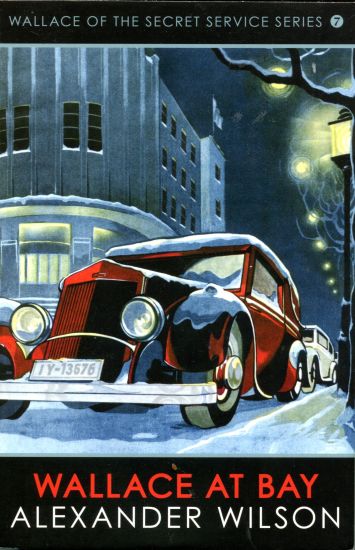
BOOK 3 in the Wallace of the Secret Service series Extreme Nationalists are fighting to relinquish the British government's power in Egypt. Secret agent Henderson, deployed to Egypt to assess the trouble, sends a coded message to say he's on the trail of something big. But there's been no word since.
Wallace at Bay

Wallace at Bay

Alexander Wilson

Allison Busby
2016
nidottu
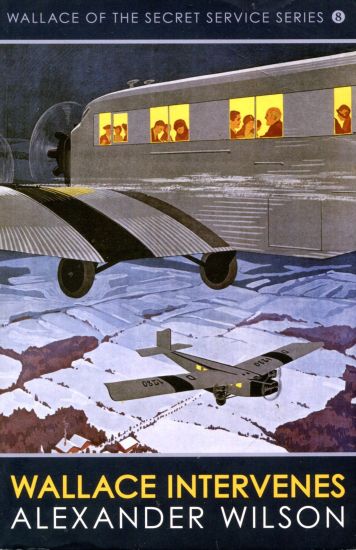
Having received intelligence regarding a dangerous band of anarchists planning to assassinate King Peter of Yugoslavia on his royal visit to England, the British Secret Service are hot on the trail of one of the key suspects. At the centre of the investigation is Sir Leonard Wallace, the famous Chief of the Secret Service. His team soon discover that the group is a small part of a much larger conspiracy with international ambitions of exterminating all royalty. Can Sir Leonard and his courageous adherents disband the fanatics before their evil designs take hold?
Wallace Intervenes

Wallace Intervenes

Alexander Wilson

Allison Busby
2016
nidottu
Sir Leonard Wallace, Chief of the Secret Service, sends one of his agents to Germany to obtain vital information from the Baroness von Reudath. Foster is told to feign infatuation with her, but the lines between reality and pretence soon blur as a result of his growing affection for the baroness. Before long, Foster becomes prey to the insane jealousy of the tyrannical Marshal von Strom: Foster suddenly disappears and the baroness is charged with treason - the punishment for which is death. Can Wallace use his cunning to foil von Strom's treacherous plans and rescue the distressed lovers before it's too late?
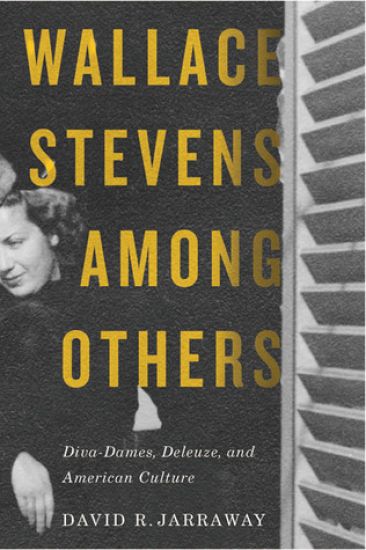
Wallace Stevens among Others

Wallace Stevens among Others

David R. Jarraway

McGill-Queen's University Press
2015
sidottu
In Wallace Stevens among Others, David Jarraway explores the extraordinary achievement of Wallace Stevens, but in contexts that are not usually thought about in connection with Stevens's work - gay literature, contemporary fiction, Hollywood film, and avant-garde architecture, among others. By viewing the poet among these "other" contexts, Jarraway considers the nature of self-reflection and pays special attention to the discrediting of self-presence as the principle of identity in American writing - a theme that reflects American authors' abiding concern for subjectivities that engage the world from spaces of distance and difference. By returning to the work of Stevens, Jarraway seeks to refurbish this preoccupation by linking it to the literary theory of French philosopher Gilles Deleuze, whose work applies to American writers from Melville and Whitman to Fitzgerald and Cummings. Jarraway forges the link between Deleuze and Stevens by drawing out the female subjectivity found in each writer's work to rethink the more static masculinist premises of being. Informed by a deep knowledge of and fluency with the work of Stevens and Deleuze, Jarraway uses these writers as a means of entry into American literature and culture, Wallace Stevens among Others is a sophisticated analysis that will open new directions for future scholarship.
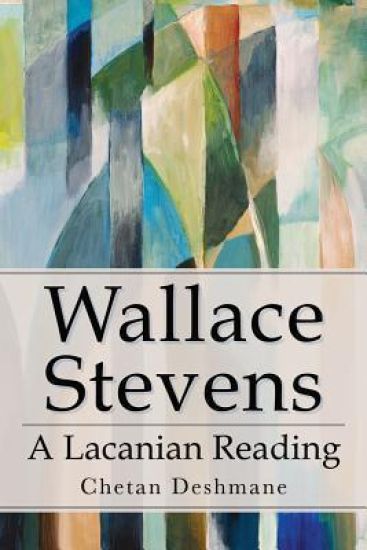
Wallace Stevens

Wallace Stevens

Chetan Deshmane

McFarland Co Inc
2012
nidottu
Wallace Stevens' complex poetry often eludes the grasp of the most tenacious reader. This critical text attempts an intensive reading of the most obscure verses through the hermeneutical lens of psychoanalytic criticism. Using Lacanian theory, the book corroborates the suspicion of various critics regarding Stevens' psychical health, examining the nature of its crisis and the cause. Avoiding intentional fallacy, the work concentrates on Stevens' language itself, revealing a use of symbols that characterize neurosis, thus shifting criticism from the poet's person to his text. A useful work for university students, scholars, and teachers alike.
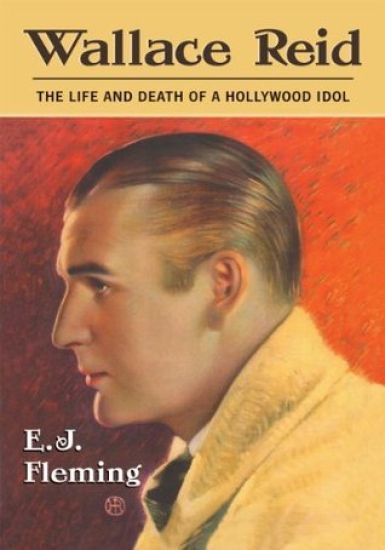
Wallace Reid

Wallace Reid

E.J. Fleming

McFarland Co Inc
2013
pokkari
For a decade Wallace Reid was the most recognized face in Hollywood, the most universally beloved actor in silent film. Today all that is widely remembered of "Wally" Reid is that he died in a padded sanitarium cell, the victim of a fatal morphine addiction. Of all the actors who have enjoyed great fame only to vanish from the public eye, Reid perhaps fell the fastest and the hardest. This first full biography recounts Reid's complicated childhood, his disrupted family history and his rise to film stardom despite these restricting factors. It documents his myriad talents and accomplishments, most notably his gift for brilliant onscreen acting. The text explores in depth how the modern studio, however unconsciously, turned the popular star, a well-adjusted man with a loving family, into a drug-dependent mental patient within three years. His death rocked the foundations of Hollywood, and the huge new industry that he helped build nearly died with "Dashing Wally Reid."
Wallace Stevens and the Demands of Modernity

Wallace Stevens and the Demands of Modernity

Charles Altieri

Cornell University Press
2013
sidottu
Charles Altieri, one of our foremost analysts of modernism, has in his recent work argued for the importance of the affects, which philosophy has too long subordinated to cognition and ethics. In Wallace Stevens and the Demands of Modernity, Altieri focuses his attention on modernist poetry, especially that of Wallace Stevens. He argues that critics have failed to appreciate the degree to which modernist poetry, like modernist art, breaks from the epistemology that arose from cultures of empiricism. If we recognize the limits of that authority we can also recognize the close positive affinities between how we feel and how we value. Nineteenth-century writing wanted to build values out of ways of looking at what could be established as fact. Early modernist poetry, particularly that of Stevens and Pound, labors to adapt Nietzschean attitudes toward poetry. Then Stevens embarked on an imaginative journey to find in linguistic activity itself a sufficient model for how we compose values. In both stages of his career facts must be respected, but they will not bear values simply by virtue of their connectedness to the world. We have to understand the constructive power taking place on intimate levels as we pursue that connectedness. Stevens matters, Altieri argues, because of the range and depth and intelligence by which he explores what such connectedness might involve. Stevens offers elaborate and moving experiments exploring how imaginative writing can help human beings grapple with questions about values that are at the very heart of our common experience.
Wallace Stevens and the Demands of Modernity

Wallace Stevens and the Demands of Modernity

Charles Altieri

Cornell University Press
2013
pokkari
Charles Altieri, one of our foremost analysts of modernism, has in his recent work argued for the importance of the affects, which philosophy has too long subordinated to cognition and ethics. In Wallace Stevens and the Demands of Modernity, Altieri focuses his attention on modernist poetry, especially that of Wallace Stevens. He argues that critics have failed to appreciate the degree to which modernist poetry, like modernist art, breaks from the epistemology that arose from cultures of empiricism. If we recognize the limits of that authority we can also recognize the close positive affinities between how we feel and how we value. Nineteenth-century writing wanted to build values out of ways of looking at what could be established as fact. Early modernist poetry, particularly that of Stevens and Pound, labors to adapt Nietzschean attitudes toward poetry. Then Stevens embarked on an imaginative journey to find in linguistic activity itself a sufficient model for how we compose values. In both stages of his career facts must be respected, but they will not bear values simply by virtue of their connectedness to the world. We have to understand the constructive power taking place on intimate levels as we pursue that connectedness. Stevens matters, Altieri argues, because of the range and depth and intelligence by which he explores what such connectedness might involve. Stevens offers elaborate and moving experiments exploring how imaginative writing can help human beings grapple with questions about values that are at the very heart of our common experience.
Wallace Stevens

Wallace Stevens

Harold Bloom

Cornell University Press
1980
pokkari
This dazzling book is at once an indispensable guide to Stevens's poetic canon and a significant addition to the literature on the American Romantic movement. It gives authoritative readings of the major long poems and sequences of Stevens and deals at length with the important shorter works as well, showing their complex relations both to one another and to the work of Stevens's precursors, Wordsworth, Shelley, Keats, Emerson, and Whitman. No other book on Stevens is as ambitious or comprehensive as this one: everyone who writes on Stevens will have to take it into account. The product of twenty years of meditating, thinking, and writing about Stevens, this truly remarkable book is a brilliant extension of Bloom's theories of literary interpretation.
Wallace Stegner

Wallace Stegner

Jackson J. Benson

Bison Books
2009
pokkari
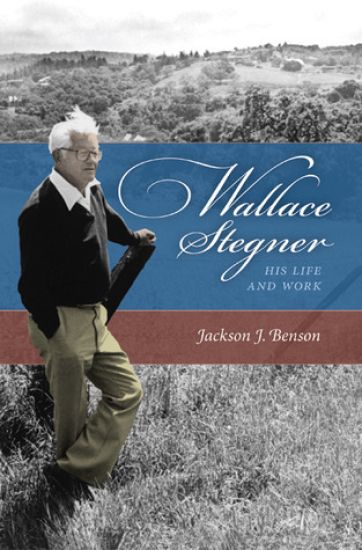
In a career spanning more than fifty years, Wallace Stegner (1909–93) emerged as the greatest contemporary author of the American West—writing more than two dozen works of history, biography, essays, and fiction, including the Pulitzer Prize-winning Angle of Repose and the bestselling Crossing to Safety. Jackson J. Benson's Wallace Stegner: His Life and Work is the first full-dress biography of this celebrated "Dean of Western Writers."Drawing on nearly ten years of research and unlimited access to Stegner's letters and personal files, Benson traces the trajectory of Wallace Stegner's life from his birth on his grandfather's Iowa farm to his prominence as an award-winning writer, critic, historian, environmental activist, and teacher, and as founder of Stanford's creative writing program.But Benson's book is as much a consideration of Stegner's literary legacy as it is a retelling of his life. His critical reassessment of the entire body of Stegner's work argues convincingly for his subject's place in the literary canon—not merely as a "regional" Western writer but straightforwardly as one of the great American writers of the twentieth century.
Wallace Stevens

Wallace Stevens

George S. Lensing

Louisiana State University Press
1986
nidottu
In Wallace Stevens: A Poet's Growth, George S. Lensing examines Stevens' gradual emergence and development as a poet, tracing his life from his formative years in Pennsylvania to his careers as a lawyer for the Hartford Accident and Indemnity Company and as one of the major poets of the twentieth century. Lensing draws extensively upon previously unpublished material from the Stevens archive at the Huntington Library, which contains letters, early drafts of poems, and notebooks. Two notebooks,Schemata and From Pieces of Paper, are here reproduced in full.The study is divided into three sections. In the first, Lensing examines the years before the publication of Sevens' first volume of poetry, paying special attention to the forces that hindered and enhanced his progress toward modernity. In the second, we see Stevens in the exercise of his craft. Lensing discusses the influence of the Romantics on the verse Stevens wrote as an undergraduate at Harvard; his interest in Oriental art, Cubism, and Fauvism; his anticipation of Imagism; and his imitation of certain French Symbolists. Sources of the epigraphs to Stevens' poems are identified fully for the first time, suggesting the role of Stevens' vast reading upon his poetry. Also considered is Stevens' voluminous correspondence with people from all over the world, some of whom he never met personally. These letters helped rescue Stevens from the insularity of his business life and aided in the making of his poems.The final section treats the critical responses to Stevens' poetry by such people as Harriet Monroe, editor and founder of Poetry, who was the first important reader and publisher of his work. Attention is also given to Stevens' explications of his poems.Wallace Stevens: A Poet's Growth is a comprehensive examination of Stevens' live and work. This study provides abundant new material, which will be of value to scholars and to those readers who are drawn to Stevens' poetry.
Wallace Stevens and the Seasons

Wallace Stevens and the Seasons

George S. Lensing

Louisiana State University Press
2004
nidottu
This fruitful pairing of literary and biographical interpretation follows Wallace Stevens's poetry through the lens of its dominant metaphor- the seasons of nature- and illuminates the poet's personal life experiences reflected there. From Stevens's first collection, Harmonium (1923), to his last poems written shortly before his death in 1955, George S. Lensing offers clear and detailed examination of Stevens's seasonal poetry, including extensive discussions of Autumn Refrain, The Snow Man, The World as Meditation, and Credences of Summer. Drawing upon a vast knowledge of the poet, Lensing argues that Stevens's pastoral poetry of the seasons assuaged a profound and persistent personal loneliness. An important scholarly assessment of a major twentieth-century modernist, Wallace Stevens and the Seasons also serves as an appealing introduction to Stevens.
Wallace Stevens and Poetic Theory

Wallace Stevens and Poetic Theory

The University of North Carolina Press
2011
nidottu
Leggett traces the effect of several important theoretical works on the poetry and prose of Stevens during a period in which he was formulating an aesthetic between 1942 and 1954. The author offers new readings of a number of poems and passages and clarifies certain controversial conceptions developed by Stevens, such as the supreme fiction, the relation of the new poet to tradition, and the psychologies of creativity.A UNC Press Enduring Edition -- UNC Press Enduring Editions use the latest in digital technology to make available again books from our distinguished backlist that were previously out of print. These editions are published unaltered from the original, and are presented in affordable paperback formats, bringing readers both historical and cultural value.
Wallace Stevens

Wallace Stevens

Eugene Paul Nassar

University of Pennsylvania Press
1965
sidottu
This book presents for the first time a thorough study of the imagery in Wallace Stevens's poetry and the patterns which these images form. Heretofore, most discussions of Stevens's work presupposed an understanding of the difficult and bizarre surface imagery and dealt mainly with broad generalizations which often left the student of Stevens's poems unsatisfied. The brilliant surface of the poems, the detailed imagery of specific passages, is here examined clearly and systematically. The images, indexed at the back of the book, are examined in four natural groups: Figures of the Mind, of Disorder, of Order, and of Change. The last half of the book is concerned with close analyses of some longer poems of Stevens's using the information gleaned from the "anatomy" of the first half.
Wallace Stevens - American Writers 11

Wallace Stevens - American Writers 11

William York Tindall

University of Minnesota Press
1961
nidottu
Wallace Stevens - American Writers 11 was first published in 1961. Minnesota Archive Editions uses digital technology to make long-unavailable books once again accessible, and are published unaltered from the original University of Minnesota Press editions.
Wallace Stevens and the Critical Schools

Wallace Stevens and the Critical Schools

Melita Schaum; John Serio

The University of Alabama Press
2003
nidottu
An overview of seventy years of Stevens criticism reveals a field marked by conflict and contradiction, both within and among critical works in their attempts to explicate and appropriate this major American poet. Stevens' changing reception among the critical schools reveals much about the shifting nature of American literature and criticism in this century and illuminates the often polemical process of literary canon formation. Each chapter of this book examines a particular aspect of the 20th-century critical involvement with Wallace Stevens' poetry, introduced by a discussion of the poet's work as an arena for the convergence of modern critical tendencies and concerns.First, the author examines the avant-garde milieu of early 20th-century modernism, which implicated Stevens in its melee of affiliations and enmities and which influenced critics' ambivalent responses to his early work. She traces the critical controversies of the poet's emergence before and during the 1920s, specifically the clash between New Humanism and aestheticism, and demonstrates how the quality of irony in Stevens' work became a part of the critics' general repertoire in their assessment of this poet.The 1930s, 1940s, and 1950s were decades during which Stevens criticism became dominated by the New Critical ideology. The turn toward deconstruction in Stevens criticism stands in part as a response to the New Critical dilemma, seen in the manner in which such critics as J. Hillis Miller and Joseph Riddel appropriated the concept of "decreation" to explain the sense of rupture in Stevens' late poetry yet brought that concept to its logical end in a deconstructive paradigm.Finally, Schaum identifies four major theoretical approaches to Stevens in the past two decades that continue to inform and direct the field of critical dissent and exploration in the 1980s. Such theories as Bloomian misprision, versions of hermeneutic criticism, redefinitions of the deconstructive enterprise, and the contemporary call for a new historicism continue the battle to appropriate Stevens as the "hard prize" of critical aims and investigations.
Wallace in the Field

Wallace in the Field

Victor Rafael Limeira-DaSilva

UNIVERSITY OF PITTSBURGH PRESS
2026
nidottu
A man of many talents—naturalist, geographer, anthropologist, and political commentator—Alfred Russel Wallace made seminal contributions to biology in the nineteenth century, playing a pivotal role in developing the theory of evolution through natural selection, which preceded Darwin’s famous tome, The Origin of Species.
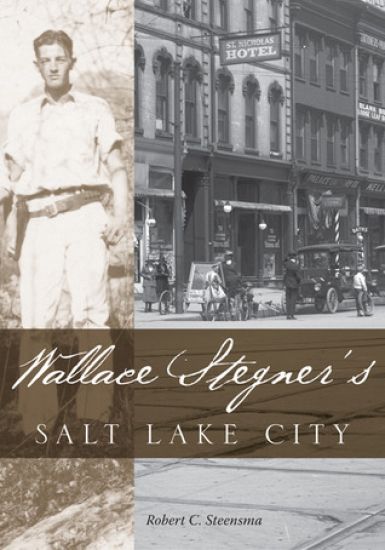
Wallace Stegners Salt Lake City

Wallace Stegners Salt Lake City

Robert Steensma

University of Utah Press,U.S.
2007
sidottu
Wallace Stegner (1909 1993) was born near Lake Mills, Iowa, and grew up in Saskatchewan, Canada; Great Falls, Montana; and Salt Lake City. He spent nearly twenty years in Salt Lake, from 1921 to 1937, and attended East High School and the University of Utah. He later taught at the University of Wisconsin, Harvard, and Stanford. As he was later to say in his essay 'At Home in the Fields of the Lord, ' he eventually realized that, if he had to have a hometown, it was Salt Lake City. He came to use the 'City of the Saints' for settings in three novels: The Big Rock Candy Mountain, Recapitulation, and The Preacher and the Slave (later retitled Joe Hill). His years in Utah helped develop the environmental ethic he espoused so eloquently in his famous 'Wilderness Letter.' Robert Steensma has meticulously searched through archival photographs, quotations from Stegner s writings, and interpretive essays in order to recreate the Salt Lake City of the 1920s and 1930s, the city of Stegner s youth and young adulthood. This is a book that will appeal to all who have been moved by Stegner s novels, nonfiction, or his urgent appeals for conservation.
Wallace Stevens and the Apocalyptic Mode

Wallace Stevens and the Apocalyptic Mode

Malcolm Woodland

University of Iowa Press
2005
sidottu
Wallace Stevens and the Apocalyptic Mode focuses on Stevens's doubled stance toward the apocalyptic past: his simultaneous use of and resistance to apocalyptic language, two contradictory forces that have generated two dominant and incompatible interpretations of his work. The book explores the often paradoxical roles of apocalyptic and antiapocalyptic rhetoric in modernist and postmodernist poetry and theory, particularly as these emerge in the poetry of Stevens and Jorie Graham. This study begins with an examination of the textual and generic issues surrounding apocalypse, culminating in the idea of apocalyptic language as a form of ""discursive mastery"" over the mayhem of events. Woodland provides an informative religious/historical discussion of apocalypse and, engaging with such critics as Parker, Derrida, and Fowler, sets forth the paradoxes and complexities that eventually challenge any clear dualities between apocalyptic and antiapocalyptic thinking. Woodland then examines some of Stevens's wartime essays and poems and describes Stevens's efforts to salvage a sense of self and poetic vitality in a time of war, as well as his resistance to the possibility of cultural collapse. Woodland discusses the major postwar poems ""Credences of Summer"" and ""The Auroras of Autumn"" in separate chapters, examining the interaction of (anti)apocalyptic modes with, respectively, pastoral and elegy. The final chapter offers a perspective on Stevens's place in literary history by examining the work of a contemporary poet, Jorie Graham, whose poetry quotes from Stevens's oeuvre and shows other marks of his influence. Woodland focuses on Graham's 1997 collection The Errancy and shows that her antiapocalyptic poetry involves a very different attitude toward the possibility of a radical break with a particular cultural or aesthetic stance. Wallace Stevens and the Apocalyptic Mode, offering a new understanding of Stevens's position in literary history, will greatly interest literary scholars and students.