Kirjojen hintavertailu. Mukana 11 417 157 kirjaa ja 12 kauppaa.

Kirjahaku

Etsi kirjoja tekijän nimen, kirjan nimen tai ISBN:n perusteella.

1000 tulosta hakusanalla Walter Benjamin

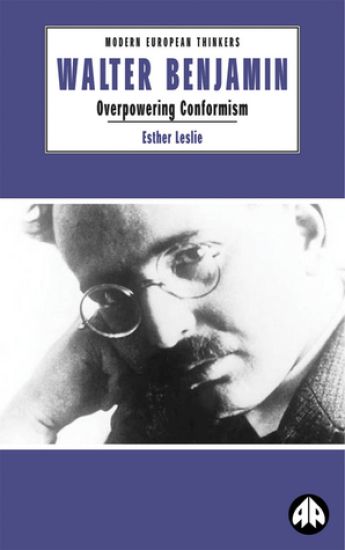
Walter Benjamin: Overpowering Conformism

Walter Benjamin: Overpowering Conformism

Esther Leslie

Pluto Press (UK)
2000
sidottu
Esther Leslie's path-breaking study of Walter Benjamin is unlike any other book presently available in English on Benjamin, in seeking to make a case for a more politicised reading of Benjamin's oeuvre. In looking at the entirety of Benjamin's work - rather than the four or five essays available in English which tend to form the Benjamin 'canon' - Leslie offers powerful new insights into a key twentieth-century political thinker, correcting the post-structuralist bias that has characterised so much Benjamin scholarship, and repositioning Benjamin's work in its historical and political context. In her examination of Benjamin's commentary on the politics and aesthetics of technology - from Benjamin's work on nineteenth-century industrial culture to his analyses of the Nazi deployment of the bomber - Esther Leslie recontextualises Benjamin's writings in a lucid and cogently argued new study.
Walter Benjamin and the Media

Walter Benjamin and the Media

Jaeho Kang

Polity Press
2014
sidottu
Walter Benjamin (1892-1940), one of the most original and perceptive thinkers of the twentieth century, offered a unique insight into the profound impact of the media on modern society. Jaeho Kang’s book offers a lucid introduction to Benjamin’s theory of the media and its continuing relevance today. The book provides a systematic and close reading of Benjamin’s critical and provocative writings on the intersection between media - from print to electronic - and modern experience, with reference to the information industry, the urban spectacle, and the aesthetic politics. Bringing Benjamin’s thought into a critical constellation with contemporary media theorists such as Marshall McLuhan and Jean Baudrillard, the book helps students understand the implications of Benjamin’s work for media studies today and how they can apply his distinctive ideas to contemporary media culture. Kang’s book leads to a fresh appreciation of Benjamin’s work and new insight into critical theoretical approaches to media. The book will be of particular interest to students and researchers not only in media and communication studies but also in cultural studies, film studies and social theory, who are seeking a readable overview of Benjamin’s rich yet complex writings.
Walter Benjamin and the Media

Walter Benjamin and the Media

Jaeho Kang

Polity Press
2014
nidottu
Walter Benjamin (1892-1940), one of the most original and perceptive thinkers of the twentieth century, offered a unique insight into the profound impact of the media on modern society. Jaeho Kang’s book offers a lucid introduction to Benjamin’s theory of the media and its continuing relevance today. The book provides a systematic and close reading of Benjamin’s critical and provocative writings on the intersection between media - from print to electronic - and modern experience, with reference to the information industry, the urban spectacle, and the aesthetic politics. Bringing Benjamin’s thought into a critical constellation with contemporary media theorists such as Marshall McLuhan and Jean Baudrillard, the book helps students understand the implications of Benjamin’s work for media studies today and how they can apply his distinctive ideas to contemporary media culture. Kang’s book leads to a fresh appreciation of Benjamin’s work and new insight into critical theoretical approaches to media. The book will be of particular interest to students and researchers not only in media and communication studies but also in cultural studies, film studies and social theory, who are seeking a readable overview of Benjamin’s rich yet complex writings.
Walter Benjamin and the Antinomies of Tradition
Few modern thinkers have been as convinced of the necessity of recovering the past in order to redeem the present as Walter Benjamin (1892-1940). Benjamin at once mourned and celebrated what he took to be an inevitable liquidation of traditional culture, and his determination to think both of these attitudes through to their conclusions lends his work its peculiar honesty, along with its paradoxical, antinomial coherence. In a landmark interpretation of the whole of Benjamin's career, John McCole demonstrates a way of understanding Benjamin that both contextualizes and addresses the complexities and ambiguities of his texts.Working with Pierre Bourdieu's concept of the "intellectual field," McCole traces Benjamin's deep ambivalence about cultural tradition through the longterm project-an immanent critique of German idealist and romantic aesthetics-which unites his writings. McCole builds a sustained reading of Benjamin's intellectual development which sheds new light on the formative role of early influences—particularly his participation in the pre-World War I German youth movement and the orthodox discourse of German intellectual culture—and shows how Benjamin later extended the strategies he learned within these contexts during key encounters with Weimar modernism, surrealism, and the fiction of Proust.The fullest account of Benjamin available in English, this lucid and penetrating book will be welcomed by intellectual historians, literary theorists and critics, historians of German literature, and Continental philosophers.
Walter Benjamin and the Demands of History
This book is the first to consider the presence of history and the question of historical practice in Walter Benjamin's work. Benjamin, the critic and philosopher of history, was also the practitioner, the authors contend, and it is in the practice of historical writing that the materialist aspect of his thought is most evident.Some of the essays analyze Benjamin's writings in cultural history and the philosophy of history. Others connect his historical and theoretical practices to issues in contemporary feminism and post-colonial studies, and to cultural contexts including the United States, Japan, and Hong Kong. In different ways, the authors all find in Benjamin's specific notion of historical materialism a dialectic between textual and cultural analysis which can reinvigorate the relation between literary and historical studies.
Walter Benjamin and the Demands of History
This book is the first to consider the presence of history and the question of historical practice in Walter Benjamin's work. Benjamin, the critic and philosopher of history, was also the practitioner, the authors contend, and it is in the practice of historical writing that the materialist aspect of his thought is most evident. Some of the essays analyze Benjamin's writings in cultural history and the philosophy of history. Others connect his historical and theoretical practices to issues in contemporary feminism and post-colonial studies, and to cultural contexts including the United States, Japan, and Hong Kong. In different ways, the authors all find in Benjamin's specific notion of historical materialism a dialectic between textual and cultural analysis which can reinvigorate the relation between literary and historical studies.
Walter Benjamin and the Antinomies of Tradition

Walter Benjamin and the Antinomies of Tradition

John McCole

Cornell University Press
1993
pokkari
Few modern thinkers have been as convinced of the necessity of recovering the past in order to redeem the present as Walter Benjamin (1892-1940). Benjamin at once mourned and celebrated what he took to be an inevitable liquidation of traditional culture, and his determination to think both of these attitudes through to their conclusions lends his work its peculiar honesty, along with its paradoxical, antinomial coherence. In a landmark interpretation of the whole of Benjamin's career, John McCole demonstrates a way of understanding Benjamin that both contextualizes and addresses the complexities and ambiguities of his texts. Working with Pierre Bourdieu's concept of the "intellectual field," McCole traces Benjamin's deep ambivalence about cultural tradition through the longterm project-an immanent critique of German idealist and romantic aesthetics-which unites his writings. McCole builds a sustained reading of Benjamin's intellectual development which sheds new light on the formative role of early influences—particularly his participation in the pre-World War I German youth movement and the orthodox discourse of German intellectual culture—and shows how Benjamin later extended the strategies he learned within these contexts during key encounters with Weimar modernism, surrealism, and the fiction of Proust. The fullest account of Benjamin available in English, this lucid and penetrating book will be welcomed by intellectual historians, literary theorists and critics, historians of German literature, and Continental philosophers.
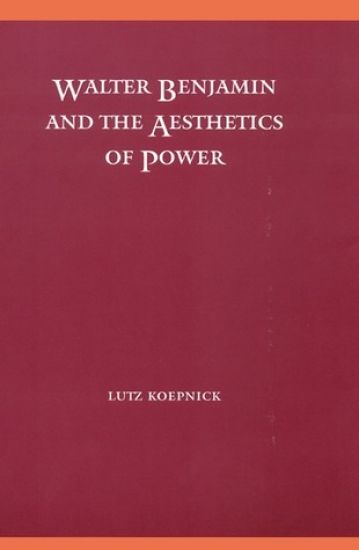
Walter Benjamin and the Aesthetics of Power

Walter Benjamin and the Aesthetics of Power

Lutz Koepnick

University of Nebraska Press
1999
sidottu
Walter Benjamin and the Aesthetics of Power explores Walter Benjamin's seminal writings on the relationship between mass culture and fascism. The book offers a nuanced reading of Benjamin's widely influential critique of aesthetic politics, while it contributes to current debates about the cultural projects of Nazi Germany, the changing role of popular culture in the twentieth century, and the way in which Nazi aesthetics have persisted into the present. Lutz Koepnick first explores the development of the aestheticization thesis in Benjamin's work from the early 1920s to his death in 1940. Pushing Benjamin's fragmentary remarks to a logical conclusion, Koepnick sheds light on the ways in which the Nazis employed industrial mass culture to redress the political as a self-referential space of authenticity and self-assertion. Koepnick then examines to what extent Benjamin's analysis of fascism holds up to recent historical analyses of the National Socialist period and whether Benjamin's aestheticization thesis can help conceptualize cultural politics today. Although Koepnick insists on crucial differences between the stage-managing of political action in modern and postmodern societies, he argues throughout that it is in Benjamin's emphatic insistence on experience that we may find the relevance of his reflections today. Walter Benjamin and the Aesthetics of Power is both an important contribution to Benjamin studies and a revealing addition to our understanding of the Third Reich and of contemporary culture's uneasy relationship to Nazi culture.
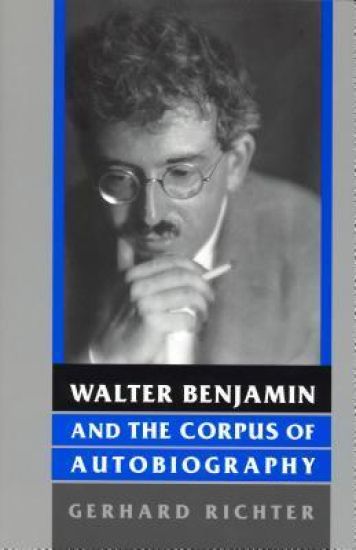
Walter Benjamin and the Corpus of Autobiography

Walter Benjamin and the Corpus of Autobiography

Gerhard Richter

Wayne State University Press
2002
nidottu
Walter Benjamin is considered one of the most significant writers and theorists in 20th-century Western culture. The author of this work shows that Benjamin's engagement with the political cannot be understood in terms of unified concepts, but rather should be understood from his language.
Walter Benjamin and Theology

Walter Benjamin and Theology

Fordham University Press
2016
sidottu
In the Arcades Project, Walter Benjamin writes that his work is "related to theology as blotting pad is related to ink. It is saturated with it." For a thinker so decisive to critical literary, cultural, political, and aesthetic writings over the past half-century, Benjamin's relationship to theological matters has been less observed than it should, even despite a variety of attempts over the last four decades to illuminate the theological elements latent within his eclectic and occasional writings. Such attempts, though undeniably crucial to comprehending his thought, remain in need of deepened systematic analysis. In bringing together some of the most renowned experts from both sides of the Atlantic, Walter Benjamin and Theology seeks to establish a new site from which to address both the issue of Benjamin's relationship with theology and all the crucial aspects that Benjamin himself grappled with when addressing the field and operations of theological inquiry.
Walter Benjamin and Theology

Walter Benjamin and Theology

Fordham University Press
2016
pokkari
In the Arcades Project, Walter Benjamin writes that his work is "related to theology as blotting pad is related to ink. It is saturated with it." For a thinker so decisive to critical literary, cultural, political, and aesthetic writings over the past half-century, Benjamin's relationship to theological matters has been less observed than it should, even despite a variety of attempts over the last four decades to illuminate the theological elements latent within his eclectic and occasional writings. Such attempts, though undeniably crucial to comprehending his thought, remain in need of deepened systematic analysis. In bringing together some of the most renowned experts from both sides of the Atlantic, Walter Benjamin and Theology seeks to establish a new site from which to address both the issue of Benjamin's relationship with theology and all the crucial aspects that Benjamin himself grappled with when addressing the field and operations of theological inquiry.
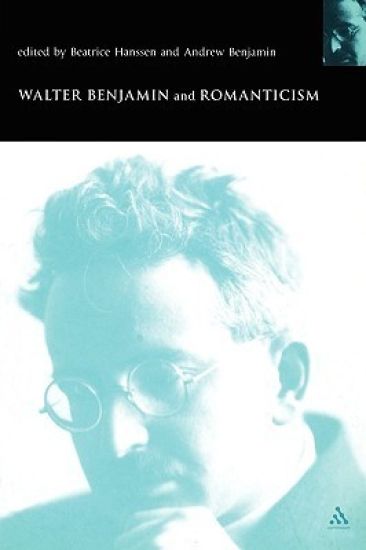
Walter Benjamin and Romanticism

Walter Benjamin and Romanticism

Continuum International Publishing Group Ltd.
2002
pokkari
This text explores the relationship between Walter Benjamin's literary and philosophical work and the tradition of German Romanticism, as well as Holderlin and Goethe. Through a detailed and scholarly analysis of the major texts, the book explores the endurance of Benjamin's relationship to Romanticism, the residual presence of Romantic Goethean and Holderlinian motifs in Benjamin's subsequent writings and how Benjamin's understanding of the relationship between criticism and Romanticism can still play a vital role in contemporary philosophical and literary practice. Contributors include Andrew Benjamin, Josh Cohen, David Ferris, Beatrice Hanssen, Philippe Lacoue-Labarthe, Charlie Louth, Bettine Menke, Winfried Menninghaus, Anthony Phelan and Sigrid Weigel.
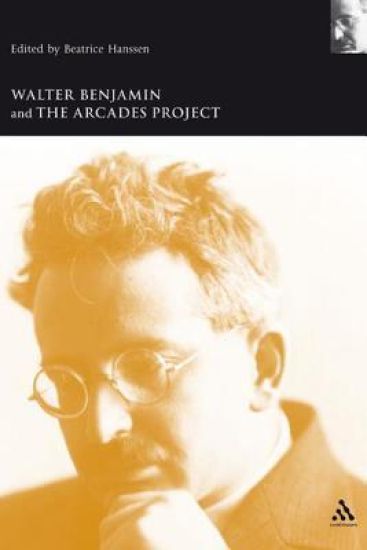
Walter Benjamin and the Arcades Project

Walter Benjamin and the Arcades Project

Continuum International Publishing Group Ltd.
2006
sidottu
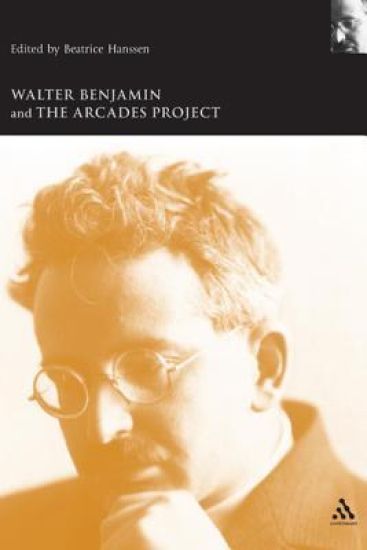
One of the most significant cultural documents of the Weimar Republic and Nazi era, Walter Benjamin's unfinished Arcades Project has had a remarkable impact on present-day cultural theory, urban studies, cultural studies and literary interpretation. Originally designed as a panoramic study chronicling the rise and decline of the Parisian shopping arcades, Benjamin's work combines imaginative peregrinations through the changing city-scape of nineteenth-century Paris with passages that read like a blueprint for a new cultural theory of modernity. Walter Benjamin and the Arcades Project provides the first comprehensive introduction to this extraordinary work accessible to English-language readers. The diverse range of issues explored include the nature of collecting, the anatomy of melancholy, the flaneur, the physiognomy of ruins, the dialectical image, Benjamin's relation to Baudelaire, the practice of history-writing, and modernity and architecture. Contributors include Susan Buck-Morss, Stanley Cavell, Jonathan Culler, Brigid Doherty, Barbara Johnson, Esther Leslie, Gerhard Richter, Andrew Benjamin, Howard Caygill, Beatrice Hanssen, Detlef Mertins, Elissa Marder, Tyrus Miller, and Irving Wohlfarth
Walter Benjamin and the Arcades Project

Walter Benjamin and the Arcades Project

Continuum International Publishing Group Ltd.
2006
nidottu
This is the first comprehensive introduction to Benjamin's unfinished "Arcades Project" - one of the most significant cultural documents of the Weimar Republic and Nazi era. Walter Benjamin's unfinished "Arcades Project" has had a remarkable impact on present-day cultural theory, urban studies, cultural studies and literary interpretation. Originally designed as a panoramic study chronicling the rise and decline of the Parisian shopping arcades, Benjamin's work combines imaginative peregrinations through the changing city-scape of nineteenth-century Paris with passages that read like a blueprint for a new cultural theory of modernity. "Walter Benjamin and the Arcades Project" provides the first comprehensive introduction to this extraordinary work accessible to English-language readers. The diverse range of issues explored include the fl and No. 226; neur, the physiognomy of ruins, the dialectical image, and modernity and architecture. The contributors include: Susan Buck-Morss, Stanley Cavell, Brigid Doherty, Stathis Gourgouris, Barbara Johnson, Esther Leslie, Gerhard Richter, Beatrice Hanssen, Detlef Mertins, Elissa Marder, Tyrus Miller, Max Pensky, and Irving Wohlfarth.
Walter Benjamin and Art

Walter Benjamin and Art

Andrew Benjamin

Continuum International Publishing Group Ltd.
2005
nidottu
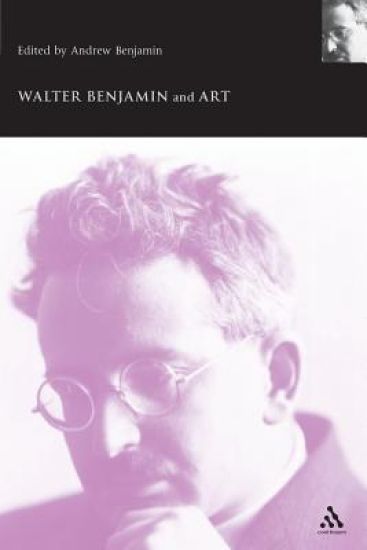
Walter Benjamin's most famous and influential essay remains The Work of Art in the Age of Mechanical Reproduction. Walter Benjamin and the Work of Art is the first book to provide a broad and dedicated analysis of this canonical work and its effect upon core contemporary concerns in the visual arts, aesthetics and the history of philosophy. The book is structured around three distinct areas: the extension of Benjamin's work; the question of historical connection; the importance of the essay in the development of criticism of both the visual arts and literature. Contributors to the volume include major Benjamin commentators, whose work has very much defined the reception of the essay, and leading philosophers, historians and aesthetician, whose approaches open up new areas of interest and relevance.
Walter Benjamin and History

Walter Benjamin and History

Andrew Benjamin

Mansell Publishing
2005
nidottu
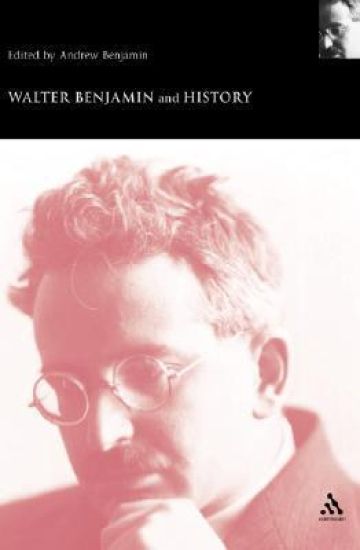
The first book to examine in detail Benjamin's Theses on the Philosophy of History Benjamin's collection of fragments, Theses on the Philosophy of History, play a determining role in how Benjamin's thought is understood, as well as in the debate about the interplay between politics, history and time. Walter Benjamin and History is the first volume to give access to the themes and problems raised by the Theses, providing valuable exegetical and historical work on the text. The essays collected here are all the work of noted Benjamin scholars, and pursue the themes central to the Theses.
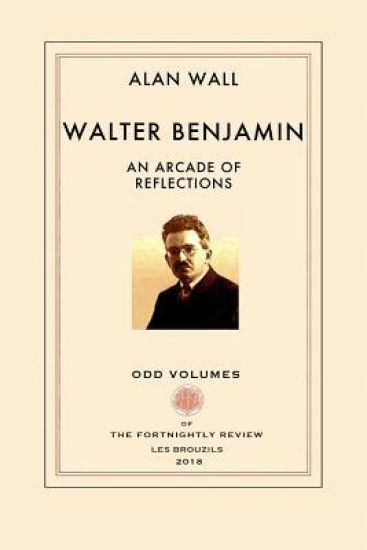
Walter Benjamin: An Arcade of Reflections
Walter Benjamin (1892-1940) was a German philosopher, essayist and critic whose work has grown in relevance and importance in the 75 years since his death by suicide on the French-Spanish border as Nazi invaders drew near. In his possession: a mysterious suitcase, now lost. The University of Chester's Alan Wall examines many of the recent contexts for discussions of Benjamin and offers detailed explanations for the overdue resurgence of interest in this important writer. Alan Wall studied at Oxford and teaches at the University of Chester. For the past several years, he has been writing about Benjamin for The Fortnightly Review. The aim of this collection of essays is to use some of the key concepts of Walter Benjamin in order to describe aspects of contemporary culture and politics. The chapters in this volume: - Part One: Uneven and Combined Development - Part Two: Texting: Ancient and Modern - Part Three: Bad Reading Habits -Part Four: Spadefuls of Meaning -Part Five: Walter Benjamin and Aby Warburg -- Photographs of Heaven, Photographs of Hell - Part Six: The 'Canonicity' of Kafka - Part Seven: Baudelaire, Allegory and the Aura - Part Eight: Benjamin's Angel and His 'Theses' - Part Nine: Benjamin and Surrealism - Part Ten: Benjamin and the City fortnightlyreview.co.uk/odd-volumes/
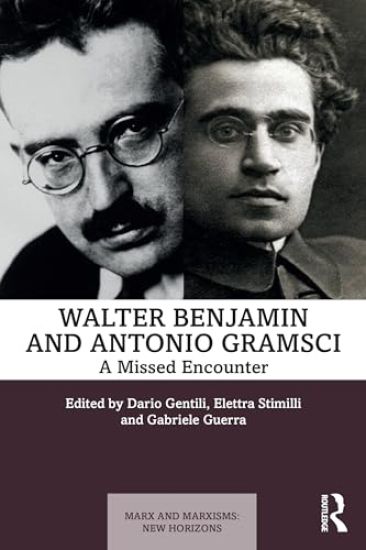
Walter Benjamin and Antonio Gramsci
This book marks a missed encounter between two of the most influential Marxist thinkers of our age, Walter Benjamin and Antonio Gramsci, studied here for the first time side by side.Benjamin and Gramsci were contemporaries, whose births and deaths took place within a few years of each other in Western Europe in the first half of the twentieth century. Two Marxists sui generis, they radically changed Marxism’s themes and vocabulary, profoundly influencing the most significant analyses and debates. At a time in which Marxism was considered to be outdated and in crisis, both Gramsci’s and Benjamin’s thoughts provided resources for its renewal: particularly in postcolonial studies for Gramsci and in new media studies for Benjamin. Both were victims of fascism, on the threshold of the catastrophe of the Second World War. These two philosophers’ posthumous fortune depended on the transmission of their thought, which was first entrusted to friends and comrades, and then to entire generations of scholars from a wide range of disciplines.Editors, Dario Gentili, Elettra Stimilli, and Gabriele Guerra explore with leading voices on Benjamin and Gramsci the most relevant and topical issues today. The book gives an indispensable new perspective in Marxism for students and researchers alike.
Walter Benjamin and Antonio Gramsci
This book marks a missed encounter between two of the most influential Marxist thinkers of our age, Walter Benjamin and Antonio Gramsci, studied here for the first time side by side.Benjamin and Gramsci were contemporaries, whose births and deaths took place within a few years of each other in Western Europe in the first half of the twentieth century. Two Marxists sui generis, they radically changed Marxism’s themes and vocabulary, profoundly influencing the most significant analyses and debates. At a time in which Marxism was considered to be outdated and in crisis, both Gramsci’s and Benjamin’s thoughts provided resources for its renewal: particularly in postcolonial studies for Gramsci and in new media studies for Benjamin. Both were victims of fascism, on the threshold of the catastrophe of the Second World War. These two philosophers’ posthumous fortune depended on the transmission of their thought, which was first entrusted to friends and comrades, and then to entire generations of scholars from a wide range of disciplines.Editors, Dario Gentili, Elettra Stimilli, and Gabriele Guerra explore with leading voices on Benjamin and Gramsci the most relevant and topical issues today. The book gives an indispensable new perspective in Marxism for students and researchers alike.