

Kirjahaku
Etsi kirjoja tekijän nimen, kirjan nimen tai ISBN:n perusteella.
1000 tulosta hakusanalla Walter C Short
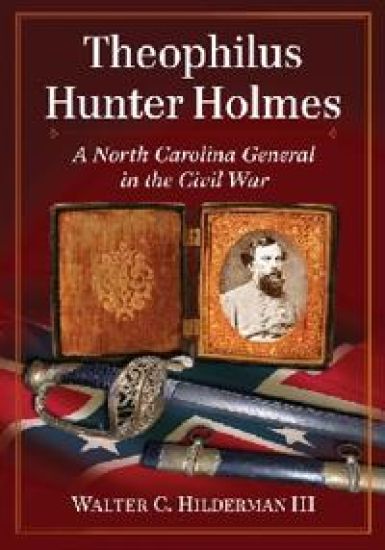
The son of a North Carolina governor, Theophilus Hunter Holmes graduated from the United States Military Academy in 1829 and served on the frontier during the Trail of Tears. He fought in the Second Seminole War and in the U.S.-Mexican War. In 1859, he became the U.S. Army's chief recruiting officer and was assigned to Governors Island at New York City. Only days before resigning from the U.S. Army, he helped organize the naval expedition sent to relieve Fort Sumter from the Confederacy's blockade. But then casting his lot with his native state, Holmes led a Confederate brigade at First Manassas and a division during the Peninsular Campaign, commanded armies in the Trans-Mississippi, and organized North Carolina's young boys and old men into the Confederate Reserves. Holmes served with some of America's most notable historic figures: Zachary Taylor, Winfield Scott, Robert E. Lee, and Jefferson Davis. In modern times, however, he is virtually unknown. The man and the soldier possessed traits of both triumph and tragedy, as demonstrated in this biography.

The Proprietors' Records of the Town of Lunenburg, Massachusetts, Including Fitchburg and a Portion of Ashby, 1729-1833
Walter C Davis
Heritage Books
2013
pokkari
This book provides a framework for analyzing and forecasting a variety of mineral and energy markets and related industries. Such modeling activity has been at the forefront of the economic and engineering professions for some time, having received a major stimulus fC?llowing the first oil price shock in 1973. Since that time, other shocks have affected these markets and industries, causing disequilibrium economic adjustments which are difficult to analyze and to predict. Moreover, geopolitics remains an important factor which can destabilize crude oil markets and associated refining industries. Mineral and energy modeling, consequently, has become a major interest of energy-related corporations, mining and drilling companies, metal manufacturers, public utilities, investment banks,. national government agencies and international organizations. This book hopes to advance mineral and energy modeling as follows: (1) The modeling process is presented sequentially by leading the model builder from model specification, estimation, simulation, and validation to practical model applications, including explaining history, analyzing policy, and market and price forecasting; (2) New developments in modeling approaches are presented which encompass econometric market and industry models, spatial equilibrium and programming models, optimal resource depletion models, input-output models, economic sector models, and macro oriented energy interaction models (including computable general equilibrium); (3) The verification and application of the models is considered not only individually but also in relation to the performance of alternative modeling approaches; and (4) The modeling framework includes a perspective on new directions, so that the present model building advice willextend into the future.
Toward an Exegetical Theology – Biblical Exegesis for Preaching and Teaching
Walter C. Jr. Kaiser
Baker Academic, Div of Baker Publishing Group
1998
nidottu
Proposes a method of biblical interpretation consisting of the following steps: contextual analysis, syntactical analysis, verbal analysis, theological analysis, and homiletical analysis.
Preaching and Teaching from the Old Testament – A Guide for the Church
Walter C. Jr. Kaiser
Baker Academic, Div of Baker Publishing Group
2003
nidottu
Viewed as antiquated and remote, the Old Testament is frequently neglected in the preaching and teaching ministry of the church. But contrary to the prevailing attitude, might the Old Testament contain relevant and meaningful application for today? Renowned author and scholar Walter Kaiser shows why the Old Testament deserves equal attention with the New Testament and offers a helpful guide on how preachers and teachers can give it the full attention it deserves. Growing out of his teaching material from the last decade, Preaching and Teaching from the Old Testament demonstrates Kaiser's celebrated straightforward exposition. Offering an apologetic for the Christian use of the Old Testament, the opening chapters deal with the value, problem, and task of preaching from it. Following a discussion of the role of expository preaching, Kaiser provides a practical focus by examining preaching and teaching from the texts of various genres. A final chapter explores the relevance of the Old Testament in speaking to a contemporary audience.Bible teachers, pastors, seminary students, and professors will appreciate Kaiser's practical focus and relevant applications. Additional helps include a glossary and suggested outlines and worksheets for expository preaching.
What Does the Lord Require?
Walter C. Jr. Kaiser
Baker Academic, Div of Baker Publishing Group
2009
nidottu
How applicable is the Bible's moral standard to the complex issues we face today--like stem cell research, euthanasia, gambling, and environmental care? How does a person use Scripture to make ethical decisions? And how do we teach people to think biblically about ethics? Experienced Bible teacher Walter Kaiser answers these questions by demonstrating how, connecting eighteen key teaching Scriptures to eighteen tough ethical issues. Some examples include connecting poverty and orphans with Isaiah 58:1-12, genetic engineering with Genesis 1:26-39 and 2:15-25, and cohabitation and adultery with 1 Thessalonians 4:1-8. The result is a stimulating resource and guide for preaching and a solid foundation for developing Bible studies. Each chapter also includes concluding points, bibliography, and discussion questions.
Preaching and Teaching the Last Things – Old Testament Eschatology for the Life of the Church
Walter C. Jr. Kaiser
Baker Academic, Div of Baker Publishing Group
2011
nidottu
Distinguished Old Testament scholar Walter Kaiser believes that the Old Testament is sorely neglected today in teaching and preaching, but it is even more neglected when it comes to setting forth the hope that Christians have for the future. Firmly believing that the Old Testament offers important insights into biblical eschatology and the Christian life, he provides guidance for expositing fifteen key Old Testament eschatological passages to preachers, teachers, and Bible students. Each chapter focuses on a single biblical text. Kaiser introduces the topic, examines the issues, notes who has contributed to some of the solutions, and shows how this sets up the text to be exegeted and prepared for exposition.

Mission in the Old Testament – Israel as a Light to the Nations
Walter C. Jr. Kaiser
Baker Academic, Div of Baker Publishing Group
2012
nidottu
Walter Kaiser questions the notion that the New Testament represents a deviation from God's supposed intention to save only the Israelites. He argues that--contrary to popular opinion--the older Testament does not reinforce an exclusive redemptive plan. Instead, it emphasizes a common human condition and God's original and continuing concern for all humanity. Kaiser shows that the Israelites' mission was always to actively spread to gentiles the Good News of the promised Messiah. This new edition adds two new chapters, freshens material throughout, expands the bibliography, and includes study questions.
The River Flows On offers an impressively broad examination of slave resistance in America, spanning the colonial and antebellum eras in both the North and South and covering all forms of recalcitrance, from major revolts and rebellions to everyday acts of disobedience. Walter C. Rucker analyses American slave resistance with a keen understanding of its African influences, tracing the emergence of an African American identity and culture. Rucker points to the shared cultural heritage that facilitated collective action among both African- and American-born slaves, such as the ubiquitous belief in conjure and spiritual forces, the importance of martial dance and the drum, and ideas about the afterlife and transmigration.Focusing on the role of African cultural and sociopolitical forces, Rucker gives in-depth attention to the 1712 New York City revolt, the 1739 Stono rebellion in South Carolina, the 1741 New York conspiracy, Gabriel Prosser's 1800 Richmond slave plot, and Denmark Vesey's 1822 Charleston scheme. He concludes with Nat Turner's 1831 revolt in Southampton, Virginia, which bore the marks of both conjure and Christianity, reflecting a new, African American consciousness. With rich evidence drawn from anthropology, archaeology, and religion, The River Flows On is an innovative and convincing study.
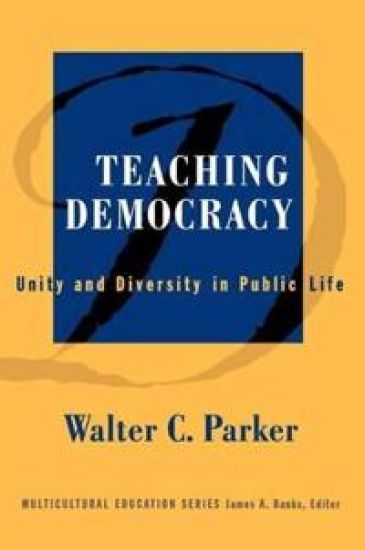
In Teaching Democracy, Walter Parker makes a unique and thoughtful contribution to the hot debate between proponents of multicultural education and those who favor a cultural literacy approach. Parker conclusively demonstrates that educating for democratic citizenship in a multicultural society includes a fundamental respect for diversity.This scholarly yet accessible work:Bridges the widening gap between multicultural education and civic education.Provides powerful teaching strategies that educators can use to draw children creatively and productively into a way of life that protects and nurtures cultural pluralism and racial equity.Explains the unity–diversity confusion that is found in popular media as well as in multicultural- and citizenship-education initiatives.Defines deliberative discussion and explores its promise as the centerpiece of democratic education in schools, both elementary and secondary.
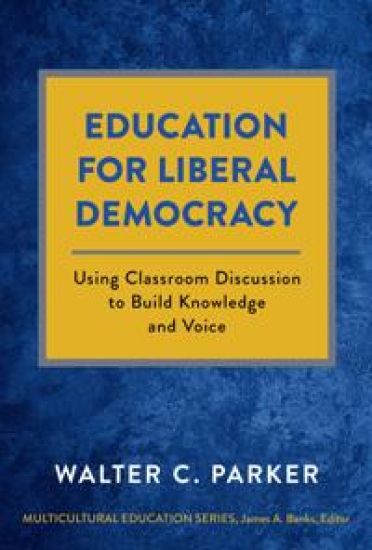
Our democracy is in crisis. Both political trust and a shared standard of truth are broken. In this book, Walter Parker shows why and how a civic education can help. Offering a centrist approach suitable for a polarized society, Parker focuses on two linked curriculum objectives: disciplinary knowledge and voice. He illustrates how classroom discussion, alongside concept formation and deep reading, expand students' minds while developing their ability to speak with others and form opinions. When children come to school, they emerge from the private chrysalis of babyhood and kin to interact with a diverse student body along with teachers, curriculum, instruction, and the school's unique mission: education. Parker argues that these assets make school the ideal place to teach young people the liberal arts of studying and discussing public issues and academic controversies, both in and beyond school. The chapters in this collection, spanning 20 years and coming from one of civic education's most influential scholars, show that voice can be taught right alongside disciplinary knowledge. Drawing students into dialogue with one another on the curriculum's central questions is a teacher's most ambitious goal and, when it happens, teaching's greatest accomplishment.Book Features:Argues that the proper aim of civic education in schools is to shore up liberal democracy.Shows how discussion can be a main course, and not a side dish, of classroom instruction. Demonstrates how to use discussion to develop voice, defined as the freedom to make and express uncoerced decisions, and disciplinary knowledge, defined as the knowledge that results from a public process of error-seeking, contestation, and validation.Explains why students need to learn both disciplinary knowledge and voice if they are to take their place on the public stage and hold the "office of citizen" in a democracy.Treats subject-centered and student-centered instruction as partners, not opponents.
Our democracy is in crisis. Both political trust and a shared standard of truth are broken. In this book, Walter Parker shows why and how a civic education can help. Offering a centrist approach suitable for a polarized society, Parker focuses on two linked curriculum objectives: disciplinary knowledge and voice. He illustrates how classroom discussion, alongside concept formation and deep reading, expand students' minds while developing their ability to speak with others and form opinions. When children come to school, they emerge from the private chrysalis of babyhood and kin to interact with a diverse student body along with teachers, curriculum, instruction, and the school's unique mission: education. Parker argues that these assets make school the ideal place to teach young people the liberal arts of studying and discussing public issues and academic controversies, both in and beyond school. The chapters in this collection, spanning 20 years and coming from one of civic education's most influential scholars, show that voice can be taught right alongside disciplinary knowledge. Drawing students into dialogue with one another on the curriculum's central questions is a teacher's most ambitious goal and, when it happens, teaching's greatest accomplishment.Book Features:Argues that the proper aim of civic education in schools is to shore up liberal democracy.Shows how discussion can be a main course, and not a side dish, of classroom instruction. Demonstrates how to use discussion to develop voice, defined as the freedom to make and express uncoerced decisions, and disciplinary knowledge, defined as the knowledge that results from a public process of error-seeking, contestation, and validation.Explains why students need to learn both disciplinary knowledge and voice if they are to take their place on the public stage and hold the "office of citizen" in a democracy.Treats subject-centered and student-centered instruction as partners, not opponents.
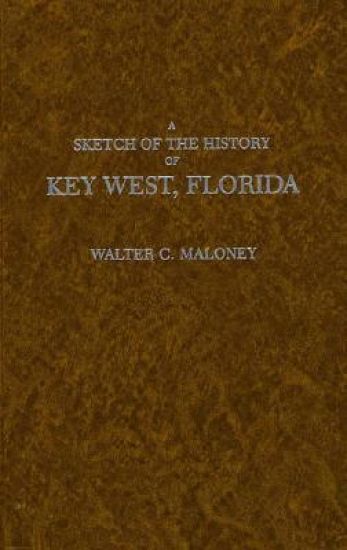
Sketch of the History of Key West, Florida
Walter C. Maloney
University Press of Florida
1968
sidottu
This work has been selected by scholars as being culturally important, and is part of the knowledge base of civilization as we know it. This work was reproduced from the original artifact, and remains as true to the original work as possible. Therefore, you will see the original copyright references, library stamps (as most of these works have been housed in our most important libraries around the world), and other notations in the work. This work is in the public domain in the United States of America, and possibly other nations. Within the United States, you may freely copy and distribute this work, as no entity (individual or corporate) has a copyright on the body of the work.As a reproduction of a historical artifact, this work may contain missing or blurred pages, poor pictures, errant marks, etc. Scholars believe, and we concur, that this work is important enough to be preserved, reproduced, and made generally available to the public. We appreciate your support of the preservation process, and thank you for being an important part of keeping this knowledge alive and relevant.

With nearly twenty-five million citizens, a secretive totalitarian dictatorship, and active nuclear and ballistic missile weapons programs, North Korea presents some of the world's most difficult foreign policy challenges. For decades, the United States and its partners have employed multiple strategies in an effort to prevent Pyongyang from acquiring weapons of mass destruction. Washington has moved from the Agreed Framework under President Bill Clinton to George W. Bush's denunciation of the regime as part of the "axis of evil" to a posture of "strategic patience" under Barack Obama. Given that a new president will soon occupy the White House, policy expert Walter C. Clemens Jr. argues that now is the time to reconsider US diplomatic efforts in North Korea.In North Korea and the World, Clemens poses the question, "Can, should, and must we negotiate with a regime we regard as evil?" Weighing the needs of all the stakeholders -- including China, Japan, Russia, and South Korea -- he concludes that the answer is yes. After assessing nine other policy options, he makes the case for engagement and negotiation with the regime. There still may be time to freeze or eliminate North Korea's weapons of mass destruction.Grounded in philosophy and history, this volume offers a fresh road map for negotiators and outlines a grand bargain that balances both ethical and practical security concerns.
The first edition of this book provided readers with a complete examination of the tsunami phenomenon in Hawaii. This second edition adds many eyewitness accounts of the tsunamis of 1946 and 1960 and expands its coverage to include major tsunamis in the Mediterranean and off the coasts of Japan, Chile, Indonesia, Fiji, Alaska, California, Newfoundland and the Caribbean. Photographs and accounts of experiencing tsunami firsthand are placed within the framework of the how and why of tsunamis, our scientific understanding of these phenomena and the state of the tsunami warning system, which is widely used to forecast and measure tsunamis and prepare coastal areas for possible strikes.
On April 1, 1946, shortly after sunrise, the town of Hilo on the island of Hawai'i was devastated by a series of giant waves. Traveling 2,300 miles from the Aleutian Islands in less than five hours, the waves struck without warning and claimed 159 lives. Fourteen years later, on May 22, 1960, a massive earthquake occurred off of the coast of Chile. The earthquake generated giant waves that sped across the Pacific at 442 miles per hour, reaching Hilo in just fifteen hours. The first wave to hit the town was a modest four feet higher than normal, the second nine feet. Before the third wave could arrive, a tidal phenomenon known as a bore smashed into the Hilo bayfront, with thirty-five foot waves that wrenched buildings off their foundations. That day several city blocks were swept clean of all structures and 61 people died. The first edition of Tsunami!, published in 1988, provided readers with a complete examination of the tsunami phenomenon in Hawai'i. This second edition adds many eyewitness accounts of the tsunamis of 1946 and 1960 and expands its coverage to include major tsunamis in the Mediterranean and off the coasts of Japan, Chile, Indonesia, Fiji, Alaska, California, Newfoundland, and the Caribbean, as well as the 1998 devastation in Papua New Guinea. Dramatic photographs and accounts of experiencing a tsunami firsthand are placed within the framework of the how and why of tsunamis, our scientific understanding of these phenomena, and the current status of the Tsunami Warning System, which is widely used to forecast and measure tsunamis and prepare coastal areas for potentially deadly tsunami strikes.
Spanish Edition. This book offers deep insight into the different historical periods of the Old Testament and their relation to God's Promise. It explores the connection between the Old Testament and New Testament, and has an annotated bibliography, a topical index, Scripture index and name index.
Hard Sayings of the Bible
Walter C. Kaiser; Peter H. Davids; F. F. Bruce; Manfred Brauch
Inter-Varsity Press,US
2010
nidottu
Are you grappling with a difficult verse in the Bible? And are you looking for a short, easy-to-read answer that really makes sense without explaining away the verse? Hard Sayings of the Bible is the handy reference book you need. Here you will find explanations of over five hundred of the most troubling verses to test the minds and hearts of Bible readers. Four seasoned scholars, all with a notable gift for communicating with people in the pew, take you behind the scenes to find succinct solutions to a wide variety of Bible difficulties, ranging from discrepancies about numbers to questions about God's justice. Historical, cultural and linguistic backgrounds shed light on these passages and not only help explain what they meant in biblical times but also show how they are relevant today. Now carefully cross-referenced with over one hundred new verses explained, as well as a dozen new introductory articles on chronology, miracles, archaeology, prophecy and more, Hard Sayings of the Bible offers the combined resources of five previous volumes that have over 250,000 copies in print. If you find yourself tied up in scriptural knots, here's the book that will help you cut through them.