
Kirjahaku
Etsi kirjoja tekijän nimen, kirjan nimen tai ISBN:n perusteella.
1000 tulosta hakusanalla Werner Seim
Werner’s Syndrome and Human Aging
Springer-Verlag New York Inc.
2012
nidottu
In keeping with the traditions of deve1opmenta1 bio1ogy and geronto1ogy, there was a long incubation period before fu11 expres- sion of the plans for an International Conference on the Werner Syndrome and the pub1ication of the present monograph based upon the proceedings of that conference. The initial concept emerged at the Xlth International Congress. of Geronto1ogy, which took p1ace in Tokyo in 1978. Drs. G.M. Martin, Y. Fujiwara and Y. Mitsui met on that occasion to discuss ways of acce1erating the pace of research on this important disorder, inc1uding banking and sharing of ce11 cu1tures, establishment of patient registries, and p1anning of joint conferences and pub1ications. In November 1979, under the auspices of the Geronto1ogica1 Society of America and a conference grant from the National Institute on Aging of the U.S. National Institutes of Hea1th, a group of Japanese investigators (Drs. Fujiwara, Mitsui, M. Goto, T. Ishii, K. Oota and *T. Matsumura) met with Drs. Martin, D. Sa1k and W. Ted Brown to deve10p plans to implement the goals discussed at the initial Tokyo meeting. A workshop focused on the needs of ce11 banking and 1ed to an accumu1ation of research materials both in Japan (main1y under the leadership of T. Matsumura) and in the U.S.A. (with the cooperation of Dr. Arthur Greene of the Institute of Medica1 Research).
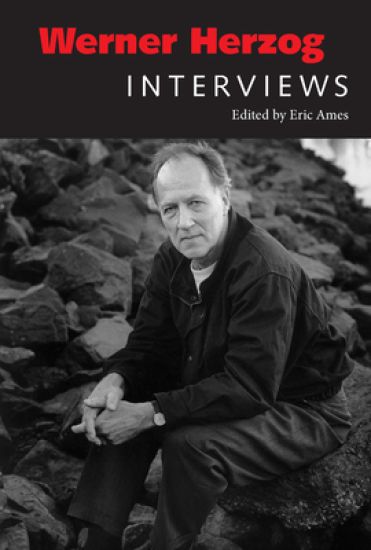
Werner Herzog
University Press of Mississippi
2015
nidottu
Over the course of his career, legendary director Werner Herzog (b. 1942) has made almost sixty films and given more than eight hundred interviews. This collection features the best of these, focusing on all the major films, from Signs of Life and Aguirre, the Wrath of God to Grizzly Man and Cave of Forgotten Dreams. When did Herzog decide to become a filmmaker? Who are his key influences? Where does he find his peculiar themes and characters? What role does music play in his films? How does he see himself in relation to the German past and in relation to film history? And how did he ever survive the wrath of Klaus Kinski? Herzog answers these and many other questions in twenty-five interviews ranging from the 1960s to the present. Critics and fans recognized Herzog's importance as a young German filmmaker early on, but his films have attained international significance over the decades. Most of the interviews collected in this volume--some of them from Herzog's production archive and previously unpublished--appear in English for the very first time. Together, they offer an unprecedented look at Herzog's work, his career, and his public persona as it has developed and changed over time.
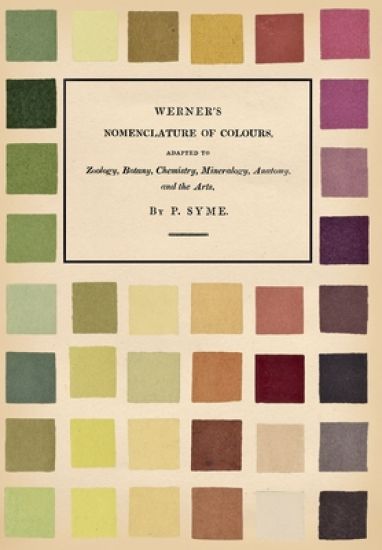
Werner's Nomenclature of Colours;Adapted to Zoology, Botany, Chemistry, Mineralogy, Anatomy, and the Arts
Patrick Syme; Abraham Gottlob Werner
Art Meets Science
2020
sidottu
Read & Co. presents this new edition of Werner's Nomenclature of Colours. First published in 1814, this small volume comprises a collection of 110 swatches displaying nature's colour palette together with their poetical descriptions. In the 18th Century, German geologist Abraham Gottlob Werner set out to establish a standard reference guide to colour for use in the general sciences. Scottish flower painter Patrick Syme later enhanced and extended Werner's work to include all of the most common colours or tints that appear in nature, with each colour swatch accompanied by examples from the Animal, Vegetable and Mineral Kingdoms. The resulting work was used by many scientists, explorers and anthropologists to further their studies, including Charles Darwin during his time on the HMS Beagle. Werner's Nomenclature of Colours is considered the predecessor of modern systems such as Pantone and has even inspired heritage paint ranges from the likes of Dulux and Farrow & Ball. Read & Co. is republishing this beautiful little volume in a new facsimile edition and has taken great care to reproduce the original text and art for a new generation of artists and scientists.
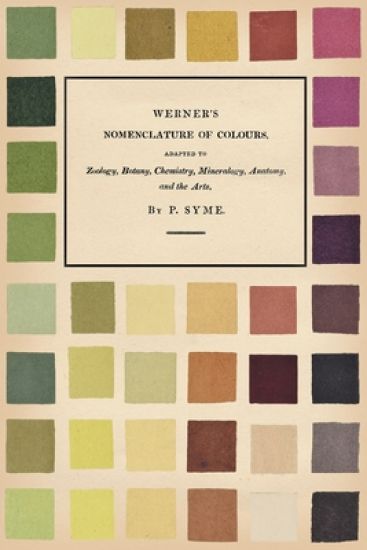
Werner's Nomenclature of Colours;Adapted to Zoology, Botany, Chemistry, Mineralogy, Anatomy, and the Arts
Patrick Syme; Abraham Gottlob Werner
Art Meets Science
2020
pokkari
Read & Co. presents this new edition of Werner's Nomenclature of Colours. First published in 1814, this small volume comprises a collection of 110 swatches displaying nature's colour palette together with their poetical descriptions. In the 18th Century, German geologist Abraham Gottlob Werner set out to establish a standard reference guide to colour for use in the general sciences. Scottish flower painter Patrick Syme later enhanced and extended Werner's work to include all of the most common colours or tints that appear in nature, with each colour swatch accompanied by examples from the Animal, Vegetable and Mineral Kingdoms. The resulting work was used by many scientists, explorers and anthropologists to further their studies, including Charles Darwin during his time on the HMS Beagle. Werner's Nomenclature of Colours is considered the predecessor of modern systems such as Pantone and has even inspired heritage paint ranges from the likes of Dulux and Farrow & Ball. Read & Co. is republishing this beautiful little volume in a new facsimile edition and has taken great care to reproduce the original text and art for a new generation of artists and scientists.
Werner's Readings and Recitations - No. 8 - First Prize
Jean Carruthers
Createspace Independent Publishing Platform
2016
nidottu
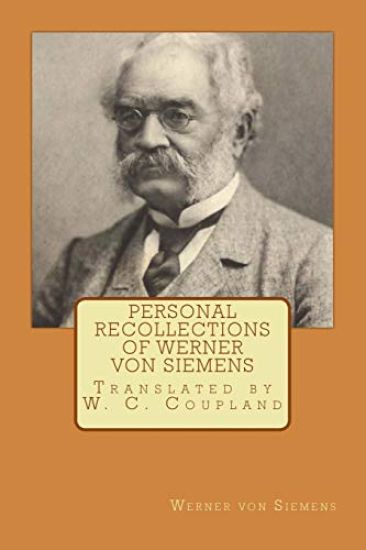
Personal Recollections of Werner von Siemens: Translated by W. C. Coupland
Werner Von Siemens
Createspace Independent Publishing Platform
2016
nidottu
A pioneering electrical inventor and international adventurer, Werner von Siemens is the archetypal 19th century hero. His bizarre but true life story encompasses world-changing discoveries, life-threatening enterprises, imprisonment, a shipwreck, accidental explosions, fighting, politics, extensive travel, mingling with high society, and the founding of Siemens - now the largest engineering company in Europe. His memoirs caused a stir when they were first published in 1893. This copy has been slightly edited for clarity but otherwise remains true to the original translation by W.C.Coupland.
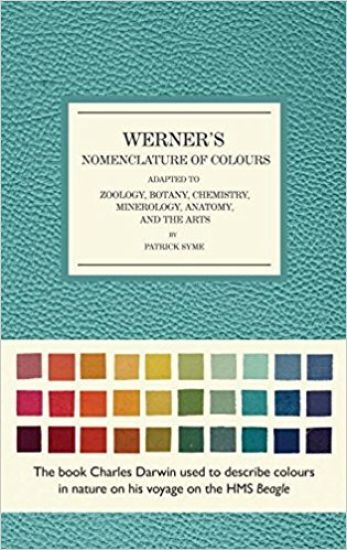
Werner's Nomenclature of Colours: Adapted to Zoology, Botany, Chemistry, Mineralogy, Anatomy, and the Arts
Patrick Syme
Smithsonian Books
2018
sidottu
A taxonomic guide to the colors of the natural world, with 13 palettes and 110 color swatches, cherished by artists and scientists for more than 2 centuries "Before Pantone, there was Werner's Nomenclature of Colours"--Architectural Digest This beautiful pocket-size facsimile is a charming artifact from the golden age of natural history and global exploration. In the pre-photographic age, almost all visual details had to be captured via the written word, and scientific observers could not afford ambiguity in their descriptions. In the late 18th century, mineralogist Abraham Gottlob Werner devised a standardized color scheme that allowed him to describe even the subtlest of chromatic differences with consistent terminology. His scheme was then adapted by an Edinburgh flower painter, Patrick Syme, who used the actual minerals described by Werner to create the color charts in the book, enhancing them with examples from flora and fauna. Werner's handbook became an invaluable resource for naturalists and anthropologists, including Charles Darwin, who used it to identify colors in nature during his seminal voyage on the HMS Beagle. Werner's terminology lent both precision and lyricism to Darwin's pioneering writings, enabling his readers to envision a world they would never see. This new facsimile edition complete with ribbon marker brings the classic work back to life.

Werner Herzog
University Press of Mississippi
2014
sidottu
Over the course of his career, legendary director Werner Herzog (b. 1942) has made almost sixty films and given more than eight hundred interviews. This collection features the best of these, focusing on all the major films, from Signs of Life and Aguirre, the Wrath of God to Grizzly Man and Cave of Forgotten Dreams. When did Herzog decide to become a filmmaker? Who are his key influences? Where does he find his peculiar themes and characters? What role does music play in his films? How does he see himself in relation to the German past and in relation to film history? And how did he ever survive the wrath of Klaus Kinski? Herzog answers these and many other questions in twenty-five interviews ranging from the 1960s to the present. Critics and fans recognized Herzog's importance as a young German filmmaker early on, but his films have attained international significance over the decades. Most of the interviews collected in this volume--some of them from Herzog's production archive and previously unpublished--appear in English for the very first time. Together, they offer an unprecedented look at Herzog's work, his career, and his public persona as it has developed and changed over time.
In the second volume of Anja Jaenicke's "Werner the Insane Penguin" Werner climbs even higher mountains and finally finds the source of life.

Werner Herzog came to fame in the 1970s as the European new wave explored new cinematic ideas. With films like Signs of Life (1968), Aguirre, the Wrath of God (1972), The Enigma of Kaspar Hauser (1974) and Fitzcarraldo (1982), Herzog became the subject of public debate, particularly due to his larger-than-life characters, often played by the mad Klaus Kinski. After the success of his documentary Grizzly Man (2005), Herzog began to lead a new form of hybrid documentary, and his tough attitude towards life and film made him a director’s director for a new generation. Kristoffer Hegnsvad’s award-winning book guides the reader through films depicting gangster priests, bear whisperers, shoe eating, revolutionary filmmakers . . . and a penguin. It is full of rare insights from Herzog’s otherwise secret Rogue film school, and is based on interviews with Herzog.

This book is a fictional account of the life of German film and theatre actor Werner Krauss, eponymous star of the classic silent film The Cabinet of Doctor Caligari. Upon gaining worldwide recognition in this film, Krauss was co-opted into the Nazi hate campaign of the 1930s and 1940s. He featured in the vicious propaganda film Jud Suss, and he was complicit in giving anti-Semitic performances onstage, most notably as Shylock in Shakespeare's The Merchant of Venice. The book focuses on three distinct eras in Krauss' life: the struggling, exuberant actor of the 1920s; the philandering pragmatist of the 1930s; and the elderly, neurotic outcast of the 1940s. Despite his honourable intentions, Krauss was all-too-often undermined by his inability to say no to women, alcohol and the egregious Joseph Goebbels. In this fictional re-imagining of his life, Krauss' motives and decisions are explored in an attempt to discover why he collaborated with the Nazis in the way that he did, as well as demonstrating the personal and political consequences of his actions. As someone who was influenced by the Nazi regime, and, in turn, influential in perpetuating their message, Krauss' story tells the wider story of the role of the arts and media in Nazi Germany. Extensively researched, including contemporary news stories, archived film material, critical essays on Krauss and translated passages from his autobiography, Das Schauspiel Meines Lebens, this fictional reconstruction of Krauss' life and career is preceded by a substantive Introduction by the author, setting the novel in the context of the genre of Holocaust fiction, emulating and reminiscent of Christopher Isherwood's Goodbye to Berlin and Thomas Keneally's Schindler's Ark.

Werner Bischof: Questions To My Father
Trolley Press
2004
sidottu
Werner Bischof was a singular post-war photographer. His focus on showing the poverty and despair around him in Europe was tempered with a desire to travel the world, and convey the beauty and humanity waiting to be discovered through his lens. Tragically his inspirational life was cut short by a car accident in Peru, but his legacy lives on, and here his son Marco presents 70 of his father's photographs, never before published.In 1916, with the Great War reducing northern Europe to a treeless, shattered void, a boy was born to the prosperous director of a pharmaceutical firm in Zurich. He was named Werner. It was not an auspicious time to be born and, indeed, his mother died soon after. As a child, young Werner sought order in his life by dissecting snails and photographing, in the limpid light of his creation, the elegant whorls revealed. He did not become the physical training instructor (a compromise) his father wanted him to be. He did not become the painter he had once wanted to be in Paris in 1939, on the brink of another devastating conflict. He became Werner Bischof, the man, and a photographer of incalculable artistry who found in both order and the chaos he confronted and experienced a sublime beauty, a humanity that was singularly his own.His photographs of the post-war Europe in poverty and despair expressed infinite hope for the human condition; yet he was only 29. Less than 10 years later he was dead, leaving behind among his last photographs that of a Peruvian child playing his flute on the edge of a ravine. It is now an iconic photograph, and has a fatal allure.Bischof died when his jeep plunged over a ravine in the Andes on a quest for the faces, the lives, of harmony there. Fifty years later his son Marco has gathered together 70 previously unpublished photographs by Werner Bischof. They powerfully reiterate the man his father was, the nature of his humanity and his search for a benign and beautiful cognisance of the brief and terrifying world he lived in.
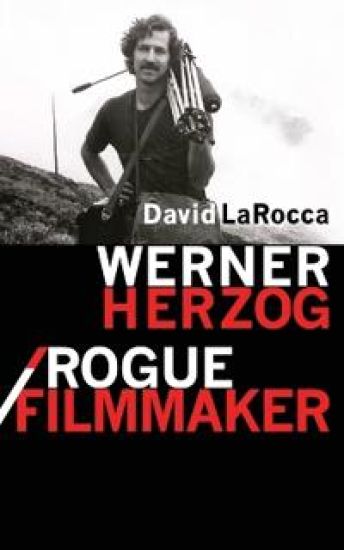
In Werner Herzog / Rogue Filmmaker, David LaRocca draws from a fan's resolute passion for his subject to face head-on vexing Herzogian notions such as ecstatic truth, the sublime, and the beguiling spirit that animates the fittingly titled Rogue Film School, which the author attended. In our distracted, dissipating times, Herzog is an icon of penetrating acuity, vigorous resolve, poetic straight-talk, and provocative medial experiments--someone with the mettle to mount visionary adventures: shouldered, provisional, failed, recuperated. In these pages, LaRocca follows the more than half-century-long footpath by which Herzog became his own genre: with fabricated films of daring, life-lived-at-the-limits intensity; artful literary innovations; and a persistently roving persona. Marshaling the awe suited to philosophical investigations, LaRocca tracks the study of Herzog from first forays to the fraught present moment, including critical dispatches on autobiography, parody, and artificial intelligence. As with any Herzogian enterprise, this one isn't for the faint of heart.

In Werner Herzog / Rogue Filmmaker, David LaRocca draws from a fan's resolute passion for his subject to face head-on vexing Herzogian notions such as ecstatic truth, the sublime, and the beguiling spirit that animates the fittingly titled Rogue Film School, which the author attended. In our distracted, dissipating times, Herzog is an icon of penetrating acuity, vigorous resolve, poetic straight-talk, and provocative medial experiments--someone with the mettle to mount visionary adventures: shouldered, provisional, failed, recuperated. In these pages, LaRocca follows the more than half-century-long footpath by which Herzog became his own genre: with fabricated films of daring, life-lived-at-the-limits intensity; artful literary innovations; and a persistently roving persona. Marshaling the awe suited to philosophical investigations, LaRocca tracks the study of Herzog from first forays to the fraught present moment, including critical dispatches on autobiography, parody, and artificial intelligence. As with any Herzogian enterprise, this one isn't for the faint of heart.

Through ten outstanding editions, Werner & Ingbar's The Thyroid: A Fundamental and Clinical Text has been the go-to reference for the most comprehensive coverage of the thyroid, including anatomy, development, biochemistry, physiology, pathophysiology, and treatment of all thyroid disorders. Now in full color throughout, the 11th Edition of this award-winning text remains the clinician’s preferred source of authoritative information on the thyroid—an essential resource for all endocrinologists and thyroid surgeons. Includes thorough updates and new content throughout the text, especially on thyroid cytopathology, thyroid imaging, and targeted therapy of thyroid cancer as well as a new full-color format.Covers all aspects of the thyroid, including thyroid hormone synthesis and secretion, thyroid function, and disorders such as thyrotoxicosis, hypothyroidism, and cancer.Discusses surgical management of thyroid cancer, thyroid disruptors, thyroid hormone analogs, thyroid dysfunction’s effects on other organ systems, the aging thyroid, subclinical hypothyroidism and hyperthyroidism, and thyroid disease in pregnancy.Features insights from international experts, including new editor Dr. Peter Kopp of Northwestern University’s Feinberg School of Medicine.Enrich Your Ebook Reading ExperienceRead directly on your preferred device(s), such as computer, tablet, or smartphone.Easily convert to audiobook, powering your content with natural language text-to-speech.

Werner Sombart and the 'Spirit' of Modern Capitalism
Christopher Adair-Toteff
Springer International Publishing AG
2024
sidottu
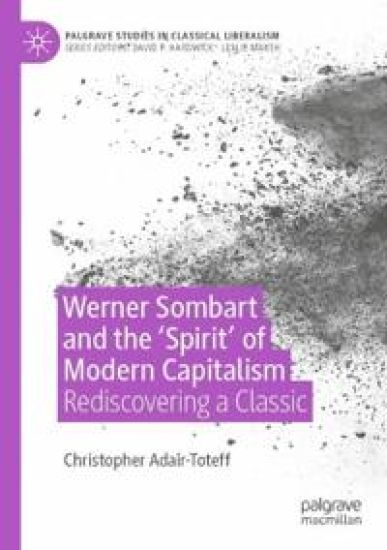
This book illuminates the work of Werner Sombart, a key contemporary of Max Weber, showing how his writing and thinking laid the groundwork for concepts of modern capitalism. Although the notion of the ‘spirit’ of modern capitalism is most associated with Weber, it was Sombart who first used this phrase, with Weber focusing mainly on socioeconomics while Sombart continued to develop his ideas around modern capitalism. This book critically analyses Sombart’s groundbreaking work, “Der moderne Kapitalismus” among his other writings to demonstrate how they may be read as a complementary alternative to Weber, providing a more detailed, sustained, and a comprehensive account of the genesis and nature of modern capitalism. This book will be of interest to a scholarly audience including students and researchers of the history of economic thought, as well as areas of sociology, politics, and political economy.
Werner Sombart and the 'Spirit' of Modern Capitalism
Christopher Adair-Toteff
Springer International Publishing AG
2025
nidottu
This book illuminates the work of Werner Sombart, a key contemporary of Max Weber, showing how his writing and thinking laid the groundwork for concepts of modern capitalism. Although the notion of the ‘spirit’ of modern capitalism is most associated with Weber, it was Sombart who first used this phrase, with Weber focusing mainly on socioeconomics while Sombart continued to develop his ideas around modern capitalism. This book critically analyses Sombart’s groundbreaking work, “Der moderne Kapitalismus” among his other writings to demonstrate how they may be read as a complementary alternative to Weber, providing a more detailed, sustained, and a comprehensive account of the genesis and nature of modern capitalism. This book will be of interest to a scholarly audience including students and researchers of the history of economic thought, as well as areas of sociology, politics, and political economy.

Werner Sombart und der „Geist“ des modernen Kapitalismus
Christopher Adair-Toteff
Springer-Verlag Berlin and Heidelberg GmbH Co. KG
2025
sidottu
Dieses Buch beleuchtet das Werk von Werner Sombart, einem wichtigen Zeitgenossen von Max Weber, und zeigt, wie sein Denken die Grundlagen für Konzepte des modernen Kapitalismus legte. Obwohl der Begriff des „Geistes“ des modernen Kapitalismus am häufigsten mit Weber verbunden wird, war es Sombart, der diesen Ausdruck zuerst verwendete, während Weber sich hauptsächlich auf die Sozialökonomik konzentrierte, während Sombart seine Ideen zum modernen Kapitalismus weiterentwickelte. Dieses Buch analysiert kritisch Sombarts bahnbrechendes Werk „Der moderne Kapitalismus“ und andere Schriften, um zu zeigen, wie sie als ergänzende Alternative zu Weber gelesen werden können, und bietet eine detailliertere und umfassendere Darstellung der Entstehung und Natur des modernen Kapitalismus. Dieses Buch wird ein interessantes Werk für ein wissenschaftliches Publikum sein, einschließlich Studierenden und Forschern der Geschichte des wirtschaftlichen Denkens sowie in den Bereichen Soziologie, Politik und Politische Ökonomie.