Kirjojen hintavertailu. Mukana 12 390 323 kirjaa ja 12 kauppaa.

Kirjahaku

Etsi kirjoja tekijän nimen, kirjan nimen tai ISBN:n perusteella.

1000 tulosta hakusanalla William Foster

Mexico City in Contemporary Mexican Cinema

Mexico City in Contemporary Mexican Cinema

David William Foster

University of Texas Press
2002
pokkari
Just as Mexican national life has come to center on the sprawling, dynamic, almost indefinable metropolis of Mexico City, so recent Mexican cinema has focused on the city not merely as a setting for films but almost as a protagonist in its own right, whose conditions both create meaning for and receive meaning from the human lives lived in its midst. Through close readings of fourteen recent critically acclaimed films, this book watches Mexican cinema in this process of producing cultural meaning through its creation, enaction, and interpretation of the idea of Mexico City. David William Foster analyzes how Mexican filmmakers have used Mexico City as a vehicle for exploring such issues as crime, living space, street life, youth culture, political and police corruption, safety hazards, gender roles, and ethnic and social identities. The book is divided into three sections. "Politics of the City" examines the films Rojo amanecer,Novia que te vea,Frida, naturaleza viva, and Sexo, pudor y lágrimas. "Human Geographies" looks at El Callejón de los Milagros,Mecánica nacional,El castillo de la pureza,Todo el poder, and Lolo. "Mapping Gender" discusses Danzón,De noche vienes,Esmeralda,La tarea,Lola, and Entre Pancho Villa y una mujer desnuda.
Gay and Lesbian Themes in Latin American Writing

Gay and Lesbian Themes in Latin American Writing

David William Foster

University of Texas Press
1991
pokkari
A taboo subject in many cultures, homosexuality has been traditionally repressed in Latin America, both as a way of life and as a subject for literature. Yet numerous writers have attempted to break the cultural silence surrounding homosexuality, using various strategies to overtly or covertly discuss lesbian and gay themes. In this study, David William Foster examines more than two dozen texts that deal with gay and lesbian topics, drawing from them significant insights into the relationship between homosexuality and society in different Latin American countries and time periods.Foster's study includes works both sympathetic and antagonistic to homosexuality, showing the range of opinion on this topic. The preponderance of his examples come from Argentina, Brazil, and Mexico, countries with historically active gay communities, although he also includes material on other countries. Noteworthy among the authors covered are Reinaldo Arenas, Adolfo Caminha, Isaac Chocrón, José Donoso, Sylvia Molloy, Alejandra Pizarnik, and Luis Zapata.
Latin American Writers on Gay and Lesbian Themes

Latin American Writers on Gay and Lesbian Themes

David William Foster

Greenwood Press
1994
sidottu
Gay and lesbian themes in Latin American literature have been largely ignored. This reference fills this gap by providing more than a hundred alphabetically arranged entries for Latin American authors who have treated gay or lesbian material in their works. Each entry explores the significance of gay and lesbian themes in a particular author's writings and closes with a bibliography of primary and secondary sources. The figures included have a professed gay identity, or have written on gay or lesbian themes in either a positive or negative way, or have authored works in which a gay sensibility can be identified. The volume pays particular attention to the difficulty of ascribing North American critical perspectives to Latin American authors, and studies these authors within the larger context of Latin American culture. The book includes entries for men and women, and for authors from Latin American countries as well as Latino writers from the United States. The entries are written by roughly 60 expert contributors from Latin America, the U.S., and Europe.
Culture and Customs of Argentina

Culture and Customs of Argentina

David William Foster; Melissa Lockhart; Darrell B. Lockhart

Greenwood Press
1998
sidottu
Argentina, one of the most dynamic societies in Latin America, is known for its impressive level of cultural production. This examination of the social and cultural institutions of Argentine society contains a series of comprehensive and informative essays that focus on the most important forms of cultural production in terms of major works, major artists, and major venues. Students and interested readers will discover what is unique about Argentina's culture and customs in this thorough and engaging overview. The authors describe the issues that have dominated Argentine society and place everything in its proper context by including a chronology of major historic events. This volume also contains chapters on Religion, Social Customs, Broadcasting and Print Media, Cinema, Literature, Performing Arts, and Art (including Sculpture, Photography, Architecture, Painting).
Spanish Writers on Gay and Lesbian Themes

Spanish Writers on Gay and Lesbian Themes

David William Foster

Greenwood Press
1999
sidottu
Spanish literature is one of the major European literatures, with an extensive array of canonical and important writers from the Middle Ages to the present. Because Spain was a crossroads of Christian, Jewish, and Islamic cultures, its cultural traditions weave together issues related to homoerotic practices and beliefs from these diverse origins. Homoeroticism, as a consequence, has always been a highly charged issue for Spain. But only since the return to a constitutional society after the death of Franco in 1975 and the international growth of interest in queer issues has it been possible to establish a reliable history of homoeroticism in Spanish culture. Many of these issues have been treated in Spanish literature, since the literature of a country so closely records its culture. This reference book examines the prominence of gay and lesbian themes in the works of Spanish writers and thus illuminates the homoerotic element in Spanish culture from the medieval period to the twentieth century. The volume presents entries for more than 50 Spanish writers, such as Federico García Lorca, Ignatius of Loyola, Juan de la Cruz, Miguel de Unamuno, María de Zayas, and Esther Tusqueto. The writers included fall chiefly into two groups: those of the canon whose works contain elements of interest to an agenda of sexual dissidence, and those who constitute a lesbigay inventory for contemporary Spain. Included are those writers whose works are of interest to lesbigay scholarship, regardless of whether the writers themselves were lesbigay. The volume also includes entries for several Spanish cultural figures such as filmmaker Pedro Almodóvar and painter Salvador Dalí, who were not writers but nonetheless inform the homoerotic background of Spanish writing and culture. Entries are arranged alphabetically and are written by expert contributors. Each includes a brief biographical profile, a discussion of gay and lesbian themes in the writer's works, and a bibliography. The volume also includes an extensive introductory essay and a list of major studies.
Notable Twentieth-Century Latin American Women

Notable Twentieth-Century Latin American Women

David William Foster; Cynthia Tompkins

Greenwood Press
2000
sidottu
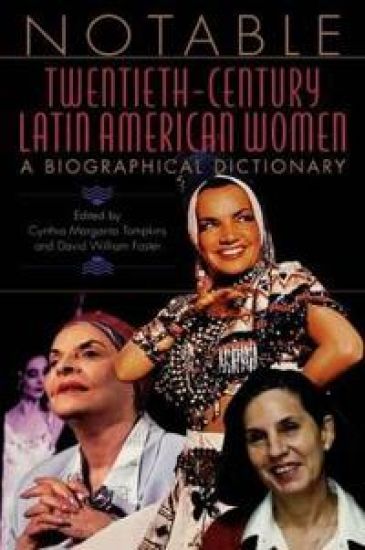
Notable Twentieth-Century Latin American Women is a powerful testimony to the outstanding contributions 72 of the most noteworthy women have made to their fields and to society. This volume covers a broad range of women excelling in the fields of politics, art, religion, government, education, literature, popular culture, and the sciences, with substantial, up-to-date biographical and career overviews. Many notables are international figures, such as former Nicaraguan President Violeta Barrios de Chamorro, Cuban Queen of Salsa Celia Cruz, and Mexican artist Frida Kahlo. Others, such as the Mirabal sisters, founders of a resistance movement against a repressive Dominican Republic regime, and Carmen Naranjo, a prolific Costa Rican author and champion of culture, merit the wider recognition offered here.An excellent introduction detailing the status of Latin American women in the twentieth century is the ideal framework for appreciating the struggles of these women. In the entries, information given includes family and background details, education, influences, obstacles faced and overcome, and achievements. Each entry includes a Further Reading section to enable students and other interested readers to learn more about the woman's life. Numerous photos enhance the text.
Cosmopolitan Desire

Cosmopolitan Desire

Stephen William Foster

AltaMira Press,U.S.
2006
nidottu
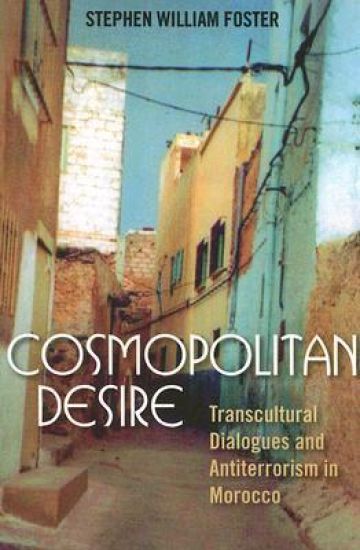
Foster's timely work looks at globalization processes and the transformations that occur within a diverse society. He investigates the multicultural blend of Western and Moslem cultures in Morocco, showing how a multicultural society deals with differences, e.g., how urban secularized Moslems constitute their identities, and how they present themselves to non-Moslem Westerners. Foster's work is about close encounters-he captures the dialogues between individuals and their resistance to intolerance. He offers a combination of narrative & life history, timely investigation of the intercultural problems facing Westerners & Moslims, and a consideration of the broader psychological and political forces at work in a multicultural society. His ethnography is a rich resource for anthropologists and African studies researchers.
Urban Photography in Argentina

Urban Photography in Argentina

David William Foster

McFarland Co Inc
2007
nidottu
This work examines the cultural impact of photography in Argentina following the end of the country's military dictatorship in the early 1980s. The interpretive study surveys nine modern photographers in Argentina - Marcelo Brodsky, Gabriel Valansi, Eduardo Gil, Gaby Messina, Adriana Lestido, Gabriel Diaz, Marcos Lopez, Silivio Fabrykant and Gabriela Liffschitz - and covers the major themes in each of their works. The author details each photographer's cultural and artistic contributions and provides a listing of the websites where their works can be viewed.
Glimpses of Phoenix

Glimpses of Phoenix

David William Foster

McFarland Co Inc
2013
pokkari
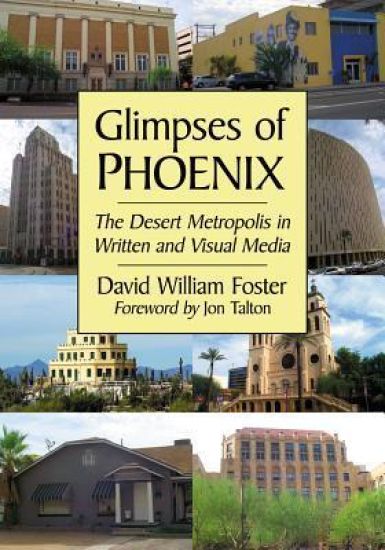
Part of the self-image of Phoenix is that the city has no history and that anything of importance happened yesterday. Also that Phoenix, the Arizona state capital, is a "clean" city (despite a past of police corruption and social oppression). The "real" Phoenix, easygoing, sun-drenched, a place of ever-expanding development and economic growth, guarantees, it is said, an enviable lifestyle, low taxes, and unfettered personal freedom and opportunity. Little of this is true. Phoenix has been described as one of the least sustainable cities in the country. This sixth largest urban area of the United States has an alarmingly superficial and tourism-oriented discourse among its leaders. This book examines a series of narrative works (novels, theater, chronicles, investigative reporting, personal accounts, editorial cartooning, even a children's television program) that question this discourse in a frequently stinging fashion. The works examined are anchored in a critical understanding of the dominant urban myths of Greater Phoenix, and an awareness of how all the newness, modernity and fun-in-the-sun mentality mask a uniquely dystopian human experience.
Sao Paulo

Sao Paulo

David William Foster

University Press of Florida
2011
sidottu
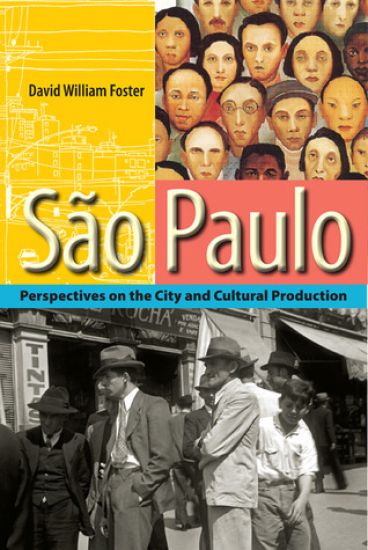
"Serves as a kind of cultural-historical road map to Sao Paulo (including alternative routes and detours), one that will be a necessary resource for any subsequent cultural studies of Sao Paulo and Latin American urbanization."--Justin Read, author ofModern Poetics and Hemispheric American Cultural Studies "The essays brought together in this volume all focus on the city of Sao Paulo, in the triple dynamic of cultural production: the critical representation of society, the analytical interpretation of the internal dynamic, and the principled imagination of alternative ways of living."--Pedro Meira Monteiro, author ofA Moralist in the Tropics David Foster brings an intense curiosity and lifelong familiarity to this unique examination of the cultural tapestry of Sao Paulo, the largest city in South America and the second largest in Latin America. Examining everything from the poetics of Mario de Andrade to the Eisner Award-winning graphic novels of Fabio Moon and Gabriel Ba, Foster paints a portrait as colorful and multifaceted as the city it reveals. He offers representative examples of poetry, fiction, graphic art, photography, film, and social commentary to introduce readers to some of the most important cultural dimensions of the city as well as some of its most outstanding writers and artists. Foster selects his featured artists and works with care and precision in order to reveal insights into the development of the city throughout the twentieth century. This is a tour-de-force overview of the cultural output of one of the world's great urban centers, one that future researchers on Brazilian culture will ignore at their peril. David William Foster, Regents' Professor of Spanish, Humanities, and Women's Studies at Arizona State University, is author of Buenos Aires: Perspectives on the City and Cultural Production, Urban Photography in Argentina: Nine Artists of the Post-Dictatorship Era, and Queer Issues in Contemporary Latin American Cinema.
Latin American Documentary Filmmaking

Latin American Documentary Filmmaking

David William Foster

University of Arizona Press
2013
nidottu
Latin American Documentary Filmmaking is the first volume written in English to explore Latin American documentary filmmaking with extensive and intelligent analysis. David William Foster, the leading authority on Latin American urban cultural production, provides rich, new interpretations on the production of gender, political persecution, historical conflicts, and exclusion from the mainstream in many of Latin America’s most important documentary films.Foster provides a series of detailed examinations of major texts of Latin American filmmaking, discussing their textual production and processes of meaning. His analysis delves deeply into the world of Latin American film and brings forth a discourse of structure that has previously been absent from the fields of filmmaking and Latin American studies. This volume provides perspective on diverse and methodological approaches, pulling from a wide scope of cinematic traditions. Using his own critical readings and research, Foster presents his findings in terms that are accessible to non-Spanish speakers and Latin American film enthusiasts.A much-needed contribution to the field of Latin American documentary film, Foster’s research and perspective will be a valuable source for those interested in film studies, gender studies, and culture.
Estudios Sobre Teatro Mexicano Contemporaneo

Estudios Sobre Teatro Mexicano Contemporaneo

David William Foster

Peter Lang Publishing Inc
1984
sidottu
Los ensayos reunidos en esta monografia examinan los principios de estructuracion de la obra teatral que generan en el publico espectador una comprension de los significados nucleares del texto-produccion. Se examinan obras representativas del teatro mexicano de los ultimos treinta anos, con hincapie en Rodolfo Usigli, Celestino Gorostiza, Vicente Lenero, Emilio Carballido, Jorge Ibargueengoitia, Luisa Josefina Hernandez, Jose Agustin, Carlos Solorzano, Felipe Reyes Palacios.
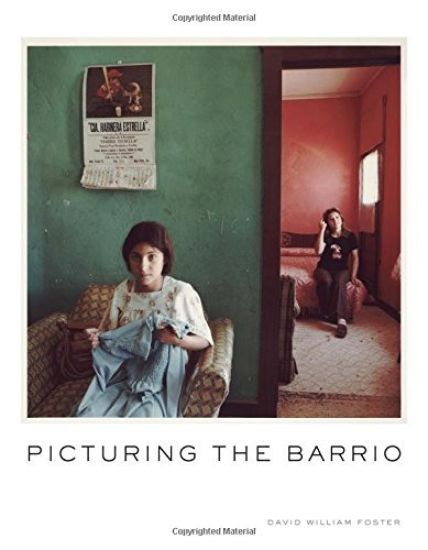
Picturing the Barrio

Picturing the Barrio

David William Foster

University of Pittsburgh Press
2017
nidottu
Mexican-American life, like that of nearly every contemporary community, has been extensively photographed. Yet there is surprisingly little scholarship on Chicano photography. Picturing the Barrio presents the first book-length examination on the topic. David William Foster analyzes the imagery of ten distinctive artists who offer a range of approaches to portraying Chicano life. The production of each artist is examined as an ideological interpretation of how Chicano experience is constructed and interpreted through the medium of photography, in sites ranging from the traditional barrio to large metropolitan societies. These photographers present artistic as well as documentary images of the socially invisible. They and their subjects grapple with definitions of identity, as well as ethnicity and gender. As such, this study deepens our understanding of the many interpretations of the "Chicano experience."
Contemporary Argentine Cinema

Contemporary Argentine Cinema

David William Foster

University of Missouri Press
1992
sidottu
Argentina's return to constitutional democracy in 1983 initiated a cultural renaissance as the new government instituted a widespread collective effort to recover from a decade of military dictatorship. For a five-year period, until severe financial emergencies forced the cancellation of subsidies, film-making flourished. Cinematographers took the opportunity to articulate their pent-up frustrations regarding the suppression of political dissent as well as to address social attitudes towards violence, Nazism, homosexuality and incest. In this book, David Foster discusses 10 major films of this time and examines the transformation of social topics into motion pictures and the relationship between commercial film-making strategies and Argentine redemocratisation. Foster analyses internationally recognised films such as ""Kiss of the Spider Woman"", ""The Offical Story"" and ""Man Facing Southeast"" as structural features - how action is framed, the transition between scenes, the relationships among characters, the use of highlighting and foregrounding - as a key to ech film's interpretation of Argentine social topics. General readers, students of film theory and Latin American scholars should welcome Foster's analysis of the most important films made during Argentina's period of cultural renewal.
Violence in Argentine Literature

Violence in Argentine Literature

David William Foster

University of Missouri Press
1995
sidottu
This is an analysis of selected texts viewed as cultural responses to military tyranny, and especially to the military dictatorship in Argentina between 1976 and 1983. The work goes on to study the process of institutional redemocratisation.