Kirjojen hintavertailu. Mukana 11 446 841 kirjaa ja 12 kauppaa.

Kirjahaku

Etsi kirjoja tekijän nimen, kirjan nimen tai ISBN:n perusteella.

1000 tulosta hakusanalla William G. Cook

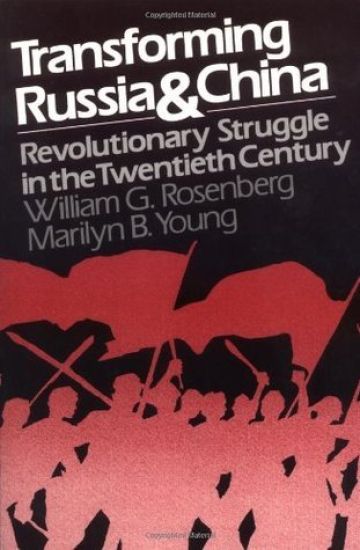
Transforming Russia and China

Transforming Russia and China

William G. Rosenberg; Marilyn B. Young

Oxford University Press Inc
1982
nidottu
In the best tradition of historical writing, this fascinating study concentrates on the distinguishing characteristics of the Russian and Chinese experiences of revolution during the same time period. Using quotations, anecdotes, and colorful descriptive material, the authors unravel the tangle of people, places, and events central to understanding the nature of revolutionary change.
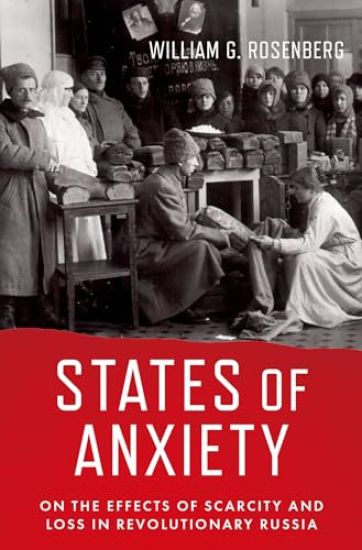
States of Anxiety

States of Anxiety

William G. Rosenberg

OXFORD UNIVERSITY PRESS INC
2023
sidottu
Amidst the vast literature on the parties and politics of revolutionary Russia and its near constant appropriation for presentist purposes over the years, States of Anxiety assesses the effects of the great scarcities and enormous losses that Russia experienced between 1914 and 1921, a period of dramatic civil conflicts and Russia's “long World War.” Scarcities meant not only the deficits of necessary goods like food, but also their accompanying anxieties and fears. Using archival documents and materials of the period almost exclusively, this study explores how the tsarist, democratic liberal, democratic socialist, and Bolshevik regimes all addressed the forms and effects of scarcity and loss in ways they hoped would assure the revolutionary outcomes of their own historical imaginations. Looking closely at their efforts, it suggests how and why each failed to do so. Approaching the Russian revolutionary period in these terms involves exploring a broad range of connected issues. Material scarcities involved problems with market exchange, prices, and inflation, as well as procurement, production, and distribution. They involved fiscal policies, monetary emissions, and the effects of escalating debt. But they also directly engaged cultural understandings of fairness, sacrifice, and social difference, and were accompanied by what today would be called today the anxieties of “food insecurity,” the dangerous risks of unemployment, and a range of fears about family and community welfare. Officials and members of various state and public committees of various political orientations faced both the threats and actualities of market collapse, rampant speculation, black markets, increasingly visible social inequalities, and an array of emotional fields whose implications need to be understood. The statistical and other objective dimensions of scarcity and loss are generally described in ways that omit their complex emotional dimension, as the language of “food insecurity” obscures the actual effects of hunger. While taking into account important recent contributions to a large historiography, new efforts to decipher historical feelings and emotions, and attention to the languages through which events and feelings both were represented and given coherence, this book contributes to a broader understanding of the social and cultural foundations of uprisings and revolutionary upheavals.
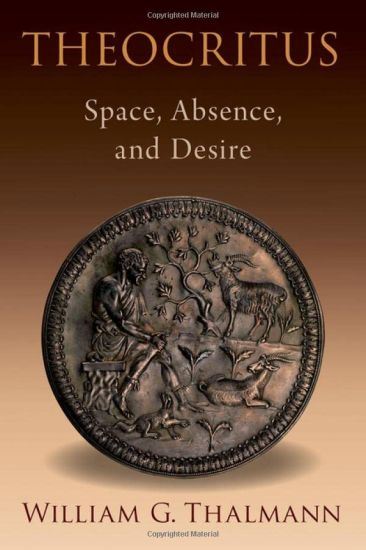
Theocritus

Theocritus

William G. Thalmann

OXFORD UNIVERSITY PRESS INC
2023
sidottu
Theocritus: Space, Absence, and Desire discusses many of Theocritus's Idylls with emphasis on how these poems construct space--its contours and borders, along with the people, animals, and objects that fill it--and the equally important role of absence. Drawing on spatial theory from anthropology and cultural geography, author William G. Thalmann studies each poem in itself and in its connections with other poems, so that a loose coherence emerges among them. Spatially, the Ptolemaic empire provides a setting and reference point for the various types of Idylls (bucolic, urban, mythological, and encomiastic poems), in ways that help legitimate it. In all the idylls, however, space is constructed selectively from particular perspectives, so that it reflects and shapes people's relations with each other and humans' relations with nature. The bucolic Idylls in particular raise questions about being in and out of place and relations between self and other that would have been important under the conditions of mobility and intercultural contact in the early Hellenistic period. Yet theirs is a fictional world, defined more by its margins than by its center, and visions of fullness and presence of nature are always distanced from the reader. Absence is constitutive of this world, just as absence of the beloved is the precondition for the desire of bucolic characters and prompts their singing. Their desire mirrors the desire of readers for the absent bucolic world that the poems arouse and that keeps them reading.
Marriage, Property, and Law in Late Imperial Russia
This is the first systematic study of civil law in late Imperial Russia. It shows that efforts to adjust family, property, and inheritance law to changing social and economic conditions often became intertwined with attempts to shape society in accordance with competing ideological ideals. Through a restructuring of the family's legal basis, members of the growing educated and professional strata of society in particular endeavoured to promote conflicting coneptions of authority, individuality, gender, and law. Legal reform also served for members of the emerging legal and medical professions as a way to establish their authority, often at the expense of the state administration and the Orthodox Chruch. Civil law in late Imperial Russia therefore constituted both an important medium for ideological redefinition and a field of battle for those seeking to reform, to overthrow, or to defend the ancien regime. Because this battle extended into the state bureaucracy, legislative change proved extremely difficult. Newly empowered by the 1864 judicial reform, the judiciar responded to legislative inaction by not merely adapting the law, but also by promoting an ideal of the family whose values and principles challenged those underlying the autocracy. Professor Wagner's detailed and scholarly analysis of these issues offers many important insights into cultural attitudes and political structures in late Imperial Russia.
On Evidence in Philosophy

On Evidence in Philosophy

William G. Lycan

Oxford University Press
2019
sidottu
In this book William G. Lycan offers an epistemology of philosophy itself, a partial method for philosophical inquiry. The epistemology features three ultimate sources of justified philosophical belief. First, common sense, in a carefully restricted sense of the term-the sorts of contingent propositions Moore defended against idealists and skeptics. Second, the deliverances of well confirmed science. Third and more fundamentally, intuitions about cases in a carefully specified sense of that term. The first half of On Evidence in Philosophy expounds a version of Moore's method and applies it to each of several issues. This version is shown to resist all the standard objections to Moore; most of them do not even apply. It is argued, in Chapters 5 and 6, that philosophical method is far less powerful than most have taken it to be. In particular, deductive argument can accomplish very little, and hardly ever is an opposing position refuted except by common sense or by science. The final two chapters defend the evidential status of intuitions and the Goodmanian method of reflective equilibrium; it is argued that philosophy always and everywhere depends on them. The method is then set within a more general explanatory-coherentist epistemology, which is shown to resist standard forms of skepticism. In sum, William G. Lycan advocates a picture of philosophy as a very wide explanatory reflective equilibrium incorporating common sense, science, and our firmest intuitions on any topic-and nothing more, not ever.
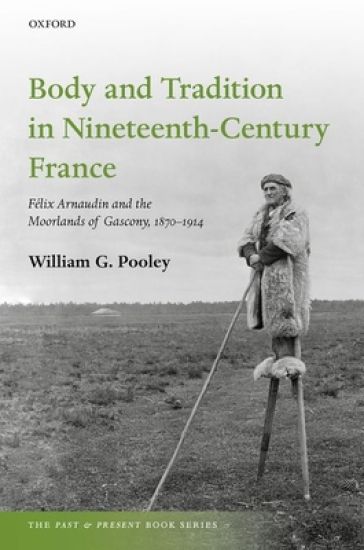
Body and Tradition in Nineteenth-Century France

Body and Tradition in Nineteenth-Century France

William G. Pooley

Oxford University Press
2019
sidottu
The moorlands of Gascony are often considered one of the most dramatic examples of top-down rural modernization in nineteenth-century Europe. From an area of open moors, they were transformed in one generation into the largest man-made forest in Europe. Body and Tradition in Nineteenth-Century France explores how these changes were experienced and negotiated by the people who lived there, drawing on the immense ethnographic archive of Félix Arnaudin (1844-1921). The study places the songs, stories, and everyday speech that Arnaudin collected, as well as the photographs he took, in the everyday lives of agricultural workers and artisans. It argues that the changes are were understood as a gradual revolution in bodily experiences, as men and women forged new working habits, new sexual relations, and new ways of conceiving of their own bodies. Rather than merely presenting a story of top-down reform, this is an account of the flexibility and creativity of the cultural traditions of the working population. William G. Pooley tells the story of the folklorist Arnaudin and the men and women whose cultural traditions he recorded, then uncovers the work carried out by Arnaudin to explore everyday speech about the body, stories of werewolves and shapeshifters, tales of animal cunning and exploitation, and songs about love and courtship. The volume focuses on the lives of a handful of the most talented storytellers and singers Arnaudin encountered, showing how their cultural choices reflect wider patterns of behaviour in the region, and across rural Europe.
Real Conditionals

Real Conditionals

William G. Lycan

Clarendon Press
2001
sidottu
Philosophers and logicians have long debated how best to understand conditional or hypothetical sentences. William G. Lycan has a distinctive approach to this debate, attending not just to the semantics of such sentences, but equally to their syntax. He shows how insights from linguistic theory help to illuminate problems about the meaning and function of conditionals. For instance, philosophers and logicians have had problems analysing the locutions 'only if', 'unless', and 'even if'. Lycan sets out a general semantic theory of conditionals which works for all such sentences; he assigns meanings to them in a way that explains how and why those meanings depend upon features of utterance context. According to Lycan's theory the 'if'-clauses refer to items called 'events', 'circumstances', or 'conditions'. Real Conditionals gives at last the definitive presentation of this original approach to a topic at the intersection of philosophy, logic, and linguistics. Lycan's characteristically lively and witty expository style ensures that it can be enjoyed by readers from all three disciplines.
Real Conditionals

Real Conditionals

William G. Lycan

Oxford University Press
2005
nidottu
Philosophers and logicians have long debated how best to understand conditional or hypothetical sentences. William G. Lycan has a distinctive approach to this debate, attending not just to the semantics of such sentences, but equally to their syntax. He shows how insights from linguistic theory help to illuminate problems about the meaning and function of conditionals. For instance, philosophers and logicians have had problems analysing the locutions 'only if', 'unless', and 'even if'. Lycan sets out a general semantic theory of conditionals which works for all such sentences; he assigns meanings to them in a way that explains how and why those meanings depend upon features of utterance context. According to Lycan's theory the 'if'-clauses refer to items called 'events', 'circumstances', or 'conditions'. Real Conditionals gives at last the definitive presentation of this original approach to a topic at the intersection of philosophy, logic, and linguistics. Lycan's characteristically lively and witty expository style ensures that it can be enjoyed by readers from all three disciplines.
Apollonius of Rhodes and the Spaces of Hellenism

Apollonius of Rhodes and the Spaces of Hellenism

William G. Thalmann

Oxford University Press Inc
2011
sidottu
Although Apollonius of Rhodes' extraordinary epic poem on the Argonauts' quest for the Golden Fleece has begun to get the attention it deserves, it still is not well known to many readers and scholars. This book explores the poem's relation to the conditions of its writing in third century BCE Alexandria, where a multicultural environment transformed the Greeks' understanding of themselves and the world. Apollonius uses the resources of the imagination - the myth of the Argonauts' voyage and their encounters with other peoples - to probe the expanded possibilities and the anxieties opened up when definitions of Hellenism and boundaries between Greeks and others were exposed to question. Central to this concern with definitions is the poem's representation of space. Thalmann uses spatial theories from cultural geography and anthropology to argue that the Argo's itinerary defines space from a Greek perspective that is at the same time qualified. Its limits are exposed, and the signs with which the Argonauts mark space by their passage preserve the stories of their complex interactions with non-Greeks. The book closely considers many episodes in the narrative with regard to the Argonauts' redefinition of space and the implications of their actions for the Greeks' situation in Egypt, and it ends by considering Alexandria itself as a space that accommodated both Greek and Egyptian cultures.
The Wartime President

The Wartime President

William G. Howell; Saul P. Jackman; Jon C. Rogowski

University of Chicago Press
2013
sidottu
"It is the nature of war to increase the executive at the expense of the legislative authority," wrote Alexander Hamilton in the Federalist Papers. The balance of power between Congress and the president has been a powerful thread throughout American political thought since the time of the Founding Fathers. And yet, for all that has been written on the topic, we still lack a solid empirical or theoretical justification for Hamilton's proposition. For the first time, William G. Howell, Saul P. Jackman, and Jon C. Rogowski systematically analyze the question, Congress, they show, is more likely to defer to the president's policy preferences when political debates center on national rather than local considerations. Thus, World War II and the post-9/11 wars in Afghanistan and Iraq significantly augmented presidential power, allowing the president to enact foreign and domestic policies that would have been unattainable in times of peace. But, contrary to popular belief, there are also times when war has little effect on a president's influence in Congress. The Vietnam and Gulf Wars, for instance, did not nationalize our politics nearly so much, and presidential influence expanded only moderately. Built on groundbreaking research, The Wartime President offers one of the most significant works ever written on the wartime powers presidents wield at home.
The Wartime President

The Wartime President

William G. Howell; Saul P. Jackman; Jon C. Rogowski

University of Chicago Press
2013
nidottu
"It is the nature of war to increase the executive at the expense of the legislative authority," wrote Alexander Hamilton in the Federalist Papers. The balance of power between Congress and the president has been a powerful thread throughout American political thought since the time of the Founding Fathers. And yet, for all that has been written on the topic, we still lack a solid empirical or theoretical justification for Hamilton's proposition. For the first time, William G. Howell, Saul P. Jackman, and Jon C. Rogowski systematically analyze the question. Congress, they show, is more likely to defer to the president's policy preferences when political debates center on national rather than local considerations. Thus, World War II and the post-9/11 wars in Afghanistan and Iraq significantly augmented presidential power, allowing the president to enact foreign and domestic policies that would have been unattainable in times of peace. But, contrary to popular belief, there are also times when war has little effect on a president's influence in Congress. The Vietnam and Gulf Wars, for instance, did not nationalize our politics nearly so much, and presidential influence expanded only moderately. Built on groundbreaking research, The Wartime President offers one of the most significant works ever written on the wartime powers presidents wield at home.
Stormwater

Stormwater

William G. Wilson

University of Chicago Press
2016
sidottu
As cities grow and climates change, precipitation increases, and with every great storm—from record-breaking Boston blizzards to floods in Houston—come buckets of stormwater and a deluge of problems. In Stormwater, William G. Wilson brings us the first expansive guide to stormwater science and management in urban environments, where rising runoff threatens both human and environmental health. As Wilson shows, rivers of runoff flowing from manmade surfaces—such as roads, sidewalks, and industrial sites—carry a glut of sediments and pollutants. Unlike soil, pavement does not filter or biodegrade these contaminants. Oil, pesticides, road salts, metals, automobile chemicals, and bacteria all pour into stormwater systems. Often this runoff discharges directly into waterways, uncontrolled and untreated, damaging valuable ecosystems. Detailing the harm that can be caused by this urban runoff, Wilson also outlines methods of control, from restored watersheds to green roofs and rain gardens, and, in so doing, gives hope in the face of an omnipresent threat. Illustrated throughout, Stormwater will be an essential resource for urban planners and scientists, policy makers, citizen activists, and environmental educators in the stormy decades to come.
Stormwater

Stormwater

William G. Wilson

University of Chicago Press
2016
nidottu
As cities grow and climates change, precipitation increases, and with every great storm—from record-breaking Boston blizzards to floods in Houston—come buckets of stormwater and a deluge of problems. In Stormwater, William G. Wilson brings us the first expansive guide to stormwater science and management in urban environments, where rising runoff threatens both human and environmental health. As Wilson shows, rivers of runoff flowing from manmade surfaces—such as roads, sidewalks, and industrial sites—carry a glut of sediments and pollutants. Unlike soil, pavement does not filter or biodegrade these contaminants. Oil, pesticides, road salts, metals, automobile chemicals, and bacteria all pour into stormwater systems. Often this runoff discharges directly into waterways, uncontrolled and untreated, damaging valuable ecosystems. Detailing the harm that can be caused by this urban runoff, Wilson also outlines methods of control, from restored watersheds to green roofs and rain gardens, and, in so doing, gives hope in the face of an omnipresent threat. Illustrated throughout, Stormwater will be an essential resource for urban planners and scientists, policy makers, citizen activists, and environmental educators in the stormy decades to come.
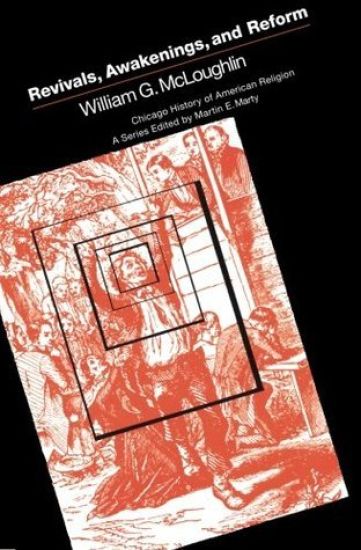
Revivals, Awakening and Reform

Revivals, Awakening and Reform

William G. McLoughlin

University of Chicago Press
1980
nidottu
In Revivals, Awakenings, and Reform, McLoughlin draws on psychohistory, sociology, and anthropology to examine the relationship between America's five great religious awakenings and their influence on five great movements for social reform in the United States. He finds that awakenings (and the revivals that are part of them) are periods of revitalization born in times of cultural stress and eventuating in drastic social reform. Awakenings are thus the means by which a people or nation creates and sustains its identity in a changing world. "This book is sensitive, thought-provoking and stimulating. It is 'must' reading for those interested in awakenings, and even though some may not revise their views as a result of McLoughlin's suggestive outline, none can remain unmoved by the insights he has provided on the subject."-Christian Century "This is one of the best books I have read all year. Professor McLoughlin has again given us a profound analysis of our culture in the midst of revivalistic trends."-Review and Expositor
Presidents, Populism, and the Crisis of Democracy

Presidents, Populism, and the Crisis of Democracy

William G Howell; Terry M Moe

University of Chicago Press
2020
sidottu
Has American democracy's long, ambitious run come to an end? Possibly yes. As William G. Howell and Terry M. Moe argue in this trenchant new analysis of modern politics, the United States faces a historic crisis that threatens our system of self-government--and if democracy is to be saved, the causes of the crisis must be understood and defused. The most visible cause is Donald Trump, who has used his presidency to attack the nation's institutions and violate its democratic norms. Yet Trump is but a symptom of causes that run much deeper: social forces like globalization, automation, and immigration that for decades have generated economic harms and cultural anxieties that our government has been wholly ineffective at addressing. Millions of Americans have grown angry and disaffected, and populist appeals have found a receptive audience. These are the drivers of Trump's dangerous presidency. And after he leaves office, they will still be there for other populists to weaponize. What can be done to safeguard American democracy? The disruptive forces of modernity cannot be stopped. The solution lies, instead, in having a government that can deal with them--which calls for aggressive new policies, but also for institutional reforms that enhance its capacity for effective action. The path to progress is filled with political obstacles, including an increasingly populist, anti-government Republican Party. It is hard to be optimistic. But if the challenge is to be met, we need reforms of the presidency itself--reforms that harness the promise of presidential power for effective government, but firmly protect against the fear that it may be put to anti-democratic ends.
Presidents, Populism, and the Crisis of Democracy

Presidents, Populism, and the Crisis of Democracy

William G Howell; Terry M Moe

University of Chicago Press
2020
pokkari
Has American democracy's long, ambitious run come to an end? Possibly yes. As William G. Howell and Terry M. Moe argue in this trenchant new analysis of modern politics, the United States faces a historic crisis that threatens our system of self-government--and if democracy is to be saved, the causes of the crisis must be understood and defused. The most visible cause is Donald Trump, who has used his presidency to attack the nation's institutions and violate its democratic norms. Yet Trump is but a symptom of causes that run much deeper: social forces like globalization, automation, and immigration that for decades have generated economic harms and cultural anxieties that our government has been wholly ineffective at addressing. Millions of Americans have grown angry and disaffected, and populist appeals have found a receptive audience. These are the drivers of Trump's dangerous presidency. And after he leaves office, they will still be there for other populists to weaponize. What can be done to safeguard American democracy? The disruptive forces of modernity cannot be stopped. The solution lies, instead, in having a government that can deal with them--which calls for aggressive new policies, but also for institutional reforms that enhance its capacity for effective action. The path to progress is filled with political obstacles, including an increasingly populist, anti-government Republican Party. It is hard to be optimistic. But if the challenge is to be met, we need reforms of the presidency itself--reforms that harness the promise of presidential power for effective government, but firmly protect against the fear that it may be put to anti-democratic ends.
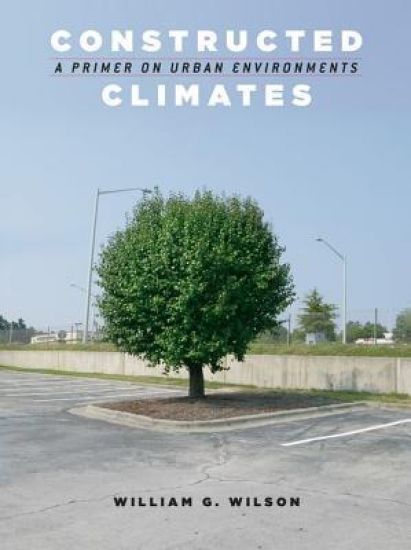
Constructed Climates

Constructed Climates

William G. Wilson

University of Chicago Press
2011
sidottu
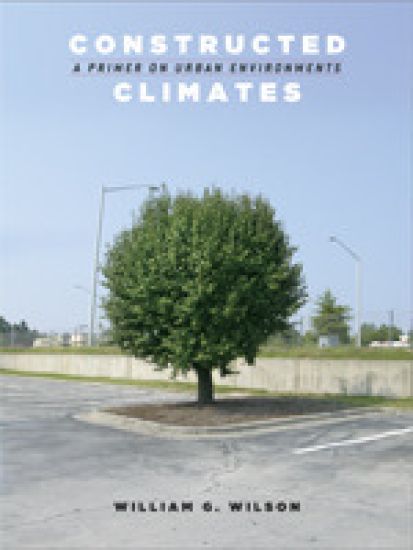
As our world becomes increasingly urbanized, an understanding of the context, mechanisms, and consequences of city and suburban environments becomes more critical. Without a sense of what open spaces such as parks and gardens contribute, it's difficult to argue for their creation and upkeep: in the face of schools needing resources, roads and sewers needing maintenance, and people suffering at the hands of others, why should cities and counties spend scarce dollars planting trees and preserving parks? In "Constructed Climates", ecologist William G. Wilson demonstrates the value of urban green. Focusing specifically on the role of vegetation and trees, Wilson shows the costs and benefits reaped from urban open spaces, from cooler temperatures to better quality ground water - and why it all matters. While "Constructed Climates" is a work of science, it does not ignore the social component. Wilson looks at low-income areas that have poor vegetation and shows how enhancing these areas through the planting of community gardens and trees can alleviate social ills. This book will be essential reading for environmentalists and anyone making decisions for the nature and well-being of our cities and citizens.
Constructed Climates

Constructed Climates

William G. Wilson

University of Chicago Press
2011
nidottu
As our world becomes increasingly urbanized, an understanding of the context, mechanisms, and consequences of city and suburban environments becomes more critical. Without a sense of what open spaces such as parks and gardens contribute, it's difficult to argue for their creation and upkeep: in the face of schools needing resources, roads and sewers needing maintenance, and people suffering at the hands of others, why should cities and counties spend scarce dollars planting trees and preserving parks? In "Constructed Climates", ecologist William G. Wilson demonstrates the value of urban green. Focusing specifically on the role of vegetation and trees, Wilson shows the costs and benefits reaped from urban open spaces, from cooler temperatures to better quality ground water - and why it all matters. While "Constructed Climates" is a work of science, it does not ignore the social component. Wilson looks at low-income areas that have poor vegetation and shows how enhancing these areas through the planting of community gardens and trees can alleviate social ills. This book will be essential reading for environmentalists and anyone making decisions for the nature and well-being of our cities and citizens.