

Kirjahaku
Etsi kirjoja tekijän nimen, kirjan nimen tai ISBN:n perusteella.
1000 tulosta hakusanalla William Knowles


Knowledge and Environmental Policy
William Ascher; Toddi Steelman; Robert Healy
MIT Press
2010
pokkari
An analysis of the challenges involved in incorporating science and other kinds of knowledge into making environmental policy.During the George W. Bush administration, politics and ideology routinely trumped scientific knowledge in making environmental policy. Data were falsified, reports were edited selectively, and scientists were censored. The Obama administration has pledged to restore science to the policy making process. And yet, as the authors of Knowledge and Environmental Policy point out, the problems in connecting scientific discovery to science-based policy are systemic. The process-currently structured in a futile effort to separate policy from science-is dysfunctional in many respects. William Ascher, Toddi Steelman, and Robert Healy analyze the dysfunction and offer recommendations for incorporating formal science and other important types of knowledge (including local knowledge and public sentiment) into the environmental policymaking process.The authors divide the knowledge process into three functions-generation, transmission, and use-and explore the key obstacles to incorporating knowledge into the making of environmental policy. Using case studies and integrating a broad literature on science, politics, and policy, they examine the ignorance or distortion of policy-relevant knowledge, the overemphasis of particular concerns and the neglect of others, and the marginalization of certain voices. The book's analysis will be valuable to scientists who want to make their work more accessible and useful to environmental policy and to policymakers who want their decisions to be informed by science but have had difficulty finding scientific knowledge that is useful or timely.

International Business Knowledge
William A. Dymsza; Robert G. Vambery
Praeger Publishers Inc
1986
sidottu
Management of international business has become more complex with rapidly changing global environments, a multi-actor setting with numerous conflicts and disparities, increased political, foreign exchange, and other risks, and substantial global competition from Japan and newly industrialized nations. This book covers two decades of international business management and provides readers with general principles and observations drawn from experience. International Business Knowledge features articles--many of them published in the prestigious Journal of International Business--by leading practitioners and academics. They combine descriptive, analytical, and prescriptive aspects of the subjects they discuss, providing useful bases for researcher and practical tools for business executives and government officials.
Knowledge and Character bound with The Modern Teacher(RLE Edu K)
William Archer
Routledge
2011
sidottu
Written before, but published after The First World War, this volume’s plea for a national system of education which will produce a nation of prosperous, morally fulfilled people able to live at peace with other nations is doubly poignant given the sacrifice of the ‘lost generation’. However, the author also sees the horror of the War as an opportunity to change human destiny through education, an opportunity to abandon the narrow system of education in favour of one which will ‘bring education in touch with life’ and provide Britain with the intellectual and moral efficiency necessary to steer her through the following turbulent years of the twentieth century. Covering the core subjects of the English school curriculum in the early twentieth century the chapters in The Modern Teacher, if somewhat utopian, describe best practice in teaching of the particular subject and suggest possible improvements. One chapter also discusses the importance of the relatively new subject of citizenship, as well as the moral education of pupils.
Knowledge and Character bound with The Modern Teacher(RLE Edu K)
William Archer
Routledge
2014
nidottu
Written before, but published after The First World War, this volume’s plea for a national system of education which will produce a nation of prosperous, morally fulfilled people able to live at peace with other nations is doubly poignant given the sacrifice of the ‘lost generation’. However, the author also sees the horror of the War as an opportunity to change human destiny through education, an opportunity to abandon the narrow system of education in favour of one which will ‘bring education in touch with life’ and provide Britain with the intellectual and moral efficiency necessary to steer her through the following turbulent years of the twentieth century. Covering the core subjects of the English school curriculum in the early twentieth century the chapters in The Modern Teacher, if somewhat utopian, describe best practice in teaching of the particular subject and suggest possible improvements. One chapter also discusses the importance of the relatively new subject of citizenship, as well as the moral education of pupils.

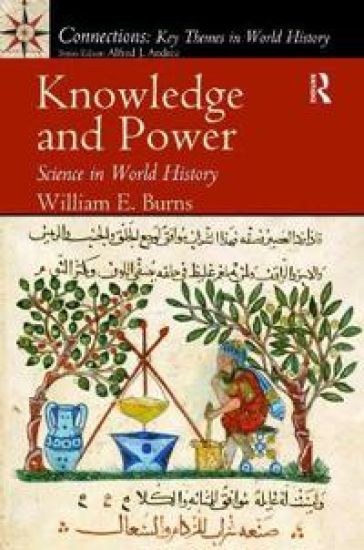
Knowledge and Power shows how science has developed in different historical settings by focusing on four episodes in the history of world science from the Middle Ages to the mid-twentieth century. The title of this book comes from a famous saying by the English Renaissance philosopher Francis Bacon: "Knowledge is Power." Through a combination of narrative and primary sources, author William Burns explores the following topics in order to provide students with an understanding of how different cultures throughout time and across the globe approached science: Science in the Medieval Mediterranean, The Jesuits and World Science ca. 1540-1773, Science in Russia and Japan ca. 1684-1860s, and Africa in the Age of Imperialism and Nationalism ca. 1860-1960.

Knowledge and Power presents and explores science not as something specifically for scientists, but as an integral part of human civilization, and traces the development of science through different historical settings from the Middle Ages through to the Cold War. Five case studies are examined within this book: the creation of modern science by Muslims, Christians and Jews in the medieval Mediterranean; the global science of the Jesuit order in the early modern world; the relationship between "modernization" and "westernization" in Russia and Japan from the late seventeenth to the mid-nineteenth century; the role of science in the European colonization of Africa; and the rivalry in "big science" between the United States and the Soviet Union during the Cold War. Each chapter includes original documents to further the reader’s understanding, and this second edition has been enhanced with a selection of new images and a new chapter on Big Science and the Superpowers during the Cold War.Since the Middle Ages, people have been working in many civilizations and cultures to advance knowledge of, and power over, the natural world. Through a combination of narrative and primary sources, Knowledge and Power provides students with an understanding of how different cultures throughout time and across the globe approached science. It is ideal for students of world history and the history of science.
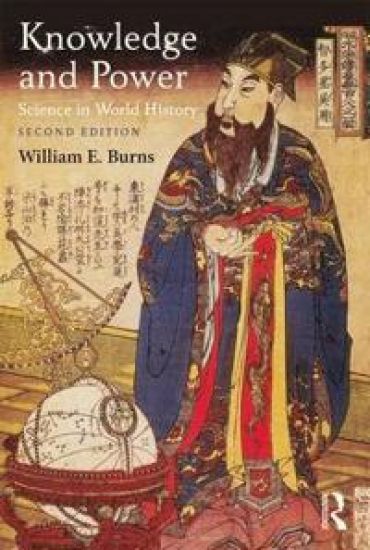
Knowledge and Power presents and explores science not as something specifically for scientists, but as an integral part of human civilization, and traces the development of science through different historical settings from the Middle Ages through to the Cold War. Five case studies are examined within this book: the creation of modern science by Muslims, Christians and Jews in the medieval Mediterranean; the global science of the Jesuit order in the early modern world; the relationship between "modernization" and "westernization" in Russia and Japan from the late seventeenth to the mid-nineteenth century; the role of science in the European colonization of Africa; and the rivalry in "big science" between the United States and the Soviet Union during the Cold War. Each chapter includes original documents to further the reader’s understanding, and this second edition has been enhanced with a selection of new images and a new chapter on Big Science and the Superpowers during the Cold War.Since the Middle Ages, people have been working in many civilizations and cultures to advance knowledge of, and power over, the natural world. Through a combination of narrative and primary sources, Knowledge and Power provides students with an understanding of how different cultures throughout time and across the globe approached science. It is ideal for students of world history and the history of science.

Originally published in 1991, this book focuses on the concept of virtue, and in particular on the virtue of wisdom or knowledge, as it is found in the epic poems of Homer, some tragedies of Sophocles, selected writings of Plato, Aristotle, and the Stoic and Epicurean philosophers. The key questions discussed are the nature of the virtues, their relation to each other, and the relation between the virtues and happiness or well-being. This book provides the background and interpretative framework to make classical works on Ethics, such as Plato’s Republic and Aristotle’s Nicomachean Ethics, accessible to readers with no training in the classics.
Originally published in 1991, this book focuses on the concept of virtue, and in particular on the virtue of wisdom or knowledge, as it is found in the epic poems of Homer, some tragedies of Sophocles, selected writings of Plato, Aristotle, and the Stoic and Epicurean philosophers. The key questions discussed are the nature of the virtues, their relation to each other, and the relation between the virtues and happiness or well-being. This book provides the background and interpretative framework to make classical works on Ethics, such as Plato’s Republic and Aristotle’s Nicomachean Ethics, accessible to readers with no training in the classics.
![Ptolemy's Knowledge of Arabia, Especially of Hadhramaut and the Wilderness El-Ahkaf. [Reprinted from the Classical Museum, No. VII.]](/covers/9781241167226.jpg)
Ptolemy's Knowledge of Arabia, Especially of Hadhramaut and the Wilderness El-Ahkaf. [Reprinted from the Classical Museum, No. VII.]
William Plate
British Library, Historical Print Editions
2011
pokkari

Treasury Of Knowledge, In Three Parts: Elementary Lessons In Common Things, Practical Lessons On Common Objects, Introduction To The Sciences (1849)
William Chambers; Robert Chambers
KESSINGER PUBLISHING, LLC
2008
nidottu


Knowledge Representation 2.0: The Structure-Behavior Coalescence Approach
William S. Chao
Createspace Independent Publishing Platform
2015
nidottu
In "Knowledge, Competence, and Communication," author William H. Walcott debates the meaning of creating equitable and critical instructional practices by exploring diverse representations of knowledge. He covers both historically important topics and current issues: such as colonialism, multiculturalism, gender and language learning, and popular culture. He then presents a systematic and painstaking assessment of Noam Chomsky's and Paulo Freire's theories of knowledge and their educational relevance.In the end, Walcott makes his case for the Freireian approach--"conscientizacao"; it is the Freireian, with its sociological connection (necessitated by the global context of inequality), which, he believes, needs take precedence as a pedagogical practice.
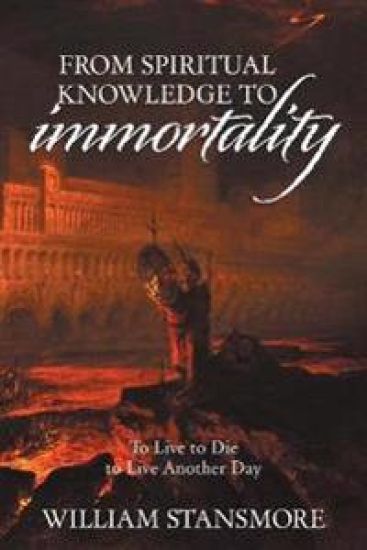
This work is an attempt to re-establish the importance of absolute values in a world where such values re becoming increasingly irrelevant, and the necessity of preserving those immutable and self evident truths upon witch was established our nation's framework and foundation. To this end I propose to establish in the field of education a curriculum of the civilizing arts, who's purpose is to clarify and strengthen the original commitments witch underlie and empower the United States Constitution and Declaration of Independance.