
Kirjahaku
Etsi kirjoja tekijän nimen, kirjan nimen tai ISBN:n perusteella.
1000 tulosta hakusanalla William L Perry
The Politics of Aristotle with an introduction, two prefatory essays and notes critical and explanatory by W. L. Newman
William L Newman
Hansebooks
2016
pokkari
The Politics of Aristotle with an introduction, two prefatory essays and notes critical and explanatory by W. L. Newman - Vol. III is an unchanged, high-quality reprint of the original edition of 1902. Hansebooks is editor of the literature on different topic areas such as research and science, travel and expeditions, cooking and nutrition, medicine, and other genres. As a publisher we focus on the preservation of historical literature. Many works of historical writers and scientists are available today as antiques only. Hansebooks newly publishes these books and contributes to the preservation of literature which has become rare and historical knowledge for the future.
Reproduction of the original: William E. Burton by William L. Keese
The Life And Times Of Sir William Johnson, Bart. (Volume I)
William L Stone
Alpha Edition
2021
pokkari
The Life And Times Of Sir William Johnson, Bart. (Volume I) has been considered by academicians and scholars of great significance and value to literature. This forms a part of the knowledge base for future generations. So that the book is never forgotten we have represented this book in a print format as the same form as it was originally first published. Hence any marks or annotations seen are left intentionally to preserve its true nature.
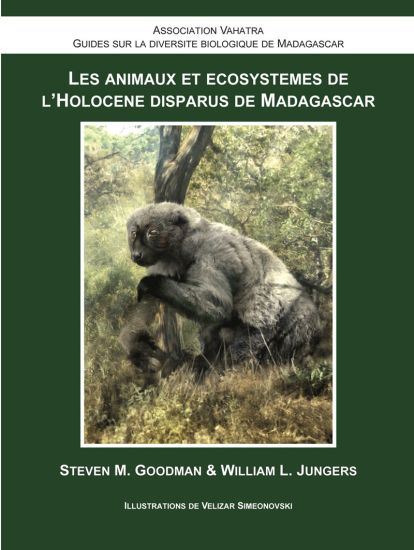
Les Animaux et Écosystèmes de l`Holocène Disparus de Madagascar
Steven M. Goodman; William L. Jungers
Association Vahatra in Antananarivo
2016
nidottu
While the current biodiversity of Madagascar is the subject of international attention from both evolutionary biologists and conservationists, no in-depth synthesis exists to describe ecological changes on the island during the Holocene and, most importantly, during the periods before and after human colonization. This concise, French-language book provides the first such explication of those alterations. Drawing on various aspects of the morphology and extrapolated habitat use of extinct animals identified from paleontological and archaeological sites, as well as characteristics of extant species, Steven M. Goodman and William L. Jungers reconstruct these organisms’ natural history and the ecosystems in which they lived. These windows into the past are presented in twenty different vignettes beautifully illustrated with plates from Velizar Simeonovski.
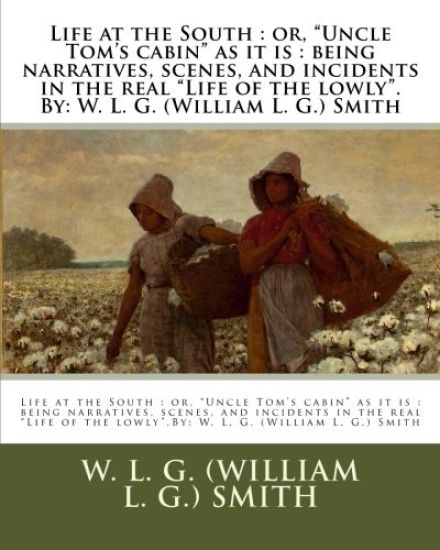
Life at the South: or, "Uncle Tom's cabin" as it is: being narratives, scenes, and incidents in the real "Life of the lowly".By: W. L. G.
W. L. G. (William L. G. ). Smith
Createspace Independent Publishing Platform
2017
nidottu
"WHO is not familiar with the history of the Old Dominion f " remarked a portly-appearing gentleman, seated at his ease in the portico of the United States Hotel, at Washington, some years since. " And where is her equal, sir, in all that's good and chivalrous ? " he added, with the view of engaging the attention of a member of Congress, who just then took a seat by his side. " Ah, Mr. Erskine," replied the person addressed, " I find you ' still harping on my daughter.' Her history is good so far as it goes; but it does not go far enough. It is the unwritten pages which we of the North take exceptions to."
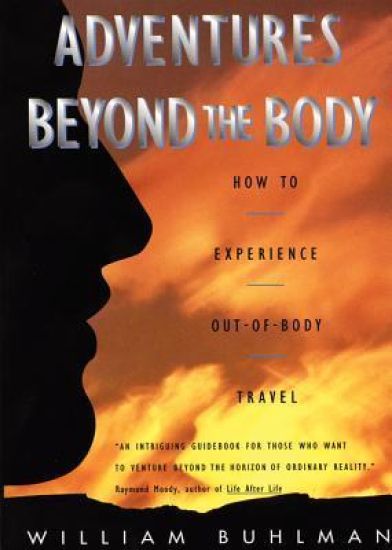
Explore new worlds ...If you ever wondered what might lie beyond the reality we experience every day, if you've ever thrilled to accounts of out-of-body travel and longer to go alone for the ride, this fascinating, practical guide is for you. America's leading expert on out-of-body travel tells the riveting story of his travels to other realms and offers easy-to-use techniques to guide you on your journey of a lifetime'and beyond. Travel into parallel realities ...William Buhlman has trained out-of-body travelers in his workshop for more than a decade, teaching people how to project their consciousness outside the limits of their physical bodies and to explore dimensions and worlds beyond everyday life. Now he vividly recounts how own adventures in the parallel universe described in the new-physics theories of Stephen Hawkins, Paul Davies, and Fred Alan Wolf and presents his step-by-step guide to astral travel'including exercises, tips, techniques, and answers to your every question about out-of-body experiences. And discover surprising truths about reality, past lives, the soul, and life after death. Astral travel, Buhlman reveals, not only can expand your conscious'it can help verify the existence of the soul, teach you about past lives, and enhance your daily life. Find out in this compelling handbook for everyone who wants to venture beyond the body and take the ultimate trip.
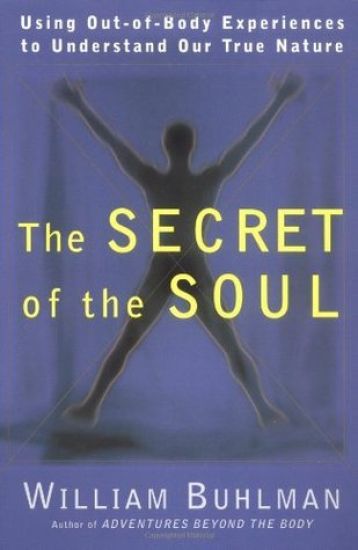
In this remarkable book, William Buhlman, author of the bestselling Adventures Beyond the Body, offers the reader a comprehensive guidebook to understanding and exploring the fascinating phenomenon of out-of-body experiences (OBEs). Learn how you can: * Explore your true spiritual self and attain profound transformation in your awareness and knowledge of the universe.* Gain life-changing benefits as you break free from mental and physical limitations* Contact departed loved ones using OBEs to move beyond the current limited understanding of death.Filled with engrossing stories based on the testimonies of people from all over the world, and offering forty new, easy-to-understand techniques, The Secret of the Soul will prepare human beings everywhere for the next major leap in the evolution of consciousness.
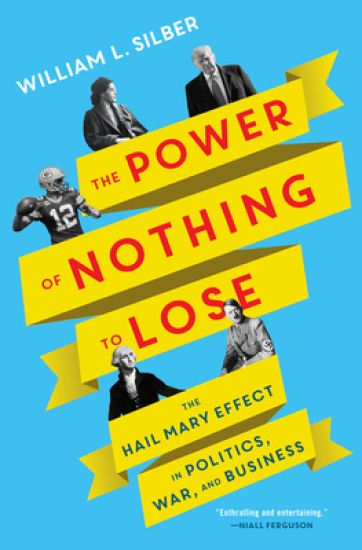
Following books by Malcolm Gladwell and Dan Ariely, noted economics professor William L. Silber explores the Hail Mary effect, from its origins in sports to its applications to history, nature, politics, and business.A quarterback like Green Bay’s Aaron Rodgers gambles with a Hail Mary pass at the end of a football game when he has nothing to lose -- the risky throw might turn defeat into victory, or end in a meaningless interception. Rodgers may not realize it, but he has much in common with figures such as George Washington, Rosa Parks, Woodrow Wilson, and Adolph Hitler, all of whom changed the modern world with their risk-loving decisions.In The Power of Nothing to Lose, award-winning economist William Silber explores the phenomenon in politics, war, and business, where situations with a big upside and limited downside trigger gambling behavior like with a Hail Mary. Silber describes in colorful detail how the American Revolution turned on such a gamble. The famous scene of Washington crossing the Delaware on Christmas night to attack the enemy may not look like a Hail Mary, but it was. Washington said days before his risky decision, “If this fails I think the game will be pretty well up.” Rosa Parks remained seated in the white section of an Alabama bus, defying local segregation laws, an act that sparked the modern civil rights movement in America. It was a life-threatening decision for her, but she said, “I was not frightened. I just made up my mind that as long as we accepted that kind of treatment it would continue, so I had nothing to lose.” The risky exploits of George Washington and Rosa Parks made the world a better place, but demagogues have inflicted great damage with Hail Marys. Towards the end of World War II, Adolph Hitler ordered a desperate counterattack, the Battle of the Bulge, to stem the Allied advance into Germany. He said, “The outcome of the battle would spell either life or death for the German nation.” Hitler failed to change the war’s outcome, but his desperate gamble inflicted great collateral damage, including the worst wartime atrocity on American troops in Europe.Silber shares these illuminating insights on these figures and more, from Woodrow Wilson to Donald Trump, asylum seekers to terrorists and rogue traders. Collectively they illustrate that downside protection fosters risky undertakings, that it changes the world in ways we least expect.
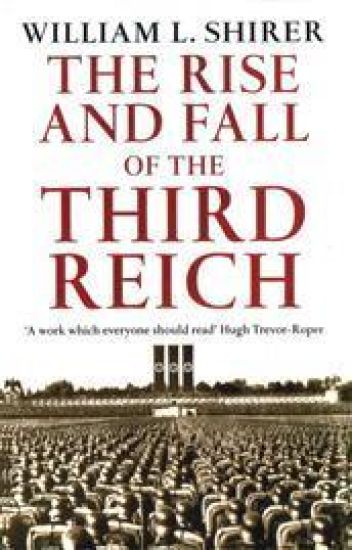
This is his authoritative historical account of the years 1933-45, when the Nazis, under the rule of their despotic leader Adolf Hitler, ruled Germany. They commandeered the Holocaust, one of the most shocking acts of evil in modern history, plunged the world into a second war, and changed the face of modern history and modern Europe forever.
Exploring Monte Carlo Methods
William L. Dunn; J. Kenneth Shultis
ELSEVIER SCIENCE PUBLISHING CO INC
2022
nidottu
Exploring Monte Carlo Methods, Second Edition provides a valuable introduction to the numerical methods that have come to be known as "Monte Carlo." This unique and trusted resource for course use, as well as researcher reference, offers accessible coverage, clear explanations and helpful examples throughout. Building from the basics, the text also includes applications in a variety of fields, such as physics, nuclear engineering, finance and investment, medical modeling and prediction, archaeology, geology and transportation planning.

Regardless of whether they owned slaves, Southern whites lived in a world defined by slavery. As shown by their blaming British and Northern slave traders for saddling them with slavery, most were uncomfortable with the institution. While many wanted it ended, most were content to leave that up to God. All that changed with the election of Abraham Lincoln. Rebels in the Making is a narrative-driven history of how and why secession occurred. In this work, senior Civil War historian William L. Barney narrates the explosion of the sectional conflict into secession and civil war. Carefully examining the events in all fifteen slave states and distinguishing the political circumstances in each, he argues that this was not a mass democratic movement but one led from above. The work begins with the deepening strains within Southern society as the slave economy matured in the mid-nineteenth century and Southern ideologues struggled to convert whites to the orthodoxy of slavery as a positive good. It then focuses on the years of 1860-1861 when the sectional conflict led to the break-up of the Union. As foreshadowed by the fracturing of the Democratic Party over the issue of federal protection for slavery in the territories, the election of 1860 set the stage for secession. Exploiting fears of slave insurrections, anxieties over crops ravaged by a long drought, and the perceived moral degradation of submitting to the rule of an antislavery Republican, secessionists launched a movement in South Carolina that spread across the South in a frenzied atmosphere described as the great excitement. After examining why Congress was unable to reach a compromise on the core issue of slavery's expansion, the study shows why secession swept over the Lower South in January of 1861 but stalled in the Upper South. The driving impetus for secession is shown to have come from the middling ranks of the slaveholders who saw their aspirations of planter status blocked and denigrated by the Republicans. A separate chapter on the formation of the Confederate government in February of 1861 reveals how moderates and former conservatives pushed aside the original secessionists to assume positions of leadership. The final chapter centers on the crisis over Fort Sumter, the resolution of which by Lincoln precipitated a second wave of secession in the Upper South. Rebels in the Making shows that secession was not a unified movement, but has its own proponents and patterns in each of the slave states. It draws together the voices of planters, non-slaveholders, women, the enslaved, journalists, and politicians. This is the definitive study of the seminal moment in Southern history that culminated in the Civil War.
The Narrative Complexity of Ordinary Life
William L. Randall
Oxford University Press Inc
2017
nidottu
Our everyday lives are enmeshed in storytelling: the stories we tell about our memories, the people we know, and the world we inhabit; those we tell about our families and communities; and the narratives we encounter in books, movies, and television. Narrative structures how we view ourselves and everything around us. In The Narrative Complexity of Ordinary Life, William L. Randall shows how concepts central to the study of narrative psychology--such as narrative development and the interrelation between narrative and identity, cognition, and development--are integral to everyday life. He makes the case that all people function as narrative psychologists by continually storying their lives in memory and imagination, as well as speculating on the stories that others may be living, a process that Randall refers to as storyotyping. Relying heavily on narrative, Randall draws from experiences in his own life to illustrate various concepts in narrative psychology. His inquiry leads him to the topics of gossip, rumor, and the narrative complexity of nostalgia. In doing so, he makes the case that all people function as narrative psychologists by continually storying - or, cementing - their lives in memory and imagination, a process Randall refers to as "storyotyping".
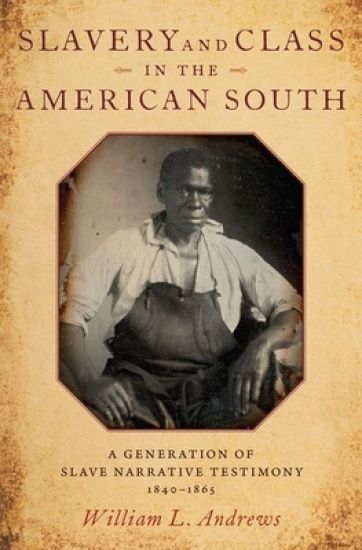
"The distinction among slaves is as marked, as the classes of society are in any aristocratic community. Some refusing to associate with others whom they deem to be beneath them, in point of character, color, condition, or the superior importance of their respective masters." Henry Bibb, fugitive slave, editor, and antislavery activist, stated this in his Narrative of the Life and Adventures of Henry Bibb (1849). In William L. Andrews's magisterial study of an entire generation of slave narrators, more than 60 mid-nineteenth-century narratives reveal how work, family, skills, and connections made for social and economic differences among the enslaved of the South. Slave narrators disclosed class-based reasons for violence that broke out between "impudent," "gentleman," and "lady" slaves and their resentful "mean masters." Andrews's far-reaching book shows that status and class played key roles in the self- and social awareness and in the processes of liberation portrayed in the narratives of the most celebrated fugitives from U.S. slavery, such as Frederick Douglass, Harriet Jacobs, William Wells Brown, and William and Ellen Craft. Slavery and Class in the American South explains why social and economic distinctions developed and how they functioned among the enslaved. Noting that the majority of the slave narrators came from the higher echelons of the enslaved, Andrews also pays close attention to the narratives that have received the least notice from scholars, those from the most exploited class, the "field hands." By examining the lives of the most and least acclaimed heroes and heroines of the slave narrative, Andrews shows how the dividing edge of social class cut two ways, sometimes separating upper and lower strata of slaves to their enslavers' advantage, but at other times fueling pride, aspiration, and a sense of just deserts among some of the enslaved that could be satisfied by nothing less than complete freedom. The culmination of a career spent studying African American literature, this comprehensive study of the antebellum slave narrative offers a ground-breaking consideration of a unique genre of American literature.
The first atomic bombs were constructed a the Los Alamos National Laboratory for the Manhattan project and other weapons programs. Waste plutonium was drained into the Rio Grande. This book studies the movement of the plutonium through the river system, and is illustrated with maps, diagrams and photographs. The analytic methods emplyed will serve as a model for application elsewhere.
Philosophy of Religion
William L. Rowe; William J. Wainwright
Oxford University Press Inc
1998
nidottu
This third edition of Philosophy of Religion offers a wide variety of readings designed to introduce students to important issues in the philosophy of religion. The authors have coupled new readings--including essays by Robert M. Adams, Peter Van Inwagen, and William P. Alston--with readings from classical philosophers, thus offering instructors and students an even more comprehensive and well-focused textbook. Many of the essays are particularly accessible to beginning philosophy students. New essays cover religious pluralism, teleological and moral arguments for God's existence, and the problem of evil. Philosophy of Religion, 3/e is an excellent choice for use as a main text or as a supplement for introductory courses in philosophy and religion.
Against the background of Socrates' insight that the unexamined life is not worth living, Reading Our Lives investigates the often overlooked inside dimensions of aging. Despite popular portrayals of mid and later life as entailing inevitable decline, this book looks at ageing as, potentially, a process of poeisis: a creative endevour of fashioning meaning from the ever-accumulating texts - memories and reflections - that constitute our inner worlds. At its centre is the conviction that although we are constantly reading our lives to some degree anyway, doing so in a mindful manner is critical to our development in the second half of life. Drawing on research in numerous disciplines - including cognitive psychology, neuroscience, and the psychology of ageing - this book presents a vision of aging that promises to accommodate such time-honoured concepts as wisdom and spirituality; one that understands aging as a matter not merely of getting old but of consciously growing old.