Kirjojen hintavertailu. Mukana 11 717 486 kirjaa ja 12 kauppaa.

Kirjahaku

Etsi kirjoja tekijän nimen, kirjan nimen tai ISBN:n perusteella.

1000 tulosta hakusanalla William Offutt

William Faulkner's Absalom, Absalom!

William Faulkner's Absalom, Absalom!

Oxford University Press Inc
2003
nidottu
Absalom, Absalom! has long been seen as one of William Faulkner's supreme creations, as well as one of the leading American novels of the twentieth century. In this collection Fred Hobson has brought together eight of the most stimulating essays on Absalom, essays written over a thirty-year span which approach the novel both formally and historically. Here are critical responses by Cleanth Brooks, John Irwin, Thadious Davis, and Eric Sundquist, as well as four essays published in the last decade. The casebook concludes with Faulkner's own remarks on the novel, delivered in a discussion with students at the University of Virginia. What emerges from all the selections is a rich and suggestive treatment of a work which Faulkner himself called "the best novel yet written by an American" and a less biased critic has called "the greatest American novel of the century... joining Moby-Dick and Huckleberry Finn at the pinnacle of American fiction."
William Wordsworth's The Prelude

William Wordsworth's The Prelude

Oxford University Press Inc
2006
sidottu
William Wordsworth's long poem The Prelude is a fascinating work-as autobiography, the fruit of many attempts at understanding the formative period of Wordsworth's life; as a fragment of historical evidence from the revolutionary and post-revolutionary years; as an unstable literary text, which mutated through at least five discernable versions from 1799-1839; and as a poem offering the pleasures of blank verse in a variety and to an intensity unmatched in English non-dramatic poetry. In this collection, leading Wordsworth scholar Stephen Gill, gathers together thirteen influential essays on The Prelude. The volume as a whole is a useful and inspiring companion for students and general readers of Wordsworth's greatest, but most demanding poem.
William Wordsworth's The Prelude

William Wordsworth's The Prelude

Oxford University Press Inc
2006
nidottu
William Wordsworth's long poem The Prelude is a fascinating work-as autobiography, the fruit of many attempts at understanding the formative period of Wordsworth's life; as a fragment of historical evidence from the revolutionary and post-revolutionary years; as an unstable literary text, which mutated through at least five discernable versions from 1799-1839; and as a poem offering the pleasures of blank verse in a variety and to an intensity unmatched in English non-dramatic poetry. In this collection, leading Wordsworth scholar Stephen Gill, gathers together thirteen influential essays on The Prelude. The volume as a whole is a useful and inspiring companion for students and general readers of Wordsworth's greatest, but most demanding poem.
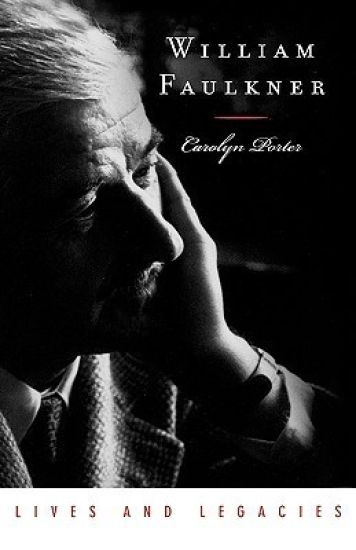
William Faulkner

William Faulkner

Carolyn Porter

Oxford University Press Inc
2008
sidottu
In this newest volume in Oxford's Lives and Legacies series, Carolyn Porter, a leading authority on William Faulkner, offers an insightful account of Faulkner's life and work, with special focus on the breathtaking twelve-year period when he wrote some of the finest novels in American literature. Porter ranges from Faulkner's childhood in Mississippi to his abortive career as a poet, his sojourn in New Orleans (where he met a sympathetic Sherwood Anderson and wrote his first novel Soldier's Pay), his short but strategically important stay in Paris, his "rescue" by Malcolm Crowley in the late 1940s, and his winning of the Nobel Prize. But the heart of the book illuminates the formal leap in Faulkner's creative vision beginning with The Sound and the Fury in 1929, which sold poorly but signaled the arrival of a major new literary talent. Indeed, from 1929 through 1942, he would produce, against formidable odds--physical, spiritual, and financial--some of the greatest fictional works of the twentieth century, including As I Lay Dying, Sanctuary, Light in August, Absalom, Absalom! and Go Down, Moses. Porter shows how, during this remarkably sustained burst of creativity, Faulkner pursued an often feverish process of increasingly ambitious narrative experimentation, coupled with an equally ambitious thematic expansion, as he moved from a close-up study of the white nuclear family, both lower and upper class, to an epic vision of southern, American, and ultimately Western culture. Porter illuminates the importance of Faulkner's legacy not only for American literature, but also for world literature, and reveals how Faulkner lives on so powerfully, both in the works of his literary heirs and in the lives of readers today.
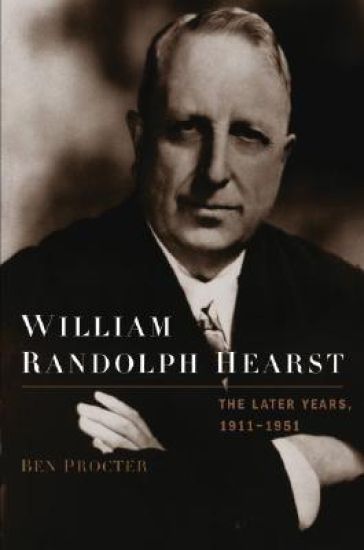
William Randolph Hearst: The Later Years 1911-1951

William Randolph Hearst: The Later Years 1911-1951

Ben Procter

Oxford University Press Inc
2007
sidottu
William Randolph Hearst was a figure of Shakespearean proportions, a man of huge ambition, inflexible will, and inexhaustible energy. He revolutionized the newspaper industry in America, becoming the most powerful media mogul the world had ever seen, and in the process earned himself the title of "most hated man in America" on four different occasions. Now in the second volume of this sweeping biography, Ben Procter gives readers a vivid portrait of the final 40 years of Hearst's life. Drawing on previously unavailable letters and manuscripts, and quoting generously from Hearst's own editorials, Procter covers all aspects of Hearst's career: his journalistic innovations, his impassioned patriotism, his fierce belief in "Government by Newspaper," his frustrated political aspirations, profligate spending and voracious art collecting, the building of his castle at San Simeon, and his tumultuous Hollywood years. The book offers new insight into Hearst's bitter and highly public quarrels with Al Smith (who referred to Hearst papers as "Mudgutter Gazettes") and FDR (whose New Deal Hearst dubbed the "Raw Deal"); his 30-year affair with the actress Marion Davies (and her own affairs with others); his political evolution from a progressive trust-buster and "America first" isolationist to an increasingly conservative and at times hysterical anti-communist. Procter also explores Hearst's ill-considered meeting with Hitler, his attempts to suppress "Citizen Kane," and his relationships with Joseph Kennedy, Charles Lindbergh, Louis B. Meyer, and many other major figures of his time. As Life magazine noted, Hearst newspapers were a "one-man fireworks display"--sensational, controversial, informative, and always entertaining. In Ben Procter's fascinating biography, Hearst shines forth in all his eccentric and egocentric glory.
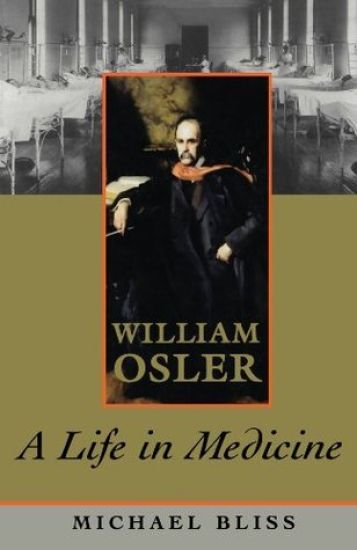
William Osler

William Osler

Michael Bliss

Oxford University Press Inc
2007
nidottu
William Osler was born in a parsonage in backwoods Canada on July 12, 1849. In a life lasting seventy years, he practiced, taught, and wrote about medicine at Canada's McGill University, America's Johns Hopkins University, and finally as Regius Professor at Oxford. At the time of his death in England in 1919, many considered him to be the greatest doctor in the world. Osler, who was a brilliant, innovative teacher and a scholar of the natural history of disease, revolutionised the art of practicing medicine at the bedside of his patients. He was idolised by two generations of medical students and practitioners for whom he came to personify the ideal doctor. But much more than a physician, Osler was a supremely intelligent humanist. In both his writings and his personal life, and through the prism of the tragedy of the Great War, he embodied the art of living. It was perhaps his legendary compassion that elevated his healing talents to an art form and attracted to his private practice students, colleagues, poets (Walt Whitman for example) politicians, royalty, and nameless ordinary people with extraordinary conditions. William Osler's life lucidly illuminates the times in which he lived. Indeed, this is a book not only about the evolution of modern medicine, the training of doctors, holism in medical thought, and the doctor-patient relationship, but also about humanism, Victorianism, the Great War, and much else. Meticulously researched, drawing on many new sources and offering new interpretations, William Osler: A Life in Medicine brings to life both a fascinating man and the formative age of twentieth-century medicine. It is a classic biography of a classic life, both authoritative and highly readable.
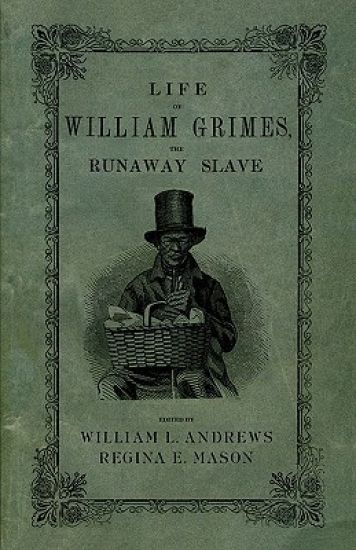
Life of William Grimes, the Runaway Slave

Life of William Grimes, the Runaway Slave

William L Andrews; Regina E Mason

Oxford University Press Inc
2008
nidottu
Life of William Grimes, the Runaway Slave is the first fugitive slave narrative in American history. When it appeared in New York in 1825, it was the longest African American autobiography published up to that time. Because Grimes wrote and published his narrative on his own, without deference to white editors, publishers, or sponsors, his Life has an immediacy, candor, and no-holds-barred realism unparalleled in antebellum slave narratives. The famous fugitives of the 1840s and 1850s, even Douglass, Brown, and Harriet Jacobs, all wrote in accordance with an antislavery script that circumscribed their freedom to speak out about what they had experienced as slaves in the South and as quasi-free men and women in the North. William Grimes, however, wrote before this formulaic script had been composed. Life appeared years before the advent of any organized national American antislavery movement, before David Walker's Appeal (1829), before the first African American newspaper, before William Lloyd Garrison had publicly acknowledged himself an abolitionist, before Frederick Douglass could read the word "abolitionist." Beholden to no one and unschooled in antislavery propaganda, Grimes's Life represents a truly unfiltered and personally authentic account of both southern slavery and the severely compromised "freedom" of the northern states in antebellum America. This edition of Life of William Grimes represents an historic partnership between a prominent scholar of the African American slave narrative and a genealogist who is also direct descendant of Grimes himself. Regina Mason, the great-great-great-granddaughter of William Grimes, combines her extensive historical research into her family and the text of her ancestor with William L. Andrews's scholarship on the origins and development of African American autobiography. The result is an authoritative, copiously annotated text that features pages from an original Grimes family Bible, transcriptions of the 1824 correspondence that set the terms for the author's self-purchase in Connecticut (nine years after his escape from Savannah, Georgia), and many other striking images that invoke the life and times of William Grimes.
William of Ockham, Dialogus, Part 2; Part 3 Tract 1
William of Ockham was a medieval English philosopher and theologian (he was born about 1285, perhaps as late as 1288, and died in 1347 or 1348). In 1328 Ockham turned away from 'pure' philosophy and theology to polemic. From that year until the end of his life he worked to overthrow what he saw as the tyranny of Pope John XXII (1316-1334) and of his successors Popes Benedict XII (1334-1342) and Clement VI (1342-1352). This campaign led him into questions of ecclesiology (the study of the nature and structure of the Christian Church, e.g. of the functions and powers of the pope) and political philosophy. The Dialogus purports to be a transcript made by a mature student of lengthy discussions between himself and a university master about the various opinions of the learned on the matters disputed between John XXII and the dissident Franciscans. The student is usually the initiator; he chooses the topics, asks most of the questions and decides when he has heard enough. The master is, so to speak, an expert witness whom the student examines. This volume publishes an edition of two elements of the Dialogus. Part 2 of the Dialogus is not in dialogue form and may not to be the work of Ockham himself. Part 3 is divided into two tracts. Tract 1, which is reproduced in this volume, is on the power of the Pope and clergy. Liberal thinking in modern times builds on certain earlier ancient and medieval political ideas, which Ockham reasserted, defended and helped to perpetuate. Thus there are elements in his ecclesiology and political philosophy that anticipate the views of Locke, Mill, and other modern liberals.
William of Ockham, Dialogus

William of Ockham, Dialogus

Oxford University Press
2019
sidottu
William of Ockham was a medieval English philosopher and theologian (he was born about 1285, perhaps as late as 1288, and died in 1347 or 1348). In 1328 Ockham turned away from 'pure' philosophy and theology to polemic. From that year until the end of his life he worked to overthrow what he saw as the tyranny of Pope John XXII (1316-1334) and of his successors Popes Benedict XII (1334-1342) and Clement VI (1342-1352). This campaign led him into questions of ecclesiology (the study of the nature and structure of the Christian Church, e.g. of the functions and powers of the pope) and political philosophy. The Dialogus purports to be a transcript made by a mature student of lengthy discussions between himself and a university master about the various opinions of the learned on the matters disputed between John XXII and the dissident Franciscans. The student is usually the initiator; he chooses the topics, asks most of the questions and decides when he has heard enough. The master is, so to speak, an expert witness whom the student examines. This volume provides the first critical edition of part 3.2 of the Dialogus and deals with the relation between the empire and the nation-states and engages in the theory of property rights, natural law, and political freedom.
William Of Ockham Dialogus Part 1, Books 1-5
William of Ockham was a leading English philosopher and theologian in the fourteenth century who came into controversy with Pope John XXII. His Dialogus is a survey of a wide range of matters controversial in the Catholic Church in the early fourteenth century. Topics discussed include the concepts of orthodoxy and heresy and the procedures for deciding whether a person is a heretic, the power of the pope within the Church, the power of the Church in relation to secular government, the constitution of the Church, and the constitution of secular government. The Dialogus is an important source of ideas on ecclesiology and political philosophy in the late middle ages. The present volume is concerned with heresy and heretics.
William of Ockham, Dialogus Part 1, Book 6
William Ockham intended the Dialogus to be a thorough examination (a "summa") of the doctrinal and political issues at stake during what in fact became the last major confrontation between Church and State in the waning period of the Western Middle Ages. Part I of the project, entitled “Concerning Heretics”, dealt with the problem of a Pope betraying the main values of his community, and the lengthy Book 6 described the consequent inquisition and punishment. The Dialogus is to Ockham what The Republic is to Plato or the Leviathan to Hobbes. It is one of the great treatises in the history of political thought. Cast in the form of a discussion between a master and a student, while primarily focusing on the concrete events of its time, it enunciates general principles which are easily adaptable to any socio-political situation involving human political interaction.
William of Ockham, Dialogus Part 1, Book 7
The Dialogus became an important reference text during the last two centuries of the Middle Ages, especially in the time of troubles associated with the Great Schism. It was printed twice in the later 15th century. One of its most elegant manuscripts was a text belonging to Pope Sixtus IV. Its ideal of an enlightened papacy ("monarchia de concilio peritorum") did not survive the Reformation, though many of its principles percolated into the writings of political philosophers, contributing along with other sources to the rise of constitutional liberalism and responsible government. This final book of Dialogus, Part I is not only a monument celebrating the possible emergence of cooperative political societies from the rubble of autocracies, but also an indication that Ockham's political orientation was essentially pragmatic.
William of Ockham

William of Ockham

Oxford University Press
2023
sidottu
Theologians and church lawyers in William Ockham's time generally agreed that a pope could become a heretic. According to Ockham, that had happened with Pope John XXII. The first part of Ockham's Dialogue is intended to show that John was a heretic, and to set out what should be done to remove him from the papacy. The relevant questions are discussed in a long conversation between Master and Student in which Ockham's own opinions are not directly stated. In Against John, Ockham makes his views very clear. According to Ockham, no individual or body within the Church is infallible, not even the pope or a general council. Religious error can spread almost throughout the Church. But there will always be a remnant who do not fall into the error. Thus, a dissident individual or minority may be in the right. Among Christians there should therefore be freedom of speech. Any Christian, man or woman, learned or illiterate, can put forward an opinion and argue for it 'a thousand times', in the face of contradiction by the pope himself, without being a heretic, even if the opinion is in truth a heresy. What makes a believer in a heresy a heretic is pertinacity, i.e. unwillingness to listen or unwillingness to change one's mind even if contrary evidence is clearly explained. A clear sign of pertinacity is an attempt to impose error coercively. According to Ockham, Pope John XXII was a heretic, and therefore no longer pope, because he tried to impose heresies coercively.
William Wordsworth: Intensity and Achievement

William Wordsworth: Intensity and Achievement

Thomas McFarland

Clarendon Press
1992
sidottu
This book seeks to isolate the special factors that generate Wordsworth's greatness as a poet. Setting out from a dissatisfaction with the current trend towards New Historicism in Wordsworthian criticism, it endeavours to qualify the social and political bias of that criticism by a renewed assertion of the poetic primacy of the personal and the qualitative. Taking Marjorie Levinson's reading of `Tintern Abbey' as the book's starting point, McFarland sets forth a different way of approaching the poem, and then identifies `intensity' as the secret of Wordsworth's power. The permutations of that quality are illustrated by careful examinations of `Ruth', of the `spots of time', and of `Home at Grasmere', which is revealed as containing the incandescent centre of Wordsworth's values. There follow chapters on Wordsworth's dessication, which is seen as precisely the absence of intensity; and on the aspiration of The Recluse, which is seen to fail largely because the personal intensity necessary to complete the venture had been used up in the opening of `Home at Grasmere'. McFarland then discusses the special way in which Wordsworth assumed the prophetic stance which was essential to his poetic vision and was adopted in the intense personal confidence that he possessed the truth. The book concludes with a reading of The Borderers, not as a successful play but as a disposal chamber for the dark matter of Wordsworth's cosmos; the writing of the play is seen as necessary to clear the way for the purified current of Wordsworthian intensity to flow towards supreme poetic achievement.