This book presents the principles and applications of optical fiber communication based on digital signal processing (DSP) for both single and multi-carrier modulation signals. In the context of single carrier modulation, it describes DSP for linear and nonlinear optical fiber communication systems, discussing all-optical Nyquist modulation signal generation and processing, and how to use probabilistic and geometrical shaping to improve the transmission performance. For multi-carrier modulation, it examines DSP-based OFDM signal generation and detection and presents 4D and high-order modulation formats. Lastly, it demonstrates how to use artificial intelligence in optical fiber communication. As such it is a useful resource for students, researches and engineers in the field of optical fiber communication.
In traditional Internet of Things (IoT) systems, sensor nodes are usually powered by batteries, and their limited battery power leads to limited system lifetimes and prevents the large-scale promotion of IoT; this is commonly referred to as the energy bottleneck. The subsequent emergence of Wireless Power Transmission (WPT) technology enables IoT nodes to replenish their energy through wireless charging, giving rise to the novel network paradigm of Wireless Rechargeable Sensor Networks (WRSNs). This has made it possible to solve the IoT energy bottleneck and extend IoT system lifetimes. This book elaborates on the theory and technical paradigms of WRSNs. The topics discussed include the energy efficiency, schedulability and reliability of WRSNs, as well as their potential intersections with other fields. Specifically, this book 1) proposes the theory of optimal scheduling of spatio-temporal correlation power supply for large-scale WRSNs; 2) analyses in depth the shortcomings and hidden risks of existing WRSN hardware and protocols, and proposes the concept of charging attack and the theory of trusted scheduling; and 3) introduces a radio electromagnetic signal propagation model into the design of charging deployment methods in complex environments, revealing a new dimension of charging efficiency optimization. The methods described here will lay the theoretical foundation for extending WRSN lifetimes and provide a new theoretical model for WRSN security and reliability, accelerating the development of these networks from multiple perspectives.
This unique book makes a contribution to the deeper understanding of various trade-related investment measures (TRIMs). The issues have been largely inspired by the use of trade policies on foreign investment adopted in China and many other nations from the 1960s to the 1990s. Building upon the existing literature and the authors' own work, the 20 chapters in the book examine, using several versions of general-equilibrium frameworks, resource allocation and welfare effects of both trade-related investment measures and investment-related trade/environmental measures. Traditional and duality microeconomic tools and modelling techniques have been extensively utilised in analysing various real-world, investment and environmental issues, especially those encountered in developing economies. Policy implications regarding optimal trade, investment and environmental policies that emerged from the analyses are also provided.This book is self-contained in applications of trade theories and related general-equilibrium modelling techniques. It may be used as an advanced textbook in trade theory and policy as well as a reference book for policy makers, professional practitioners and academic researchers in designing trade policies.
With the rapid proliferation of information and communications technology, industrial automation has undergone a sweeping transformation toward intelligent manufacturing. Wireless communication is widely considered to be one of the key technologies enabling intelligent manufacturing. On one hand, deterministic communication with high reliability and low latency is typically required in industrial automation applications. On the other hand, wireless communication in industrial settings is hindered by strictly limited communication resources and many other factors which mainly derive from the shared and error-prone nature of the wireless channels used. The limited communication resources and harsh channel conditions pose considerable challenges for reliable, real-time data transmission in industrial wireless networks. Resource optimization methods are vital to ensuring the deterministic performance of industrial wireless networks. Traditional resource optimization methods adopt the isolated resource optimization methods for each protocol layer, which is inherently local-optimal and leads performance uncontrollable. To focus on “Performance Controllable Industrial Wireless Networks”, this book presents thejoint resource optimization methods across multiple protocol layers for industrial wireless networks; reviews recent, major advances; and discusses the practical implementations of the proposed methods. The joint resource optimization methods discussed here will greatly benefit scientists and researchers in the areas of industrial automation and Industrial Internet of Things. To gain the most from this book, readers should have a fundamental grasp of wireless communication, scheduling theory, and convex optimization.
With the rapid proliferation of information and communications technology, industrial automation has undergone a sweeping transformation toward intelligent manufacturing. Wireless communication is widely considered to be one of the key technologies enabling intelligent manufacturing. On one hand, deterministic communication with high reliability and low latency is typically required in industrial automation applications. On the other hand, wireless communication in industrial settings is hindered by strictly limited communication resources and many other factors which mainly derive from the shared and error-prone nature of the wireless channels used. The limited communication resources and harsh channel conditions pose considerable challenges for reliable, real-time data transmission in industrial wireless networks. Resource optimization methods are vital to ensuring the deterministic performance of industrial wireless networks. Traditional resource optimization methods adopt the isolated resource optimization methods for each protocol layer, which is inherently local-optimal and leads performance uncontrollable. To focus on “Performance Controllable Industrial Wireless Networks”, this book presents thejoint resource optimization methods across multiple protocol layers for industrial wireless networks; reviews recent, major advances; and discusses the practical implementations of the proposed methods. The joint resource optimization methods discussed here will greatly benefit scientists and researchers in the areas of industrial automation and Industrial Internet of Things. To gain the most from this book, readers should have a fundamental grasp of wireless communication, scheduling theory, and convex optimization.
Rui P. Martins; Pui-In Mak; Sai-Weng Sin; Man-Kay Law; Yan Zhu; Yan Lu; Jun Yin; Chi-Hang Chan; Yong Chen; Ka-Fai Un; Mo Huang; Minglei Zhang; Yang Jiang; Wei-Han Yu
Technology-assisted People-to-People (P2P) interactions, embedded in a global environment, will be at the core of 21st century communications and will command the technological development of the forthcoming future. The intelligent interactivity of people, process (delivering the right information to the right person/machine at the right time), data and things, incorporates the Internet-of-Everything (IoE) that expands itself beyond the Internet-of-Things (IoT). In general, IoT comprises all physical or cyber objects (things) with an address that can transmit data (without human-to-machine interactions), while the IoE also involves communications among the users and the whole universe of electronic gadgets. Further, they both operate with data acquired from analog sources, thus connecting two different realities, the analog (physical/real) and the digital (cyber/virtual) worlds. Since the interface between the two realms deals with analog signals, its mandatory functions integrate several analog and mixed-signal sub-systems that include signal sensing, transmission and reception, frequency generation, energy harvesting, in-memory processing, data and power conversion. This publication presents state-of-the-art designs of the most critical building blocks of the analog/digital interface highlighting new and innovative circuit architectures and techniques. It addresses capacitive sensor interfaces, ultra-low-power wireless transceivers, key technologies for wireline transceivers, oscillators and frequency generators, integrated energy harvesting interfaces, in-memory processing, as well as, data and power converters, all exhibiting high quality performance with low power consumption, high energy-efficiency and high speed, thus enabling a reliable and consistent development of the IoE while enlarging its frontiers. In the coming decades, with the continuous evolution of electronics downscaling, the challenges that the above-mentioned sub-systems face will be tremendous in terms of the requirements for ultra-low power and ultra-high speed, obtained with the maximum energy-efficiency. Thus, the analog and mixed-signal very large scale integration area of work will continue to be an attractive field for research for design engineers both in the academia and in the industry, as it has been always the case since the emergence of silicon planar electronics 6 decades ago.
The Yuchis are one of the least known yet most distinctive of the Native groups in the American southeast. Located in late prehistoric times in eastern Tennessee, they played an important historical role at various times during the last five centuries and in many ways served as a bridge between their southeastern neighbors and Native communities in the northeast. First noted by the de Soto expedition in the sixteenth century, the Yuchis moved several times and made many alliances over the next few centuries. The famous naturalist William Bartram visited a Yuchi town in 1775, at a time when the Yuchis had moved near and become allied with Creek communities in Georgia. This alliance had long-lasting repercussions: when the United States government forced most southeastern groups to move to Oklahoma in the early nineteenth century, the Yuchis were classified as Creeks and placed under the jurisdiction of the Creek Nation. Today, despite the existence of a separate language and their distinct history, culture, and religious traditions, the Yuchis are not recognized as a sovereign people by the Creek Nation or the United States. Jason Baird Jackson examines the significance of community ceremonies for the Yuchis today. For many Yuchis, traditional rituals remain important to their identity, and they feel an obligation to perform and renew them each year at one of three ceremonial grounds, called "Big Houses." The Big House acts as a periodic gathering place for the Yuchis, their Creator, and their ancestors. Drawing on a decade of collaborative study with tribal elders and using insights gained from ethnopoetics, Jackson captures in vivid detail the performance, impact, and motivations behind such rituals as the Stomp Dance, the Green Corn Ceremony, and the Soup Dance and discusses their continuing importance to the community.
In Yuchi Indian Histories Before the Removal Era, folklorist and anthropologist Jason Baird Jackson and nine scholars of Yuchi (Euchee) Indian culture and history offer a revisionist and in-depth portrait of Yuchi community and society. This first interdisciplinary history of the Yuchi people corrects the historical record, which often submerges the Yuchi within the Creek Confederacy instead of acknowledging the Yuchi as a separate tribe. By looking at the oral, historical, ethnographic, linguistic, and archaeological record, contributors illuminate Yuchi political circumstances and cultural identity. Focusing on the pre-Removal era, the volume shows that from the entrada of Hernando de Soto into the American South in 1541 to the Yuchis' internal migrations throughout the hinterlands of the South and their entanglement with the Creeks to the maintenance of community and identity today, the Yuchis have persisted as a distinct people. This volume provides a voice to an indigenous nation that previous generations of scholars have misidentified or erroneously assumed to be a simple constituent of the Creek Nation. In doing so, it offers a fuller picture of Yuchi social realities since the arrival of Europeans and other non-natives in their Southern homelands.
The Yuchis are one of the least known yet most distinctive of the Native groups in the American southeast. Located in late prehistoric times in eastern Tennessee, they played an important historical role at various times during the last five centuries and in many ways served as a bridge between their southeastern neighbors and Native communities in the northeast. First noted by the de Soto expedition in the sixteenth century, the Yuchis moved several times and made many alliances over the next few centuries. The famous naturalist William Bartram visited a Yuchi town in 1775, at a time when the Yuchis had moved near and become allied with Creek communities in Georgia. This alliance had long-lasting repercussions: when the United States government forced most southeastern groups to move to Oklahoma in the early nineteenth century, the Yuchis were classified as Creeks and placed under the jurisdiction of the Creek Nation. Today, despite the existence of a separate language and their distinct history, culture, and religious traditions, the Yuchis are not recognized as a sovereign people by the Creek Nation or the United States. Jason Baird Jackson examines the significance of community ceremonies for the Yuchis today. For many Yuchis, traditional rituals remain important to their identity, and they feel an obligation to perform and renew them each year at one of three ceremonial grounds, called "Big Houses." The Big House acts as a periodic gathering place for the Yuchis, their Creator, and their ancestors. Drawing on a decade of collaborative study with tribal elders and using insights gained from ethnopoetics, Jackson captures in vivid detail the performance, impact, and motivations behind such rituals as the Stomp Dance, the Green Corn Ceremony, and the Soup Dance and discusses their continuing importance to the community.
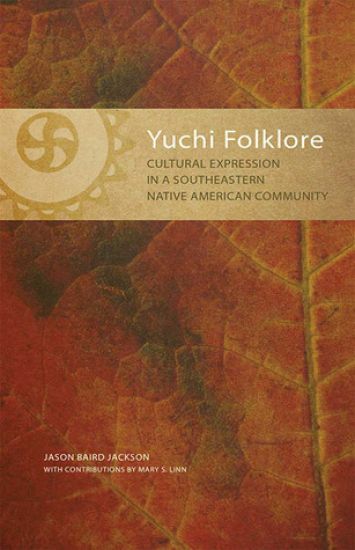
In countless ways, the Yuchi (Euchee) people are unique among their fellow Oklahomans and Native peoples of North America. Inheritors of a language unrelated to any other, the Yuchi preserve a strong cultural identity. In part because they have not yet won federal recognition as a tribe, the Yuchi are largely unknown among their non-Native neighbors and often misunderstood in scholarship. Jason Baird Jackson's Yuchi Folklore, the result of twenty years of collaboration with Yuchi people and one of just a handful of works considering their experience, brings Yuchi cultural expression to light. Yuchi Folklore examines expressive genres and customs that have long been of special interest to Yuchi people themselves. Beginning with an overview of Yuchi history and ethnography, the book explores four categories of cultural expression: verbal or spoken art, material culture, cultural performance, and worldview. In describing oratory, food, architecture, and dance, Jackson visits and revisits the themes of cultural persistence and social interaction, initially between Yuchi and other peoples east of the Mississippi and now in northeastern Oklahoma. The Yuchi exist in a complex, shifting relationship with the federally recognized Muscogee (Creek) Nation, with which they were removed to Indian Territory in the 1830s. Jackson shows how Yuchi cultural forms, values, customs, and practices constantly combine as Yuchi people adapt to new circumstances and everyday life. To be Yuchi today is, for example, to successfully negotiate a world where commercial rap and country music coexist with Native-language hymns and doctoring songs. While centered on Yuchi community life, this volume of essays also illustrates the discipline of folklore studies and offers perspectives for advancing a broader understanding of Woodlands peoples across the breadth of the American South and East.
The Yuchis, one of the more resilient peoples of the southeastern United States, were forcibly relocated to Indian Territory along with their neighbors in the 1830s. In the early 1900s, as this study shows, much of their traditional way of life remained. Yuchi life at the dawn of the modern era is portrayed in fascinating detail here, as observed and recorded by noted anthropologist Frank G. Speck in 1904–8. Speck's fieldwork, combined with information gleaned from the experiences of a number of Yuchi men, describes numerous facets of Yuchi culture, including language, subsistence practices, decorative arts, domestic architecture, clothing, religious beliefs and rituals, healing practices, mythology, music, social and political organizations, warfare, games, and life-transition rituals and customs, such as birthing, naming, marriage, and burial. Affording a precious glimpse of a Native community in transition a century ago, Ethnology of the Yuchi Indians stands as an essential introduction to the history and culture of a vibrant southeastern Native people.