This book is for anyone who is seeking mortgage financing solutions and sees themselves in one of these five categories: A) A fully-employed person with qualified income who has excellent credit and has secured a full down payment for purchasing their owner-occupied, single family home, personal residence;B) A fully employed person with qualified income who has a high credit score and has a full down payment available (or existing equity) to purchase orre-finance a recreational cottage, a second home, a rental duplex/triplex, an apartment block, an office building, or a commercial strip mall;C) A self-employed person, or someone with bruised credit, or anyone who hasn't filed their taxes in the last 12-24 months, or who has been recently divorced, or who is new to Canada, or who already owns more properties than their bank is willing to finance, or who is a recently discharged bankrupt, or who may be a builder engaged in new construction, who wishes to purchase/re-finance a unique property under challenging circumstances;D) An employer who firmly believes in the motto, "happy employees are productive employees" and who wants to make the lives of their employees more fulfilling by offering them a customized mortgage plan as part of an employee benefits plan;E) A lawyer, accountant, or financial planner, debt advisor, realtor, inspector, or risk management consultant, or any business professional who wants to refer their clients to an expert in the mortgage business to help them navigate the ever-changing sea of mortgage rules here in the Canadian real estate market.Please note that the layout of the chapters in this book are not necessarily in the order of importance for questions that consumers should be asking their mortgage planner, but instead are laid out in an orderly series that reflects the frequency in which most people have asked us these questions over the years we have researched these topics and the time we've served our clients.By way of full disclosure, please note that the author is the principal consultant with The Bret Dobbin Mortgage Team @ Mortgage Architects (BDMT@MA). Although we have done our best to provide valuable information for our readers, we strongly believe in the power of personal contact and urge you to find mortgage brokers/advisors/planners in your local area (even if with a different company other than our own) so that you can fully capitalize on the information we have researched for you. As outlined in Chapter 2, it is important that readers select their own team of professionals who can work with them directly. No information in this book shall be deemed as legal advice, accounting advice, insurance advice or realty advice as the author is not a lawyer, accountant, insurance agent or a realtor. We wish you great success as you begin your journey into the world of mortgages, economics, and finance. Please use our book links for follow-up and don't forget to request our free gifts as well as your reader bonuses. Each chapter end shows a different way to contact our mortgage advisory team members for further assistance.
Necessitating Change unveils a novel way of life that no one intuitively develops, provides tools of self-governance that schools never teach, reveals ugly truths we've been programmed to ignore, and presents controversial yet liberating facts we have no choice but to accept. We have been going through the motions, treading mindlessly through life, making uninformed decisions based on little to no understanding of the protagonist-ourselves. In a world of everchanging people, places, and practices, the archaic and maladaptive psyche we blindly inherit deprives us of twenty-first-century privileges and opportunities we unknowingly forego-setting ourselves up for disappointment and depressingly familiar, unfulfilled lives. You may have been feeling incompatible with life's paradigms and memes, assuming preordained suffering, questioning your sanity and life choices, wondering if there is something intrinsically wrong with the world as you see it. You may have been questioning all that is uncontrollable and disregarding what is: your outlook, your mindset, your motivations, your method.Necessitating Change details an actionable "Quasi-Chaotic Lifestyle" model whose core principles are founded on the adaptive, efficient, and value-driven industry-proven software development standard: the Agile philosophy. Unlike the pseudoscientific, "believe in yourself," think-harder-but-not-so-much word salads you find littering most self-help bookshelves, this proposed lifestyle is substantiated by multidisciplinary empirical evidence with realistic instructions and examples that make it easy to follow and achieve unparalleled immediate and enduring life-changing results.Within these pages is an inclusive, accessible, and practical twenty-first-century guide to Self-Actualization, outlining a path for cultivating an examined life of fulfillment and everlasting growth to conquer your fullest potential, as you see fit, in your own individualistic way.Necessitating Change is the book you never knew you needed. If you were looking for an answer, this is it.
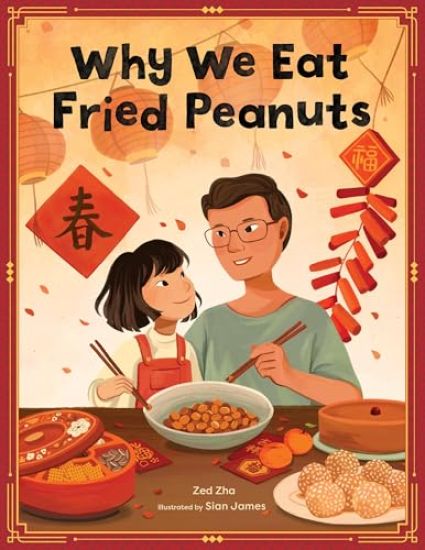
Celebrate Lunar New Year through a story of ancestral bravery while learning about Chinese history, language, and food. Join M ng, a Chinese American girl, as she prepares for the Lunar New Year festivities with her family and discovers the significance of ancestral stories and the history behind the Mandarin language and traditional foods eaten during the holiday. Meng's father shares with her the family story of t i nai nai, Meng's great-grandmother, and a very important ancestor for the family. T i nai nai's brave act of courage many years ago inspired generations after and teaches valuable lessons that every child can learn from today. Along the way, see how food plays an important role in the festivities and why one food--peanuts--is an important snack. The simple recipe for fried peanuts at the end of the story provides a fun, easy way to include the Lunar New Year in your annually celebrated holidays. Through the tale of t i nai nai, you will also learn significant moments in Chinese history and how to say a few words in Mandarin, such as: 太奶奶 - great-grandmother 热心 - warmhearted故事 - story帮助 - help宝宝 - baby幸运 - lucky母亲 - mother and more Rich with vibrant and joyful illustrations, Why We Eat Fried Peanuts honours the concept of ancestry, a pillar of Chinese culture that is remembered during the Lunar New Year celebrations. Through this engaging story, discover the rich history and culture of the Lunar New Year and learn how to apply the values of strength and courage all year round.
Celebrate Lunar New Year through a story of ancestral bravery while learning about Chinese history, language and food.Join Mèng, a Chinese American girl, as she prepares for the Lunar New Year festivities with her family and discovers the significance of ancestral stories and the history behind the Mandarin language and traditional foods eaten during the holiday. Meng’s father shares with her the family story of tài nai nai, Meng’s great-grandmother and a very important ancestor for the family. Tài nai nai’s brave act of courage many years ago inspired generations after and teaches valuable lessons that every child can learn from today. Along the way, see how food plays an important role in the festivities and why one food – peanuts – is an important snack. The simple recipe for fried peanuts at the end of the story provides a fun, easy way to include the Lunar New Year in your annually celebrated holidays.Through the tale of tài nai nai, you will also learn significant moments in Chinese history and how to say a few words in Mandarin, such as: ??? – great-grandmother ?? – warmhearted?? – story?? - help?? – baby?? - lucky?? – mother and more!Rich with vibrant and joyful illustrations, Why We Eat Fried Peanuts honours the concept of ancestry, a pillar of Chinese culture that is remembered during the Lunar New Year celebrations. Through this engaging story, discover the rich history and culture of the Lunar New Year and learn how to apply the values of strength and courage all year round.
In On the Genealogy of Color, Zed Adams argues for a historicized approach to conceptual analysis, by exploring the relevance of the history of color science for contemporary philosophical debates about color realism. Adams contends that two prominent positions in these debates, Cartesian anti-realism and Oxford realism, are both predicated on the assumption that the concept of color is ahistorical and unrevisable. Adams takes issue with this premise by offering a philosophical genealogy of the concept of color. This book makes a significant contribution to recent debates on philosophical methodology by demonstrating the efficacy of using the genealogical method to explore philosophical concepts, and will appeal to philosophers of perception, philosophers of mind, and metaphysicians.
In On the Genealogy of Color, Zed Adams argues for a historicized approach to conceptual analysis, by exploring the relevance of the history of color science for contemporary philosophical debates about color realism. Adams contends that two prominent positions in these debates, Cartesian anti-realism and Oxford realism, are both predicated on the assumption that the concept of color is ahistorical and unrevisable. Adams takes issue with this premise by offering a philosophical genealogy of the concept of color. This book makes a significant contribution to recent debates on philosophical methodology by demonstrating the efficacy of using the genealogical method to explore philosophical concepts, and will appeal to philosophers of perception, philosophers of mind, and metaphysicians.
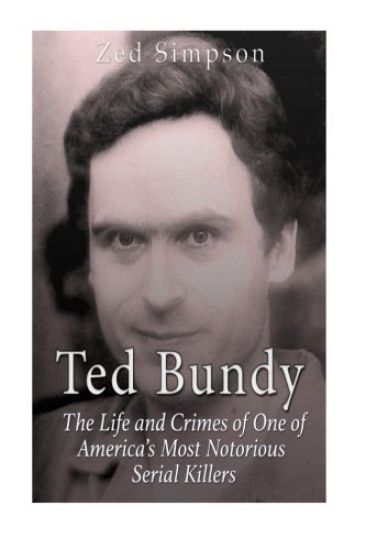
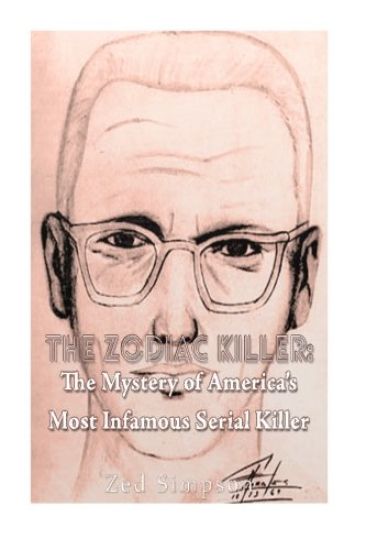
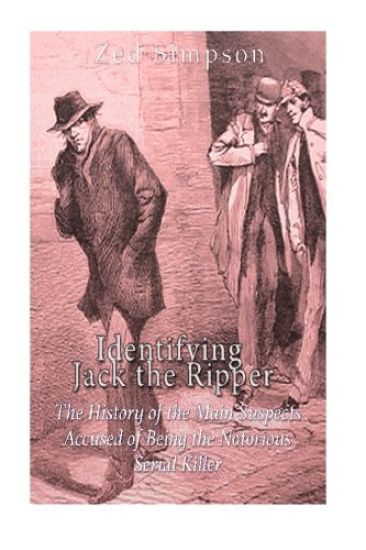
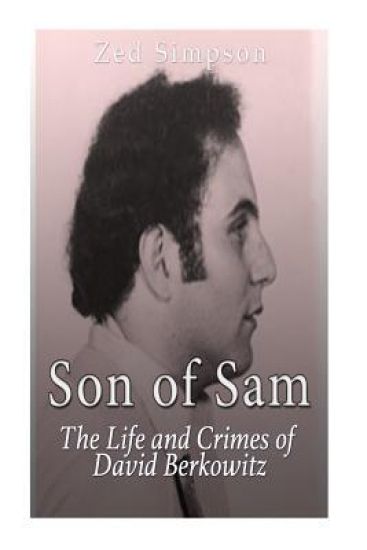
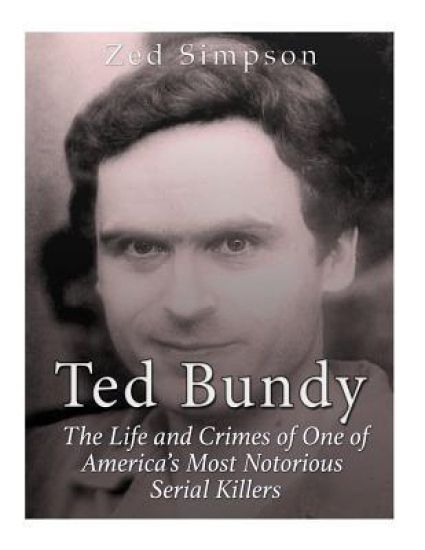
*Includes pictures *Includes accounts *Includes online resources and a bibliography for further reading The legends of vampires like Dracula have generated massive interest throughout time. Indeed, the story of a man (in some versions a very handsome, dashing man), who feeds on the blood of virgins in order to survive, and who walks the earth only at night, has been revived throughout the centuries in different forms. However, one famous tale that has been lost among the legends is the story of a female Dracula, an educated woman from a well-known family of 16th century Hungary who was so afraid to lose her beauty and young looks that she engaged in dangerous practices, combining witchcraft with exsanguination. Countess Elizabeth B thory is this female Dracula. She is said to have drained the blood of approximately 600 young women, in order to drink it, spread it all over her body as a nurturing blend, or simply to bathe in it. There have been a countless number of serial killers throughout history, and certainly more prolific ones, but the timing, circumstances, and unsolved nature of the case continue to make Jack the Ripper the most famous serial killer in history. The murders came at a time when media coverage could be both more acute and more widespread, and it allowed the public a closer look into how police agencies operated at the time, exposing both their strengths and shortcomings. Around the same time the Zodiac Killer was murdering people on the West Coast, the Son of Sam terrorized New York City in much the same way by killing at random and writing letters to the police. Serial killers often use a set pattern and/or rituals as part of their modus operandi, so in that regard the actions of the Zodiac Killer didn't exactly distinguish him from other serial killers. The main difference, of course, is that most serial killers are caught, including the Son of Sam (David Berkowitz), while the Zodiac Killer's identity remains an unsolved mystery. By both remaining unidentified and leaving seemingly tantalizing clues in his writing, the Zodiac Killer ensured his notorious legacy in American history, much the same way the attempt to identify Jack the Ripper continues to fascinate people across the world today. For most people, Ted Bundy is the quintessential serial killer - a good-looking, highly intelligent man who used his charm to lure an untold number of women to their deaths. In fact, as the judge announced his death sentence, he noted Bundy's intellect and mused that he would have enjoyed hearing Bundy try a case before him had he remained simply the genius law student he had once been. Bundy, of course, ended up choosing a far different path, going on a historic crime spree during the 1970s so prolific that estimates of his kill count vary by dozens, a debate Bundy was only too happy to stoke. On one occasion, when the FBI estimated he was responsible for 3 dozen murders, Bundy replied, "Add one digit to that, and you'll have it." On another occasion, he claimed the estimate of 3 dozen was close to accurate. The case of the Boston Strangler is as confusing and mystifying as it is terrifying. In fact, the mythology and debate lingering over the crime spree only heightened when Albert DeSalvo confessed to the crimes, provided both accurate and inaccurate details about some of them, and had his DNA tied to several of the crime scenes. However, before DeSalvo himself was murdered by an unknown assailant in jail in 1973, he had recanted his confession, and ultimately, he was never tried for the murders in Boston. 50 years after the Boston Strangler stopped killing, investigators and amateurs alike are still debating the very messy and all too real 18 month reign of terror that gripped the city of Boston in the early 1960s and haunts many to this day.
*Includes pictures *Includes accounts *Includes online resources and a bibliography for further reading The legends of vampires like Dracula have generated massive interest throughout time. Indeed, the story of a man (in some versions a very handsome, dashing man), who feeds on the blood of virgins in order to survive, and who walks the earth only at night, has been revived throughout the centuries in different forms. However, one famous tale that has been lost among the legends is the story of a female Dracula, an educated woman from a well-known family of 16th century Hungary who was so afraid to lose her beauty and young looks that she engaged in dangerous practices, combining witchcraft with exsanguination. Countess Elizabeth B thory is this female Dracula. She is said to have drained the blood of approximately 600 young women, in order to drink it, spread it all over her body as a nurturing blend, or simply to bathe in it. There have been a countless number of serial killers throughout history, and certainly more prolific ones, but the timing, circumstances, and unsolved nature of the case continue to make Jack the Ripper the most famous serial killer in history. The murders came at a time when media coverage could be both more acute and more widespread, and it allowed the public a closer look into how police agencies operated at the time, exposing both their strengths and shortcomings. Around the same time the Zodiac Killer was murdering people on the West Coast, the Son of Sam terrorized New York City in much the same way by killing at random and writing letters to the police. Serial killers often use a set pattern and/or rituals as part of their modus operandi, so in that regard the actions of the Zodiac Killer didn't exactly distinguish him from other serial killers. The main difference, of course, is that most serial killers are caught, including the Son of Sam (David Berkowitz), while the Zodiac Killer's identity remains an unsolved mystery. By both remaining unidentified and leaving seemingly tantalizing clues in his writing, the Zodiac Killer ensured his notorious legacy in American history, much the same way the attempt to identify Jack the Ripper continues to fascinate people across the world today. For most people, Ted Bundy is the quintessential serial killer - a good-looking, highly intelligent man who used his charm to lure an untold number of women to their deaths. In fact, as the judge announced his death sentence, he noted Bundy's intellect and mused that he would have enjoyed hearing Bundy try a case before him had he remained simply the genius law student he had once been. Bundy, of course, ended up choosing a far different path, going on a historic crime spree during the 1970s so prolific that estimates of his kill count vary by dozens, a debate Bundy was only too happy to stoke. On one occasion, when the FBI estimated he was responsible for 3 dozen murders, Bundy replied, "Add one digit to that, and you'll have it." On another occasion, he claimed the estimate of 3 dozen was close to accurate. The case of the Boston Strangler is as confusing and mystifying as it is terrifying. In fact, the mythology and debate lingering over the crime spree only heightened when Albert DeSalvo confessed to the crimes, provided both accurate and inaccurate details about some of them, and had his DNA tied to several of the crime scenes. However, before DeSalvo himself was murdered by an unknown assailant in jail in 1973, he had recanted his confession, and ultimately, he was never tried for the murders in Boston. 50 years after the Boston Strangler stopped killing, investigators and amateurs alike are still debating the very messy and all too real 18 month reign of terror that gripped the city of Boston in the early 1960s and haunts many to this day.