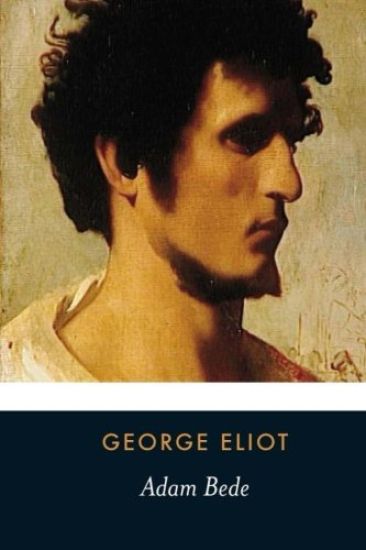
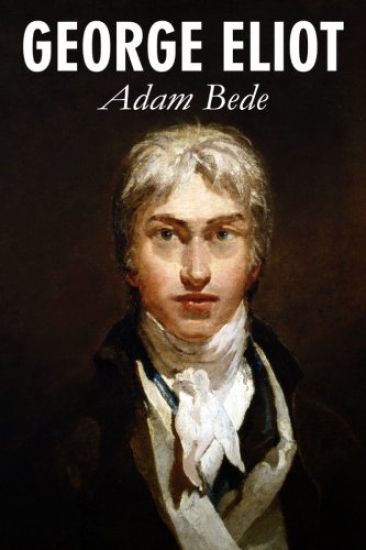
In Adam Bede (1859) George Eliot took the well-worn tale of a lovely dairy-maid seduced by a careless squire, and out if it created a wonderfully innovative and sympathetic portrait of the lives of ordinary Midlands working people--their labors and loves, their beliefs, their talk. This edition reprints the original broadsheet reports of the murder case that was a starting point for the book, and detailed notes illuminate Eliot's many literary and Biblical allusions.
Hello, Adam Welcome to the world of books. This colorful, personalized keepsake is just for you. In Adam s Reading Log, your family and friends will be able to record the first 200 books you read and prepare you for a lifetime of reading, achievement, and success. Sprinkled with great advice and inspiration, this memory book will remind you throughout your life of those books and people who inspired you. A note for adults: recording a child s first books creates a mindset of reading the first steps to a lifetime of learning and growth."
Hello, Adam Welcome to the world of books. This colorful, personalized keepsake is just for you. In Adam s Reading Log, your family and friends will be able to record the first 200 books you read and prepare you for a lifetime of reading, achievement, and success. Sprinkled with great advice and inspiration, this memory book will remind you throughout your life of those books and people who inspired you. A note for adults: recording a child s first books creates a mindset of reading the first steps to a lifetime of learning and growth."
Adam Reborn is an allegory for the stage. It uses the Biblical symbols of Adam and Eve to tell the story of man's relationship with God. In this story, Adam and Eve are young and heroic people learning to deal with a Paradise and a God that are hostile to them. There is no chance of life and everything that is natural to them is cut off, given no chance for fruition. They sense this; they feel the vacuum in their souls, and they are uncertain as to how to deal with it. The man/woman relationship suffers as it must under such strains; independence is too essential to it. How they deal with it is the message of this allegory.
All religions are based on faith, but Christianity far more than others. All religions believe in something divine that is above us, Christianity goes a little bit further. Christianity goes further because it's the only religion that is trying to prove, with tangible evidence, their beliefs. Christ accompanied His preaching with miracles that went beyond human comprehension. He walked on water, commanded the elements, healed the sick, gave sight to the blind, and raised the dead. In short, He preached with something tangible for people to see. Finally, He announced his death and resurrection. If anyone could think of Him as a great magician or illusionist, then that would signify that after he died, he could no longer have an effect on the people of this earth. His own disciples, although they were eyewitnesses of his miracles, were tested; they did not expect His resurrection. After His death, they went back to their jobs and did not expect anything more to happen until the women in the bible story, especially Mary Magdalene, told them the good news they ran to the sepulcher. Now these people, not only were they partakers of His sermons and miracles in life, but they also became eyewitnesses of the greatest event for mankind: the chance to live after death. If this message was true, it would mean eternal life existed. One of them, nevertheless, remained skeptical, namely Thomas. He did not believe at first. He didn't trust their testimonies. He wanted to reach out and touch. Jesus stayed with them for 40 days, eating with them, passing through walls. It was not a dream or a collective illusion, but a real sharing of real life, with more lessons, until Jesus disappeared into the sky in front of them. Some might think that all this was a fabrication of the apostles, such as the Jews wanted to believe. What good would this earn for the disciples? Money? Honor? Anything else? None of this, these people were embarked in an unparalleled preaching work. They left their families and went around Asia and Europe bearing their testimony. They crossed mountains, valleys and seas, according to their narrative, between mockery and brutality. Reading acts and, especially Paul's epistles, they shows incredible stoicism, Stephen dies bearing his testimony, Peter in the Sanhedrin must defend himself and then he is imprisoned and so on. What about Paul? One of the most bitter enemies of the faith that speaks of an unusual event on the road to Damascus. A hallucination? He didn't see in that way, not only he changed his life, the vision changed him from persecutor to be persecuted. The letters he wrote are the most spiritual to be found between all the scriptures. These people MUST have learned and know these things to be true, they would not have staged a farce, only to be persecuted and killed. The villains, usually, when uncovered they do not want to pay the price of their iniquity, the disciples paid the price of their honesty. Why this thing is not universally accepted? Because it is unusual and contrary to the experience of each of us. Because our minds do not get to understand it and what we do not understand we usually refuse it. Triumph over death? Look at this reaction. Acts 17: 31 Because he hath appointed a day, in the which he will judge the world in righteousness by that man whom he hath ordained; whereof he hath given assurance unto all men, in that he hath raised him from the dead. 32 And when they heard of the resurrection of the dead, some mocked: and others said, We will hear thee again of this matter. 33 So Paul departed from among them. There are real things, which we refer to every day, we cannot see, feel or touch, yet they are real for us. Time, thought, dreams, can science touch them? Weigh them? Or better yet play them or change them? No, but they are familiar for us. One thing unites the scientist and the believer: faith in what they believe.
Thank you for your donation.The Light of the Sonrise is the "ah" of Adamah. In Hebrew, the suffix denotes a swirling around, like a whirlpool towards Adam, and that's exactly what the literary and sonic light of religion and modern mythology (our music and movies) does... swirl around "Adam." Verses of light show us we are truly in Eden, searching for Adam... it is the crux of the Second Coming: Matthew 2:2 links Genesis 2, Ecclesiastes 9:11 and Jeremiah 46:6 tie together the seas of Moses' Holy Flame.From Cake singing about "the race" of the burning Bush, to The Pretty Reckless, Live, and countless others unknowingly lighting up a "race around the country," on the Lamb (of God) ... linking to the Fool Card of Tarot and Five-El's Westward journey--for our love of Freedom and Americana.... our culture is the true expression of God's religion. Just a few pieces, and many links are missing, proof of creation is at hand. Atlantic to Pacific, Ha'esh to the parted Red Sea, A Family of 3 in Eden, to a Revelation: all the way to thee. Great Light from Genesis, to Revelation found lighting the story of Exodus, backwards.
Dans ce livre, Delatour revient sur la vie et les travaux d'Adam Smith. Il pr sente d'abord l'homme: un professeur de philosophie morale issu d'une famille modeste de l' cosse profonde. Il expose galement les th ories philosophiques que Smith exposa dans son grand texte, La Th orie des Sentiments Moraux. Enfin, il offre les cl s pour comprendre les principes conomiques fondateurs qui sont pr sents dans les cinq livres de la Richesse des Nations.
Allah (God), the creator of everything, says: We are relating unto you the most beautiful stories in that which we have revealed to you from the Quran, though before it you were from among those who were not aware of them. El-Farouq.orgAllah revealed in the Quran: "Remember when your Lord said to the Angels: 'I am going to place mankind generations after generations on earth.' They said: 'Will You place therein those who will make mischief therein and kill, while we worship You and thank You.' Allah said: 'I see that which you do not know.'