Kirjojen hintavertailu. Mukana 12 016 292 kirjaa ja 12 kauppaa.

Kirjahaku

Etsi kirjoja tekijän nimen, kirjan nimen tai ISBN:n perusteella.

1000 tulosta hakusanalla Amos Perry

Photography and Jewish History

Photography and Jewish History

Amos Morris-Reich

UNIVERSITY OF PENNSYLVANIA PRESS
2022
sidottu
It is a sign of the accepted evidentiary status of photographs that historians regularly append them to their accounts, Amos Morris-Reich observes. Very often, however, these photographs are treated as mere illustrations, simple documentations of the events that transpired. Scholars of photography, on the other hand, tend to prioritize the photographs themselves, relegating the historical contexts to the background. For Morris-Reich, however, photography exists within reality; it partakes in and is very much a component of the history it records. Morris-Reich examines how photography affects categories of history and experience, how it is influenced by them, and the ways in which our understanding of the relationship between history and photography can be theorized and reoriented. Morris-Reich here turns to five twentieth-century cases in which photography and Jewish history intersect: Albert Kahn's utopian attempt to establish a photographic archive in Paris in order to advance world peace; the spectacular failed project of Helmar Lerski, the most prominent photographer in British Mandate Jewish Palestine; photography in the long career of Eugen Fischer, a Nazi professor of genetics; the street photography of Robert Frank; and the first attempt to introduce photography into the study of Russian Jewry prior to World War I, as seen from the post-Holocaust perspective of the early twenty-first century. Illustrated with nearly 100 images, Photography and Jewish History moves beyond a focus on Jewish photographers or the photographic representation of Jews or Jewish visibility to plumb the deeper and more significant registers of twentieth-century Jewish political history.
The Meaning of the Built Environment

The Meaning of the Built Environment

Amos Rapoport

University of Arizona Press
1990
nidottu
Rapoport is concerned with the meanings which buildings, their contents, and their inhabitants convey, and the conclusions which can be drawn therefrom for procedures of architectural design to satisfy the people who will ultimately live in these buildings...A challenging book on a subject that has had insufficient attention in the past.?Man and Environment ""Fills a significant gap: it introduces the notion of environmental meaning so clearly that no reader will doubt the basic premise that the environment holds meaning as part of a cultural system of symbols, and influences our actions and our determinations of social order.""?Design Book Review ""This is the second edition of a book first published in 1982...Enthusiastic and inquiring as the reader is brought into the writer's thought processes.""?Progress in Human Geography (England) ""It has merits not to be found in any other book in this much-discussed and little understood subject, to wit: it is short, it is simple, and it is useful. It is even, in parts, entertaining...a book which will help architects to do their job better."" Architecture Australia
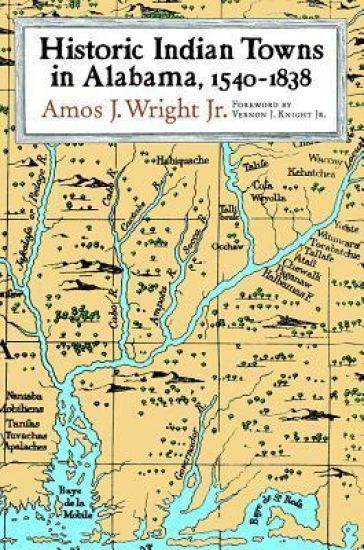
Historic Indian Towns in Alabama, 1540-1838

Historic Indian Towns in Alabama, 1540-1838

Amos Wright Jr

The University of Alabama Press
2003
sidottu
Identifies town site locations and clarifies entries from the earliest documents and maps of explorers in Alabama. This encyclopedic work is a listing of 398 ancient towns recorded within the present boundaries of the state of Alabama, containing basic information on each village's ethnic affiliation, time period, geographic location, descriptions, and (if any) movements. While publications dating back to 1901 have attempted to compile such a listing, none until now has so exhaustively harvested the 214 historic maps drawn between 1544, when Hernando de Soto's entourage first came through the southeastern territory, and 1846, when Indian removal to the Oklahoma Territory was complete. Wright combines the map data with a keen awareness of both previously published information and archival sources, such as colonial town lists, census information, and travel narratives. The towns are listed alphabetically, and the text of each entry develops chronologically. While only a few of these towns have been accurately located by archaeologists, this volume provides a wealth of information for the future study of cultural geography, southeastern archaeology, and ethnohistory. It will be an enduring reference source for many years to come. SAMPLE ENTRY, ALIBAMA TOWN (Alibama) The Alibama consisted of several towns - Mucclassa, Tawasa, Tomopa, Koarsati (Knight 1981, 27:48). Pickett ([1851] 1962:81) adds Ecanchati, Pawokti, and Autauga. The Alibama Town can also be added. Many maps show the Alibama as a group, but one map, 1796 Thomas and Andrews, locates the 'Alabama Town'on the east bank of the Coosa just below Wetumpka. Swanton ([1922] 1970a:209) wrote that the Tuskegee at the Alabama forks may have been known as the 'Alabama Town'; however, this is unlikely, as Major W. Blue, a removal agent, wrote in July 1835 that Coosada, Alabama Town, and Tuskegee were ready to emigrate and they all lived adjoining each other in Macon County (ASP, Military Affairs 1861,6:731). On 6 July 1838, some twenty-seven towns, including 'Alibama' (NA M234 R225), attended the Creek council held in Indian Territory. Thomas Bibb, brother to Alabama territorial govenor William Wyatt Bibb, and others, including Nashville investors, founded the town of Alabama in 1817 at Ten Mile Bluff in Montgomery County (Moser 1980-94, 4:131). The town soon disappeared into history. Retired from Redstone Arsenal (U.S. Army Missile Command) in Huntsville, Alabama, Amos J. Wright Jr. (deceased) has been an avocational archaeologist since 1965. He is author of several research articles and The McGillivray and McIntosh Traders of the Old Southwest Frontier, 1716 to 1815. Vernon J. Knight Jr.is Professor and Chair of Anthropology at The University of Alabama and a coeditor of Archaeology of the Moundville Chiefdom.
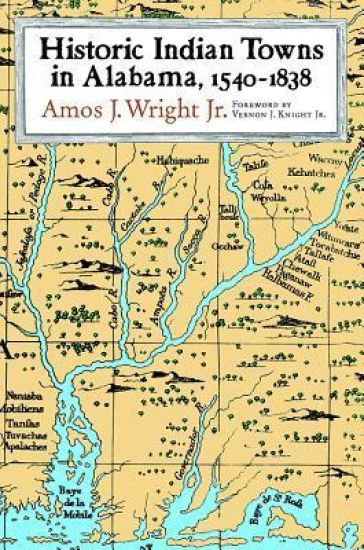
Historic Indian Towns in Alabama, 1540-1838

Historic Indian Towns in Alabama, 1540-1838

Amos Wright Jr

The University of Alabama Press
2003
nidottu
This encyclopedic work is a listing of 398 ancient towns recorded within the present boundaries of the state of Alabama, containing basic information on each village's ethnic affiliation, time period, geographic location, descriptions, and (if any) movements. While publications dating back to 1901 have attempted to compile such a listing, none until now has so exhaustively harvested the 214 historic maps drawn between 1544, when Hernando de Soto's entourage first came through the southeastern territory, and 1846, when Indian removal to the Oklahoma Territory was complete. Wright combines the map data with a keen awareness of both previously published information and archival sources, such as colonial town lists, census information, and travel narratives. The towns are listed alphabetically, and the text of each entry develops chronologically, While only a few of these towns have been accurately located by archaeologists, this volume provides a wealth of information for the future study of cultural geography, southeastern archaeology, and ethnohistory. It will be an enduring reference source for many years to come.
World Politics and the Causes of War Since 1914

World Politics and the Causes of War Since 1914

Amos Yoder

University Press of America
1985
nidottu
After constructing a theoretical framework of ideas, ideologies, and governmental factors that have been suggested as causing international wars, the author checks these hypotheses against developments that led to the outbreak of major wars since 1914, such as W.W. II, Vietnam, and the Arab-Israeli wars. Focuses on immediate causes of war, for example, nationalism, fascism, totalitarian leaders, and democracy.
Baltimore Portraits

Baltimore Portraits

Amos Badertscher

Duke University Press
1999
sidottu
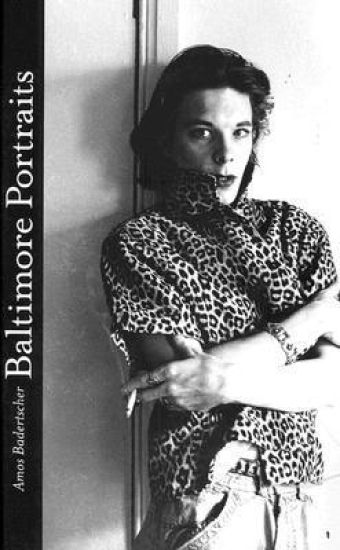
Baltimore Portraits is a unique presentation of photographs by Amos Badertscher. These portraits-many accompanied by poignantly revealing, hand-written narratives about their subjects-represent a sector of Baltimore that has gone largely unnoticed and rarely has been documented. In this volume, the assemblage of images of bar and street people-transvestites, strippers, drug addicts, drag queens, and hustlers-spans a twenty-year period from the mid-1970s to the mid-1990s. Badertscher’s arresting and melancholy photographs document a culture that has virtually disappeared due to substance abuse, AIDS, and, often, societal or family neglect. The photographer’s focus on content rather than on elaborate technique reveals the intensely personal-and, indeed, autobiographical-nature of his portraits. Their simplicity along with the text’s intimacy affects the viewer in ways not easily forgotten. An introduction by Tyler Curtain contextualizes the photographs both within the history of Baltimore and its queer subculture and in relationship to contemporaneous work by photographers Nan Goldin, Robert Mapplethorpe, Cindy Sherman, Duane Michaels, and others. Curtain also positions the underlying concerns of Bardertscher’s art in relation to gay and lesbian cultural politics. This striking collection of portraits, along with the photographer’s moving text, will impact not only a general audience of photographers and enthusiasts of the art but also those engaged with gay and lesbian studies, queer theory, and cultural studies in general. It is published in association with the Duke University Museum of Art.
Baltimore Portraits

Baltimore Portraits

Amos Badertscher

Duke University Press
1999
pokkari
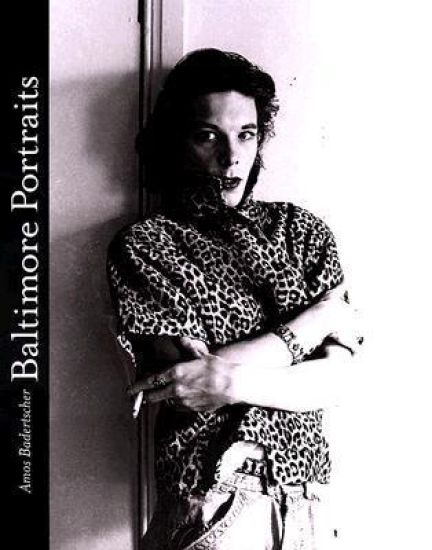
Baltimore Portraits is a unique presentation of photographs by Amos Badertscher. These portraits-many accompanied by poignantly revealing, hand-written narratives about their subjects-represent a sector of Baltimore that has gone largely unnoticed and rarely has been documented. In this volume, the assemblage of images of bar and street people-transvestites, strippers, drug addicts, drag queens, and hustlers-spans a twenty-year period from the mid-1970s to the mid-1990s. Badertscher’s arresting and melancholy photographs document a culture that has virtually disappeared due to substance abuse, AIDS, and, often, societal or family neglect. The photographer’s focus on content rather than on elaborate technique reveals the intensely personal-and, indeed, autobiographical-nature of his portraits. Their simplicity along with the text’s intimacy affects the viewer in ways not easily forgotten. An introduction by Tyler Curtain contextualizes the photographs both within the history of Baltimore and its queer subculture and in relationship to contemporaneous work by photographers Nan Goldin, Robert Mapplethorpe, Cindy Sherman, Duane Michaels, and others. Curtain also positions the underlying concerns of Bardertscher’s art in relation to gay and lesbian cultural politics. This striking collection of portraits, along with the photographer’s moving text, will impact not only a general audience of photographers and enthusiasts of the art but also those engaged with gay and lesbian studies, queer theory, and cultural studies in general. It is published in association with the Duke University Museum of Art.
Two Minutes Over Baghdad

Two Minutes Over Baghdad

Amos Perlmutter; Michael I. Handel; Uri Bar-Joseph

Vallentine Mitchell Co Ltd
1982
sidottu
A detailed account of the way Israel dealt with the Iraqi nuclear buildup between its launch in 1974 and the destruction of the Tamuz I reactor on 7 June 1981.
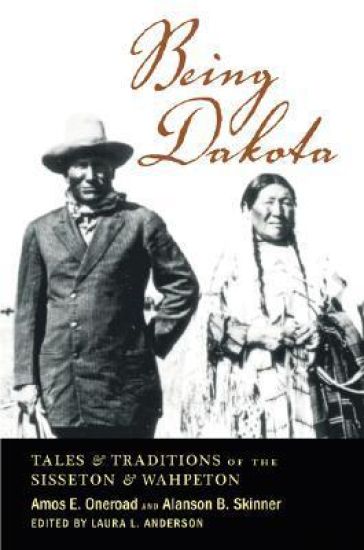
Being Dakota

Being Dakota

Amos E. Oneroad; Lanson B Skinner

Minnesota Historical Society Press,U.S.
2005
nidottu
A unique collection detailing the customs, traditions, and folklore of the Sisseton-Wahpeton Dakota at the turn of the twentieth century. At the beginning of the twentieth century, a few members of the Sisseton-Wahpeton Dakota community in north-eastern South Dakota worked quietly to preserve the customs and stories of their ancestors in the face of federal government suppression and the opposition of organised religion. Amos E. Oneroad, a son of one of those families, was educated in traditional Dakota ways and then sent East, where he obtained a college education and eventually became a Presbyterian minister. For most of his life, he moved in two worlds. By fortunate coincidence he met Alanson B. Skinner, a student of anthropology and kindred soul, in New York City. The two men formed a bond both personal and professional, collaborating on anthropological studies in various parts of the United States. The project closest to Oneroad's heart was the collection and preservation of the stories and traditions of the Sisseton and Wahpeton. Oneroad wrote down the stories and gave them to Skinner.The men intended to polish the resulting manuscript and publish it, but Skinner's untimely death in 1925 thwarted their plans. Oneroad and Skinner collected descriptions of everyday life, including material culture, tribal organisation, and ceremonies that marked the individual's passage from birth to death. Several of the folk tales relate the exploits of Iktomi, the trickster, in rare, early, unexpurgated versions. Others tell of adventures of such figures as the Child of Love, Star Born, and the Mysterious Turtle. Laura L. Anderson, who teaches anthropology at the University of Oklahoma, found the neglected manuscript among Skinner's papers in a California library and has edited it for publication. Being Dakota succeeds in fulfilling its authors' original intent by conveying these long-ago stories and traditions to the children and grandchildren, and being true to Amos Oneroad's voice.
Beachcombing the Pacific

Beachcombing the Pacific

Amos L. Wood

SCHIFFER PUBLISHING LTD
1997
nidottu
Who among us has not looked out over a beautiful body of water and wondered what treasures are buried in the shore? Or found an unusual artifact floating and wondered where it originated? Whether you are a potential or a practicing beachcomber, Beachcombing The Pacific, will show you techniques to enhance your discovery potential and improve the results of your efforts. This newly revised and illustrated edition is written to capture the fun and excitement of the setting. Whether you are beachcombing along coastal beaches, lake shores, or river banks this book will show you how to go about serious beachcombing successfully. Not only will you learn which beaches are better for finding items, but also certain techniques which are more productive for locating these treasures. Beachcombing The Pacific, is truly a comprehensive how-to and where-to handbook that will prove to be an indispensable tool for beginning as well as experienced beachcombers.
Film as a Subversive Art

Film as a Subversive Art

Amos Vogel; Herb Shellenberger

Film Desk Books
2021
sidottu
Amos Vogel’s seminal book Film as a Subversive Art was first published in 1974 and, in Vogel’s own words, detailed, “the accelerating worldwide trend toward a more liberated cinema, in which subjects and forms hitherto considered unthinkable or forbidden are boldly explored.” It is now available again in this newly restored edition, in which hundreds of errors have been corrected. Accompanied by over three hundred rare film stills, newly sourced and re-scanned for this edition. This revised edition of the book edited by Jim Colvill and Herb Shellenberger. New foreword by Herb Shellenberger. Amos Vogel (1921–2012) was born in Vienna and emigrated to the United States in 1938, eventually ending up in New York City. From 1947 to 1963 Vogel and his wife Marcia ran Cinema 16, the most successful and influential membership film society in North American history. In 1963 Vogel founded the Lincoln Center Film Department and was co-founder of the New York Film Festival, which he ran until 1968. He was a longtime faculty member at the University of Pennsylvania’s Annenberg School and a regular contributor to The Village Voice and Film Comment.
Simbi and the Satyr of the Dark Jungle

Simbi and the Satyr of the Dark Jungle

Amos Tutuola

Hassell Street Press
2021
sidottu
This work has been selected by scholars as being culturally important and is part of the knowledge base of civilization as we know it.This work is in the public domain in the United States of America, and possibly other nations. Within the United States, you may freely copy and distribute this work, as no entity (individual or corporate) has a copyright on the body of the work.Scholars believe, and we concur, that this work is important enough to be preserved, reproduced, and made generally available to the public. To ensure a quality reading experience, this work has been proofread and republished using a format that seamlessly blends the original graphical elements with text in an easy-to-read typeface.We appreciate your support of the preservation process, and thank you for being an important part of keeping this knowledge alive and relevant.
My Life in the Bush of Ghosts;

My Life in the Bush of Ghosts;

Amos Tutuola

Hassell Street Press
2021
sidottu
This work has been selected by scholars as being culturally important and is part of the knowledge base of civilization as we know it.This work is in the public domain in the United States of America, and possibly other nations. Within the United States, you may freely copy and distribute this work, as no entity (individual or corporate) has a copyright on the body of the work.Scholars believe, and we concur, that this work is important enough to be preserved, reproduced, and made generally available to the public. To ensure a quality reading experience, this work has been proofread and republished using a format that seamlessly blends the original graphical elements with text in an easy-to-read typeface.We appreciate your support of the preservation process, and thank you for being an important part of keeping this knowledge alive and relevant.